Gandhi और Ambedkar: caste, reform, Poona Pact और political thought
Gandhi और Ambedkar छुआछूत के विरोध पर सहमत थे, लेकिन caste के source, reform, Poona Pact और राज्य की भूमिका पर उनकी राहें अलग थीं।
दोनों इस बात पर सहमत हैं कि छुआछूत असहनीय है, लेकिन उसके बाद की हर बात पर असहमत हैं। यह असहमति व्यक्तिगत या tactical नहीं है। असली सवाल यह है कि बुराई की जड़ भीतर से सुधारी जा सकने वाली बिगड़ी practice है या खुद धार्मिक sanction।
यह PSIR Optional Notesका chapter 17 है। यह Paper I के syllabus के Indian Political Thought हिस्से से आता है। पूरी किताब मुफ़्त download की जा सकती है।
UPSC पाठ्यक्रम
Indian Political Thought: M. K. Gandhi, B. R. Ambedkar।
एक पन्ने में
- Gandhi की system Chapter 2 और 9 में विस्तार से आती है। यहाँ इसे Indian political thoughtकी तरह पढ़िए: swaraj, satyagraha, sarvodaya, trusteeship और constructive programme, और caste के लिए इनके मायने।
- Gandhi varna और casteके बीच फर्क करते हैं। Varna को वे hereditary occupation की ऐसी व्यवस्था मानते हैं जिसमें hierarchy नहीं है, caste को उसका पतन और untouchability को Hinduism से निकाल दिए जाने वाला पाप।
- Ambedkar इस distinction को टिकाऊ नहीं मानते। Caste labour का division नहीं, बल्कि labourersका division है, जो graded और hereditary है। उसका sanction धार्मिक है, इसलिए reform के लिए उस sanction को ही तोड़ना होगा।
- Annihilation of Caste (1936) वह central text है, जो दिया तो गया लेकिन deliver नहीं हुआ। इसका remedy inter-dining और inter-marriage है और इसके आगे उन shastras को ठुकराना है जो इस व्यवस्था को अधिकार देते हैं।
- The Poona Pact 24 September 1932 का Pact था। इसमें Gandhi के fast unto death के दबाव में separate electorates के बदले joint electorate में reserved seats आईं। Ambedkar ने sign तो किया, लेकिन इस trade को कभी fair नहीं माना।
- Ambedkar का positive programme constitutional और statist है। State and Minorities (1947) में state socialism को Constitution में ही लिखने का प्रस्ताव है और Article 17 untouchability को सीधे abolish करता है।
- Constitutional morality उनका term है। इसका अर्थ restraint की वे आदतें हैं जिनके बिना democratic Constitution केवल form रह जाता है। वे चेतावनी देते हैं कि यह natural sentiment नहीं है, इसे cultivate करना पड़ता है।
- 14 October 1956 को उनका Buddhism में conversion और The Buddha and His Dhamma (1957) इसी argument का logical terminus हैं: उस religion से exit, जिसके sanction को वे जड़ मानते थे।
Gandhi as Indian political thought
इस apparatus को Chapter 9 में रखा गया है और यहाँ इसे फिर पूरी तरह दोहराने की ज़रूरत नहीं है: means और ends की inseparability, ahimsa, satyagraha, swaraj का inner और outer अर्थ, swadeshi, sarvodaya, trusteeshipऔर modern civilisation की critique Hind Swaraj (1909) में। यहाँ ज़रूरी यह है कि इन commitments का Indian society के लिए क्या मतलब निकलता है और भीतर से इनका विरोध कहाँ हुआ।
Varna, caste और untouchability
Gandhi की position चार दशकों में बदली। इसलिए answer में उन्हें एक fixed view की तरह पेश करना गलत होगा।
उनकी शुरुआती position ने varnashrama का बचाव किया। वे इसे hereditary occupation का ऐसा law मानते थे जिसमें superiority या inferiority नहीं है। उनके अनुसार यह competition और acquisitiveness को रोकता है, क्योंकि व्यक्ति की economic ambition उसके calling तक सीमित रहती है। Inter-dining और inter-marriage पर restrictions तथा graded ranking वाली caste को वे बाद की corruption मानते थे। Untouchability उनके लिए essential faith में sanction के बिना उग आई ऐसी चीज़ थी जिसे निकाल देना चाहिए। Harijanयानी children of God, excluded लोगों के लिए उनका दिया नया नाम था। Ambedkar और बाद के Dalit writers ने इसे patronising कहकर reject किया।
उनकी बाद की position काफ़ी बदली। 1930 के दशक के बीच तक वे कह रहे थे कि varna में ऐसी hereditary restriction नहीं है जिसे वे लागू करेंगे। 1940 के दशक तक वे inter-caste marriage को encourage कर रहे थे और उन शादियों में जाने से मना कर रहे थे जो caste Hindu और Dalit के बीच न हों। यह trajectory वास्तविक है। निष्पक्ष बात यह है कि practical prescriptions में वे अंत तक Ambedkar के काफ़ी करीब आ गए थे, लेकिन theoretical point पर उन्होंने कभी concession नहीं दिया।
Constructive programme
Gandhi पर यह आरोप लगाया जाता था कि वे सिर्फ़ sentiment देते हैं। उनका जवाब था constructive programme: khadi और village industries, untouchability हटाना, communal unity, basic education (Nai Talim), village sanitation, prohibition और women का uplift। Logic यह है कि swaraj transfer नहीं होता, बनाया जाता है। जो लोग अपने गाँव नहीं चला सकते, वे देश नहीं चला सकते। Gandhi के अपने account में यह satyagraha की training ground भी है: जो latrine साफ़ करने को तैयार नहीं, वह discipline के साथ lathi charge का सामना भी शायद नहीं कर पाएगा।
Ambedkar
विचारक
B. R. Ambedkar (1891–1956)
मुख्य रचनाएँ। Castes in India (1916), Annihilation of Caste (1936), What Congress and Gandhi Have Done to the Untouchables (1945), State and Minorities (1947), The Buddha and His Dhamma (1957), Who Were the Shudras? (1946), The Problem of the Rupee (1923)
मूल दावा। Caste economic division नहीं, बल्कि endogamy से कायम रहने वाली धार्मिक sanction वाली graded inequality की system है। इसकी authority scriptures से आती है, इसलिए conscience की अपील से इसे reform नहीं किया जा सकता। Sanction को ही नष्ट करना होगा। Social democracy के बिना political democracy unstable है। इसलिए state emancipation का instrument होना चाहिए और guarantees Constitution में लिखी होनी चाहिए, goodwill पर नहीं छोड़ी जानी चाहिए।
आम आलोचना। बाद के Dalit writers ने उनके constitutional और state remedies में faith पर सवाल उठाया है। उनका कहना है कि यह ऐसे apparatus पर ज़्यादा निर्भर है जिसमें dominant groups के लोग बैठे हैं। उनकी शुरुआती economic writing को भी जितना ध्यान मिलना चाहिए, उतना नहीं मिला।
परीक्षा में पकड़। Ambedkar पूरे syllabus में बार-बार आते हैं: यहाँ, justice वाले Chapter 3 में, democracy वाले Chapter 6 में और Part IV के Constitution वाले हिस्से में।
Caste का theory
Castes in India (1916) में, जब Ambedkar 25 साल के थे और Columbia में इसे present कर रहे थे, mechanism पहले ही साफ़ था। Caste एक originally single cultural unit रही population पर ऊपर से चढ़ाई गई endogamy से कायम रहती है। इसे लागू करने वाली practices, sati, enforced widowhood और child marriage, group के भीतर ही विवाह की शर्त से पैदा हुए surplus men और women की problem का जवाब देने के लिए बनीं। इसलिए caste natural division नहीं, closure की machinery है। इसकी खास Indian feature यह है कि यह सिर्फ़ एक group के चारों तरफ़ wall नहीं है। हर group ऊपर वालों की नकल करते हुए खुद को बंद करता है।
Annihilation of Caste (1936) political argument है। इसके principal claims हैं:
- Caste labour का division नहीं है
- बल्कि labourers का division है, और वह graded तथा hereditary है। इसलिए यह work के किसी भी सामान्य economic organisation से अलग है। यह efficiency को disable करती है
- क्योंकि occupation aptitude के बजाय birth से तय होता है। Sympathy भी कम होती है, क्योंकि हर group अपने बाहर के लोगों से उदासीन हो जाता है। Ambedkar कहते हैं कि Hindu society वास्तव में society नहीं, castes का collection है। इसकी authorityधार्मिक है। Caste को shastra का sanction मिला हुआ है। इसलिए reason और humanity की अपील fail होती है: caste Hindu अपने ही हिसाब से immoral नहीं, obedient है। Remedy को behaviour नहीं, sanction पर हमला करना होगा।
- Practical solvent inter-marriageहै, क्योंकि blood का वास्तविक fusion उस separateness को dissolve करता है जिसे सिर्फ़ inter-dining नहीं कर सकता।
- इसलिए shastras की sanctity में belief को नष्ट करना social reform की condition है। अंत में Ambedkar Hinduism छोड़ने की अपनी intention साफ़ बताते हैं।
Gandhi–Ambedkar exchange
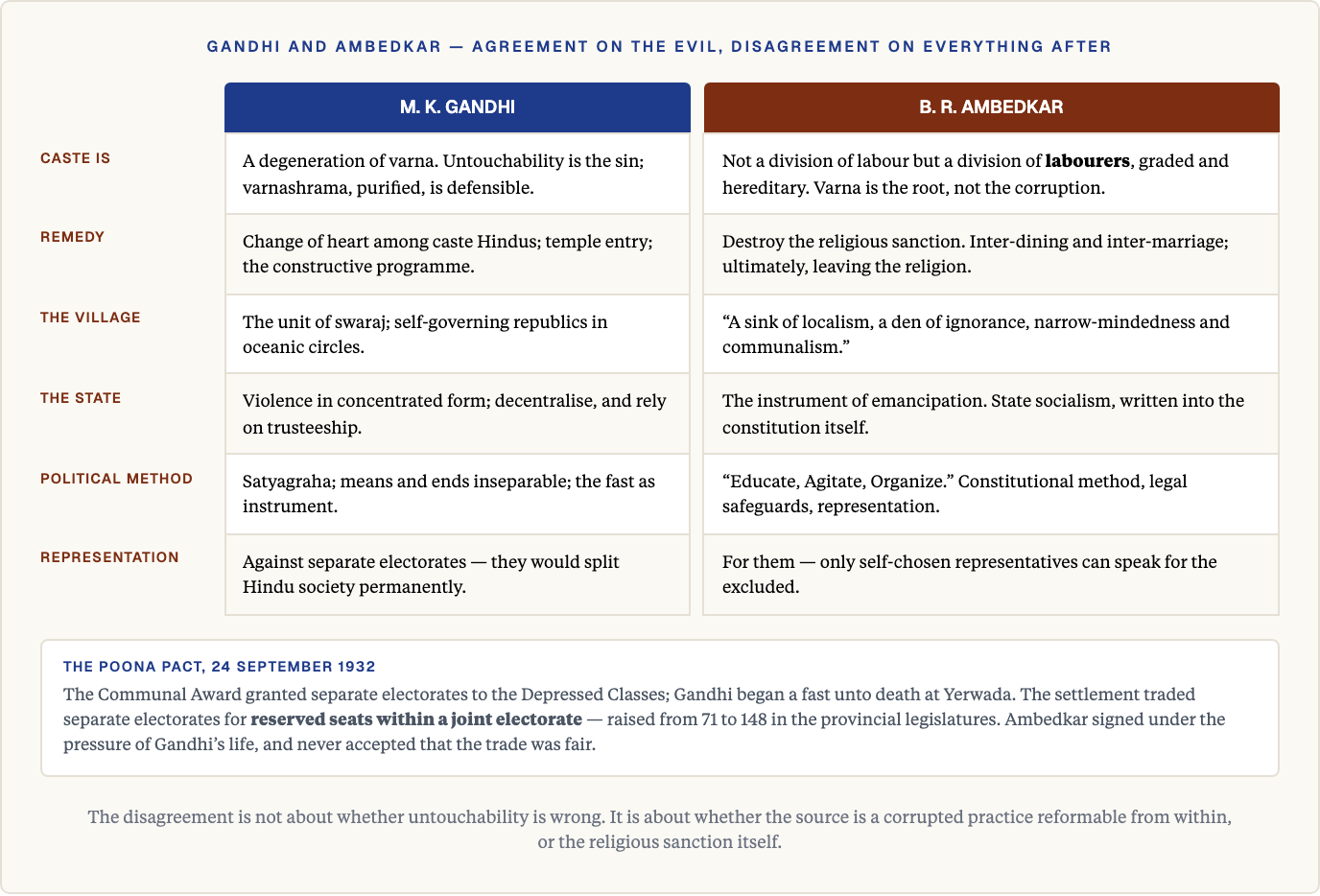
तीन specific disputes इस disagreement को marks देते हैं।
Separate electorates और Poona Pact। August 1932 के Communal Award ने Depressed Classes को separate electorates दिए। उन्हें double vote मिलता और representatives सिर्फ़ वे खुद चुनते। Gandhi ने इसका विरोध किया। उनके लिए यह Hindu society की vivisection थी, जो untouchables को स्थायी अलग element बना देती। उन्होंने Yerwada prison में fast unto death शुरू किया। इसके बाद हुए Poona Pact 24 September 1932 के Pact ने joint electorate के भीतर reserved seats रखीं। Reserved provincial seats 71 से बढ़कर 148 हुईं और primary election mechanism आया, जिसे बाद में हटा दिया गया। Ambedkar का judgement What Congress and Gandhi Have Done to the Untouchables (1945) में है: life at stake होने के moral pressure ने उन्हें वह एक instrument surrender करने पर मजबूर किया जो उनके लोगों को independent political representation दे सकता था।
Priority: political freedom या social reform Gandhi मानते थे कि untouchability हटाना swaraj का integral हिस्सा है और दोनों काम साथ चलने चाहिए। Ambedkar का मानना था कि unreformed social order के भीतर swaraj का मतलब power उन्हीं castes को transfer करना होगा जिन्होंने उनके लोगों पर oppression किया। Social democracy political independence से पहले या उसके साथ आनी चाहिए, बाद में नहीं।
The village Gandhi का village republic Ambedkar का target है। 4 November 1948 को Constituent Assembly में उन्होंने village को localism का sink, ignorance, narrow-mindedness और communalism का den कहा। उन्होंने village के बजाय individual को Constitution की unit के रूप में defend किया।
Positive programme
Ambedkar को सिर्फ़ critic की तरह पढ़ना serious under-reading है।
State and Minorities (1947) में वे state socialism का प्रस्ताव रखते हैं, जिसे Constitution खुद establish करे और ordinary legislative majority बदल न सके। Key industries state-owned हों, agriculture state enterprise हो जिसमें leased land पर collective farming हो और insurance state-run हो। उनका argument characteristic है: economic structure को parliamentary politics पर छोड़ने से poor उन लोगों की goodwill पर निर्भर हो जाते हैं जो own करते हैं। Constitutional entrenchment ही protection है।
Democracy पर उनका वह formula हर जगह quote होता है, लेकिन कम समझा जाता है: democracy मुख्यतः associated living का mode है, यानी साथ मिलकर communicated experience जीने का तरीका। इसके लिए fraternity पहले से मौजूद होनी चाहिए। Constitutional moralityजिसे वे Grote की history of Greece से लिया हुआ phrase कहते हैं, वह power के इस्तेमाल में restraint, form के प्रति deference और criticism स्वीकार करने जैसी habits का set है। इनके बिना constitutional forms सिर्फ़ forms हैं। Ambedkar की warning है कि India में यह natural sentiment नहीं है, इसे cultivate करना होगा। जहाँ society की plinth undemocratic हो, वहाँ democratic forms अस्थिर रहती हैं।
25 November 1949 को Constituent Assembly में दी गई उनकी तीन warnings reproduce की जा सकनी चाहिए। Anarchy की grammar छोड़िए, यानी Constitution आने के बाद civil disobedience और satyagraha जैसे unconstitutional methods से बचिए। Bhakti या hero-worship से बचिए, जिसे उन्होंने degradation और eventual dictatorship का sure road कहा था। और पहचानिए कि social तथा economic inequality पर टिकी political democracy contradictions की life है। जो लोग suffer करते हैं, वे अंततः इसे उड़ा देंगे।
Buddhism
14 October 1956 को Nagpur में कई hundred thousand followers के साथ किया गया conversion Annihilation of Caste (1936) का practical conclusion था। उनके twenty-two vows Hindu pantheon और avatars के doctrine को साफ़ reject करते हैं और सभी human beings की equality affirm करते हैं। The Buddha and His Dhamma (1957) मरणोपरांत प्रकाशित हुई। इसमें rationalist और social reading है, जिसे कई बार Navayanaकहा जाता है: Buddha एक social reformer हैं, dhamma reason पर टिकी morality है जो इसी दुनिया के suffering की ओर देखती है और supernatural को जानबूझकर पीछे रखती है। Buddhist scholars इस reading की textual fidelity पर असहमत हैं। Political point यही है, क्योंकि लक्ष्य किसी ancient religion को reconstruct करना नहीं, egalitarian religious home देना था।
बहस: Poona Pact betrayal था या settlement?
Betrayal। Franchise Committee और Round Table Conferences के सामने argument देकर Ambedkar ऐसा instrument जीत चुके थे जो Depressed Classes के ऐसे representatives देता जिन्हें सिर्फ़ वही जवाबदेह बनाते। उन्होंने इसे बेहतर argument के कारण नहीं, Gandhi की death की धमकी के कारण छोड़ा। नाम कुछ भी दें, यह moral coercion था। Joint electorate के भीतर reserved seats caste-Hindu majority को acceptable representatives पैदा करती हैं। ठीक इसी dependence से Ambedkar निकलना चाहते थे। Settlement। 1909 के बाद separate electorates ने Hindu-Muslim politics को पहले ही कठोर बना दिया था। इससे Hindu society के भीतर permanent split institutionalise होता और छोटी तथा बिखरी Dalit minority के लिए परिणाम unpredictable हो सकते थे। Pact ने reserved seats को दोगुने से ज़्यादा किया और joint electorates में reservation constitutional model बन गया। तब से हर legislature में लगातार Dalit presence बनी रही है। परीक्षक वाली लाइन। Instrument को उसके purpose से judge कीजिए। numbersके mechanism की तरह देखें तो Pact gain था। autonomyके mechanism की तरह देखें तो loss था। Ambedkar की शिकायत हमेशा दूसरे बिंदु पर थी। बाद का record दोनों readings को support करता है: reserved seats ने representation तो दिया, लेकिन independent Dalit political bloc नहीं बनाया। Ambedkar ने ठीक यही predict किया था।
Caste labour का division नहीं है। यह labourers का division है
B. R. Ambedkar, Annihilation of Caste, 1936
26 January 1950 को हम contradictions की life में प्रवेश करने वाले हैं। Politics में equality होगी और social तथा economic life में inequality
B. R. Ambedkar, Constituent Assembly, 25 November 1949
Constitutional morality natural sentiment नहीं है। इसे cultivate करना पड़ता है
B. R. Ambedkar, Constituent Assembly, 4 November 1948
जहाँ उत्तर नंबर गँवाते हैं
- Gandhi की caste पर view को fixed मानना। 1920s और 1940s के बीच इसमें बड़ा बदलाव आया। इसे बताना ज़्यादा accurate और useful है।
- असहमति को सिर्फ़ Poona Pact तक सीमित करना। गहरी लड़ाई यह है कि caste का sanction धार्मिक है या नहीं, और इसलिए भीतर से reform संभव भी है या नहीं।
- Ambedkar को सिर्फ़ Hinduism का critic मानना। State and Minorities (1947), constitutional morality और उनकी economic writing constructive half हैं।
- Harijan को neutral vocabulary की तरह इस्तेमाल करना। यह Gandhi का coinage था और जिन लोगों के लिए यह नाम दिया गया था, उन्होंने इसे reject किया। सही register में Dalit या Scheduled Castes लिखिए।
- यह कहना कि Ambedkar ने अकेले Constitution draft किया। सही claim यह है कि उन्होंने Drafting Committee की chair की थी, और यह भी अपने-आप में बड़ा claim है।
- 25 November 1949 की warnings को उनके content के बिना quote करना: anarchy की grammar, politics में bhakti और political तथा social democracy के बीच contradiction।
पहले पूछा जा चुका है
- Dr. Ambedkar की clarion call, “Educate, Agitate and Organize”, civil liberty हासिल करने के लिए Dalit movement को strategy देती है। चर्चा कीजिए। (2023, Paper I, 15 marks)
- Freedom movement के दौरान Indian society में egalitarianism स्थापित करने में Dalit struggle के contribution पर चर्चा कीजिए। (2024, Paper I, 20 marks)
- Indian National Movement के Dalit perspective पर note लिखिए। (2025, Paper I, 10 marks)
- Gram Swaraj का blueprint Gandhian perspective on planning को समझने की कुंजी है। चर्चा कीजिए। (2024, Paper I, 15 marks)
उत्तर का ढाँचा
Dr. Ambedkar की clarion call, “Educate, Agitate and Organize”, civil liberty हासिल करने के लिए Dalit movement को strategy देती है। चर्चा कीजिए। (15 marks, 250 words)
Frame। Slogan को तीन parallel exhortations की तरह नहीं, sequence की तरह पढ़िए। हर term एक specific obstacle का जवाब है और order मायने रखता है।
Educate। सिर्फ़ literacy नहीं, बल्कि वह knowledge हासिल करना जो standing देती है और caste को sacred order के बजाय human arrangement की तरह देखने की critical capacity देती है। Ambedkar की अपनी trajectory, Columbia और London School of Economics, इसका demonstration है। 1924 की Bahishkrit Hitakarini Sabha इसका institutional expression है।
Agitate। Shared resources पर अपने right का public assertion, क्योंकि claim न किया गया right established नहीं होता। March 1927 का Mahad satyagraha, Chavdar tank के water के लिए, और उसी साल December में Manusmriti (c. 200 BCE–200 CE) को जलाना; 1930 में Kalaram temple entry।
Organize। Independent political capacity, क्योंकि caste-Hindu parties पर dependence community को फिर petitioning की स्थिति में ले आती है। Independent Labour Party 1936, Scheduled Castes Federation 1942 और separate electorates की demand।
यह order क्यों Uneducated mass बिना direction agitate करती है। Educated लेकिन unorganised mass को individually co-opt किया जा सकता है। Education के बिना organisation followers बनाती है, citizens नहीं।
Assessment। इसने religiously sanctioned disability को political question में बदला और constitutional guarantees, Article 17, reservation तथा untouchability का abolition दिया। Limits भी हैं: Poona Pact ने दिखाया कि organised minority को कितनी आसानी से outflank किया जा सकता है। Paper पर civil liberty, practice में social equality से आगे निकल गई है। यही वह contradiction है जिसकी warning Ambedkar ने 25 November 1949 को दी थी।
आख़िरी दौर का रिवीज़न
- Gandhi: varna occupation है, hierarchy नहीं; caste उसका degeneration है; untouchability पाप है। Harijan। 1940s तक position inter-caste marriage की ओर बढ़ी।
- Constructive programme: khadi, village industries, untouchability हटाना, communal unity, Nai Talim, sanitation और women का uplift।
- Ambedkar, Castes in India (1916): endogamy ऊपर से चढ़ी हुई व्यवस्था; sati, enforced widowhood और child marriage उसके mechanisms।
- Annihilation of Caste (1936): labour नहीं, labourers का division; efficiency और sympathy को disable करती है; religious sanction; inter-marriage solvent; shastric authority में belief को नष्ट करना।
- Poona Pact, 24 September 1932: August 1932 का Communal Award, Yerwada में Gandhi का fast, joint electorate में reserved seats के बदले separate electorates, 71 से 148।
- Milestones: Bahishkrit Hitakarini Sabha 1924; Mahad satyagraha और Manusmriti burning 1927; Kalaram temple entry 1930; Independent Labour Party 1936; Scheduled Castes Federation 1942।
- State and Minorities (1947): Constitution में जड़ा हुआ state socialism।
- Constitutional morality (Grote से), 4 November 1948; village को localism का sink कहना; 25 November 1949 की तीन warnings।
- Nagpur conversion, 14 October 1956; twenty-two vows; The Buddha and His Dhamma (1957); Navayana।
बाकी भी पढ़िए। यह chapter पूरी PSIR Optional Notes PSIR Optional Notesकी 58 chapters में से एक है, जिसमें Paper I और Paper II दोनों पूरी तरह cover हैं और download मुफ़्त है।