Ayushman Bharat Digital Mission: ABHA, HPR, HFR and the Unified Health Interface Explained
Ayushman Bharat Digital Mission (ABDM) is India's national digital health infrastructure, launched in September 2021. Full UPSC explainer on ABHA ID, Healthcare Professionals Registry, Health Facility Registry, Unified Health Interface, FHIR standards, current enrollment numbers and the privacy debate.
The Ayushman Bharat Digital Mission, abbreviated ABDM, is India’s national digital health infrastructure programme, launched by the Prime Minister on 27 September 2021 after a successful pilot in six Union Territories. The Ayushman Bharat Digital Mission creates the building blocks of a federated health data ecosystem — a unique health ID called ABHA (Ayushman Bharat Health Account), a Healthcare Professionals Registry, a Health Facility Registry, the Unified Health Interface for booking and consent, and an open-source health information exchange that lets authorised participants share electronic health records using FHIR international standards. The mission is implemented by the National Health Authority, the same body that runs PM-JAY insurance, and is conceived as a public digital infrastructure for health on the same logical footing as Aadhaar and UPI.
For a UPSC aspirant, the Ayushman Bharat Digital Mission is a fertile topic across GS-II welfare delivery and governance, GS-III digital economy and cyber security, and the essay paper. As of early 2026, over 78 crore ABHA accounts have been generated and 4 crore health records linked, making ABDM one of the largest digital health rollouts globally. The mission has also drawn sharp scrutiny on consent, privacy and a missing data protection regime.
Background: Why a Digital Health Mission
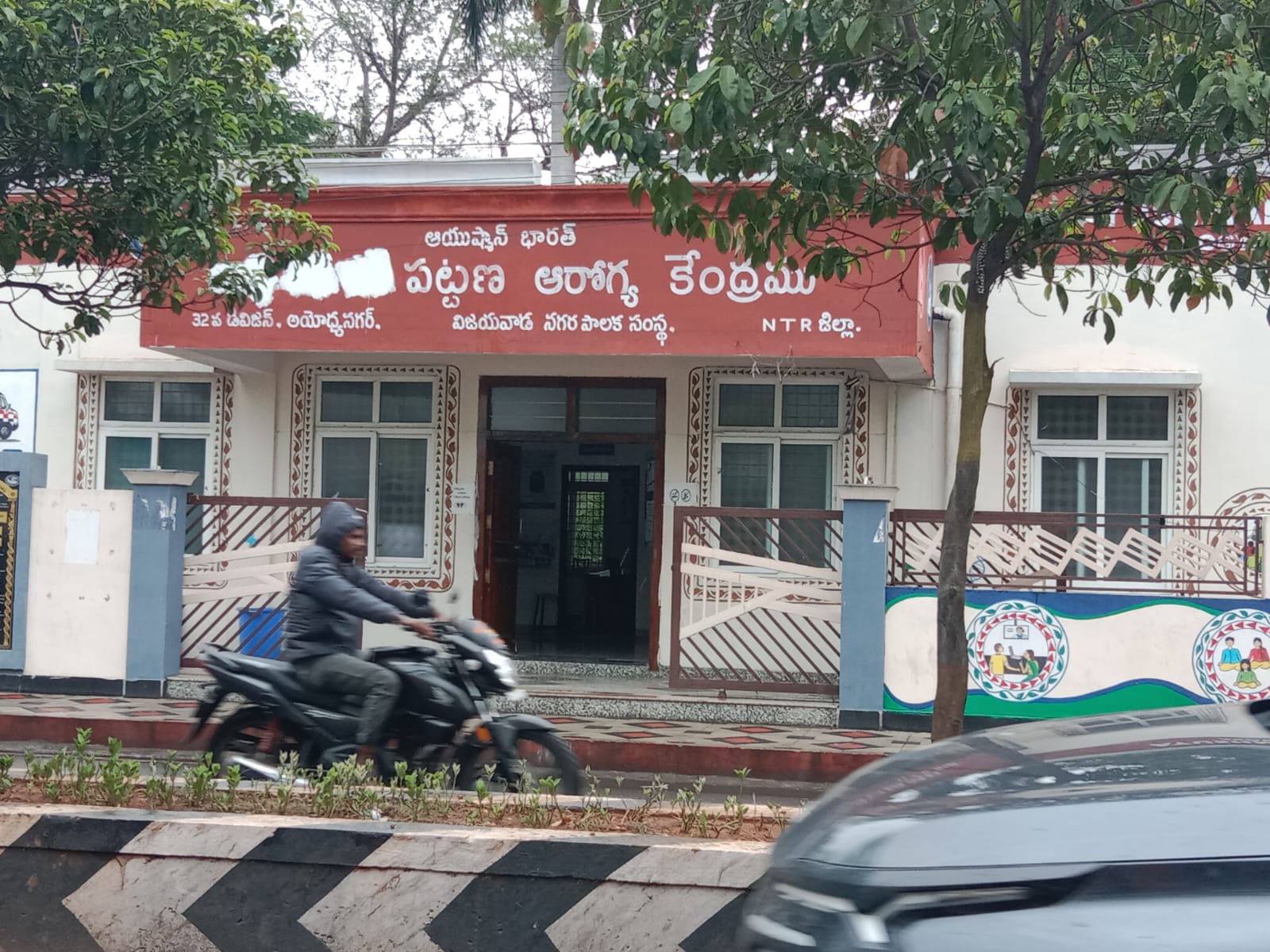
India’s health system is structurally fragmented. Public hospitals run separate Hospital Management Information Systems. Private hospitals use proprietary EHR vendors. Diagnostic labs, pharmacies, insurers and government welfare schemes operate in their own data silos. A patient who moves between districts or between public and private systems carries paper records or memory. Continuity of care, longitudinal records and meaningful population health analytics are nearly impossible.
The National Health Policy 2017 first identified the need for a national digital health architecture. The NITI Aayog National Health Stack discussion paper (2018) crystallised the design — a federated architecture, public digital goods, no centralised storage, consent-based data flow. After a two-year pilot called the National Digital Health Mission, the architecture was scaled to all states as the Ayushman Bharat Digital Mission in September 2021.
The Four Pillars
ABDM rests on four interoperable registries and exchanges:
- ABHA — the unique health ID for individuals
- Healthcare Professionals Registry (HPR) — the registry of doctors, nurses and allied professionals
- Health Facility Registry (HFR) — the registry of hospitals, clinics, labs and pharmacies
- Unified Health Interface (UHI) and Health Information Exchange and Consent Manager (HIE-CM) — the rails that move data
ABHA: The Ayushman Bharat Health Account
ABHA is a 14-digit unique health identification number that any resident can generate using Aadhaar or a mobile number through the ABHA app, the abha.abdm.gov.in portal or any participating health facility. ABHA is voluntary, free and portable across states and across the public–private divide. The number works as a permanent locator that links to electronic health records held by hospitals, labs and pharmacies the patient has authorised.
ABHA is not a database of patient records. Records remain with the originating facility (the hospital that ran the test owns the test report). ABHA stores only the patient’s identity, a registry of consent permissions, and pointers to where each record is held. When a patient consents through the ABHA app, the requesting doctor’s system fetches the record directly from the source facility through the HIE-CM consent manager.
This federated, consent-based design is deliberately Aadhaar-style infrastructure but UPI-style messaging — no central data lake.
Healthcare Professionals Registry
The Healthcare Professionals Registry is a national index of every authorised healthcare worker — modern medicine doctors, AYUSH practitioners, nurses, dentists, physiotherapists and allied professionals. Each professional gets a unique HPR ID linked to their council registration. HPR onboarding is mandatory for any professional who wants to issue ABDM-signed prescriptions, lab orders or discharge summaries. As of 2026 the HPR has more than 5 lakh enrolled professionals.
The HPR is the foundation for the National Telemedicine Service eSanjeevani, online consultation under UHI, and verification of provider credentials by insurers and patients.
Health Facility Registry
The Health Facility Registry indexes hospitals, clinics, labs, diagnostic centres and pharmacies — public and private — by a unique HFR ID. Facilities self-register at facility.abdm.gov.in and have their licences and infrastructure verified. The HFR is the source of truth for hospital empanelment, insurance claim verification, and listing on the Unified Health Interface for citizen-facing services.
Unified Health Interface
The Unified Health Interface is to digital health what UPI is to digital payments — an open protocol that lets any compliant front-end app (patient app) discover, book and pay any compliant back-end service (hospital, lab, pharmacy). UHI breaks the closed-loop logic of vendor apps that lock patients into a particular hospital network. A patient can use any participating UHI app to search for a dermatologist near them, book a slot at a teleconsultation provider, and consent to their ABHA records being shared with that provider.
UHI uses the same open Beckn protocol that powers ONDC for e-commerce, signalling a deliberate digital public infrastructure design.
EHR Standards and FHIR
Interoperability is built on the Fast Healthcare Interoperability Resources, abbreviated FHIR, an international standard maintained by HL7. India’s Electronic Health Records (EHR) Standards, first notified in 2013 and updated in 2016, are FHIR-aligned. Every ABDM-compliant facility must serialise discharge summaries, prescriptions, lab reports and diagnostic images as FHIR resources so that any other compliant system can parse them. SNOMED CT and LOINC are the standard terminologies for diagnoses and lab tests.
The Centre for Development of Advanced Computing maintains India’s national FHIR adaptation under the Ministry of Health.
Numbers: Where ABDM Stands Now
As of early 2026, the National Health Authority reports:
- Over 78 crore ABHA accounts generated
- More than 4 crore health records linked to ABHA
- Around 3.6 lakh Health Facility Registry entries
- Over 5 lakh Healthcare Professionals Registry entries
- More than 220 ABDM-integrated software products
- UHI live in over 20 states with teleconsultation, lab booking and pharmacy ordering
ABDM has also begun linkage with PM-JAY insurance, POSHAN Abhiyaan Anganwadi data and the Anaemia Mukt Bharat dashboard, signalling its evolution into a cross-scheme citizen health spine.
Privacy and Data Protection Concerns
ABDM is technically privacy-friendly by design — federated storage, consent-based flow, no central data lake — but operational and statutory gaps remain.
- The Digital Personal Data Protection Act, 2023 is the umbrella legislation, but health-specific rules under DPDP have not yet been notified.
- The Health Data Management Policy issued by NHA is a self-regulatory document, not binding statute.
- Consent flows on the ABHA app are complex; user understanding of granular permissions is limited.
- Cyber security incidents at AIIMS Delhi and other hospitals in 2022–23 exposed weak endpoint security at the facility level — even a federated architecture is only as secure as its weakest registered hospital.
- Aadhaar linkage for ABHA generation raises questions about exclusion of those without Aadhaar.
- The use of health data for analytics, insurance pricing or commercial research without granular consent has triggered debates in Parliament’s Health Standing Committee.
- The Supreme Court Puttaswamy verdict on privacy as a fundamental right under Article 21 puts the burden of proportionality squarely on government when designing health data systems.
Comparison With Other Digital Public Infrastructure
ABDM completes the India Stack triangle of identity (Aadhaar), payments (UPI) and now health. Like UPI, it is an open protocol; like Aadhaar, it issues a unique citizen identifier; unlike either, it is voluntary and consent-mediated at the record level. The architecture has drawn international interest, with WHO recognising ABDM under its Global Digital Health Strategy and Estonia, Indonesia and the African Union signing technical exchanges.
Challenges Before ABDM
- Voluntary adoption: facilities in tier-2 and tier-3 towns lack the technical and financial capacity to integrate
- EHR vendor lock-in: many private hospitals use legacy systems that cannot serialise to FHIR
- Digital divide: smartphone access and digital literacy gaps among elderly, rural and migrant populations
- Linkage paradox: the policy is voluntary but PM-JAY claim, OPD registration and PMJDY-style nudges effectively make ABHA quasi-mandatory
- Statutory ambiguity until DPDP health rules are notified
- Cyber security maturity uneven across registered facilities
- Implementation costs: states need NHA-funded ABDM micro-sites and trained personnel
Way Forward
- Notify health-specific rules under the DPDP Act, 2023
- Mandate FHIR compliance for any facility taking PM-JAY claims
- Tie ABDM compliance to NABH accreditation and CGHS empanelment
- Build a national health data security operations centre under CERT-In
- Strengthen consent UX so granular permissions are intelligible to lay users
- Expand UHI to bridge the public sector — eSanjeevani, Co-WIN style population health
- Use ABDM as the rails for One Health surveillance, drawing on our one health approach explainer
Conclusion
Ayushman Bharat Digital Mission is the most ambitious public digital infrastructure for health any large democracy has attempted. The architecture, federated and consent-based, is technically state-of-the-art; the scale, 78 crore ABHAs in four years, is unmatched. The unfinished agenda is statutory — privacy rules, cyber-security floor and consent-UX hardening — and political — ensuring voluntariness in practice, not just in policy. For UPSC, the Ayushman Bharat Digital Mission is the textbook case of an open-protocol governance mission whose success will be judged by what it does for the most vulnerable patient, not its enrolment numbers.
Frequently Asked Questions
What is Ayushman Bharat Digital Mission?
Ayushman Bharat Digital Mission is India’s national digital health infrastructure launched on 27 September 2021. It creates a unique health ID (ABHA), professional and facility registries, and consent-based data exchange using FHIR standards.
What is ABHA ID?
ABHA, the Ayushman Bharat Health Account, is a 14-digit unique health identification number that links a person’s health records across facilities. It is voluntary, free and generated via Aadhaar or mobile number.
What is the difference between ABHA and PM-JAY?
PM-JAY (Pradhan Mantri Jan Arogya Yojana) is the health insurance scheme covering 12 crore vulnerable families. ABHA is the digital identity for health records. Both are administered by the National Health Authority.
What is the Healthcare Professionals Registry?
The HPR is the national registry of every authorised doctor, nurse, AYUSH practitioner and allied professional in India, each with a unique HPR ID linked to their council registration.
What is the Unified Health Interface?
UHI is an open protocol — like UPI for payments — that lets any compliant front-end app discover, book and pay for health services from any compliant provider.
What are FHIR standards?
Fast Healthcare Interoperability Resources is an international HL7 standard for serialising health records (prescriptions, lab reports, discharge summaries) so they can be shared between systems. India’s EHR Standards 2016 are FHIR-aligned.
Is ABDM mandatory?
ABDM is voluntary by policy. However, PM-JAY claims, OPD digital registration and several state health schemes effectively make ABHA a default identifier, raising debates on quasi-mandatory adoption.
What are the privacy concerns around ABDM?
The Digital Personal Data Protection Act 2023 is in force but health-specific rules are not yet notified. The Health Data Management Policy is self-regulatory, consent UX is complex, and facility-level cyber security after the AIIMS Delhi 2022 breach remains uneven.