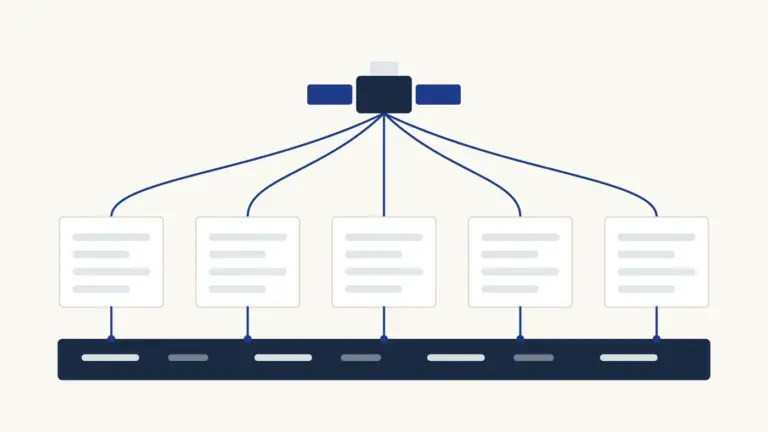
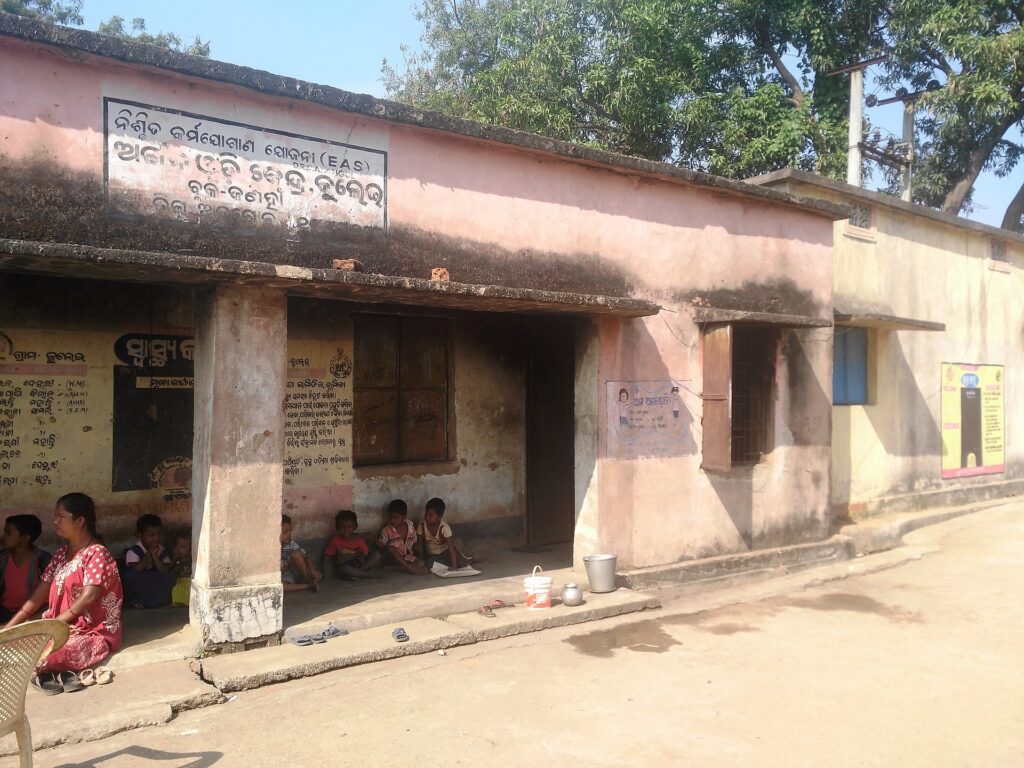
POSHAN Abhiyaan, formally the Prime Minister’s Overarching Scheme for Holistic Nourishment, is India’s flagship nutrition mission, launched on 8 March 2018 from Jhunjhunu, Rajasthan, to reduce stunting, undernutrition, anaemia and low birth weight among children, adolescent girls and pregnant and lactating women. The mission rides on the existing Integrated Child Development Services (ICDS) network of roughly 14 lakh Anganwadi centres and stitches together the Pradhan Mantri Matru Vandana Yojana, the Scheme for Adolescent Girls and various state nutrition schemes through a common technology platform. POSHAN Abhiyaan is the lens through which UPSC examines India’s persistent nutrition deficit — even after decades of food subsidy and ICDS, the National Family Health Survey 5 (NFHS-5, 2019–21) reported 35.5 percent stunting in under-fives and 57 percent anaemia in women aged 15–49.
For a UPSC aspirant, POSHAN Abhiyaan sits at the intersection of GS-II welfare schemes for vulnerable groups, GS-III food security, and the Social Justice optional. It also surfaces in essay and ethics through the linked themes of malnutrition, the first 1,000 days of life, and gender. The 2025 Union Budget continued the umbrella allocation under Saksham Anganwadi and POSHAN 2.0, reinforcing the mission’s permanence.
Background: Why POSHAN Abhiyaan Was Launched
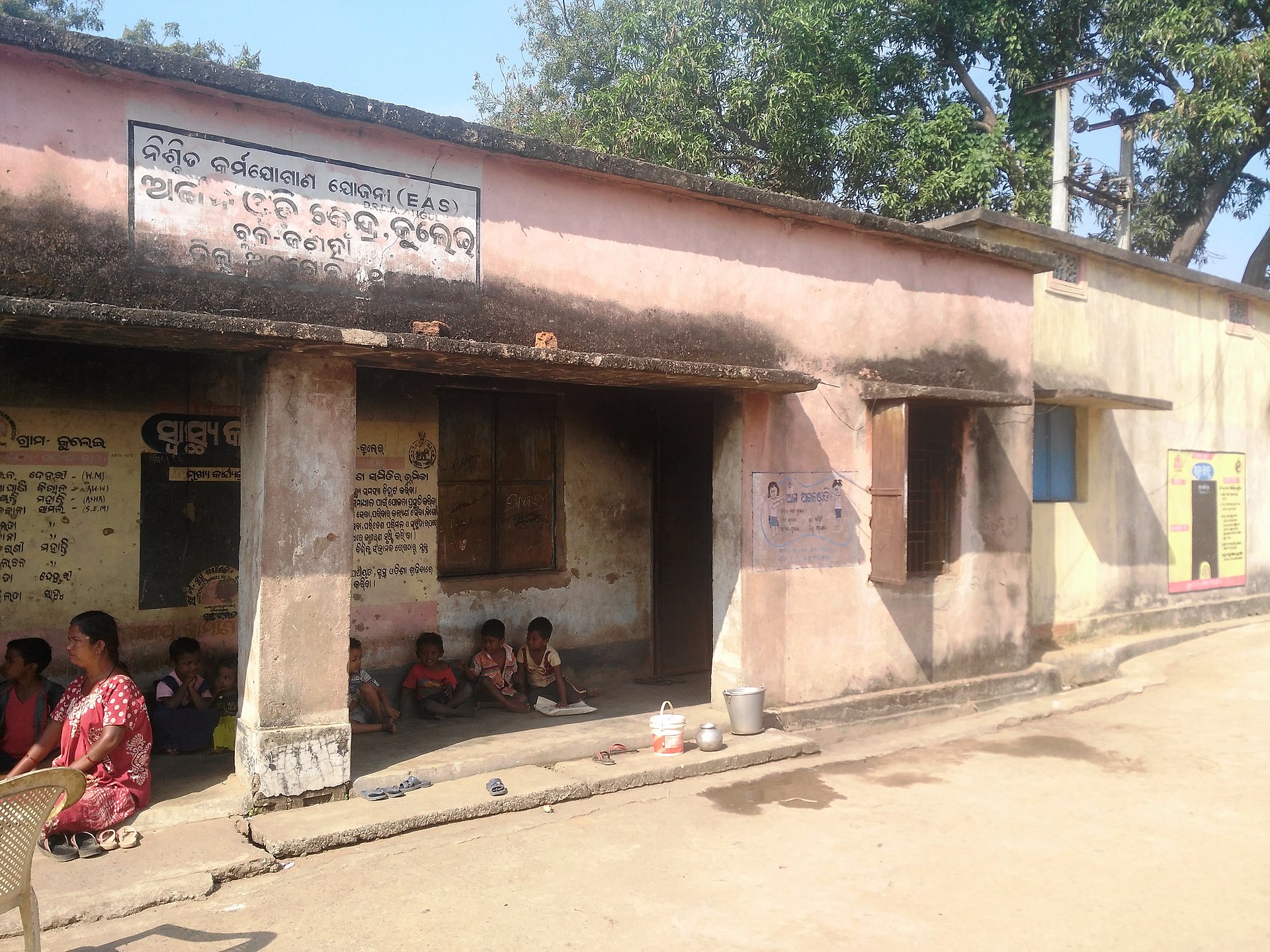
India’s nutrition story is one of paradox — record foodgrain stocks and a Public Distribution System covering 80 crore people exist alongside one of the world’s largest populations of stunted children. The NITI Aayog National Nutrition Strategy of 2017 argued that fragmented schemes, irregular monitoring and weak last-mile convergence were the binding constraints, not lack of food. POSHAN Abhiyaan was the government’s response.
The four headline targets set in 2018 were ambitious but precise:
- reduce stunting in children (0–6 years) by 2 percentage points per year
- reduce undernutrition (underweight) by 2 percentage points per year
- reduce anaemia among young children, adolescent girls and women by 3 percentage points per year
- reduce low birth weight by 2 percentage points per year
By 2022, the mission was supposed to bring stunting from the NFHS-4 baseline of 38.4 percent down to 25 percent — a goal partly slipping because of pandemic disruption, but still the benchmark against which all subsequent surveys are read.
The Malnutrition Backdrop
The malnutrition burden is multi-dimensional — stunting (chronic), wasting (acute), underweight, anaemia and hidden hunger (micronutrient deficiency). India’s challenge cuts across all five. See our malnutrition, undernutrition, overnutrition and micronutrient deficiency explainer for the typology.
Structure: How POSHAN Abhiyaan Works
POSHAN Abhiyaan is not a new welfare scheme. It is a convergence mission — a coordination layer that sits on top of existing programmes and pushes them toward measurable nutrition outcomes.
Convergence: ICDS, PMMVY and Adolescent Girls
The first pillar is convergence. The Anganwadi network under ICDS delivers supplementary nutrition, pre-school education, immunisation and growth monitoring. The Pradhan Mantri Matru Vandana Yojana (PMMVY) transfers ₹5,000 to pregnant women for the first live birth (₹6,000 for the second girl child after the 2022 revision). The Scheme for Adolescent Girls (SAG) covers out-of-school girls aged 11–14. Earlier each programme had its own register, format and reporting line. POSHAN Abhiyaan binds them into one beneficiary-level workflow visible to the Anganwadi worker and to the district magistrate.
Technology: Poshan Tracker
The second pillar is the Poshan Tracker, a mobile and web application built by the National e-Governance Division. Every Anganwadi worker enters real-time data on attendance, take-home rations, growth monitoring (height, weight, MUAC) and home visits. The platform now hosts over 10 crore registered beneficiaries and 13.7 lakh Anganwadi centres, generating one of the largest live nutrition datasets anywhere. The Poshan Tracker also flags severely acute malnourished children for referral to Nutrition Rehabilitation Centres.
Behaviour Change and Jan Andolan
The third pillar is community mobilisation. Every September is observed as Rashtriya Poshan Maah, with state-wise activities on infant and young child feeding, anaemia, diarrhoea management and hygiene. The mission frames nutrition as a Jan Andolan — a people’s movement — to push it beyond a top-down delivery scheme.
POSHAN 2.0 and Saksham Anganwadi
In 2021 the government restructured POSHAN Abhiyaan, the Anganwadi Services Scheme and the Scheme for Adolescent Girls into a single integrated nutrition support programme called Mission POSHAN 2.0, anchored by Saksham Anganwadi.
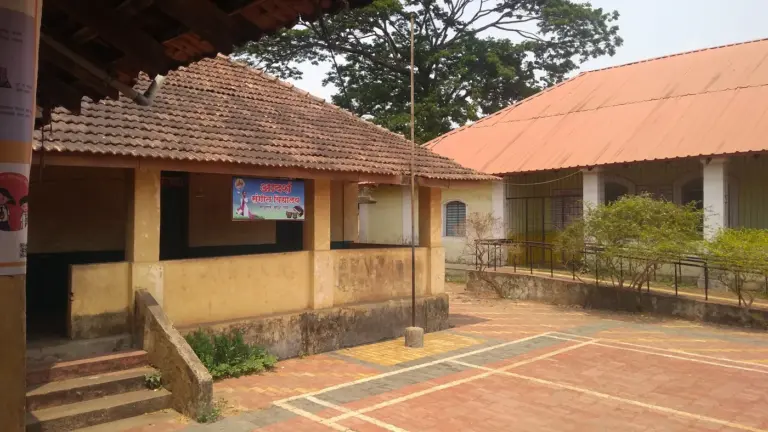
Saksham Anganwadi is the next-generation Anganwadi — upgraded infrastructure, LPG connection, water and toilet facilities, growth-monitoring devices, and early childhood care and education tools. Two lakh Anganwadis are being converted into Saksham Anganwadis with World Bank technical and financial support under the ICDS Systems Strengthening and Nutrition Improvement Project. POSHAN 2.0 also shifts emphasis from inputs (rations) to outcomes (anthropometric improvement), uses millets (Shree Anna) in supplementary nutrition, and integrates AYUSH practices on infant and maternal care.
POSHAN 2.0 Components
- Anganwadi services, including take-home ration and hot cooked meal
- Scheme for Adolescent Girls (out-of-school girls 14–18)
- POSHAN Abhiyaan strategy of convergence, technology and Jan Andolan
- Saksham Anganwadi infrastructure upgrade
Performance: What NFHS-5 Tells Us
The NFHS-5 round (2019–21) is the first nationwide data published after POSHAN Abhiyaan was launched. The picture is mixed.
- Stunting in under-fives fell from 38.4 percent (NFHS-4, 2015–16) to 35.5 percent — about half the targeted pace
- Underweight prevalence fell from 35.8 percent to 32.1 percent
- Wasting was largely stagnant at 19.3 percent
- Anaemia in women aged 15–49 worsened, rising from 53 percent to 57 percent
- Anaemia in children 6–59 months worsened, rising from 58.6 percent to 67.1 percent
The anaemia regression triggered a parallel mission, Anaemia Mukt Bharat, which we cover in our Anaemia Mukt Bharat explainer.
States like Sikkim, Goa, Tamil Nadu and Kerala show stunting under 20 percent. Bihar, Jharkhand, UP, Meghalaya and Gujarat remain above 35 percent. The gap underlines that POSHAN Abhiyaan’s outcomes are heavily a function of state-level governance, female literacy, sanitation and reach of the Anganwadi network.
Challenges Before POSHAN Abhiyaan
POSHAN Abhiyaan’s design is sound; the constraints are operational and structural.
- Anganwadi worker vacancies — over 1.5 lakh AWW/AWH positions are reported vacant across states
- Honorarium and burnout — Anganwadi workers earn ₹4,500–₹10,000 a month and now also manage Poshan Tracker data entry
- Digital divide — Poshan Tracker depends on smartphones and stable connectivity, both patchy in tribal blocks
- Underutilisation of funds — CAG reports flagged that several states surrendered POSHAN Abhiyaan funds
- Data quality — anthropometric measurement errors can distort stunting and wasting estimates
- Convergence gap — health (immunisation), Jal Jeevan (water), Swachh Bharat (sanitation), education (Samagra Shiksha) and rural development still operate in silos at block level
- Anaemia regression — points to weak iron–folic acid supply chain and adolescent counselling
POSHAN Abhiyaan, Governance and Federalism
POSHAN Abhiyaan is centrally sponsored — 60:40 cost-share with states, 90:10 with the north-east and Himalayan states, 100 percent for Union Territories without legislatures. State Nutrition Missions and District Convergence Action Plans operationalise it.
The mission illustrates cooperative federalism: targets are set by the Centre, delivery is run by states, monitoring is shared through Poshan Tracker. It also illustrates the asymmetric capacity problem — states with weak Anganwadi networks and weaker public health systems struggle to absorb central funds.
POSHAN Abhiyaan in International Context
India is a signatory to the 2025 World Health Assembly Global Nutrition Targets and the UN Decade of Action on Nutrition (2016–2025). POSHAN Abhiyaan is India’s primary domestic instrument to meet Sustainable Development Goal 2 (Zero Hunger) and SDG 3 (Good Health), particularly target 2.2 on ending all forms of malnutrition.
The World Bank’s ICDS-SSNIP (US$ 200 million) co-finances Saksham Anganwadi infrastructure and capacity building in seven states. UNICEF and WFP provide technical support on supplementary nutrition formulation and behaviour change.
Way Forward
Independent reviews from NITI Aayog, the World Bank and the Standing Committee on Education, Women, Children, Youth and Sports converge on a similar prescription for POSHAN Abhiyaan:
- Fill Anganwadi worker vacancies and raise honorarium
- Strengthen IFA supply chain and Test–Treat–Talk under Anaemia Mukt Bharat
- Integrate POSHAN Tracker with Health Management Information System (HMIS) and Ayushman Bharat Health Account
- Move from take-home ration to fortified cereals and millets under POSHAN 2.0
- Use District Nutrition Plans, not state averages, as the unit of accountability
- Strengthen first 1,000-days counselling — antenatal, exclusive breastfeeding and complementary feeding
- Expand creches under Palna scheme for working mothers
Conclusion
POSHAN Abhiyaan represents India’s most ambitious attempt yet to convert a fragmented nutrition delivery system into a real-time, outcome-tracked, technology-enabled mission. The NFHS-5 data shows the journey is long — stunting is falling but slowly, and anaemia is moving in the wrong direction. For UPSC, POSHAN Abhiyaan is a textbook case of convergence governance: ambitious central design, uneven state execution, and a measurable outcome metric that doesn’t let either tier off the hook.
Frequently Asked Questions
What is POSHAN Abhiyaan?
POSHAN Abhiyaan is the Prime Minister’s Overarching Scheme for Holistic Nourishment, launched on 8 March 2018, to reduce stunting, undernutrition, anaemia and low birth weight in India through convergence of ICDS, PMMVY, adolescent girl programmes and a real-time tracking platform.
When was POSHAN Abhiyaan launched and by which ministry?
POSHAN Abhiyaan was launched on 8 March 2018 from Jhunjhunu, Rajasthan, by the Ministry of Women and Child Development.
What are the targets of POSHAN Abhiyaan?
The targets are 2 percentage point annual reduction in stunting and underweight, 3 percentage point annual reduction in anaemia, and 2 percentage point annual reduction in low birth weight.
What is the Poshan Tracker?
Poshan Tracker is the mobile and web application built by NeGD that captures real-time data from every Anganwadi centre on beneficiaries, growth monitoring, take-home ration and home visits.
What is POSHAN 2.0 and Saksham Anganwadi?
POSHAN 2.0 is the 2021 restructured mission that integrates POSHAN Abhiyaan, Anganwadi Services and the Scheme for Adolescent Girls. Saksham Anganwadi is the upgraded Anganwadi centre with improved infrastructure, supported by the World Bank.
What does NFHS-5 say about POSHAN Abhiyaan outcomes?
NFHS-5 (2019–21) shows stunting fell from 38.4 percent to 35.5 percent, underweight from 35.8 percent to 32.1 percent, but anaemia among women rose to 57 percent and among children to 67.1 percent.
How is POSHAN Abhiyaan funded?
It is a centrally sponsored scheme with 60:40 Centre–state cost share, 90:10 for north-east and Himalayan states, and 100 percent central funding for Union Territories without legislatures.
Why is POSHAN Abhiyaan called a Jan Andolan?
It is framed as a people’s movement because nutrition outcomes depend on household behaviour — exclusive breastfeeding, complementary feeding, sanitation, dietary diversity — which require community mobilisation, not just supply-side delivery.
Tell Google you want more of this.
Add Anantam IAS as a preferred sourceOne tap, and this site shows up more often in your own Top Stories, AI Overviews and AI Mode. Remove it any time.