Bal Gangadhar Tilak: Lokmanya, Lal-Bal-Pal and the Architect of Indian Extremism
Bal Gangadhar Tilak (1856-1920) was the first mass leader of the Indian freedom struggle. UPSC notes on his journalism (Kesari, Maratha), Ganesh and Shivaji festivals, the Home Rule League, the Lal-Bal-Pal trio and the Surat Split of 1907.
Bal Gangadhar Tilak (23 July 1856 – 1 August 1920) was the first leader of the Indian freedom movement to translate constitutional grievance into mass political action. The Maratha Brahmin schoolteacher-turned-journalist redefined what Indian nationalism could demand and how it could be mobilised, replacing the petition-and-prayer method of the Moderates with assertive Swadeshi, Swaraj and street politics. Valentine Chirol called him the “Father of Indian Unrest.” Mahatma Gandhi called him “the Maker of Modern India.” For the colonial state he was a seditionist tried thrice. For ordinary Indians, especially in Maharashtra, he was simply Lokmanya — “accepted by the people as their leader.”
Bal Gangadhar Tilak’s career spans the decisive shift in Congress politics between 1885 and 1920: the rise of Extremism, the Partition of Bengal, the Swadeshi movement, the Surat Split, the Home Rule League and the Lucknow Pact. Together with Lala Lajpat Rai and Bipin Chandra Pal he formed the Lal-Bal-Pal trinity that gave Indian nationalism its first all-India militancy. His slogan — “Swaraj is my birthright and I shall have it” — became the moral charter of the movement.
Early Life and Education
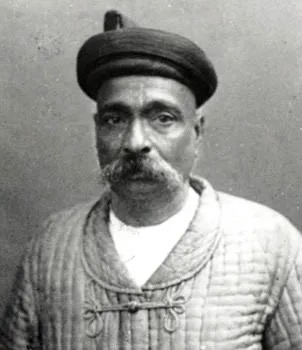
Born at Ratnagiri on the Konkan coast on 23 July 1856, Keshav Gangadhar Tilak (later called Bal) was the son of a Sanskrit scholar and schoolteacher. His Chitpavan Brahmin family migrated to Pune when he was ten. He graduated from Deccan College in 1877 with a first-class degree in mathematics and Sanskrit, and earned an LL.B. from Government Law College, Bombay, in 1879.
Tilak refused colonial employment. With his college friend Gopal Ganesh Agarkar and the educationist Vishnushastri Chiplunkar he founded the New English School (1880), the Deccan Education Society (1884) and Fergusson College (1885) — institutions designed to give Maharashtrian youth a nationalist education at one-third the cost of government colleges.
Journalism: Kesari and Maratha
In January 1881 Tilak launched two newspapers in tandem — Mahratta in English and Kesari (The Lion) in Marathi. Kesari became the most-read Marathi paper of its era and Tilak’s principal weapon. Through editorials he attacked the Age of Consent Bill (1891), the Famine Codes, plague administration in Pune (1897) and, increasingly, the Congress Moderates themselves.
Two Kesari articles in 1897 — on the assassination of plague officer W.C. Rand — led to his first sedition trial. He was convicted under Section 124A IPC and sentenced to eighteen months’ rigorous imprisonment. The trial established his all-India reputation. A second sedition case in 1908, over Kesari editorials defending the Bengali revolutionaries Khudiram Bose and Prafulla Chaki, sent him to Mandalay prison in Burma for six years (1908-1914).
Ganesh and Shivaji Festivals
Tilak’s most original contribution to mass mobilisation was the conversion of two private religious customs into public political festivals.
Sarvajanik Ganeshotsav (1893)
The household worship of Ganesh was transformed in 1893 into a ten-day public festival, complete with processions, melas, kirtans, lectures and political tableaux. Pandals carried images that mocked the Raj and lionised national heroes. The festival created a calendar of nationalist assembly that the British could not legally proscribe because it was nominally religious.
Shiv Jayanti (1895)
In 1895 Tilak launched Shivaji Jayanti at Raigad fort, the seat of the seventeenth-century Maratha king. Shivaji’s coronation was reframed as a precedent of indigenous sovereignty. The festival rebuilt regional pride and provided a vocabulary of swarajya — “self-rule” — that pre-dated and outlived any colonial constitutional reform.
These festivals were the prototype for every later technique of public mobilisation in Indian politics, from the Swadeshi processions of 1905 to Gandhi’s salt march of 1930.
The Surat Split of 1907
Inside the Indian National Congress, Tilak led the Extremists against the Moderates led by Gopal Krishna Gokhale, Pherozeshah Mehta and Dadabhai Naoroji. Three issues divided them: the goal (self-government within the Empire versus complete Swaraj), the method (constitutional petitioning versus boycott and passive resistance) and the post-Bengal-partition programme.
The clash erupted at the Surat session of December 1907. The Moderates wanted to dilute the 1906 Calcutta resolutions on Swaraj, Swadeshi, Boycott and National Education. Tilak insisted these be reaffirmed. Chairs and shoes flew across the pandal. The Congress split. It would not reunite until 1916.
Mandalay and the Gita Rahasya
Convicted of sedition in July 1908, Tilak was deported to Mandalay jail in Burma. He spent six years there. With a pencil and a few books he composed Shrimad Bhagavad Gita Rahasya — a 700-page philosophical treatise arguing that the Gita preached karma-yoga (the path of energetic action) rather than the renunciatory bhakti or jnana paths. The book, published in 1915, became the philosophical scripture of Indian extremism: action in the world, performed without selfish attachment, is the highest dharma.
His other major scholarly works include The Orion: Researches into the Antiquity of the Vedas (1893) and The Arctic Home in the Vedas (1903), both arguing for an early origin of Vedic civilisation.
Home Rule League (1916)
Released in June 1914, Tilak rejoined the Congress at its Lucknow session in 1916. With Annie Besant he launched the parallel Home Rule Leagues — Besant’s All-India Home Rule League at Madras (September 1916) and Tilak’s Indian Home Rule League at Pune (April 1916). Tilak’s league concentrated on Maharashtra, Karnataka, Central Provinces and Berar; Besant’s covered the rest of India.
The leagues demanded home rule on the model of the white Dominions. They functioned as full-time political organisations between Congress sessions, opened district offices, sold one-anna membership tickets and pressed the demand through pamphlets, public meetings and press campaigns. Within two years they had recruited over 60,000 members and forced Edwin Montagu’s August 1917 declaration committing Britain to “progressive realisation of responsible government in India.”
The slogan that defined the campaign — and Tilak’s career — was first spoken at Belgaum on 1 May 1916: “Swaraj is my birthright, and I shall have it.”
Lal-Bal-Pal: The Extremist Trinity
The most famous nationalist trinity of the early twentieth century was Lala Lajpat Rai of Punjab, Bal Gangadhar Tilak of Maharashtra and Bipin Chandra Pal of Bengal. The three were the principal advocates of Swadeshi, Boycott and Swaraj during the agitation against the Partition of Bengal (1905). They were not a formal organisation. They were a political brand — three provincial leaders speaking in unison across the country, each a master orator in his own language, each willing to court arrest.
Bal Gangadhar Tilak’s role in the trio was the strategic centre. He was the older man, the journalist, the philosopher of the movement. Lajpat Rai was the organiser and pamphleteer. Pal was the conscience and the orator-philosopher. Together they refashioned the Congress between 1905 and 1907.
Lucknow Pact and Final Years
At the Lucknow session of December 1916 Tilak presided over the reunification of the Congress with the Moderates and signed the Lucknow Pact with Mohammad Ali Jinnah and the Muslim League. The Pact accepted separate electorates for Muslims in exchange for a joint demand for self-government — an unprecedented Hindu-Muslim political compact.
In 1918-19 Tilak travelled to England to argue the Indian case before the Joint Select Committee on the Government of India Bill and to file a libel suit against Valentine Chirol (which he lost). He returned in November 1919.
He died on 1 August 1920 in Bombay, on the very day Gandhi launched the Non-Cooperation Movement. Gandhi noted the symbolic transfer of leadership. Tilak’s death closed the era of the extremist constitutional agitation; the Gandhian era of mass civil disobedience that followed — including the Chauri Chaura incident of 1922 — built on the foundations he had laid.
Tilak’s Legacy for UPSC
Three contributions matter for Mains GS-I and the optional papers.
First, the transformation of method. Tilak shifted Congress politics from elite memorialism to mass mobilisation, opening the path that Gandhi would later widen.
Second, the institutionalisation of nationalism. Through festivals, schools, newspapers and the Home Rule League, Bal Gangadhar Tilak built the infrastructure of a national public sphere that did not depend on colonial sufferance.
Third, the formulation of Swaraj as a right, not a gift. The 1916 Belgaum declaration — Swaraj is my birthright — moved Indian nationalism from supplication to entitlement. Every subsequent demand, from the Nehru Report of 1928 to the Purna Swaraj resolution of 1929, was a footnote to that sentence.
Frequently Asked Questions
Who was Bal Gangadhar Tilak?
Bal Gangadhar Tilak (1856-1920) was an Indian nationalist leader, journalist and Sanskrit scholar from Maharashtra. He was the senior member of the Lal-Bal-Pal trio, founder of the Indian Home Rule League (1916) and editor of Kesari and Mahratta. He is popularly called Lokmanya — u0022accepted by the people as their leader.u0022
Why is Tilak called Lokmanya?
The title Lokmanya was conferred by the people of India after his 1897 sedition trial, when his defiance of the colonial state during the Pune plague administration won him mass support. It means u0022one whom the people accept as their leaderu0022 and was used in preference to any official or aristocratic title.
What was Tilak’s famous slogan?
Tilak’s most famous slogan is u0022Swaraj is my birthright, and I shall have it,u0022 delivered at Belgaum on 1 May 1916 during the Home Rule League campaign. It marked the conceptual turning point in Indian nationalism from petition to claim of right.
What were the Ganesh and Shivaji festivals started by Tilak?
In 1893 Tilak converted the private worship of Ganesh into the ten-day public Sarvajanik Ganeshotsav. In 1895 he started Shiv Jayanti at Raigad to commemorate the Maratha king Shivaji. Both festivals were vehicles of mass political mobilisation under the legal cover of religious observance.
What was the Home Rule League?
The Home Rule League was a political organisation that demanded self-government for India on the Dominion model. Tilak founded the Indian Home Rule League at Pune in April 1916; Annie Besant launched the parallel All-India Home Rule League at Madras in September 1916. Together they enrolled over 60,000 members and forced the Montagu Declaration of August 1917.
Who were the Lal-Bal-Pal trio?
Lal-Bal-Pal refers to Lala Lajpat Rai of Punjab, Bal Gangadhar Tilak of Maharashtra and Bipin Chandra Pal of Bengal — the three Extremist leaders who led the Swadeshi and Boycott agitation against the Partition of Bengal in 1905-08. They were the first all-India militant nationalist leadership inside the Congress.
What was the Surat Split of 1907?
The Surat Split was the breakdown of the Indian National Congress session at Surat in December 1907 over differences between Moderates led by Gokhale and Extremists led by Tilak. The split froze the Congress for nine years until the reunification at Lucknow in 1916 under Tilak’s presidency.
When and where did Tilak die?
Bal Gangadhar Tilak died in Bombay on 1 August 1920 at the age of 64. His death coincided with the launch of Gandhi’s Non-Cooperation Movement and is conventionally treated as the end of the Extremist phase and the beginning of the Gandhian phase of the freedom struggle.