Daily Digest
UPSC · Civil Services Examination
Current Affairs · Friday, 10 October 2025
Current affairs curated and edited by Anantam IAS faculty — pulled from The Hindu, PIB, IDSA, Foreign Affairs and the ministries. Read, annotate, revise.
Old Rajinder Nagar · Delhi 110005 · anantamias.com
Surrogacy Regulation Act, 2021

Context:
Supreme Court has ruled that age bar under the surrogacy act , 2021 will not apply will not apply to those couple who had begun the process before the law came into force on January 25, 2022.
UPSC Relevance:
Important legislative developments; women as vulnerable sections.
About surrogacy:

- Surrogacy is an arrangement where a woman (the surrogate) carries and gives birth to a child for another individual or couple who are unable to conceive or carry a pregnancy of themselves.
Types:
- Traditional Surrogacy: Traditional surrogacy involves using the intended father’s sperm to fertilise the surrogate’s egg.
- The surrogate carries the pregnancy to term, and the resulting baby is biologically related to the surrogate mother and the intended father.
- Gestational Surrogacy: In gestational surrogacy, the baby is not biologically related to the surrogate.
- An embryo, created using the intended father’s sperm (or donor sperm) and the biological mother’s egg (or donor egg), is implanted into the surrogate’s uterus for her to carry to term.
Surrogacy Arrangements:
- Altruistic Surrogacy: It refers to a surrogacy arrangement where the surrogate does not receive financial compensation beyond reimbursement for medical expenses and other related costs.
- In altruistic surrogacy, the surrogate’s primary motivation is typically to help another individual or couple achieve their dream of having a child.
- Commercial Surrogacy: It involves a contractual agreement where the surrogate mother receives financial compensation beyond just reimbursement for medical expenses and other costs associated with the pregnancy.
- This compensation may vary depending on factors such as location, legal regulations, and the specific terms of the surrogacy agreement.
Surrogacy Regulation Act, 2021: Key Provisions
- The Act prohibits commercial surrogacy and allows altruistic surrogacy.
- The Act permits surrogacy when it is:
- For intending couples who suffer from proven infertility;
- Altruistic;
- Not for commercial purposes;
- Not for producing children for sale, prostitution or other forms of exploitation; and
- For any other condition or disease specified through regulations.
- The Act also permits Indian widows, divorcees, and married couples of Indian origin living abroad to become parents through altruistic surrogacy (this provision was amended in March 2023).
- People who are not allowed to use the services of surrogacy are:
- Couples with one child,
- Foreign nationals,
- In-residence partners or people in “live-in relationships”,
- Single men and women,
- Gay and lesbian couples, and
- Widowers
Eligibility Criteria for Surrogate Mother
- To obtain a certificate from the appropriate authority, the surrogate mother has to:
- be a close relative of the intending couple;
- be an ever-married woman having a child of her own;
- Be 25 to 35 years old;
- Not have been a surrogate mother earlier; and
- Have a certificate of medical and psychological fitness.
- A surrogate is prohibited from providing her own gametes for surrogacy by the Act.
- A surrogate must not receive any compensation for carrying the child in her womb other than the necessary insurance and medical costs.
Registration of Surrogacy Clinics
- Surrogacy clinics cannot undertake surrogacy or its related procedures unless the appropriate authority grants them registration.
National and State Surrogacy Boards
- The central and state governments shall constitute the National Surrogacy Board (NSB) and the State Surrogacy Boards (SSBs), respectively.
Functions of the NSB
- Advising the central government on policy matters relating to surrogacy.
- Laying down the code of conduct of surrogacy clinics.
- Supervising the functioning of SSBs.
Offences & Penalties
- The Act creates certain offences, which include:
- Undertaking or advertising commercial surrogacy;
- Exploiting the surrogate mother;
- Selling or importing human embryos or gametes for surrogacy, and
- Abandoning, exploiting or disowning a surrogate child.
- These offences will attract a penalty of up to 10 years and a fine of up to 10 lakh rupees.
Parental Status upon Birth
- Upon birth, the child is legally recognised as the biological child of the intended couple.
- The surrogate mother will have an option to withdraw from surrogacy before the embryo is implanted in her womb.
- Abortion of the foetus requires consent from both the surrogate mother and the relevant authorities, following the provisions of the Medical Termination of Pregnancy Act.
Key Issues:
- Lack of Comprehensive Regulations: Concerns about lack of legal protection for both parties involved, and potential loopholes.
- Exploitation of Surrogates: Concerns arose about their health or whether they were adequately compensated for their basic health needs.
- Commercialization: The commercialization of surrogacy raised ethical questions about treating childbirth as a transactional service.
- It brought up concerns about the commodification of women’s bodies and whether financial motives were overriding ethical considerations.
- Lack of Legal Clarity: Ambiguity in laws regarding parentage, citizenship, and rights of the child born through surrogacy created uncertainties for intended parents, surrogates, and the children.
- The absence of clear laws makes it challenging to address disputes or protect the rights of all parties.
- Foreigners and Surrogacy Tourism: India was previously a popular destination for foreigners seeking surrogacy due to its comparatively affordable services. However, concerns emerged about the exploitation of Indian surrogates and issues related to citizenship and parentage for the children born to foreign parents.
Solutions:
- Regulate surrogacy agencies and ensure they adhere to ethical practices, including fair compensation, medical care, and support for surrogates.
- Ensure informed consent and comprehensive counselling for all parties involved, emphasizing the emotional, physical, and legal implications of surrogacy.
- Encourage altruistic surrogacy where surrogates are motivated by a desire to help others rather than financial gain.
- Provide comprehensive healthcare and support services for surrogates throughout the pregnancy and postpartum period.
- Establish clear laws regarding parental rights, citizenship, and responsibilities from the outset of the surrogacy arrangement to avoid legal ambiguities.
- Establish regulatory bodies or agencies to monitor and oversee surrogacy arrangements, ensuring compliance with established laws and ethical guidelines.
- Alternative options: Promote and support other family-building options such as adoption, fostering, or alternative assisted reproductive technologies for individuals or couples unable to conceive.
Source: https://anantamias.com/current-affairs/surrogacy-regulation-act-2021/
India UK Free Trade Agreement

Context:
The recent visit by UK Prime Minister to India has brought to forefront the discussions on benefits and challenges of recently signed free trade agreement between India and UK.
UPSC Relevance:
Bilateral relations and agreements.
PYQ:
Prelims
Q. Consider the following countries:
- Australia
- Canada
- China
- India
- Japan
- USA
Which of the above are among the ‘free-trade partners’ of ASEAN?
Options:
(a) 1, 2, 4 and 5
(b) 3, 4, 5 and 6
(c) 1, 3, 4 and 5
(d) 2, 3, 4 and 6
Mains
Q. Critically evaluate the impact of Free Trade Agreements on India’s trade balance and industrial competitiveness. (2019)
Background:
- India UK Free Trade Agreement (FTA), also called the India UK Comprehensive Economic and Trade Agreement (CETA), was aimed at boosting economic ties between India and the United Kingdom post-Brexit, and was built on the Enhanced Trade Partnership (ETP) initiative launched in 2021.
- Brexit Strategy: The UK’s 2020 exit from the European Union became a major catalyst, motivating both Britain and India to pursue a comprehensive free trade agreement to enhance bilateral trade and economic cooperation.
- Formal Negotiations Begin: Official India-UK FTA talks began in January 2022. The first round was held virtually, and subsequent rounds alternated between New Delhi and London. Negotiations proceeded in roughly 14 rounds over the next three years.
- Finalisation and Signing: The India UK FTA agreement was formally concluded on 6 May 2025, marking the resolution of most sticking points. It was later signed on 24 July 2025 during the Indian Prime Minister’s visit to the UK.
India UK Free Trade Agreement Objectives:
- India–UK Free Trade Agreement (FTA) aims to unlock untapped trade potential by reducing barriers and boosting services and digital trade. It also focuses on enhancing intellectual property protections and strengthening people-to-people ties and technology cooperation to support sustainable and inclusive economic growth.
India UK Free Trade Agreement Features:
- India UK Free Trade Agreement (FTA) seeks to double bilateral trade to USD 120 billion by 2030. It aims to expand trade and build a long-term strategic India–UK partnership (Vision 2035).
- Aim: The Bilateral trade between India and the UK is expected to grow by approximately £25.5 billion annually by 2040, with the UK economy potentially gaining £4.8 billion each year.
- India’s Commitment: India will lower tariffs on approximately 90% of UK exports, with most becoming tariff-free over the next ten years. Significant reductions include cutting duties on whisky and gin from 150% to 40%, and lowering tariffs on UK cars from over 100% to 10%, within quota limits.
- UK’s commitment: Elimination of duties on about 99% of Indian exports, including textiles, leather, engineering goods, marine products, gems & jewellery.
- Services & Professional Mobility: The FTA introduces a Double Contribution Convention, which exempts professionals on short-term assignments from dual social security contributions, thereby reducing costs and facilitating mobility.
- Government Procurement: UK companies will gain access to India’s government procurement markets in areas like transport, healthcare, and energy, under specific regulatory frameworks.
- Trade Facilitation and Customs: Both countries commit to simplified and transparent customs procedures, electronic documentation, harmonised sanitary standards, and faster customs clearance. Special support will be provided to small and medium enterprises (SMEs).
- Simplified Rules of Origin: The agreement allows exporters to self-certify the origin of their products, reducing paperwork and speeding up trade. UK importers can rely on exporters’ declarations, further easing procedures.
- For shipments under £1,000, origin documents are not required, supporting e-commerce and small businesses.
- Product Specific Rules of Origin (PSRs) align with India’s supply chains in sectors like textiles, machinery, pharmaceuticals, and processed foods.
- Strategic Framework: A new partnership framework, India–UK Vision 2035, replaces the earlier India–UK Roadmap 2030, setting out shared economic, technological, and diplomatic goals.
- Pending and Excluded Issues: Certain sensitive areas remain unresolved, including:
- India’s restrictions on foreign legal services.
- Limited visa quota changes affecting professional mobility.
- The UK’s Carbon Border Adjustment Mechanism (CBAM) could raise costs for Indian exports.
India UK FTA Benefits:
- India UK FTA strengthens trade and economic ties by removing most tariffs. It helps create jobs, attract investments, support industries, improve professional mobility, and foster cooperation in sustainability and innovation, further deepening India UK relations.
- Boost to Bilateral Trade: India-UK Comprehensive Economic and Trade Agreement (CETA) removes tariffs on nearly all goods and services, unlocking significant trade opportunities. Bilateral trade is projected to increase by around £25–26 billion annually by 2040.
- Key sectors benefiting from this growth include textiles, engineering goods, gems and jewellery, IT services, and pharmaceuticals, enhancing India’s export potential and diversifying UK imports.
- Economic Growth: The agreement is expected to contribute an additional £4.8 billion annually to the UK’s Gross Domestic Product (GDP) and boost India’s export revenues.
- Expansion in labour-intensive sectors such as textiles and leather will create employment opportunities in India. While the UK’s advanced manufacturing and clean energy sectors will also benefit.
- Market Access Expansion: Indian goods and services will gain improved access to the UK market, while UK businesses will benefit from rising demand in India.
- Investment and Sustainability Growth: The FTA is expected to boost foreign direct investment (FDI) in sectors such as manufacturing, digital technology, renewable energy, and sustainable infrastructure.
- It also promotes joint initiatives in green hydrogen and clean energy, supporting both countries’ commitments under the Paris Agreement.
- Geopolitical Significance: The agreement reinforces the India–UK Strategic Partnership established in 2021 and strengthens India’s role in regional trade networks and global supply chains. It promotes industrial growth, innovation, and technological collaboration between the two nations.
India UK Free Trade Agreement Challenges:
- India UK Free Trade Agreement (FTA) offers major opportunities but faces several challenges. Indian exporters may face cost and market access challenges; at the same time, visa restrictions and investment uncertainties may hinder the FTA’s full benefits.
- Carbon Costs: The UK’s planned CBAM, set to be implemented from January 2027, is not addressed within the India UK FTA.
- Indian exports, particularly in carbon-intensive sectors like steel and aluminium, could face additional costs when entering the UK market.
- Investment Uncertainty: The FTA does not include a Bilateral Investment Treaty (BIT) or an investor-state dispute settlement mechanism. This absence may create uncertainties for investors and could potentially deter foreign direct investment (FDI) into India.
- Non-Tariff Barriers (NTBs): Despite tariff reductions, Indian products may still encounter non-tariff barriers such as stringent safety, environmental, and intellectual property standards in the UK, which could hinder market access.
- Professional Mobility Constraints: While the FTA includes provisions for business mobility, these are limited to short-term, temporary business purposes. Indian professionals may still face challenges in securing long-term employment or residency in the UK.
India UK Free Trade Agreement Way Forward:
- India UK Free Trade Agreement (FTA) can be a boon to India by strengthening exporter capacity, especially for MSMEs and rural enterprises. Effective measures aligned with domestic incentives will ensure smooth implementation.
- Targeted Negotiations: India should set clear timelines and prioritise sectors that are ready and strategically important to ensure maximum benefits from the FTA.
- Protect Sensitive Sectors: Vulnerable areas like agriculture (dairy, processed foods) and industries such as plastics should be safeguarded through exclusion lists, tariff protections, or phased liberalisation.
- Support for MSMEs and Startups: Facilitation centres should be created to assist MSMEs, rural exporters, and startups with training, compliance support, and market access guidance.
- Gradual Tariff Reductions: Tariffs should be phased out over time to give domestic industries, especially labour-intensive sectors, the space to adapt to global competition.
- Alignment with Domestic Programs: Trade policies should be coordinated with initiatives like Production-Linked Incentive (PLI) to strengthen manufacturing and boost exports.
Source: https://anantamias.com/current-affairs/india-uk-free-trade-agreement/
Antibiotic Resistance
Context:
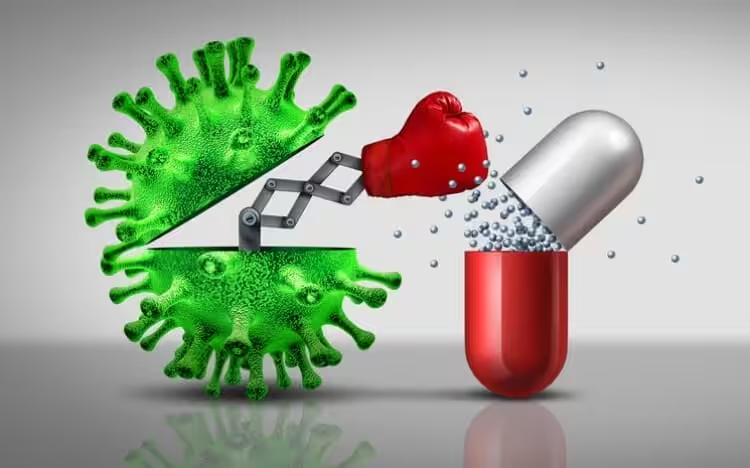
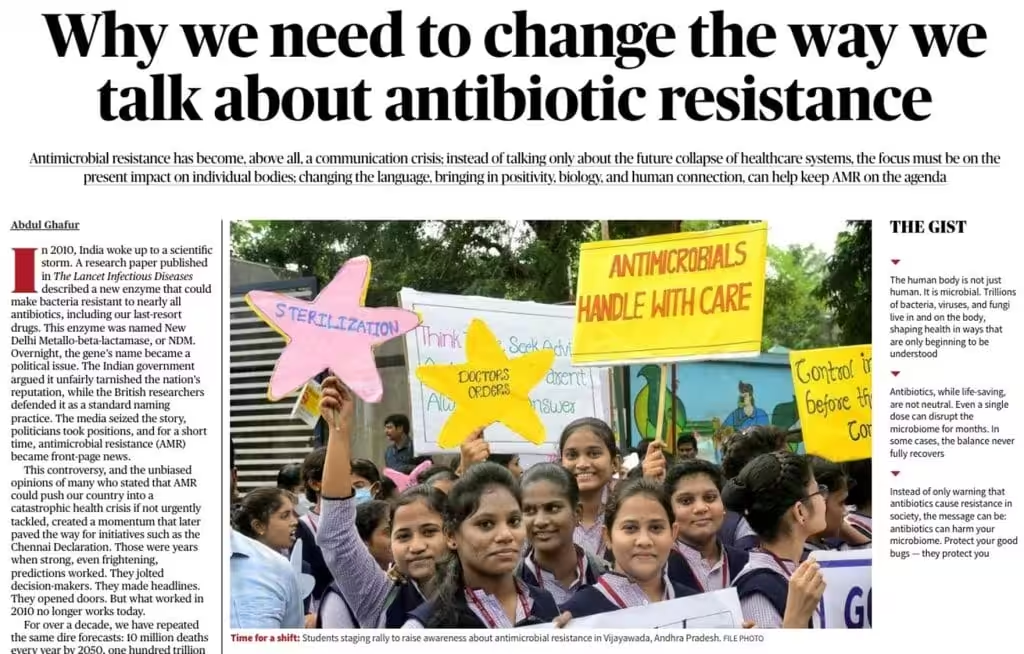
The article revisits the Antimicrobial Resistance (AMR) debate, first sparked in 2010 when the New Delhi Metallo-beta-lactamase (NDM) enzyme was discovered.
UPSC Relevance:
Disease (GS3- Science and Tech.)
UPSC PYQ:
Q. Which of the following are the reasons for the occurrence of multi-drug resistance in microbial pathogens in India? (2019)
- Genetic predisposition of some people
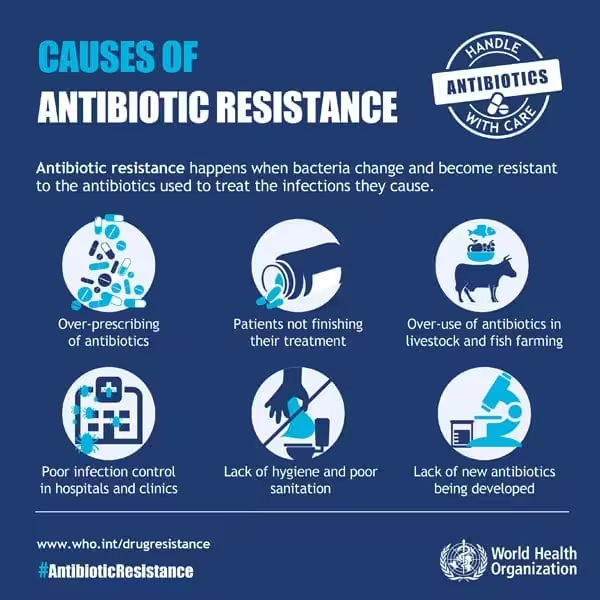
- Taking incorrect doses of antibiotics to cure diseases
- Using antibiotics in livestock farming
- Multiple chronic diseases in some people
Select the correct answer using the code given below.
(a) 1 and 2
(b) 2 and 3 only
(c) 1, 3 and 4
(d) 2, 3 and 4
Mains
Q. Can overuse and free availability of antibiotics without Doctor’s prescription, be contributors to the emergence of drug-resistant diseasesin India? What are the available mechanisms for monitoring and control? Critically discuss the various issues involved. (2014)
About Antimicrobial Resistance:

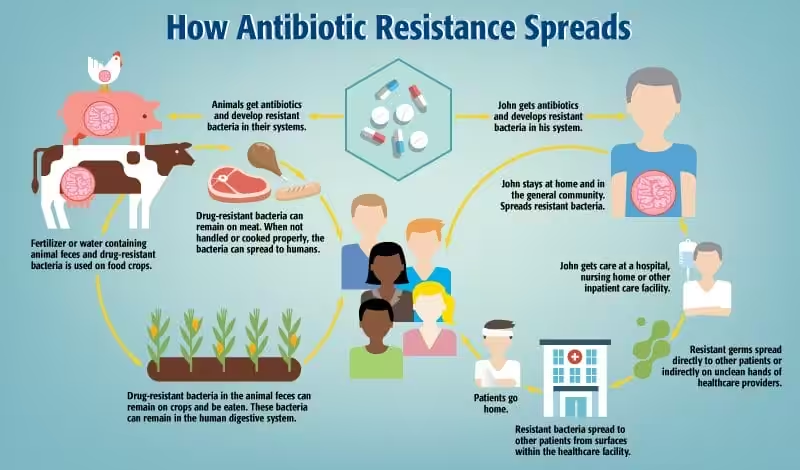
Antimicrobials – including antibiotics, antivirals, antifungals, and antiparasitics – are medicines used to prevent and treat infectious diseases in humans, animals and plants.
Antimicrobial Resistance (AMR) occurs when bacteria, viruses, fungi and parasites no longer respond to antimicrobial medicines. As a result of drug resistance, antibiotics and other antimicrobial medicines become ineffective and infections become difficult or impossible to treat, increasing the risk of disease spread, severe illness, disability and death.
Key facts:
- Antimicrobial resistance (AMR) is one of the top global public health and development threats. It is estimated that bacterial AMR was directly responsible for 1.27 million global deaths in 2019 and contributed to 4.95 million deaths.
- In addition to death and disability, AMR has significant economic costs. The World Bank estimates that AMR could result in US$ 1 trillion additional healthcare costs by 2050, and US$ 1 trillion to US$ 3.4 trillion gross domestic product (GDP) losses per year by 2030.
- Each year in the US, more than 2.8 million infections occur from antibiotic-resistant bacteria, and more than 35,000 people die as a result
Causes:
Measures:
- National programme on AMR containment was launched during 12th FYP in 2012-17. Under this programme, AMR Surveillance Network has been strengthened by establishing labs in State Medical College.
- National Action Plan on Antimicrobial Resistance (NAP-AMR) focusing on One Health approach was launched on 19th April 2017 with the aim of involving various stakeholder ministries/departments. Delhi Declaration on AMR– an inter-ministerial consensus was signed by the ministers of the concerned ministries pledging their support in AMR containment.
- Initiatives to control overuse or misuse of antibiotics:
- ICMR has initiated antibiotic stewardship program (AMSP) on a pilot project basis in 20 tertiary care hospitals across India to control misuse and overuse of antibiotics in hospital wards and ICUs.
- On the recommendations of ICMR, DCGI has banned 40 fixed dose combinations (FDCs) which were found inappropriate.
- ICMR worked in collaboration with Indian Council of Agriculture Research, Department of Animal Husbandry, Dairy and Fisheries and the DCGI to ban use of Colistin as growth promoter in animal feed in poultry.
- The Red Line campaign is an Indian Ministry of Health and Family Welfare (MoHFW) initiative to combat antimicrobial resistance (AMR) by educating the public to never use medicines marked with a red vertical line without a doctor’s prescription.
Source: https://anantamias.com/current-affairs/antibiotic-resistance/