Daily Digest
UPSC · Civil Services Examination
Current Affairs · Tuesday, 16 December 2025
Current affairs curated and edited by Anantam IAS faculty — pulled from The Hindu, PIB, IDSA, Foreign Affairs and the ministries. Read, annotate, revise.
Old Rajinder Nagar · Delhi 110005 · anantamias.com
Raj Kumar Goyal- New CIC


Context:
Raj Kumar Goyal, a 1990-batch IAS officer, has been sworn in as the Chief Information Commissioner (CIC) of India. He retired in August 2024 as Secretary, Department of Justice.
UPSC Relevance:
Polity
UPSC PYQ:
Q. Consider the following statements: (2017)
- The Election Commission of India is a five-member body.
- The Union Ministry of Home Affairs decides the election schedule for the conduct of both general elections and bye-elections.
- Election Commission resolves the disputes relating to splits/mergers of recognised political parties.
Which of the statements given above is/are correct?
(a) 1 and 2 only
(b) 2 only
(c) 2 and 3 only
(d) 3 only
About Chief Information Commission:
- Central Information Commission constituted?
- Under the provision of Section-12 of RTI Act 2005 the Central Government shall, by notification in the Official Gazette, constitute a body to be known as the Central Information Commission.
- It is not a constitutional body.
- Members: Central Information Commission shall consist of the Chief Information Commissioner (CIC) and such number of Central Information Commissioners not exceeding 10 as may be deemed necessary.
- What is the eligibility criteria?
- Section 12(5) of the RTI Act 2005 provides that the Chief Information Commissioner and Information Commissioners shall be persons of eminence in public life with wide knowledge and experience in law, science and technology, social service, management, journalism, mass media or administration and governance.
- Process of appointment of CIC?
- Section 12(3) of the RTI Act 2005 provides as follows.
- The Prime Minister, who shall be the Chairperson of the committee;
- The Leader of Opposition in the Lok Sabha ; and
- A Union Cabinet Minister to be nominated by the Prime Minister.
- Section 12(3) of the RTI Act 2005 provides as follows.
Section 12(6) of the RTI Act 2005 provides that Chief Information Commissioner or an Information Commissioner shall not be a Member of Parliament or Member of the Legislature of any State or Union Territory as the case may be , or hold any other office of profit or connected with any political party or carrying on any business or pursuing any profession.
- Term of office —The Chief Information Commissioner, or Information Commissioners, as the case may be, shall hold office for a period of three years from the date on which he enters upon his office.
Three years from their date of joining the office, or until they turn 65, whichever is earlier.
- Power and Functions of CIC:
- It is the duty of the Commission to receive and inquire into a complaint from any person regarding information requested under RTI, 2005.
- The Commission can order an inquiry into any matter if there are reasonable grounds (suo-moto power).
- While inquiring, the Commission has the powers of a civil court in respect of summoning, requiring documents etc.
Source: https://anantamias.com/current-affairs/raj-kumar-goyal-new-cic/
SHANTI Bill


Context:
The Government has introduced the Sustainable Harnessing of Advanced Nuclear Energy for Powering India (SHANTI) Bill, 2025 in the Lok Sabha.
UPSC Relevance:
Science & Technology
UPSC PYQ:
Q. With growing energy needs should India keep on expanding its nuclear energy programme? Discuss the facts and fears associated with nuclear energy. (2018)
About Nuclear Energy:
Nuclear energy is the fifth-largest source of electricity for India. Nuclear power contributes about 3% to India’s total electricity.
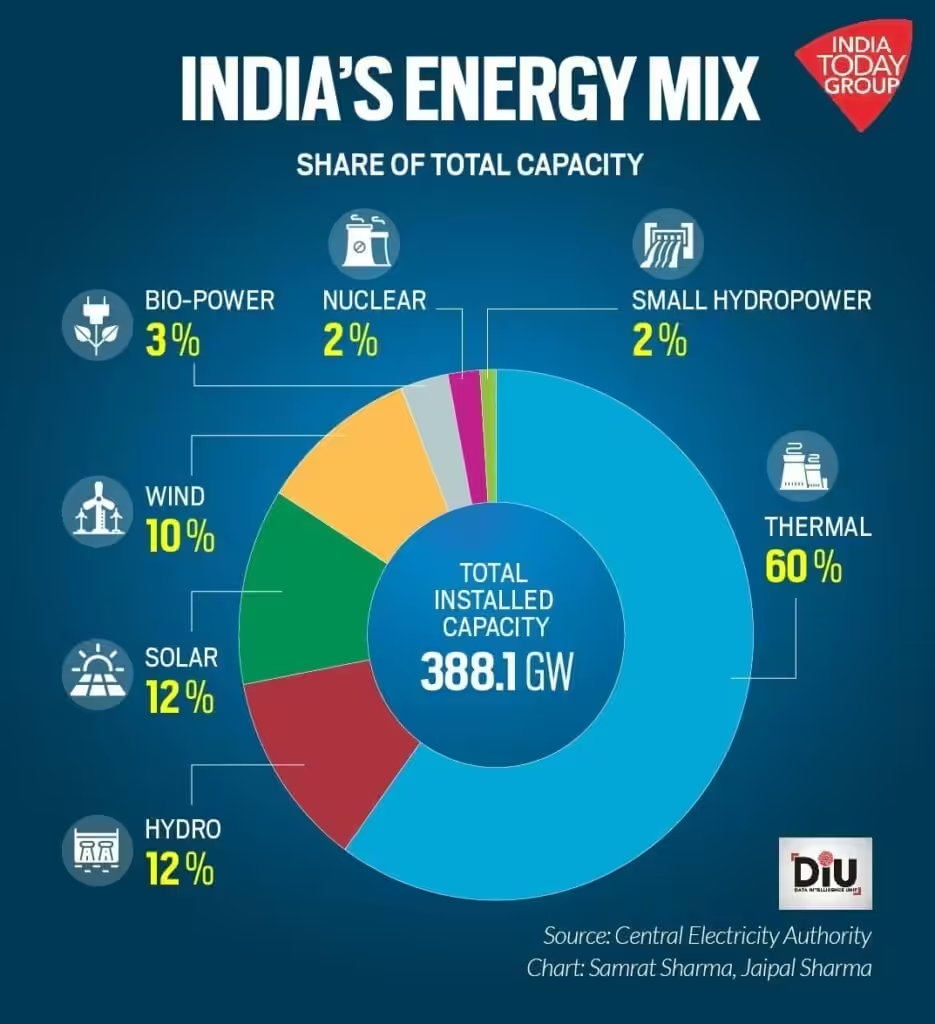
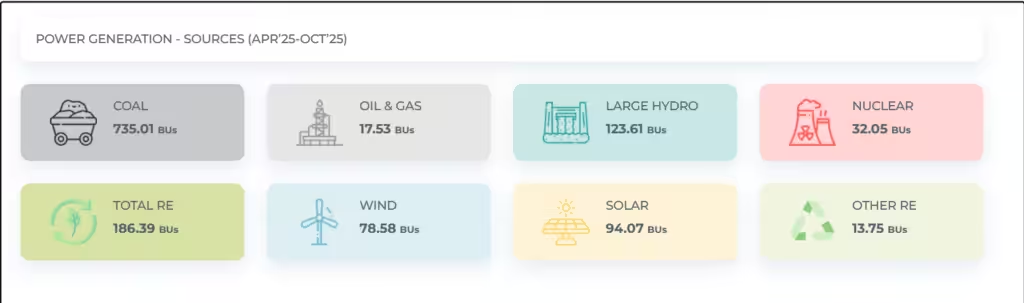
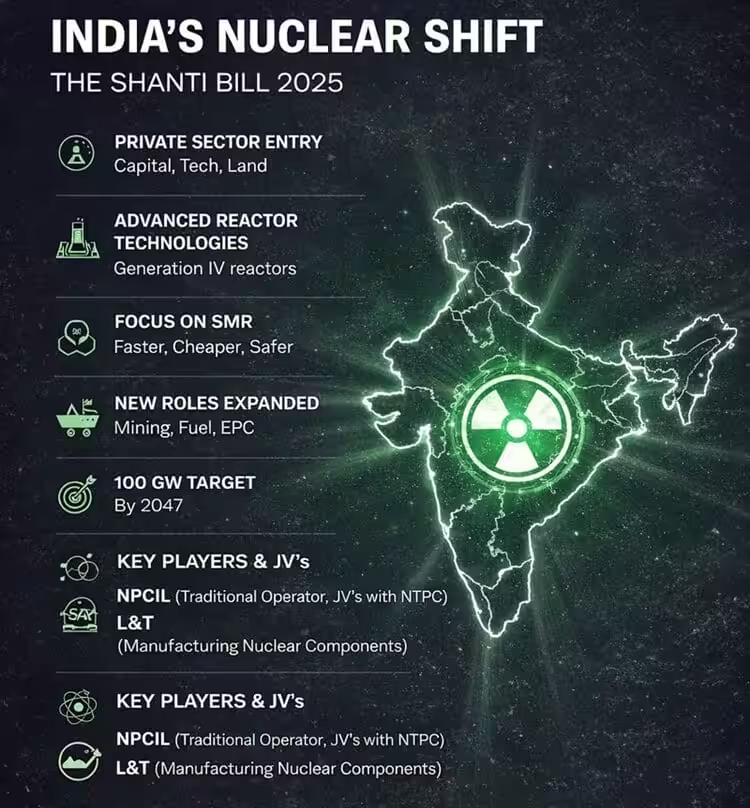
- The Union Budget 2025-26 outlines a significant push towards nuclear energy as part of India’s long-term energy transition strategy. The government has set an ambitious target of 100 GW nuclear power capacity by 2047, positioning nuclear energy as a major pillar in India’s energy mix.
Significance:
- 24/7 low-carbon electricity
- Very high energy density with minimal land footprint
- Long-term price stability
- Strategic energy security by reducing fossil fuel dependence
About SHANTI Bill:

- Minister of State of Science & Technology Jitendra Singh introduced the landmark Sustainable Harnessing and Advancement of Nuclear Energy for Transforming India Bill, 2025 (SHANTI Bill) in Parliament on Monday. The Bill aims to repeal both, the Atomic Energy Act, 1962 and the Civil Liability for Nuclear Damage Act, 2010 and open India’s highly restricted nuclear power sector to private participation.
Key Features of the SHANTI Bill, 2025:
Opening of the Nuclear Ecosystem to Private Participation:
- The Bill allows private entities to participate across multiple segments of the nuclear sector, including uranium prospecting under safeguards, fuel processing, manufacture of reactor components, and engineering–construction activities, subject to licensing.
- This represents a decisive departure from decades of exclusive state control, aiming to introduce competition, technological upgrading, and operational efficiency.
Integrated Legal and Regulatory Framework:
- SHANTI Bill brings together licensing, regulatory approvals, inspections, and enforcement within a unified legal structure.
- By replacing fragmented and overlapping regulations, it seeks to reduce procedural delays that have historically slowed nuclear project execution.
Restructured Nuclear Liability Regime:
- The Bill redesigns the liability framework by clearly distinguishing the responsibilities of operators and suppliers, introducing defined liability limits supported by compulsory insurance, and providing for government intervention in extreme accident scenarios.
- This approach aligns India’s liability system with international nuclear norms, while safeguarding public compensation interests.
Creation of an Independent Nuclear Safety Regulator:
- A new statutory nuclear safety authority is proposed, institutionally separate from organisations involved in nuclear power generation.
- This reform enhances regulatory independence, transparency, and safety credibility, bringing India closer to IAEA-recommended governance standards.
Specialised Nuclear Dispute Resolution Mechanism:
- The Bill establishes a dedicated Nuclear Tribunal to handle accident-related claims, liability issues, and contractual disputes.
- This ensures speedy adjudication, reduces legal uncertainty, and improves the overall investment climate.
Explicit Support for Small Modular Reactors (SMRs):
- The legislation provides policy backing for research, approval, and deployment of SMRs, recognising their role in India’s future energy mix.
- SMRs are valued for their lower capital requirements, flexibility, suitability for remote and industrial applications, and better integration with renewable-dominated grids.
Strategic Significance of the SHANTI Bill, 2025:
Strengthening Energy Security:
- Lowers India’s over-reliance on coal and imported natural gas.
- Broadens the national energy mix by expanding dependable nuclear capacity.
- Insulates the economy from international fuel price volatility and supply disruptions.
Advancing Climate and Sustainability Goals:
- Provides a scalable pathway for large-scale carbon reduction.
- Enables India to pursue its net-zero commitments while sustaining economic growth.
- Acts as a stable complement to variable renewables such as solar and wind, alongside green hydrogen.
Boosting Industrial Growth and Investment:
- Encourages inflow of long-term, capital-intensive investments.
- Generates high-skill employment across engineering, advanced manufacturing, and research sectors.
- Reinforces domestic capabilities in heavy engineering and high-precision industrial production.
Enhancing Strategic Autonomy:
- Strengthens indigenous nuclear technology development and operational capacity.
- Improves India’s leverage in global climate negotiations and international energy partnerships.
- Positions India as an emerging centre for advanced nuclear technologies.
Concerns:
Safety Perception and Public Confidence
- Expansion of nuclear power requires clear, transparent communication on safety standards and risk management.
- Gaining and sustaining community acceptance, along with strict environmental safeguards, will be essential for long-term viability.
Institutional and Regulatory Strength
- The proposed independent nuclear regulator must be well-resourced, professionally staffed, and legally empowered to function effectively.
- Safeguards are needed to prevent undue influence from either industry stakeholders or the government, ensuring credible oversight.
Radioactive Waste Management
- The challenge of safe, long-term disposal of nuclear waste remains unresolved.
- Nuclear expansion must be supported by robust policies, infrastructure, and technological solutions for waste handling and storage.
Centre–State and Local Governance Issues
- Nuclear projects have implications for land use, water resources, and local livelihoods.
- Effective implementation will depend on cooperative federalism, involving close coordination between the Centre, States, and affected communities.
Biosecurity

Why in News?
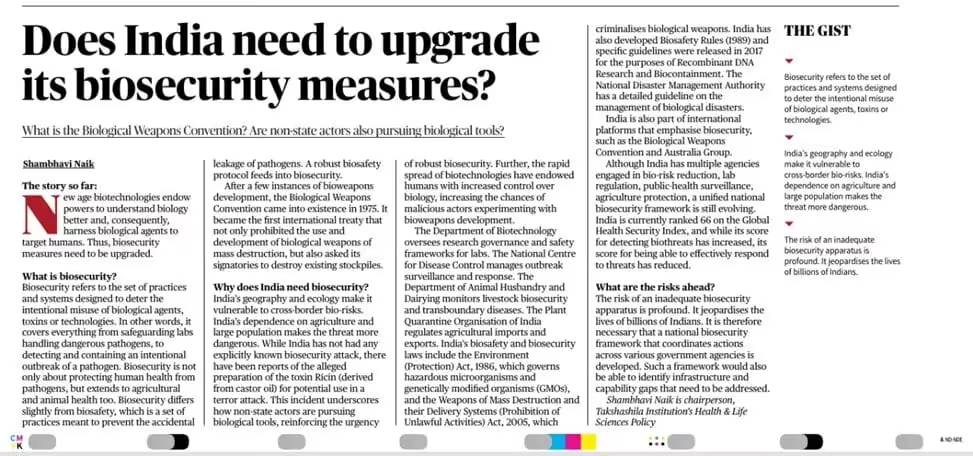
Given the rising complexity of biosecurity threats and the rapid spread of biotech innovations, there is a need for upgraded biosecurity measures in India.
UPSC relevance:
GS2: National Security, GS3: Environmental Issues and Ecology, Disaster Management
What is Biosecurity?
- Biosecurity refers to the safety measures taken to prevent the misuse of biological agents (like viruses, bacteria, toxins, and biotech tools) that could harm humans, animals, or plants. It is different from biosafety, which focuses on preventing accidental leaks of harmful pathogens.
- Key Areas of Biosecurity:
- Protecting labs that handle dangerous pathogens.
- Detecting and responding to deliberate outbreaks or attacks (like bioweapons).
- Ensuring the safety of agriculture and animal health.
- Biosecurity vs. Biosafety:
- Biosafety: Prevents accidental releases of harmful pathogens from labs.
- Biosecurity: Prevents intentional misuse, like bioterrorism or bioweapons.
Why is Biosecurity Important for India?
- Vulnerability to Cross-Border Risks: India shares borders with several countries and has a diverse geography, making it susceptible to biological threats crossing borders (like diseases or bioweapons).
- Dependence on Agriculture: India relies heavily on agriculture, which makes it vulnerable to biological threats like crop diseases or pests. A threat to agriculture can affect food security and the economy.
- Large Population: With over 1.4 billion people, the potential impact of a biological attack or outbreak is huge. Biosecurity is critical to protect public health.
- Potential Terrorism: Although India hasn’t had a confirmed biosecurity attack, there have been reports of terrorist groups attempting to create toxins (like Ricin from castor oil) for possible attacks. This emphasizes the need for strong biosecurity measures.
- Advances in Biotechnology: New technologies allow humans to better understand and manipulate biology. But these advances can also be misused by malicious actors to develop bioweapons. This increases the need for stronger biosecurity.
Current Biosecurity Measures in India:
India has several systems and laws in place to ensure biosecurity:
- Government Bodies Involved:
- Department of Biotechnology: Oversees research governance and safety in laboratories.
- National Centre for Disease Control (NCDC): Manages disease outbreaks and surveillance.
- Department of Animal Husbandry and Dairying: Monitors the health of livestock and transboundary diseases (diseases that spread across borders).
- Plant Quarantine Organisation of India: Regulates the import and export of agricultural products to prevent the spread of plant diseases.
- Laws and Regulations:
- Environment (Protection) Act, 1986: Governs the use of hazardous microorganisms and genetically modified organisms (GMOs).
- Weapons of Mass Destruction and their Delivery Systems (Prohibition of Unlawful Activities) Act, 2005: Criminalizes the use of biological weapons in India.
- Biosafety Rules, 1989: Provides guidelines for the safe use of genetically modified organisms (GMOs) and biological materials.
- National Disaster Management Authority (NDMA): Has guidelines for managing biological disasters.
- International Cooperation:
- India is a signatory to the Biological Weapons Convention, an international treaty that bans the development and use of bioweapons.
- India is also a member of the Australia Group, an informal group of countries that aims to prevent the spread of chemical and biological weapons.
India’s Challenges in Biosecurity:
- Despite having several agencies and laws in place, India still lacks a unified national biosecurity framework that coordinates efforts across all government agencies. This is necessary to address the growing biological risks more effectively.
- Global Health Security Index: India is ranked 66th in the Global Health Security Index. This ranking indicates that while India has improved its ability to detect bio-threats, it has some weaknesses in responding to these threats.
Potential Risks and Threats to India:
- Bioterrorism: The deliberate release of harmful biological agents, like viruses or toxins, by non-state actors (terrorists).
- Biological Warfare: The use of harmful biological agents in conflict to harm or kill large populations, animals, or plants.
- Outbreaks of Infectious Diseases: Disease outbreaks (natural or man-made) can spread rapidly, especially given India’s large population and dense urban areas. A biosecurity breach could result in widespread public health disasters.
- Agricultural Risks: Agricultural products are at risk from pests, diseases, or bioterrorism that could lead to crop destruction or food scarcity.
What India Needs to Do?
- Develop a Unified Biosecurity Framework: India needs a coordinated national biosecurity strategy that integrates all efforts across government agencies. This will help identify gaps in infrastructure and capabilities that need to be addressed.
- Increase Response Capabilities: India’s ability to respond effectively to bio-threats needs to improve. This includes strengthening emergency preparedness and ensuring better collaboration among national and state-level authorities.
- Strengthen International Cooperation: India must continue engaging with international platforms and treaties to stay updated on global biosecurity norms and best practices.
- Public Awareness and Education: Educating people about the importance of biosecurity and ensuring that all sectors (public health, agriculture, environment) are aware of their roles is essential to reduce risks.
- Public-Private Partnerships: Just like the U.S. and Canada, India can leverage private sector innovation and technology in biosurveillance, early detection systems, and rapid response mechanisms to tackle biological threats.
- Adopting New-Age Technologies for Biosecurity: New-age technologies like microbial forensics, AI-driven pathogen detection, and social media surveillance are transforming biosecurity practices worldwide. By leveraging these technologies, India can enhance its ability to detect, respond to, and prevent biological threats.
- Technology and Data Sharing: Countries like the U.S. and EU have advanced systems for monitoring biological risks and threats in real time. India could build similar systems that integrate data from laboratories, health departments, and international sources.
Conclusion
- While the country has established laws and agencies, gaps remain in terms of coordination and response. A unified approach is essential for better management of biological risks in the future.
- Biosecurity is an evolving challenge. India must strengthen its biosecurity framework to protect its people, agriculture, and economy from biological threats.