Context:
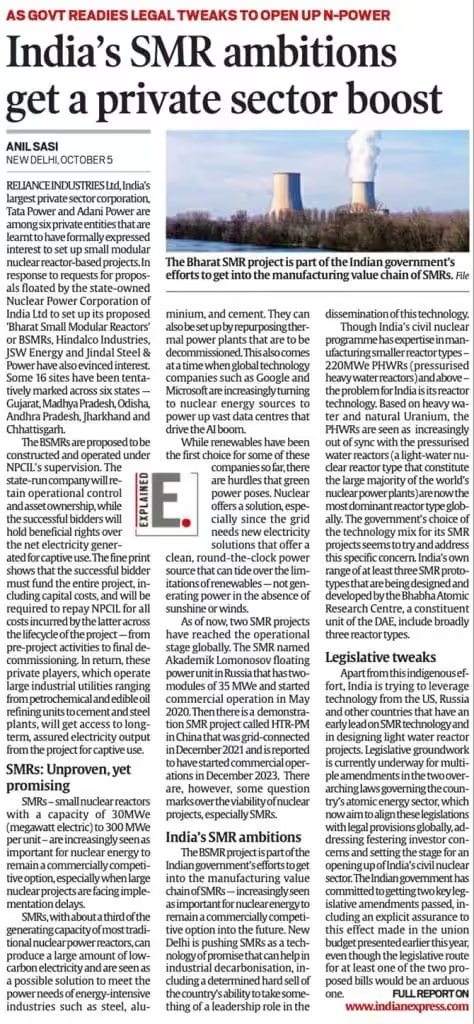
Government of India is advancing its efforts in clean energy transition by focusing on new technologies such as Small Nuclear Reactors (SMRs).
UPSC Relevance:
Science and technology
PYQ:
Q. Consider the following statements regarding “Small modular reactors (SMRs)”:
1.SMRs are advanced nuclear reactors that have a power capacity of up to 300 MW(e) per unit.
2.SMRs can be sited on locations not suitable for larger nuclear power plants.
Which of the statements given above is/are correct?
[A] 1 only
[B] 2 only
[C] Both 1 and 2
[D] Neither 1 nor 2
About Small Modular Reactors:
- They typically have a power capacity of up to 300 MW(e), which is about 1/3rd of the generating capacity of traditional nuclear power reactors.
- Harness nuclear fission to generate heat to produce energy.
- They can start from a completely de-energized state without receiving energy from the grid.
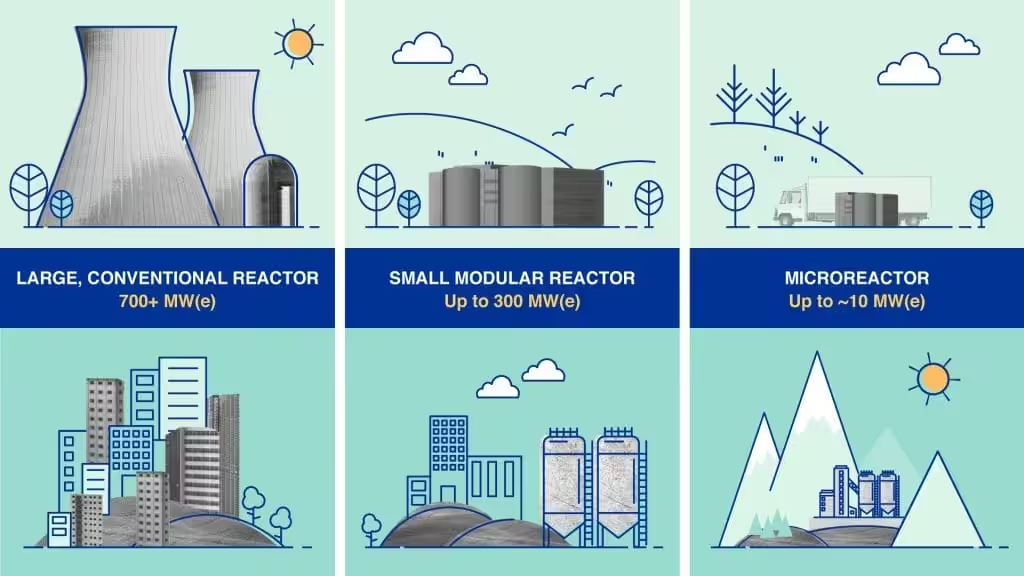
| Reactor | Capacity |
| Large, conventional reactor | 700+ MW(e) |
| Small modular reactor | 300 MW(e) |
| Microreactor | Up to ̴ 10 MW(e) |
Advantages of Small Modular Reactors:
- Realising the goal of ‘Power for All’ as they can be installed into an existing grid and in areas lacking sufficient lines of transmission and grid capacity.
- Contribute to grid stability and reliability by providing a stable baseload power supply that complements intermittent renewable energy sources.
- Climate change mitigation: They have a smaller environmental footprint due to their compact size and reduced water consumption.
- Environment Friendly: As per Nuclear Energy Institute, it consumes 30-60% less water per megawatt-hour compared to traditional nuclear plants.
- Fuel efficient: Power plants based on SMRs may require less frequent refuelling, every 3 to 7 years, in comparison to between 1 and 2 years for conventional plants.
- Greater deployment flexibility due to smaller, modular units allowing SMRs to be scaled up or down.
- Land use efficiency: SMRs can repurpose retiring coal-based thermal power station sites.
Concerns with Small Modular Reactors:
- Costly: SMRs will not be cost competitive due to the need to build thousands of such high priced reactors to achieve factory-based cost reductions → higher cost per unit of electricity generated.
- Security risk: “nuclear backpacks” highlights concerns about the security risks associated with the portability and small size of SMRs.
- Nuclear waste: According to a study, SMRs produce radioactive waste up by 30 percent compared to conventional reactors.
- Other challenges: Limited fuel options, lack of proven experience as they are still in early stages of development, uncertainty about reliability, environmental impact.
Way Ahead:
- The Atomic Energy Act must be amended to allow the private sector to set up SMRs.
- To ensure safety, security, and safeguards, control of nuclear fuel and radioactive waste must remain with the Government of India.
- can negotiate with foreign suppliers to reprocess nuclear waste from all SMRs in a state-controlled facility under IAEA safeguards.
- The Department of Atomic Energy must improve the public perception of nuclear power in India. Schemes like the Production Linked Incentive (PLI) scheme for SMRs can be introduced.
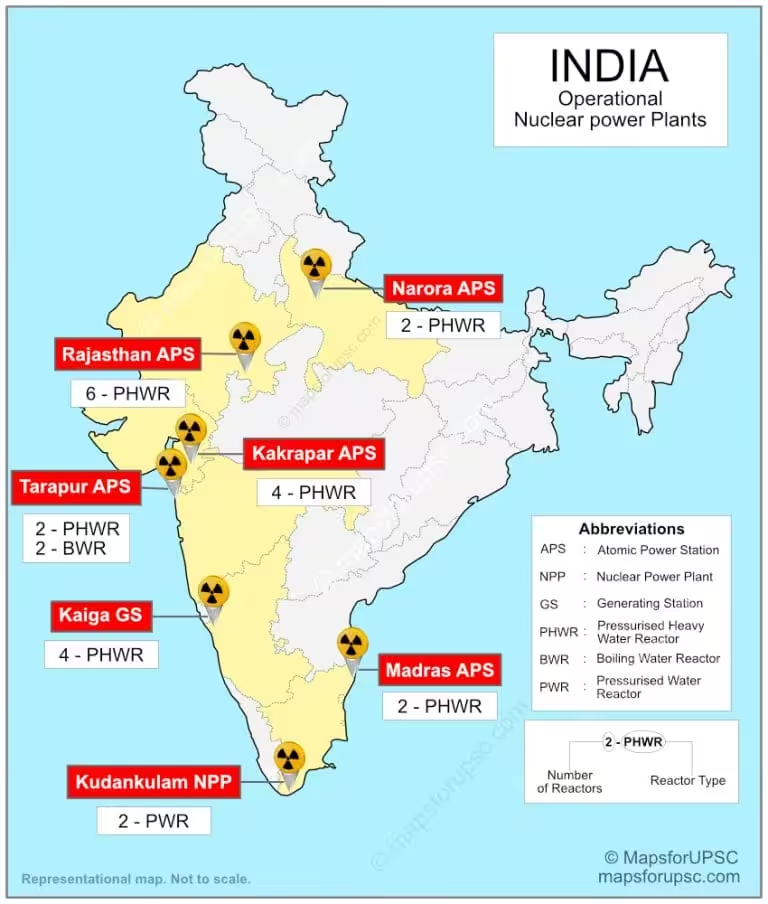
Operation Nuclear plant in India:
Tell Google you want more of this.
Add Anantam IAS as a preferred sourceOne tap, and this site shows up more often in your own Top Stories, AI Overviews and AI Mode. Remove it any time.