Daily Digest
UPSC · Civil Services Examination
Current Affairs · Sunday, 2 November 2025
Current affairs curated and edited by Anantam IAS faculty — pulled from The Hindu, PIB, IDSA, Foreign Affairs and the ministries. Read, annotate, revise.
Old Rajinder Nagar · Delhi 110005 · anantamias.com
Centrally Sponsored Schemes (CSS)

Why in the News ?
The Comptroller and Auditor General of India (CAG) has formed a committee to address “problems and issues” in the Centrally Sponsored Schemes (CSS).
UPSC Relevance
GS2, Issues and Challenges Pertaining to the Federal Structure, Devolution of Powers and Finances up to Local Levels and Challenges Therein.
GS 3, Government Budgeting
PYQ
2023 – 10 Marks
Explain the significance of the 101st constitutional amendment act. To what extent does it reflect the accommodative spirit of federalism?
2025 – 15 Marks
Examine the evolving pattern of Centre-State financial relations in the context of planned development in India. How far have the recent reforms impacted the fiscal federalism in India?
Centrally Sponsored Schemes
Centrally Sponsored Schemes are distinguished by the following features:
- Shared Funding: The cost of the scheme is shared between the Centre and the States in a pre-determined ratio. This is the fundamental difference from Central Sector Schemes, which are 100% funded by the Union Government.
- Implementation by States: Although the guidelines and funding originate from the Central Government, the implementation of the scheme falls under the responsibility of the respective State/Union Territory administration.
- Constitutional mandate : CSS are typically formulated on subjects that fall under the State List or Concurrent List under Article 246 of the Constitution (e.g., health, education, welfare), enabling the Central Government to supplement state efforts in these areas of national priority.
- They are routed through the discretionary grants under Article 282.
- Differentiated Funding Pattern: The Centre-State financial sharing ratio is not uniform and varies based on the type of scheme and the state category. The general patterns include:
- Normal States: Usually 60:40 (Centre:State)
- North-Eastern and Himalayan States (Special Category States): Often 90:10 (Centre:State)
- Union Territories (without Legislature): May receive 100% Central funding.
- Categorisation: CSS are generally categorised based on their national importance and funding:
- Core of the Core Schemes: Schemes considered essential for national priorities (e.g., National Social Assistance Programme).
- Core Schemes: Schemes representing key national development priorities (e.g., National Health Mission).
Examples of CSS

Increasing Share of CSS
- The decision is significant because CSS allocations are rising, with some schemes (like MGNREGS, Jal Jeevan Mission, and PM-Kisan) having an annual budget of over ₹50,000 crore.
- The Centre allocated ₹5.41 lakh crore for CSS in the Union Budget 2025-26.
- The government has also begun evaluating schemes before allowing their continuation in the next finance commission cycle, starting in April 2026.
Significance & Rationale of CSS
- Promoting National Goals: CSSs are a crucial instrument for the Central Government to ensure the implementation of schemes that address issues of national importance, such as education, healthcare, and poverty alleviation, even though these subjects fall primarily under the State or Concurrent Lists of the Constitution.
- Addressing Fiscal Asymmetry: The Central Government generally has greater resource-raising powers, while states have greater expenditure responsibilities. CSSs act as a mechanism to transfer financial resources from the Centre to the states, helping states fund large-scale development programs they might not be able to finance entirely on their own.
- Targeted Funding: Unlike general statutory transfers (recommended by the Finance Commission), CSS funds are earmarked for specific purposes, ensuring that money is spent on intended developmental or welfare programs
- Policy Coordination: CSSs encourage a degree of policy coordination and cooperation between the Centre and the states on shared subjects. The central design and funding, combined with state-level implementation, represent a collaborative approach to governance (sometimes referred to as Cooperative Federalism)
- Addressing Regional Disparities: By directing funds to specific, underdeveloped regions or for programs targeting vulnerable populations (like Scheduled Castes, Scheduled Tribes, women, etc.), CSSs contribute to balanced regional development and social equity
- Welfare Delivery: Schemes like the Mahatma Gandhi National Rural Employment Guarantee Act (MGNREGA), Pradhan Mantri Awas Yojana (PMAY) for housing, and the National Health Mission are key examples of CSSs that directly impact the quality of life for millions of citizens
Issues arising out of CSS
- Encroachment of state functions:
- Since many CSS are for subjects primarily falling under the State List (like health, education, and agriculture), the Central Government’s involvement through funding and guidelines can be seen as an infringement on the constitutional domain of the states.
- This limits the policy-making and executive freedom of states on their own subjects.
- Misuse of Article 282 : Using Article 282, a provision for special or exceptional grants, as the primary mechanism for transferring large, sustained, conditional funds to states for subjects in the State List fundamentally undermines the federal balance and the constitutional scheme of resource sharing devised through the Finance Commission.
- One size fits all:
- The uniform design of schemes often fails to account for the diverse socio-economic, geographical, and administrative realities across different states in India.
- A scheme tailored for a developed state may be inappropriate or ineffective in a less developed or geographically difficult state, leading to poor utilization of funds and sub-optimal outcomes.
- Limited flexibility:
- States have little room to modify the scheme design, financial norms, or operational guidelines to suit their local needs. This lack of adaptability restricts local innovation and responsiveness to specific regional challenges.
- Inadequate deliberations with states:
- CSS are often designed by the central ministries with insufficient consultation with the state governments.
- This results in a ‘top-down’ approach that overlooks valuable ground-level knowledge and can lead to a lack of ownership and commitment during implementation by the states.
- Proliferation of Schemes but Resources are thin:
- A large number of CSS (historically over a hundred before rationalization) often leads to limited financial allocation for each individual scheme, spreading resources thinly and diluting the impact.
- States face administrative difficulty in managing and monitoring a multitude of separate schemes.
- Strain on state’s Resources:
- Centrally Sponsored Schemes typically require a mandatory matching contribution from the state governments.
- This compulsory expenditure locks up a significant portion of the state’s own resources, restricting their fiscal space and ability to fund their own developmental priorities or critical state-specific schemes. This burden is particularly felt by financially weaker states.
Recommendations on CSS and Fiscal Federalism
NITI Aayog’s Sub-Group of Chief Ministers (2015)
- Reduction in Number of Schemes: Recommended that the total number of CSS should be reduced from 66 to a maximum of 30 to improve visibility and impact.
- Categorization of Schemes: Schemes should be grouped into three categories:
- Core of the Core Schemes: For social protection and social inclusion (e.g., MGNREGA, National Social Assistance Programme), which should be the first charge on available funds.
- Core Schemes: For the National Development Agenda where the Centre and States work together (e.g., National Health Mission, Swachh Bharat Mission).
- Optional Schemes: Where states would be free to choose the schemes they wish to implement, with funds allocated as a lump sum by the Ministry of Finance.
- Increased Flexibility: Raised the availability of flexi-funds within each CSS from 10% to 25% for States and 30% for Union Territories to allow for better adaptation to local needs.
- Revised Funding Patterns: Proposed new Central-State fund sharing patterns for Core Schemes (e.g., 60:40 for general states, 90:10 for North-Eastern and Himalayan states) and Optional Schemes (e.g., 50:50 for general states).
14th Finance Commission (2015-2020)
- Increased Vertical Devolution: Recommended increasing the states’ share in the divisible pool of central taxes from 32% to 42%. This gave states greater fiscal autonomy.
- New Institutional Mechanism: Recommended evolving a new institutional arrangement to review CSS and other non-FC transfers to minimize discretion, improve design, and promote cooperative federalism.
15th Finance Commission (2021-2026)
- Building on the 14th FC’s changes, the 15th FC focused on improving the efficiency and design of the remaining CSS.
- Continuation of High Devolution: Recommended the states’ share in central taxes be 41% (a 1% adjustment from 42% was made for the newly created Union Territories of J&K and Ladakh).
- Minimum Funding Threshold for CSS: Suggested fixing a minimum threshold for annual allocation to any CSS, below which the scheme’s funding should be stopped to phase out those with limited impact.
- Outcome-Based Schemes: Emphasized shifting the focus of CSS, especially in sectors like health, from inputs (spending money) to measurable outcomes and suggesting performance-based incentives for states.
- Transparent and Stable Funding: Recommended that the funding pattern for all CSS should be fixed upfront in a transparent manner and be kept stable.
- Third-Party Evaluation: Recommended that a comprehensive third-party evaluation of all CSS should be completed within a stipulated timeframe.
Source: https://anantamias.com/current-affairs/centrally-sponsored-schemes-css/
Silicon Carbide Semiconductor Unit in Odisha

Why in News?
Chief Minister Mohan Charan Majhi performed the groundbreaking ceremony for India’s first end-to-end silicon carbide semiconductor production plant on Saturday, November 1st.
UPSC Relevance
Prelims, Latest technologies and Related developments
Odisha’s First Compound Chip Unit
- Company and Location: The unit is being set up by SiCSem Private Limited in collaboration with Clas-SiC Wafer Fab Ltd., UK, in Info Valley, Bhubaneswar.
- Investment and Approval:
- The project was recently approved by the Union Cabinet.
- It involves an investment of Rs 2,067 crore.
- Employment Generation: The facility is expected to create around 5,000 direct and indirect employment opportunities.
- Production Capacity and Products:
- The compound semiconductor fab will manufacture Silicon Carbide (SiC) devices.
- It will have an annual capacity of 60,000 wafers and a packaging capacity of 96 million units.
- Proposed products will be used in missiles, defense equipment, electric vehicles (EVs), railways, fast chargers, data center racks, consumer appliances, and solar power inverters.
What are Silicon Carbide (SiC) Semiconductors?
Silicon Carbide (SiC) is a compound semiconductor material composed of silicon (Si) and carbon C.
It belongs to the family of Wide Bandgap (WBG) semiconductors, which are materials that require significantly more energy (a wider bandgap) to allow electrons to flow than traditional silicon.
Features of Silicon Carbide
| Feature | SiC Value | Compared to Silicon | Implication |
| Wide Bandgap | approx 3.2 eV | approx 3 times higher | Enables operation at higher voltages and higher temperatures. |
| High Critical Breakdown Field | approx 10 times higher | Withstands much higher voltages without dielectric breakdown. | |
| High Thermal Conductivity | approx 3.7 W/cm.K | approx 2.5 times better | Dissipates heat much more efficiently. |
| Maximum Operating Temperature | 200° C to 250° C | Significantly higher than 150°C for Silicon semiconductors. | Enhances reliability in harsh environments. |
| Exceptional Hardness | SiC has a Mohs hardness of 9.2-9.5, second only to diamond and boron nitride among common abrasives. | This allows it to effectively cut and grind extremely hard materials like ceramics, stone (granite, marble), glass, and cemented carbide. | |
| High Friability | The granular crystals are brittle and easily fracture under grinding stress. | This is a crucial feature: when a grain breaks, it constantly exposes new, sharp cutting edges (a process called “self-sharpening”), ensuring a fast and continuous material removal rate. | |
| Sharp Crystalline Structure | grains possess a sharp, angular, needle-like shape (especially green SiC). | This structure maximizes the cutting aggressiveness and allows for fast stock removal and fine surface finishing. | |
| Wear Resistance | Due to its hardness, it offers high resistance to wear and tear, ensuring a longer service life for abrasive tools. | This property also makes sintered SiC a premier material for wear-resistant parts like pump seals and nozzles. |
Applications of SiC semiconductors
- Electric Vehicles (EVs):
- Traction Inverters: Improves the efficiency of converting battery DC power to motor AC power, extending the vehicle’s driving range
- On-Board Chargers (OBCs) and DC Fast Chargers: Enables faster, more efficient charging
- Renewable Energy: Used in solar inverters and wind power converters to maximize energy conversion efficiency from DC to AC and manage high-voltage grid connections
- Power Supplies and Data Centers: High-efficiency power supplies (PSUs) for servers and data centers, reducing operational energy consumption and cooling costs
- Industrial Power: Motor drives, welding equipment, and Uninterruptible Power Supplies (UPS) requiring high-voltage and high-temperature operation.
- Aerospace and Defense: Used in radar, communication systems, and high-temperature electronics where high reliability and radiation hardness are essential.
Other Applications of Silicon Carbide
- Abrasive Tools: Sandpaper (especially for automotive finishing and stone), grinding wheels, cutting tools, honing stones, and abrasive belts
- Blasting Media: Used for sandblasting and surface treatment to efficiently remove rust, scale, and paint
- Advanced Ceramics: Sintered SiC is used to produce wear-resistant components like ballistic armor plates (ceramic inserts in bulletproof vests), bearings, and high-temperature furnace parts.
- Lapping and Polishing: Fine SiC powders are essential for precision lapping and polishing of hard materials, including optical glass, semiconductors, and metal alloys.
Source: https://anantamias.com/current-affairs/silicon-carbide-semiconductor-unit-in-odisha/
UNESCO Creative City Network


Context:
During the 43rd Session of the UNESCO General Conference in Uzbekistan, Lucknow has been officially declared a UNESCO Creative City of Gastronomy.
UPSC Relevance:
UPSC PYQ:
Q. Which one of the following was the latest inclusion in the Intangible Cultural Heritage List of UNESCO?
[A] Chhau dance
[B] Durga puja.
[C] Garba dance
[D] Kumbh mela
About UNESCO Creative City Network:
- Today, cities are home to more than half of the world’s population and represent three quarters of its economic activity, including a large share of the creative economy.
- Established: 2004 by UNESCO.
- Objective: To promote cooperation among cities that have identified creativity as a strategic factor for sustainable urban development.
- Headquarters: Paris, France
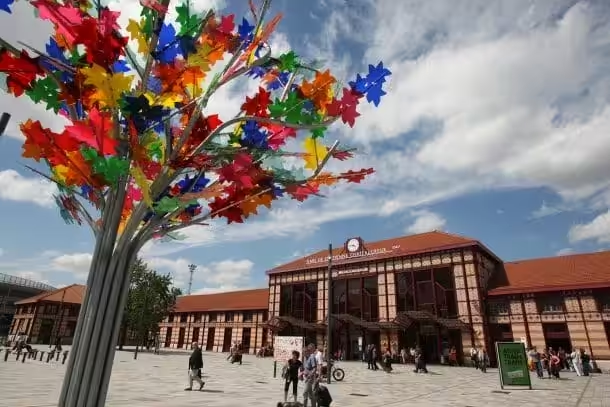
The crucial role of cities in promoting sustainable development focused on people and local communities and stakeholders is notably recognized in the 2030 Agenda for Sustainable Development which includes among its 17 goals a specific objective to ‘make cities and human settlements inclusive, safe, resilient and sustainable’. It also identifies culture and creativity as one of the essential levers for action.
- On World Cities Day 2025, UNESCO Director-General Audrey Azoulay designated 58 cities as new members of the UNESCO Creative Cities Network (UCCN).
With these new designations, the Network now includes 408 cities across more than 100 countries. For the first time, the UCCN welcomes Creative Cities of Architecture—a new creative field in addition to the seven existing ones.
UCCN Areas:
- Crafts and Folk Art
- Design
- Film
- Gastronomy
- Literature
- Media Arts
- Music
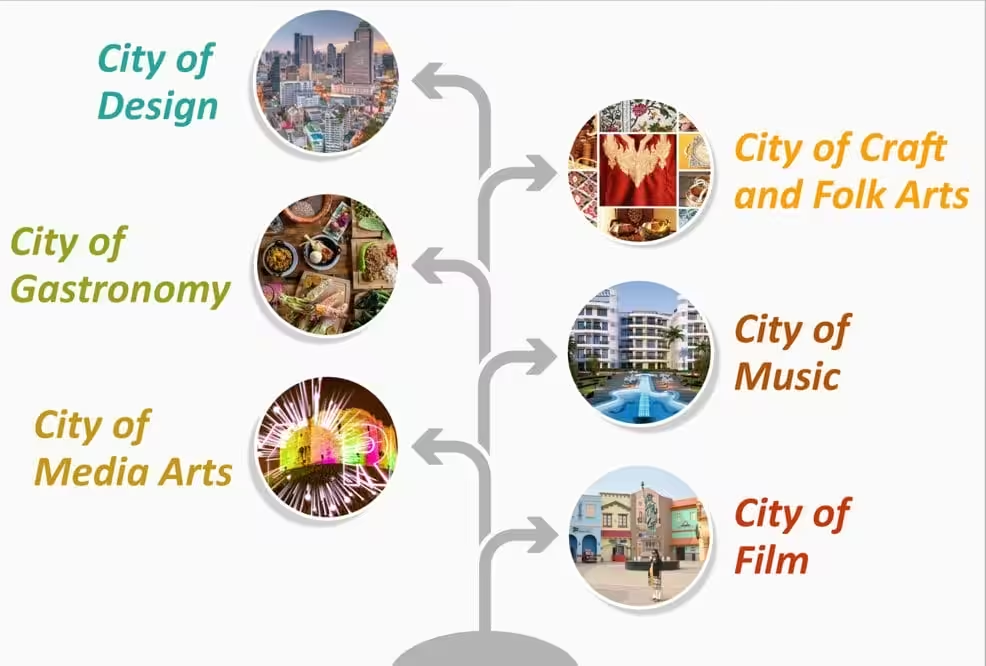
Indian Cities in the Network:
- Jaipur – Crafts and Folk Art
- Varanasi – Music
- Chennai – Music
- Mumbai – Film
- Hyderabad – Gastronomy
- Srinagar – Crafts and Folk Art
- Lucknow (2025) – Gastronomy
Cultural Heritage of Lucknow:
- Lucknow’s Awadhi cuisine evolved under Nawabi rule, combining Mughlai and regional Indian traditions.
- Dishes such as Tunday Kabab, Galouti Kebabs, Biryani, Korma, and Sheermal have international fame.
- Inclusivity: Its food culture blends Hindu, Muslim, and local traditions, reflecting India’s pluralistic ethos.
Source: https://anantamias.com/current-affairs/unecsco-creative-city-network/
Stampede disaster in India

Context:
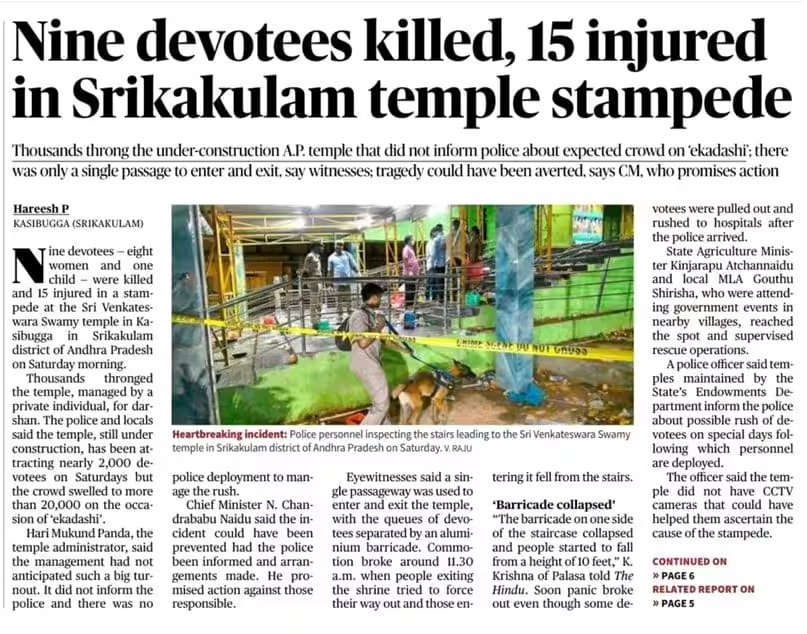
Recently, nine devotees were killed and fifteen injured in a stampede at the Sri Venkateswara Swamy temple in Andhra Pradesh.
UPSC Relevance:
Disaster Management
PYQ:
Q) Discuss the recent measures initiated in disaster management by the Government of India departing from the earlier reactive approach. [250 Words] [15 Marks] [2020]
About stampede:
- Stampede- Stampede is the disruption of the orderly movement of crowds which leads to injuries and fatalities. This impulsive mass movement of crowd often takes place in response to a perceived danger, loss of physical space or a will to attain something as gratifying.
Process of a Stampede:

Stampede Statistics In India:
- According to the National Crime Records Bureau figures, from 2000 to 2013, almost 2,000 people died in stampedes in India.
- A 2013 study published by International Journal of Disaster Risk Reduction (IJDRR) points out that religious gathering and pilgrimages have been venues for 79% of the stampedes in India.
What are the major causes of Stampedes in India?
Structural Causes
The stampedes occur due to structural and design failures in the buildings, bridges etc. This includes the following causes-
(a) Structural collapse of makeshift bridges, railings, temporary structures
(b) Improper and unauthorised built structures
(c) Railings of the bridge collapsing due to panic triggered by rumours
(d) Difficult terrain (famous religious sites built on top of hills that are difficult to access)
(e) Narrow streets with very few entry/exits
(f) Absence of emergency exits
Fire/Electricity causes
This includes the following causes-
(a) Fire in a makeshift facility or a shop, and illegal and unauthorised structure
(b) Non-availability of fire extinguishers in working condition
(c) Building and fire code violations, unauthorized fireworks in enclosed places
(d) Electricity supply failure creating panic and triggering a sudden exodus
(e) Illegal electric connections and faulty electric equipment
Crowd Behaviour
The stampedes are either triggered or made worse by panic. Crowd behaviour plays an important role in it. Following are some crowd behaviour causes-
(a) Craze- In large group settings, this “craze” percolates to every member and can make them act in detriment to their own individual interests. For ex- One of the major causes behind the recent Hathras Stampede has been the rush to touch the preacher’s feet and trying to collect soil from where he walked.
(b) Crowds forcing to entrance/exits a venue after the start/closing time
(c) Rush during distribution of disaster relief supplies
(d) A large (much more than expected) anxious and competitive crowd gathering at promotional events
(f) Unruly and irresponsible crowd behaviour
(g) Last minute change in platform for train arrival/departure resulting in lots of movements within short period of time
Security Issues
This includes:
(a) Security Personnel
(i) Under deployment of security staff and deployment of untrained staff
(ii) Lack of adequate rehearsals and briefing of security personnel on crowd control
(iii) Lack of adequate scientific planning in making police arrangement to deal with crowd with proper sectoral deployment, and lack of proper wireless deployment
(iv) Ineptitude of the police in effectively managing the crowd and enforcing prohibitory orders
(b) Surveillance
(i) Lack of adequate observation towers with proper wireless communication to monitor and regulate crowd
(ii) Lack of adequate CCTV surveillance of the crowd
(iii) Absence of public announcement systems or effective wireless system with the police;
(c) Infrastructure
(i) Lack of adequate road opening parties to secure the routes
(ii) Lack of adequate metal detectors and frisking of pilgrims entering the pilgrimage area or persons entering the gathering area
Lack of Coordination between Stakeholders
This includes the following issues-
(a) Coordination gap between agencies (e.g. Police and District Magistrate; PWD, Fire Service, Forest officials, Revenue officials, Medical officers etc.)
(b) Poor infrastructure (Plans on paper but no implementation due to lack of funds, resources, or will)
(c) Inadequate water, medical assistance, public transport/parking facilities
(d) Communication delays
(e) Vacant/late/delayed posting of key personnel
What are the Impact of these Stampedes?
Stampedes at religious gatherings in India have significant impacts on local communities. Mentioned below are some of the major impacts.
1. Trauma and Loss- Witnessing a stampede tragedy and the resultant deaths and injuries causes immense trauma, especially for those who lost loved ones. For ex- Deadly stampede killing 121 people in Hathras.
2. Economic Hardship- The majority of victims in such stampedes come from lower castes and poor backgrounds. Their deaths leave families without primary breadwinners, causing economic hardship in the community. Also the cost of funerals and medical expenses further strain already limited resources.
3. Erosion of Trust- Repeated stampedes at Indian religious festivals due to similar failures further undermine faith in the ability of organizers to keep devotees safe. For ex- Gross negligence like poor planning, with insufficient exits, inadequate crowd control, and lack of emergency preparedness, by organizers and authorities erodes trust in religious institutions.
4. Loss of Social and Human Capital- Many young children and women are the victims of these stampede tragedies. This leads to loss of the productive social and human capital of the country.
NDMA Guidelines?
In view of the recurring stampedes at places of mass gathering, including religious places, and typically ad-hoc responses to those, the National Disaster Management Authority (NDMA) has prepared ‘Suggestive Framework for Preparation of Crowd Management Plan for Events/Venues of Mass Gathering’.
| Understanding venue, visitors and stakeholders | It requires understanding of- a. Type of event (such as religious, schools/ university, sports event, music event, political event) b. Expected Crowd (age, gender, economic strata) c. Crowd Motives (such as social, academic, religious, entertainment, economic etc.) d. Venue (location, topography of area, temporal or permanent, open or closed) e. Role of other stake holders (such as NGOs, neighbours of event venue, local administrators etc.) |
| Crowd Handling | a. Proper regulation of Traffic around the mass gathering venues. b. A route map for venues along with emergency exits route maps. c. Barricade facility to control the movement of crowd queues. d. Snake line approach should be followed in case large crowd queues e. The organizers of crowded events/venue managers should discourage general admissions and have plans to handle VIP visitors. |
| Safety and Security | a. The venue Organisers should ensure authorised use of electricity, use of fire safety extinguishers as per the safety guidelines. b. Use of CCTV cameras to monitor crowds and use of mini UAV in case of big crowd spread. |
| Communication | A public address system, with loudspeakers installed at all crowded points, to communicate with the crowds. |
| Medical and Emergency care | Medical first-aid rooms and emergency operations centres to handle post-disaster emergencies should be set up |
| Role of Event Managers | The event organizers and venue managers should develop, implement, review and revise the disaster management plan in coordination with others including local administration and police. |
| Role of Civil society | Event/venue managers should involve NGOs and civil defence in traffic control, people flow control, medical assistance, sanitation and mobilization of local resources in case of disaster. |
| Role of police | The police should actively participate in venue assessment and preparedness checks and guide crowd and traffic movements. |
| Role of Media | (a) Educational- Media can educate public about the possible disaster threats, ways to prevent them and how to be better prepared in the face of a disaster (b) Critical- Media can critically evaluate the disaster management plans to highlight the gaps for correction; |
| Capacity Building | Capacity building, conduction of drills, periodic assessment of training of security personnel, police is essential to prevent crowd disasters |
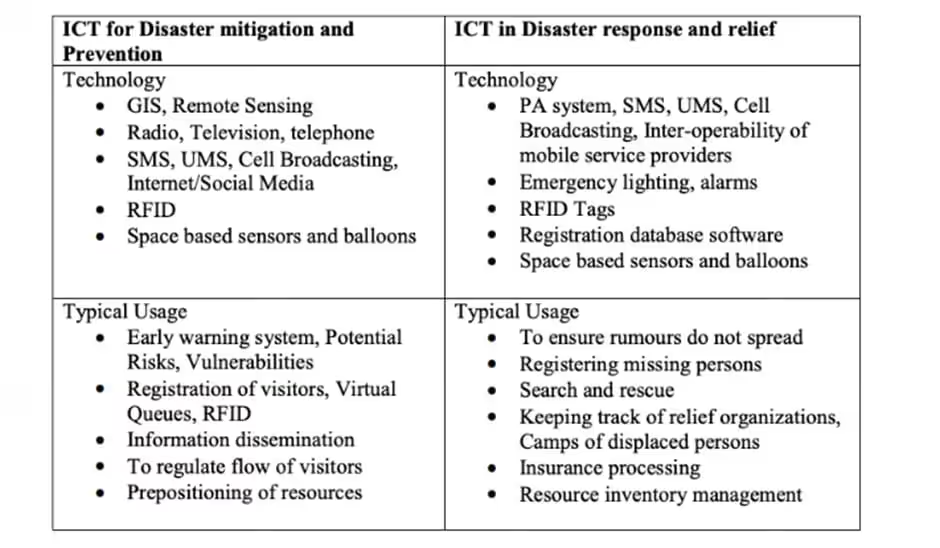
Use of ICT in Stampede Management:
What are the Challenges in the implementation of these Guidelines?
1. Lack of adoption and implementation- The state governments and local authorities have not yet properly implemented the NDMA guidelines on crowd management.
2. Rapidly rising population- With rising population and rapid urbanization, urban areas have become more susceptible along with places of frequent mass gatherings like temples.
3. Greater tolerance to crowd- According to several psychologists, there is very high tolerance for crowded places in India, because Indians don’t feel uncomfortable until it’s very packed. Hence, large-scale events in India become more susceptible to stampedes because of a greater tolerance for high-density crowds.
4. Governance and accountability- Agencies responsible for issuing permissions/ licences for mass gatherings, events often fail to follow the guidelines and the requirements. Further, there is lack of accountability on part of the authorities.
Way Forward?
1. Legislation, Rules and Regulations for Stampedes- Supreme Court in Uphaar Cinema tragedy observed that there is a need for a comprehensive legislation dealing with tortuous liability of the State.
2. Specialisation and Professionalism- India needs to emphasize effective communication, sensitive on-ground interventions, specialized personnel training, safety insurance, online customer feedback system, transparency, statutory compliances and professionalism, to maintain the decorum of the crowd in huge events.
3. Use of technology- Latest technology such as CCTV surveillance with HD IP cameras with VMS (Video Management Software), mobile control room, drones for roof level surveillance and public address system, face recognition among crowds and robotic support should be deployed extensively in crowded places.
4. Capacity Evaluation- There should be proper evaluation of the capacity of a location or structure before holding mass gatherings. Existing infrastructural problem should be addressed to avoid mishaps.
5. Crowd Behaviour Management- Every mass event must have a public address system for the officials to stop rumours from getting out of hand, calm panicking crowds, and help people exit in a systematic manner.
6. Penalties- Stricter penalties, revocation of licenses for construction/fire safety violations, random checks and inspections, must be adopted ensure effective compliance.
7. Engaging Civil Society- The Local Civilian Organisations like NGOs must be actively engaged in the event for capacity building of event managers etc, for easy mobilization of local resources, better preparedness and traffic control.
8. Learning from Global Best Practices- The learnings from Global Best Practices in Crowd Management must be adopted for effective management of Stampedes in India. For ex- Crowd management during Haj Pilgrimage in Makkah.
Source: https://anantamias.com/current-affairs/stampede-disaster-in-india/
Chakhao rice of Manipur

Context:
Manipur is going to export a new variety of Chakhao rice to Japan.
UPSC Relevance:
Intellectual property rights
PYQ:
Q. Which of the following has/have been accorded ‘Geographical Indication’ status? (2015)
1.Banaras Brocades and Sarees
2.Rajasthani Daal-Bati-Churma
3.Tirupathi Laddu
Select the correct answer using the code given below:
(a) 1 only
(b) 2 and 3 only
(c) 1 and 3 only
(d) 1, 2 and 3
About Chakhao rice
- Chakhao is a scented glutinous (sticky) rice which has been in cultivation in Manipur over centuries, and is characterised by its special aroma.
- The rice is black in colour and takes the longest cooking time of 40-45 minutes due to the presence of a fibrous bran layer and higher crude fibre content.
- It is normally eaten during community feasts and is served as Chak-Hao kheer.
- Chak-Hao has also been used by traditional medical practitioners as part of traditional medicine.
Uttar Pradesh
- Kalanamak rice: An aromatic, non-basmati variety also called “Buddha Rice.” It is known for its nutritional value and resilience.
Odisha
- Koraput kala jeera rice: Also known as “Prince of Rice,” this is a black rice variety with a distinct aroma, taste, and high nutritional value.
Manipur
- Chakhao rice: A black rice variety that has a deep black color due to the presence of anthocyanin.
Chhattisgarh
- Jeeraphool: An aromatic and fine short-slender rice variety that resembles cumin seeds.
Other GI-tagged rice varieties
- Wayanad Jeerakasala: A variety from Kerala.
- Palakkadan Matta: Another variety from Kerala.
- Navara: A red rice variety from Kerala.
About GI tag:
- A GI is primarily an agricultural, natural or a manufactured product (handicrafts and industrial goods) originating from a definite geographical territory.
Significance of a GI tag:
- Typically, such a name conveys an assurance of quality and distinctiveness, which is essentially attributable to the place of its origin.
- Security: Once the GI protection is granted, no other producer can misuse the name to market similar products. It also provides comfort to customers about the authenticity of that product.
Who is a registered proprietor of a geographical indication?
- Any association of persons, producers, organisation or authority established by or under the law can be a registered proprietor.
- Their name should be entered in the Register of Geographical Indication as registered proprietor for the Geographical Indication applied for.
How long the registration of Geographical Indication is valid?
- The registration of a geographical indication is valid for a period of 10 years.
- It can be renewed from time to time for further period of 10 years each.
What is the difference between a geographical indication and a trademark?
- A trademark is a sign used by an enterprise to distinguish its goods and services from those of other enterprises. It gives its owner the right to exclude others from using the trademark.
- A geographical indication tells consumers that a product is produced in a certain place and has certain characteristics that are due to that place of production. It may be used by all producers who make their products in the place designated by a geographical indication and whose products share typical qualities.
Who accords and regulates Geographical Indications?
- At the International level: Geographical Indications are covered as a component of intellectual property rights (IPRs) under the Paris Convention for the Protection of Industrial Property. GI is also governed by the World Trade Organisation’s (WTO’s) Agreement on Trade-Related Aspects of Intellectual Property Rights (TRIPS).
- In India, Geographical Indications registration is administered by the Geographical Indications of Goods (Registration and Protection) Act, 1999 which came into force with effect from September 2003. The first product in India to be accorded with GI tag was Darjeeling tea in the year 2004-05.
Source: https://anantamias.com/current-affairs/chakhao-rice-of-manipur/