Daily Digest
UPSC · Civil Services Examination
Current Affairs · Wednesday, 20 August 2025
Current affairs curated and edited by Anantam IAS faculty — pulled from The Hindu, PIB, IDSA, Foreign Affairs and the ministries. Read, annotate, revise.
Old Rajinder Nagar · Delhi 110005 · anantamias.com
Saltwater Crocodile

Why in news:
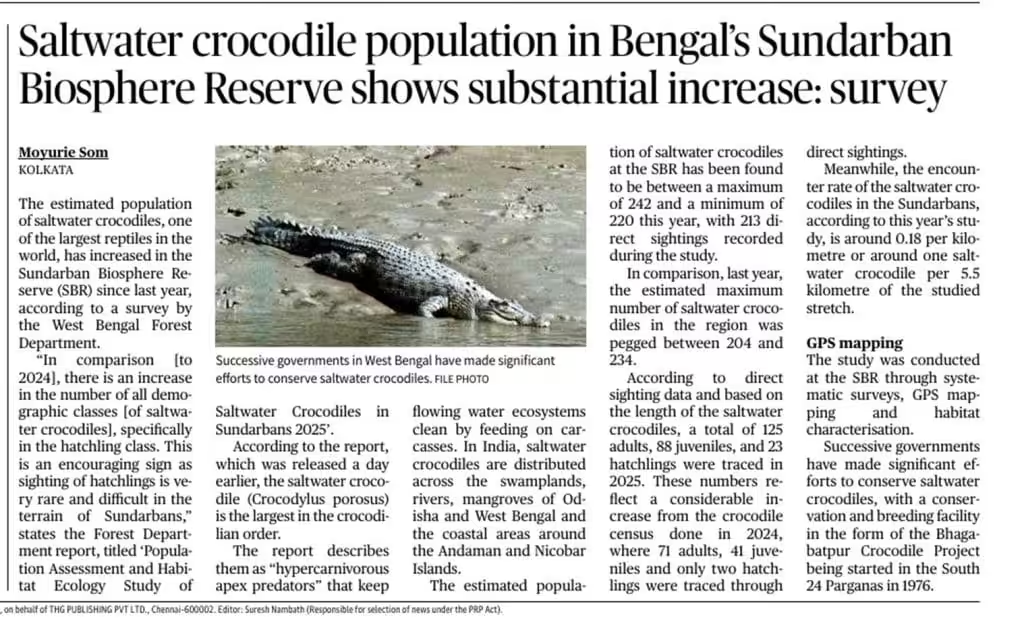
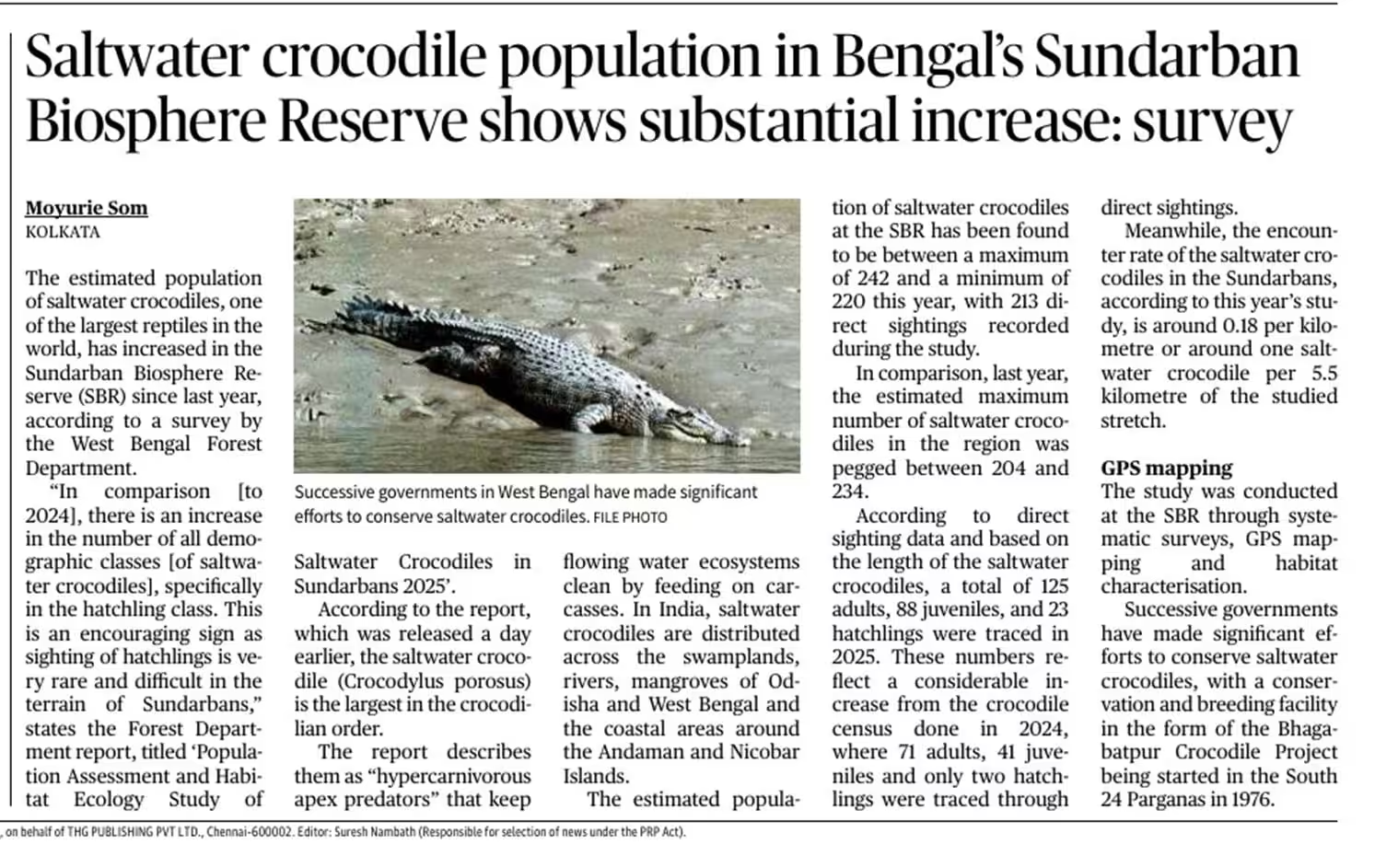
West Bengal Forest Department has released a new report titled “Population Assessment and Habitat Ecology Study of Saltwater Crocodiles in Sundarbans 2025”. The saltwater crocodile population in the Sundarban Biosphere Reserve (SBR) has shown a significant increase from last year.
UPSC Relevance:
UPSC CSE in prelims examination has focused on Species in news. Every year UPSC had asked at least one question related to species. A case in point is a following PYQ.
UPSC Prelims PYQ 2024:
Q. Consider the following statements:
- Lions do not have a particular breeding season.
- Unlike most other big cats, cheetahs do not roar.
- Unlike male lions, male leopards do not proclaim their territory by scent marking.
Which of the statements given above are correct?
(a) 1 and 2 only
(b) 2 and 3 only
(c) 1 and 3 only
(d) 1, 2 and 3
About crocodiles:
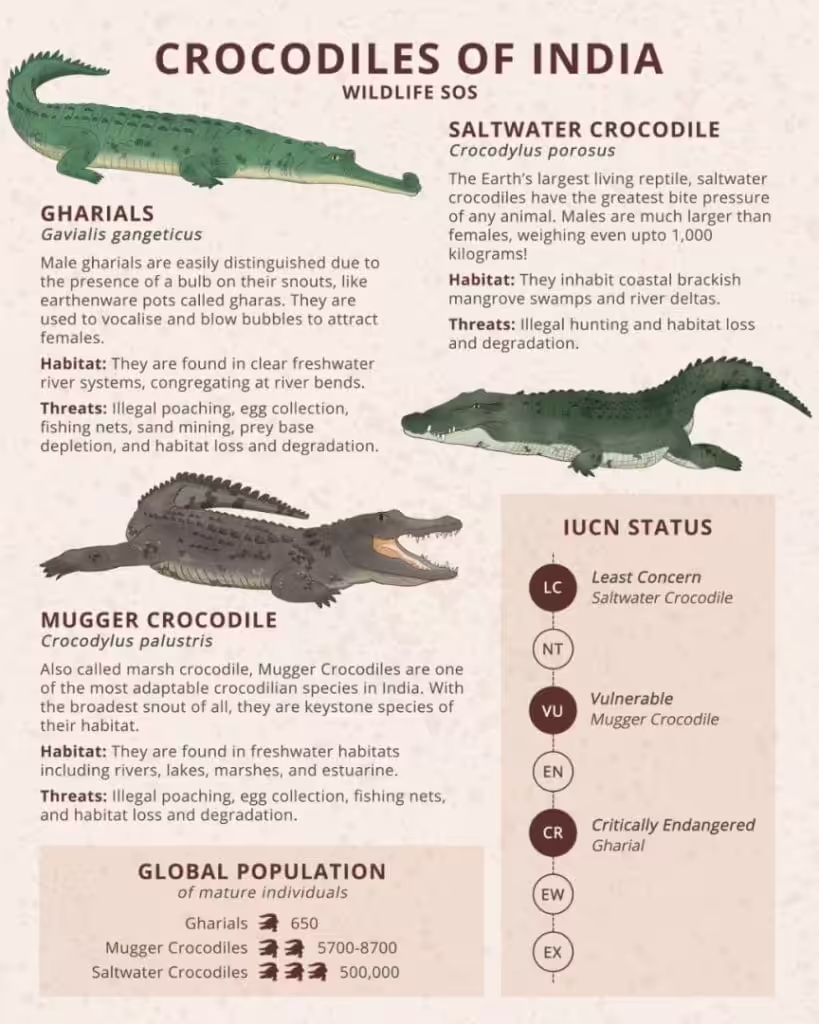
Saltwater crocodile: (Crocodylus porosus)
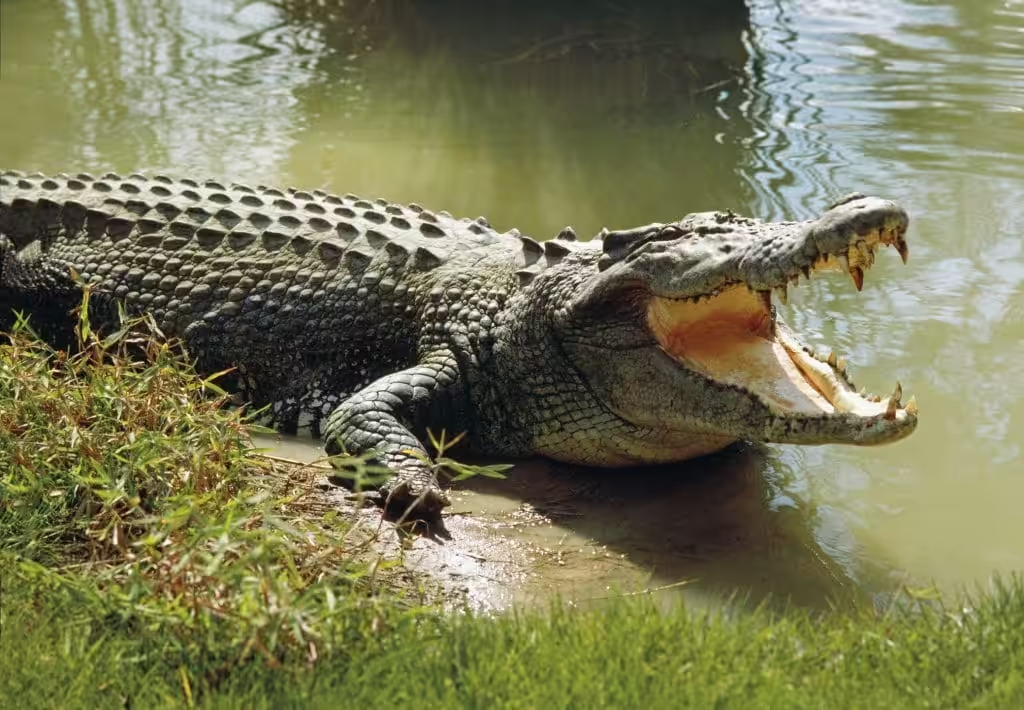
- Estuarine or Saltwater Crocodiles are the largest crocodile species on the planet. They can live in fresh, brackish, and saltwater.
- Adults are generally dark in colour with a lighter tan and dark bands and stripes on the lower flanks.
- Their diet includes everything from insects, fish, crustaceans and birds to turtles, goannas and water buffalo. These known cannibals have even been recorded eating other saltwater crocodiles.
- The species is more aquatic than most crocodiles, capable of swimming at a speed of 12-15mph during short bursts.
- These animals can be found in the Indo-Pacific: from northern Australia through south east Asia and into India. Saltwater Crocodiles in India are seen along the northeast coast and the Andaman Islands.
- Large population is present in and around the Bhitarkanika Wildlife Sanctuary in Odisha.
- Salt water crocodile eggs have an incubation period of around 80 days.
- IUCN Red List Status: Least Concern
- Saltwater crocs can live to be 70 years old in the wild.
Mugger or Marsh Crocodile (Crocodylus palustris):
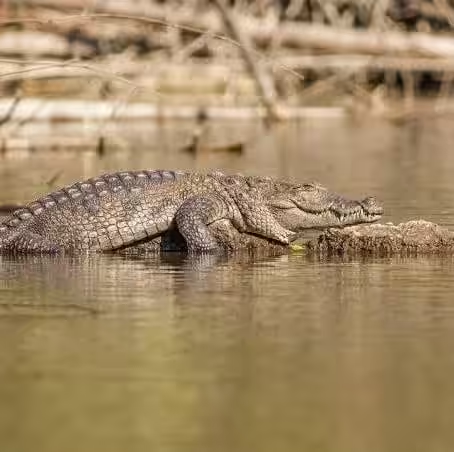
- Another member of the Crocodylidae family, the Mugger or Marsh Crocodile is a species largely restricted to the Indian subcontinent.
- It is native to freshwater habitats from south-eastern Iran to the Indian subcontinent, where it inhabits marshes, lakes, rivers and artificial ponds.
- They are found in various freshwater habitats, including rivers, lakes, marshes, irrigation canals and even coastal saltwater lagoons and estuaries.
- IUCN Red List Status: Vulnerable
Gharial (Gavialis gangeticus):
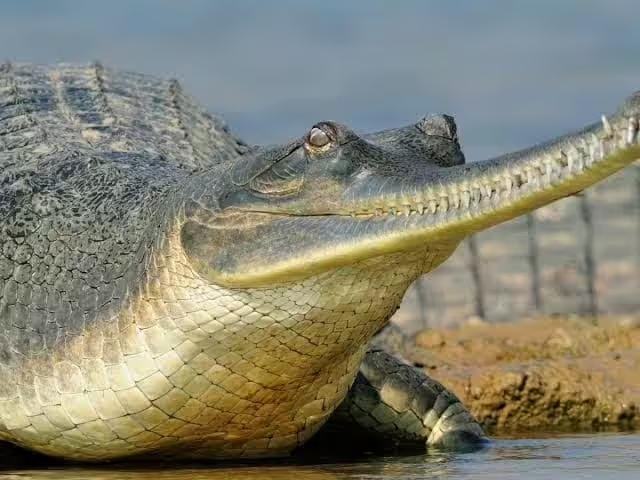
- IUCN Red List Status: Critically Endangered
- The Gharial derives its name from a bulbous knob-like protuberance on the snout of breeding males that resembles a ghara, which in Hindi means an earthen pot.
- The bulbous snout makes them the only crocodile species on the planet with a visible difference between males and females.
- Gharial prefers deep fast flowing rivers, however adult gharial have also been observed in still water branches (jheel) of rivers and in comparatively velocity-free aquatic environments of deepholes (kunds) at river bends and confluences.
- Historically, gharial were found in the river system of India, Pakistan, Bangladesh and southern part of Bhutan and Nepal. Today they survive only in the waters of India and Nepal.
- The surviving population can be found within the tributaries of the Ganges river system: Girwa (Uttar Pradesh), Son (Madhya Pradesh), Ramganga (Uttarakhand), Gandak (Bihar), Chambal (Uttar Pradesh, Madhya Pradesh and Rajasthan) and Mahanadi (Orissa).
- WWF-India has been involved in the Species Recovery Programme ever since the National Chambal Gharial crisis in December 2007.
Source: https://anantamias.com/current-affairs/saltwater-crocodile/
Civet

Why in news:
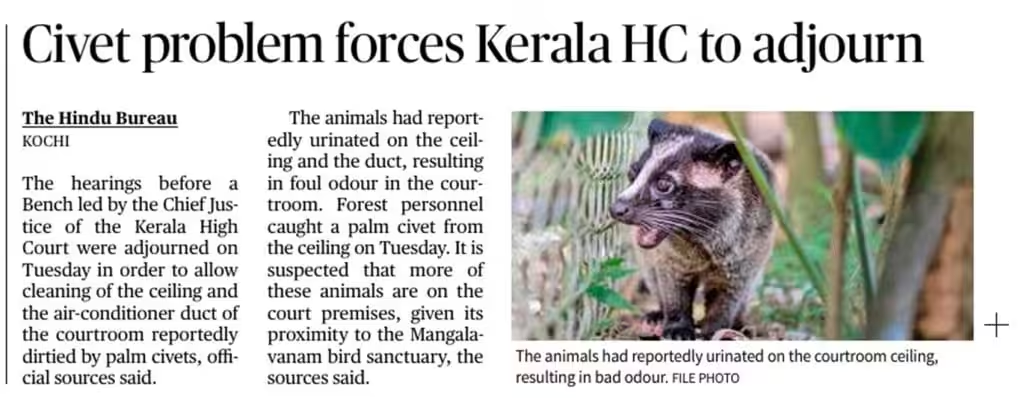
Proceedings in the Kerala High Court were adjourned after it was discovered that palm civets had urinated on the ceiling and air-conditioning ducts, causing a foul smell inside the courtroom. A palm civet was captured from the ceiling by forest personnel. Officials suspect that more civets may be present on the premises due to the court’s proximity to the Mangalavanam Bird Sanctuary.
UPSC Relevance:
UPSC CSE in prelims examination has focused on Species in news. Every year UPSC had asked at least one question related to species. A case in point is a following PYQ.
UPSC PYQ 2024:
Consider the following:
- Butterflies
- Fish
- Frogs
How many of the above have poisonous species among them?
a) Only one
b) Only two
c) All three
d) None
About Civet:
- Civets are small, cat-like mammals that live in tropical forests.
- Civets are small carnivores in the Viverridae family.
- Civets aren’t cats. But they do have some cat-like features, including a long furry tail, whiskers, and a muzzle.
- Civets have a varied diet, including fruits, small prey, and carrion.
- Civets play an important role in seed dispersal. They eat fruits and excrete the seeds across their habitat. As such, their decline threatens entire ecosystems.
- Civets are captured and kept in cruel conditions to sustain the civet coffee trade.
- IUCN Red List, the Malabar civet is critically endangered.
- Brown palm civets are arboreal (live mainly in trees), nocturnal (active at night)
- There are 8 different species of Wild civets found in India out of which Common Palm civets and Small Indian civets can be spotted across the sub-continent. They are omnivorous and some species are frugivorous too.
- They are absent in the arid zone (Some parts of Gujarat & Rajasthan), and the high Himalayan range of our country. They prefer a scrub, grassland, agricultural area near human habitation.
- Small Indian civets can be seen at Bandhavgarh, Kanha, Satpura, Panna, in Central India. Also in Western ghats Maám at Bandipur, Madumalai, Annamalai, Br Hills, Parambikulam.
Small Indian civets:
Malabar Civet:
- Very little is known about the Malabar civet which is endemic to the Western Ghats.
- Critically endangered in the IUCN red list.
Masked Palm Civet (Himalayan Palm Civet):
- Its range varies from the Himalayas to North East India and also in the Andamans in the evergreen and mountain forests.
Mangalavanam Bird Sanctuary:
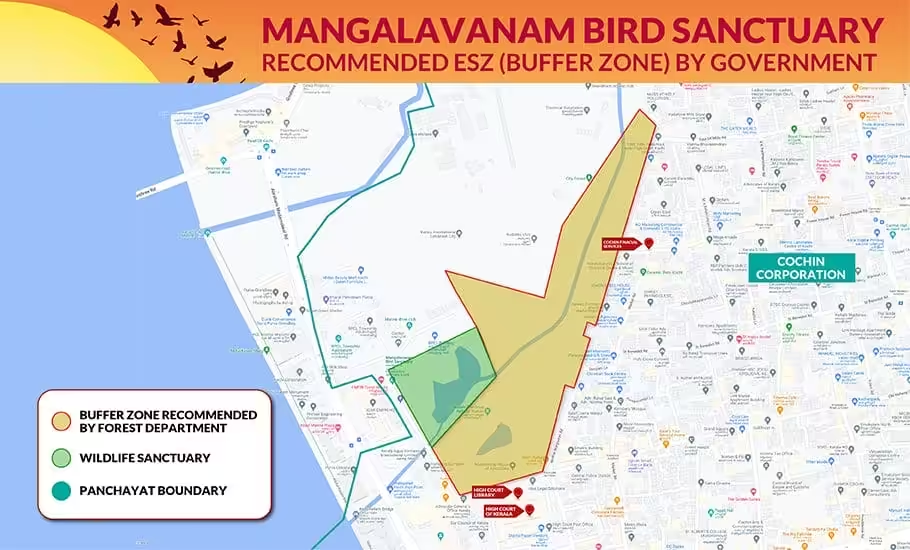
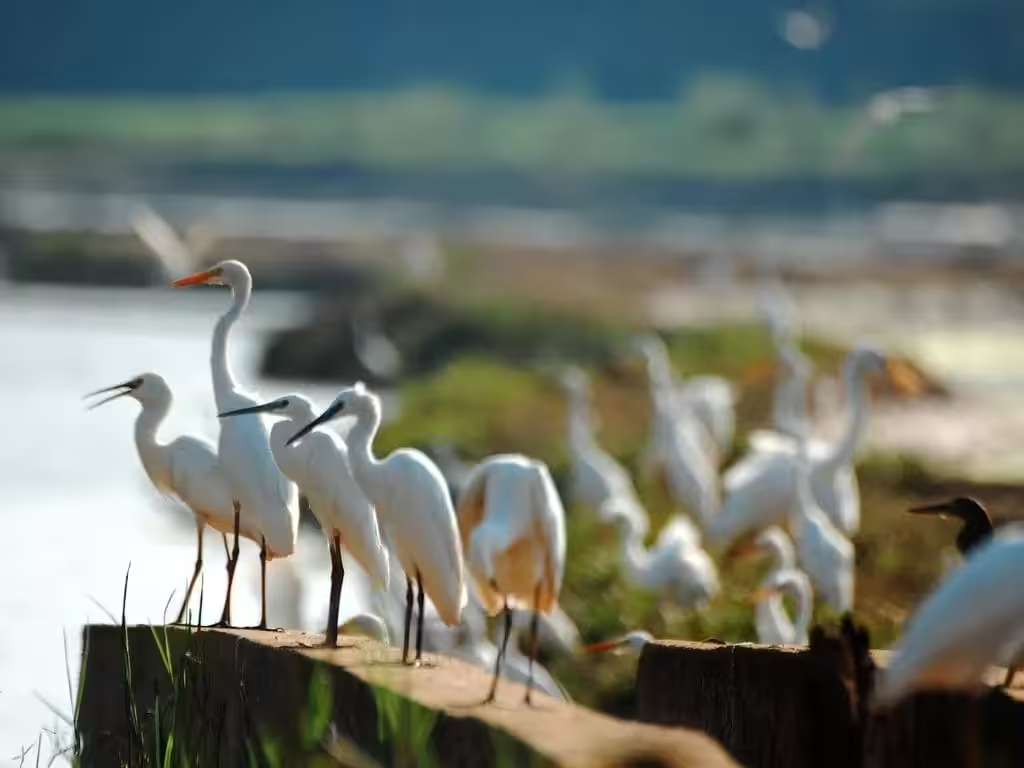
- Mangalavanam Bird Sanctuary is a bird sanctuary in the city of Ernakulam district of Kerala state in India.
- It is located in the heart of Kochi city.
- It is the only bird sanctuary in Kerala which is located in Mangrove forests.
Decline in Unemployment Rate : Periodic Labour Force Survey
Context : Latest unemployment data has been released for the month of July as well as Quarter of April – June.

UPSC Relevance:
Prelims, GS3, Indian Economy and issues relating to Planning, Mobilization of Resources, Growth, Development and Employment.
PYQ :
2021 Prelims
With reference to casual workers employed in India, consider the following statements:
1. All casual workers are entitled for Employees Provident Fund coverage.
2. All casual workers are entitled for regular working hours and overtime payment.
3. The government can by a notification specify that an establishment or industry shall pay wages only through its bank account.
Which of the above statements are correct?
(a) 1 and 2 only
(b) 2 and 3 only
(c) 1 and 3 only
(d) 1, 2 and 3
2023
Most of the unemployment in India is structural in nature. Examine the methodology adopted to compute unemployment in the country and suggest improvements.
2015
The nature of economic growth in India is described as jobless growth. Do you agree with this view? Give arguments in favour of your answer.
PLFS (Periodic Labour Force Survey)
- Conducted by the Ministry of Statistics and Programme Implementation (MoSPI) since 2017.
- Covers both rural and urban areas .
- Uses a multistage stratified sampling design; samples both households and census blocks to represent all districts in India.
New methodology used for PLFS
- As part of the revamped survey design of the PLFS adopted in January, a rotational panel sampling design is being used.
- Under this, each selected household is visited four times in four consecutive months. This ensures that three-fourths of first-stage sampling units, or FSUs, are matched between two consecutive months.
- The district is the basic sampling unit, improving representativeness.
- The number of households surveyed has also increased.
- The redesigned PLFS aims to achieve the following objectives:
- To generate key employment and unemployment indicators – namely Labour Force Participation Rate (LFPR), Worker Population Ratio (WPR) and Unemployment Rate (UR) – every month for both rural and urban areas at the all-India level under the Current Weekly Status (CWS).
- To extend the Quarterly PLFS results to rural areas, thereby producing quarterly estimates of labour market indicators for both rural and urban India under the CWS framework.
- To provide annual estimates of key employment and unemployment indicators in both usual status (ps+ss) and Current Weekly Status (CWS) for rural as well as urban areas.
Important Concepts
Labour Force: Persons aged 15 years and above who are working (employed) or seeking/available for work (unemployed).
Labour Force Participation Rate (LFPR): LFPR is defined as the percentage of persons in labour force (i.e. working or seeking or available for work) in the population.
Worker Population Ratio (WPR): WPR is defined as the percentage of employed persons in the population.
Unemployment Rate (UR): UR is defined as the percentage of persons unemployed among the persons in the labour force.
Current Weekly Status (CWS): The activity status determined on the basis of a reference period of last 7 days preceding the date of survey is known as the current weekly status (CWS) of the person.
Usual Principal Status (UPS): A person is considered employed/unemployed based on their activity status over the last year (183 or more days of unemployment in 365 days).
Usual Principal & Subsidiary Status (UPSS): Considers both main and subsidiary (side) activities over the last year.( considers even 30 days of unemployment in last 12 months).
Monthly data – JULY
- The monthly jobs data is based on the Current Weekly Status (CWS) approach.
National Unemployment (July 2025)
| Category | June 2025 | July 2025 |
| Overall (15+) | 5.6% | 5.2% |
| Male | 5.6% | 5.3% |
| Female | 5.6% | 5.1% |
Labour Force Participation Rate (LFPR)
| Category | June 2025 | July 2025 |
| Overall | 54.2% | 54.9% |
| Male | 77.1% | 77.1% |
| Female | 32% | 33.3% |
Youth Unemployment (15–29 years)
| Location | June 2025 | July 2025 |
| All-India | 15.3% | 14.9% |
| Rural | 13.8% | 13% |
| Urban | 18.8% | 19% |
Quarterly Data : (April – June 2025)
- Based on the Current Weekly Status (CWS) approach.
Overall Unemployment (15+)
- 5.4% national average
- Rural: 4.8%
- Urban: 6.8%
State Highlights
| State | Unemployment (15+) | Youth Unemployment |
| Rajasthan | 8.8% (Highest overall) | – |
| Gujarat | 2.2% (Lowest overall) | 5.6% (Lowest youth) |
| Himachal Pradesh | – | 29.6% (Highest) |
Labour Force Participation (Quarterly, Apr–Jun 2025)
| Category | LFPR |
| All-India (15+) | 55% |
| Male | 77.3% |
| Female | 33.4% |
| Highest LFPR: Himachal Pradesh | 70.3% |
| Lowest LFPR: Delhi | 43.5% |
Sector-Wise Employment
- Rural – Agriculture dominates
- Men: 44.6%
- Women: 70.9%
- Urban – Tertiary sector dominates
- Men: 60.6%
- Women: 64.9%
Important Trends to be remembered.
- July unemployment lowest in 3 months (5.2%).
- Women driving workforce participation growth.
- Rural youth unemployment fell sharply, urban youth joblessness edged up.
- Himachal facing massive youth unemployment (~30%) + natural disaster impacts.
- Gujarat is strong on both low unemployment and high youth LFPR.
Types of Unemployment
- Disguised Unemployment: More people engaged in a task than needed, mostly in agriculture.
- Seasonal Unemployment: Labourers jobless during off-seasons (esp. in farming).
- Structural Unemployment: Mismatch between skills and job requirements.
- Frictional Unemployment: Temporary unemployment during job transitions.
- Cyclical Unemployment: Due to changes in business cycles i.e. boom or recession.
- Technological Unemployment: Loss of jobs due to automation/technological progress.
- Vulnerable Unemployment: Informal workers without legal or social security
Source: https://anantamias.com/current-affairs/decline-in-unemployment-rate-periodic-labour-force-survey/