Why in news:
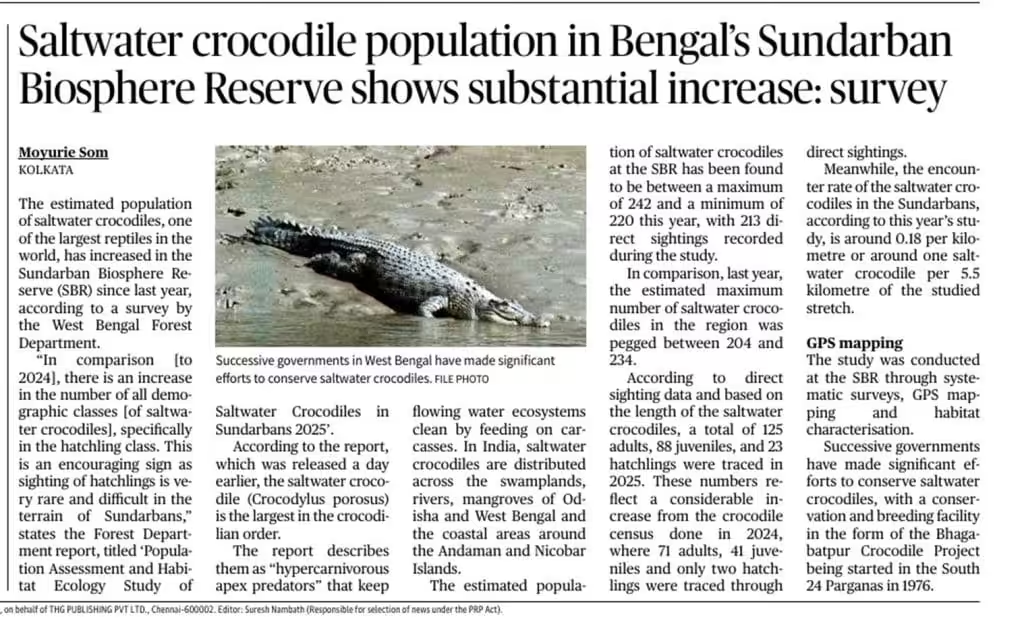
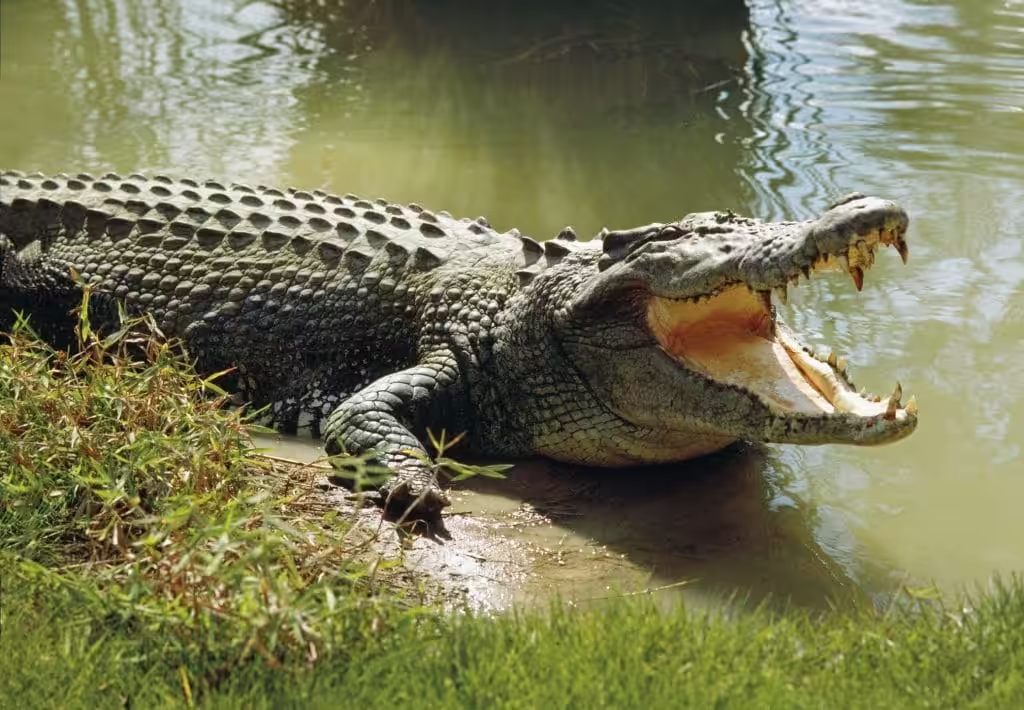
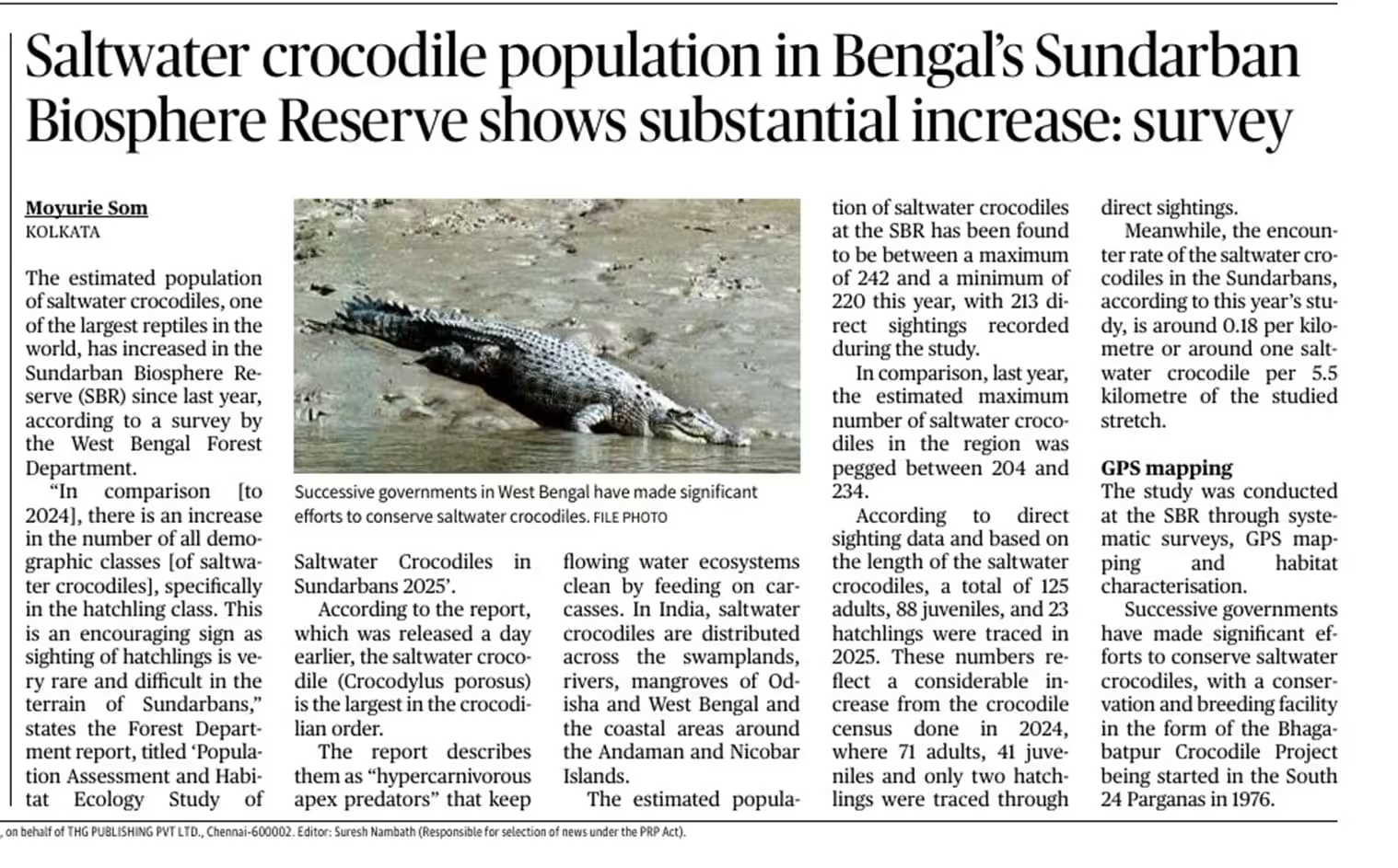
West Bengal Forest Department has released a new report titled “Population Assessment and Habitat Ecology Study of Saltwater Crocodiles in Sundarbans 2025”. The saltwater crocodile population in the Sundarban Biosphere Reserve (SBR) has shown a significant increase from last year.
UPSC Relevance:
UPSC CSE in prelims examination has focused on Species in news. Every year UPSC had asked at least one question related to species. A case in point is a following PYQ.
UPSC Prelims PYQ 2024:
Q. Consider the following statements:
- Lions do not have a particular breeding season.
- Unlike most other big cats, cheetahs do not roar.
- Unlike male lions, male leopards do not proclaim their territory by scent marking.
Which of the statements given above are correct?
(a) 1 and 2 only
(b) 2 and 3 only
(c) 1 and 3 only
(d) 1, 2 and 3
About crocodiles:
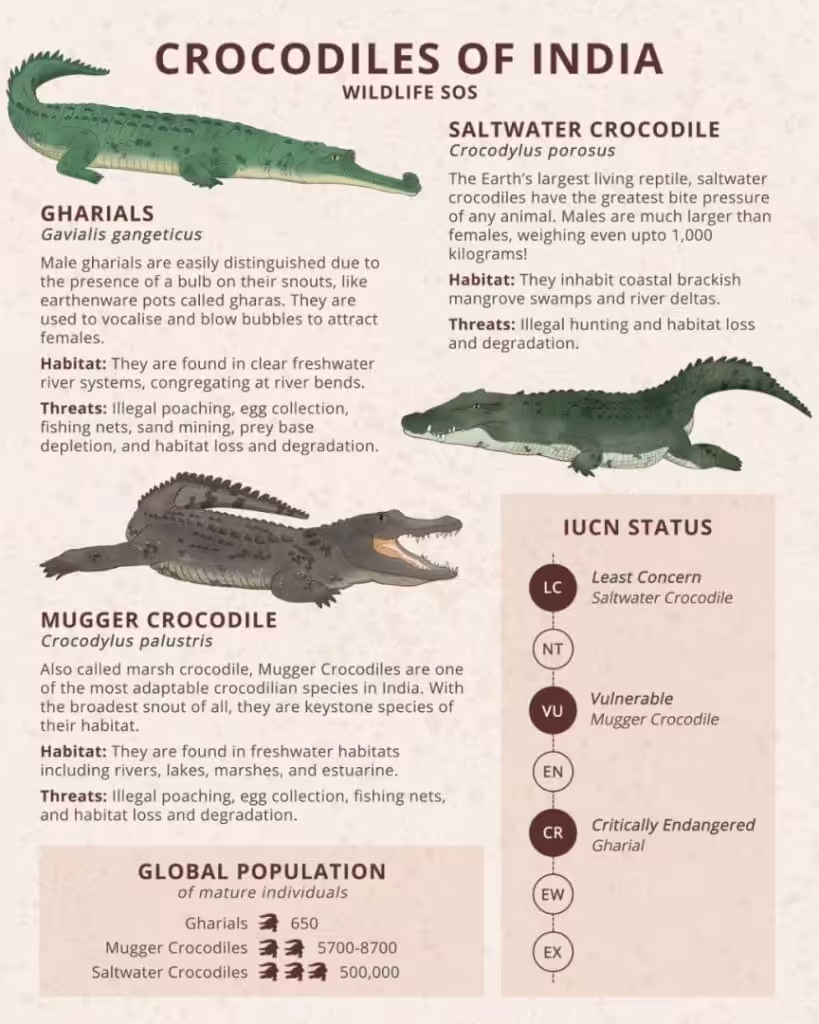
Saltwater crocodile: (Crocodylus porosus)
- Estuarine or Saltwater Crocodiles are the largest crocodile species on the planet. They can live in fresh, brackish, and saltwater.
- Adults are generally dark in colour with a lighter tan and dark bands and stripes on the lower flanks.
- Their diet includes everything from insects, fish, crustaceans and birds to turtles, goannas and water buffalo. These known cannibals have even been recorded eating other saltwater crocodiles.
- The species is more aquatic than most crocodiles, capable of swimming at a speed of 12-15mph during short bursts.
- These animals can be found in the Indo-Pacific: from northern Australia through south east Asia and into India. Saltwater Crocodiles in India are seen along the northeast coast and the Andaman Islands.
- Large population is present in and around the Bhitarkanika Wildlife Sanctuary in Odisha.
- Salt water crocodile eggs have an incubation period of around 80 days.
- IUCN Red List Status: Least Concern
- Saltwater crocs can live to be 70 years old in the wild.
Mugger or Marsh Crocodile (Crocodylus palustris):
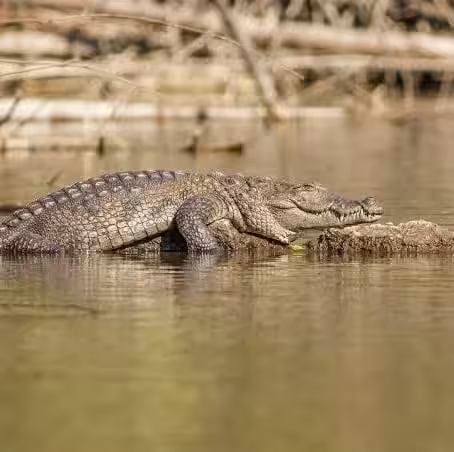
- Another member of the Crocodylidae family, the Mugger or Marsh Crocodile is a species largely restricted to the Indian subcontinent.
- It is native to freshwater habitats from south-eastern Iran to the Indian subcontinent, where it inhabits marshes, lakes, rivers and artificial ponds.
- They are found in various freshwater habitats, including rivers, lakes, marshes, irrigation canals and even coastal saltwater lagoons and estuaries.
- IUCN Red List Status: Vulnerable
Gharial (Gavialis gangeticus):
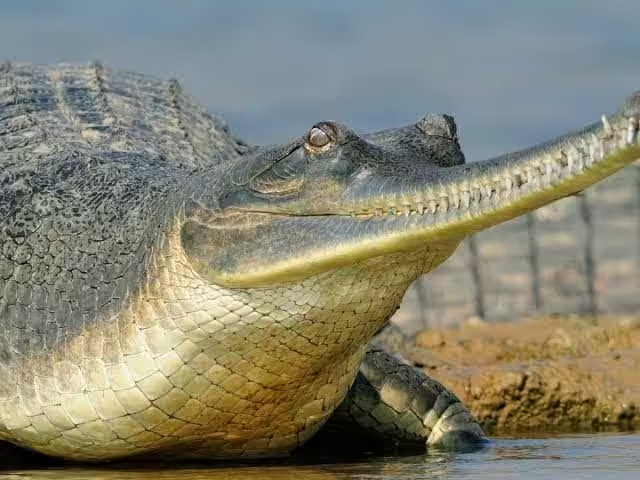
- IUCN Red List Status: Critically Endangered
- The Gharial derives its name from a bulbous knob-like protuberance on the snout of breeding males that resembles a ghara, which in Hindi means an earthen pot.
- The bulbous snout makes them the only crocodile species on the planet with a visible difference between males and females.
- Gharial prefers deep fast flowing rivers, however adult gharial have also been observed in still water branches (jheel) of rivers and in comparatively velocity-free aquatic environments of deepholes (kunds) at river bends and confluences.
- Historically, gharial were found in the river system of India, Pakistan, Bangladesh and southern part of Bhutan and Nepal. Today they survive only in the waters of India and Nepal.
- The surviving population can be found within the tributaries of the Ganges river system: Girwa (Uttar Pradesh), Son (Madhya Pradesh), Ramganga (Uttarakhand), Gandak (Bihar), Chambal (Uttar Pradesh, Madhya Pradesh and Rajasthan) and Mahanadi (Orissa).
- WWF-India has been involved in the Species Recovery Programme ever since the National Chambal Gharial crisis in December 2007.
Tell Google you want more of this.
Add Anantam IAS as a preferred sourceOne tap, and this site shows up more often in your own Top Stories, AI Overviews and AI Mode. Remove it any time.