Daily Digest
UPSC · Civil Services Examination
Current Affairs · Monday, 21 July 2025
Current affairs curated and edited by Anantam IAS faculty — pulled from The Hindu, PIB, IDSA, Foreign Affairs and the ministries. Read, annotate, revise.
Old Rajinder Nagar · Delhi 110005 · anantamias.com
Digital Overload among Young Adults and Children
Increasing health and psychological issues among the younger generation owing to increased screen time.
The WHO recommends zero screen time for children under two, and no more than one hour
of high-quality, supervised programming for children aged two–five.
A new study published in BMJ Paediatrics Open, found that screen exposure among
children aged two–five in India far exceeds the WHO guidelines.
Factors for increasing overload:-
- Lack of adult supervision in nuclear families. A new study published in BMJ Paediatrics Open highlights “Parents used screen time for their own rest, to carry out household chores, or to pacify their children,” Hybrid mode of education and online learning post covid pandemic has exposed students to screens.
- Lack of concrete guidelines and policy on screen usage and digital ethics in schools where mobiles are often allowed for security and coordination.
- Digital devices as a medium of entertainment, recreation and social interaction appeals more to the younger generations among lack of community activities in urban spaces.
- Impact :-
- Physiological impact
- Reduced physical activity leading to lower stamina and energy levels
- Increasing obesity
- Deformity and impaired posture
- worsening eyesight
- Violence causing self harm
- Psychological impact
- Social withdrawal and isolation due to reduced social engagement
- Irritable and aggressive behaviour due to prolonged screen exposure.
- Cyber bullying, stalking, trolling affecting self esteem and mental peace.
- Disrupted sleep cycles and insomnia
- Brain rot affects ideation and creativity.
- Depressive and suicidal tendencies increase due to above impacts as overall mental well being declines.
- Poor learning outcomes and slipping grades in academics and extra curricular
Measures:-
- Directives by delhi high court for managing smartphone use in school
- Safe deposit systems at entry
- Prohibiting devices in classrooms
- Educate students about online behaviour and ethical digital manners.
- Disallowing smartphones explicitly for recreation and entertainment.
- Parental supervision and attention to observe and intervene in any pattern of digital
- overload and excessive screen times by imposing fixed hours of digital curfews and
- encouraging social interaction and engagement.
- Cognitive behavioural therapies for weaning screen usage and develop tolerance,
- sleep therapies to restore sleep cycle and counselling to deal with any mental health issues.
- Initiating peer group based campaigns like PLANY {an online safety initiative by
- students of Delhi} to acknowledge and foster dialogue about cyber safety and mental health.
Source: https://anantamias.com/current-affairs/digital-overload-among-young-adults-and-children/
How a Sitting Judge Can Be Removed From Office
Context: Union Parliamentary Affairs Minister Kiren Rijiju on July 20, 2025 said over 100 MPs have already signed a notice to bring a motion in Parliament for the removal of Justice Yashwant Varma, which is the minimum support required for tabling the impeachment exercise in the Lok Sabha.
The constitution states that a judge can be removed only by a president’s order, on the basis of a motion moved and approved by both houses of the parliament.
UPSC PYQ (2019)
Consider the following statements:
- If the motion for the impeachment of a Judge is taken up for voting, the law requires the motion to be backed by each House of the Parliament and supported by a majority of total membership of that House and by not less than two-thirds of total members of that House present and voting.
- The motion to impeach a Judge of the Supreme Court of India cannot be rejected by the Speaker of the Lok Sabha as per the Judges (Inquiry) Act, 1968.
- The Constitution of India defines and gives details of what constitutes incapacity and proved misbehaviour’ of the Judges of the Supreme Court of India.
Which of the statements given above is/are correct?
D 1, 3 and 4 only
A 1 and 2 only
B 3 only
C 3 and 4 only
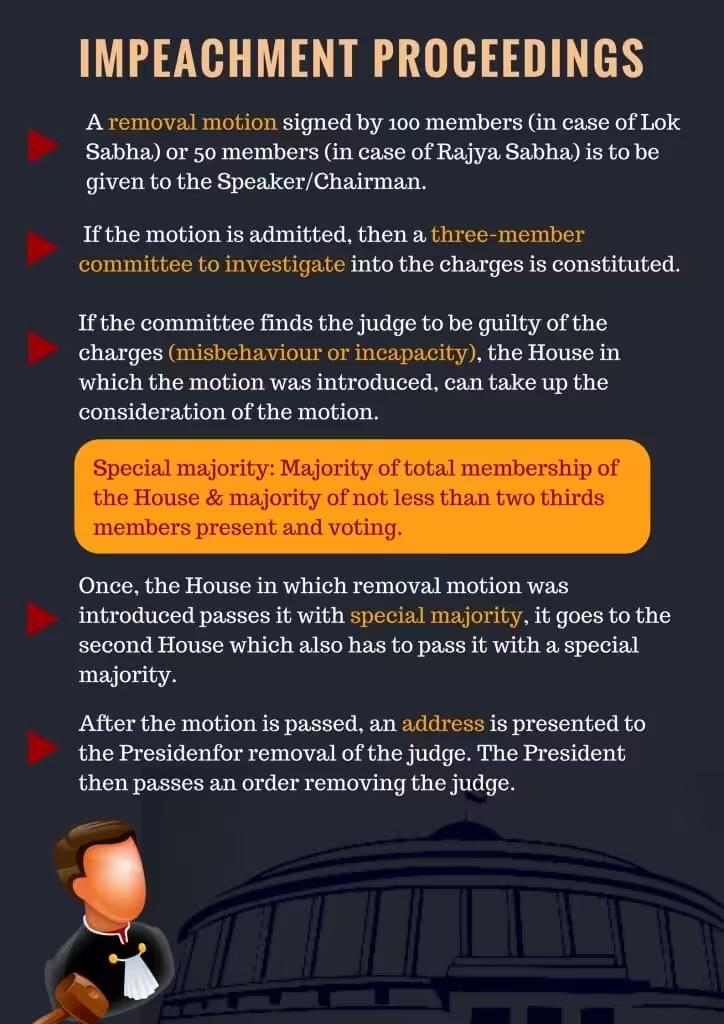
The details of the process of impeachment of the Judges of the Supreme Court of India are given in the Judges (Inquiry) Act, 1968. The process for removing judges is further detailed in the Judges Inquiry Act, 1968. The Act prescribes the following steps for removal from office:
- According to the Act, an impeachment motion can be initiated in either house of parliament.
- To bring proceedings into being: (i) not less than 100 members of Lok Sabha can present a signed notice to the speaker, or (ii) not less than 50 members of Rajya Sabha can present a signed notice to the chairman.
- The speaker or chairman can consult persons and scrutinize concerned material connected with the notice. Depending on this, he or she can choose to either grant the motion or deny the motion.
- If the motion is accepted, the speaker or chairman (who accepts it) will form a three-member committee to inquire into the complaint.
- It will include:
- (i) a Supreme Court judge;
- (ii) chief justice of a high court; and
- (iii) a renowned jurist.
- The committee will draft charges upon which the inquiry shall be conducted.
A copy of the charges will be sent to the judge who may file a written defence. Once it makes its findings, the committee shall report to the speaker or chairman, who shall lay the report before the parliament house concerned. Upon entering a finding of misbehaviour or incapacity, the motion for removal will be moved and shall be considered and debated.
The removal motion must be passed by each parliament house by: (i) the majority of the entire membership of such house; and (ii) a majority of not less than two-thirds of members present and voting in such house. When the motion is so passed, the motion will be referred to the other house for adoption.
After it is passed in the two chambers, the motion is brought before the president for an order of removal of the judge.
Source: https://anantamias.com/current-affairs/how-a-sitting-judge-can-be-removed-from-office/
The Soil of a Nation
To improve both crop and human nutrition, India needs a paradigm shift – from indiscriminate use of fertilisers to tailored and science-based soil nutrition management.
How far India has come since Independence
- In 2024-25 (FY25), India exported 20.2 million tonnes (MT) of rice in a global market of 61 MT.
- The country also runs the world’s largest food distribution programme, the PM-Garib Kalyan Yojana (PMGKY), which provides 5 kg of free rice or wheat per person per month to more than 800 million people.
- Yet, the Food Corporation of India holds about 57 MT of rice -the highest stock in 20 years and nearly four times the buffer norm of 13.54 million tonnes as of July 1.2025.
- The extreme poverty head count (those earning less than $3/day at 2021 PPP) dropped from 27.1 per cent in 2011 to just 5.3 per cent in 2022.

Persisting issues
- Malnutrition amongst children remains a challenge.
- The National Family Health Survey (NFHS5)(2019-21) reports that 35.5 per cent of children under five years of age are stunted. 32.1 per cent are underweight, and 19.3 per cent are wasted.
- Food security in India has evolved beyond merely ensuring caloric sufficiency; it must now encompass nutritional security as well.
Health of soils.
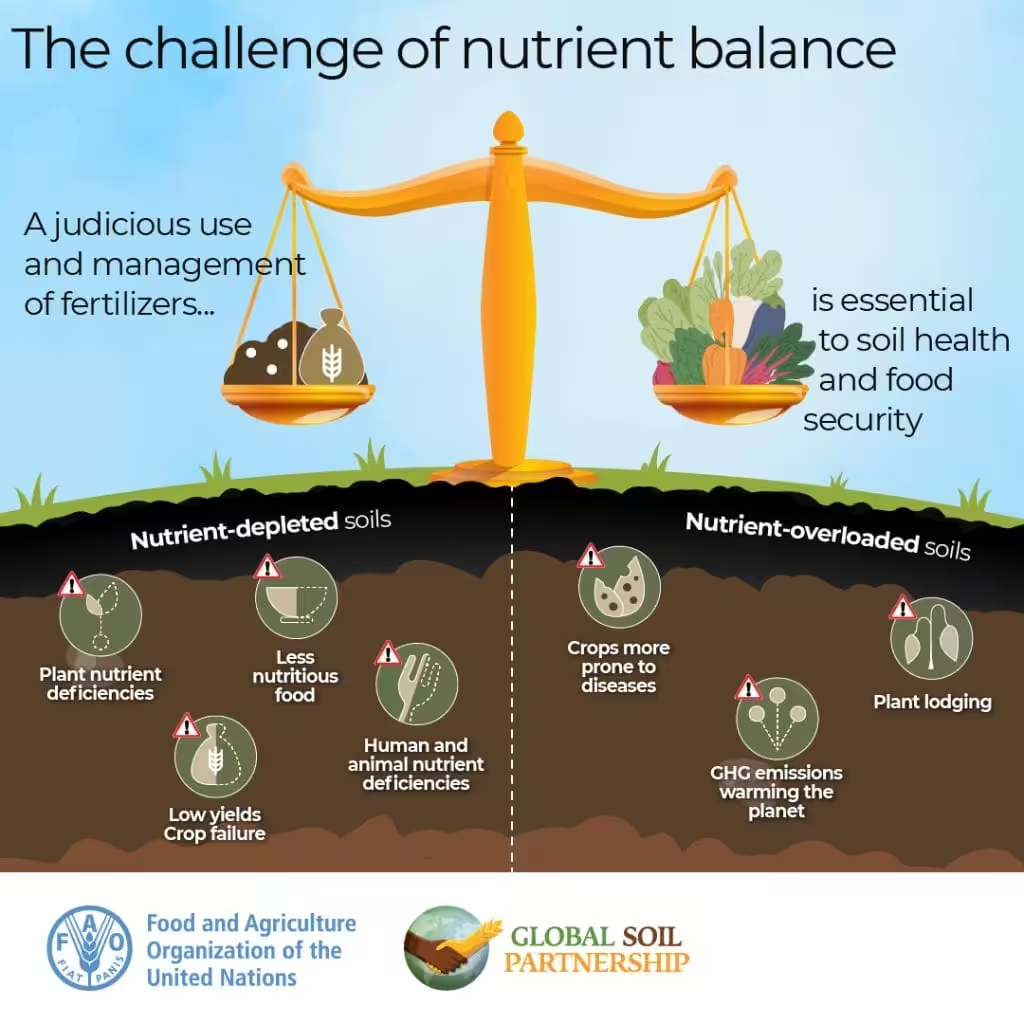
Soil micronutrient deficiencies not only impair agricultural productivity but also degrade the nutritional quality of crops.
Take zinc: Its deficiency in soils translates into low zinc content in cereals like wheat and rice, which in turn is linked to childhood stunting-long-term cognitive health, as well as the professional life of a person.
Status of Indian soils
Less than 5% have high or sufficient nitrogen (N), only 40% have sufficient phosphate (P), 32% have sufficient potash (K) and just 20% are sufficient in soil organic carbon (SOC). SOC is a critical parameter defining the physical, chemical, and biological properties of soil-these govern its holding capacity and nutrient use efficiency. Our soils also suffer from a deficiency of sulphur, as well as micronutrients like iron, zinc and boron. These deficiencies range from moderate to severe. In some parts of the country, nitrogen (N) is overused while phosphorus (P) and potassium (K) are under used.
For example, in Punjab,
- Nitrogen use exceeds recommendations by 61 percent,
- Potassium use is short by 89 per cent,
- phosphorus use is short by 8 per cent.
- The highly imbalanced use of N, P and Kand the neglect of micronutrients leads to sub optimal agricultural productivity.
- Nationwide, the fertiliser-to-grain response ratio has declined significantly from 1:10 in the 1970s to a mere 1:2.7 in 2015.
A significant portion of urea is diverted to non-agricultural uses and also finds its way to neighbouring countries. The application of granular urea results in substantial nitrogen losses, with only 35-40 per cent of the nitrogen being absorbed by the crops. The remaining nitrogen is either released into the atmosphere as nitrous oxide a greenhouse gas that is 273 times more potent than carbon dioxide or leaches into groundwater, contaminating it with nitrates and making it unsafe for consumption.
To restore soil health and improve both crop and human nutrition
- The collaboration aims to develop, implement, and scale region-specific, data-driven soil nutrition solutions that enhance crop productivity while improving their nutritional profile.
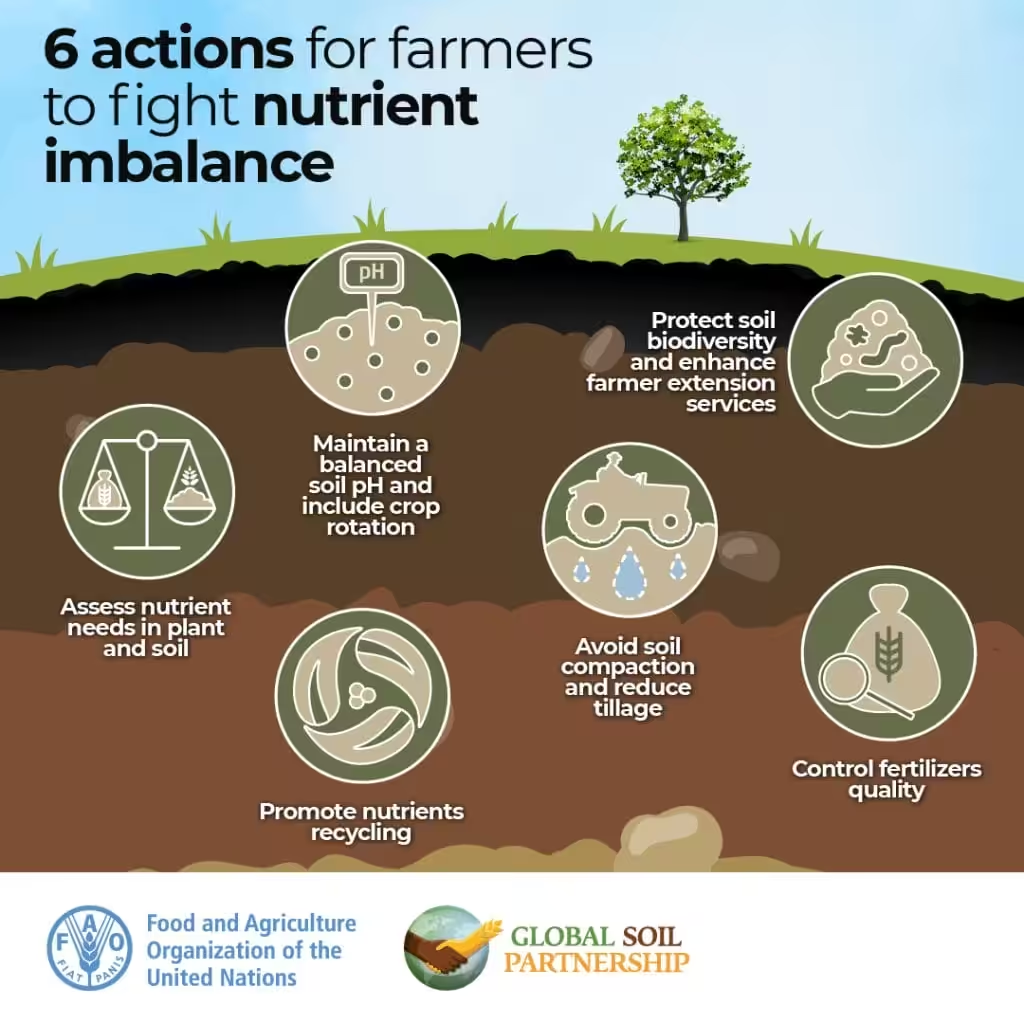
- India needs a paradigm shift-from indiscriminate use of fertilisers to tailored and science-based soil nutrition management.
- precise and customised fertilisation strategies, which are informed by rigorous soil testing and aligned with the nutritional needs of different soils and crops.
- Indian Council for Research on International Economic Relations (ICRIER) and OCP Nutricrops have committed to collaborating to improve soil health in India and beyond.
Source: https://anantamias.com/current-affairs/the-soil-of-a-nation/