Current affairs curated and edited by Anantam IAS faculty — pulled from The Hindu, PIB, IDSA, Foreign Affairs and the ministries. Read, annotate, revise.
Articles2
EditionCurrent Affairs · Friday, 22 August 2025
Publishedanantamias.com
Old Rajinder Nagar · Delhi 110005 · anantamias.com
Anantam IASDaily Digest
Article 1 / 2 · 22 August 2025, 12:53 pm
India’s First Fully Digital Literacy State
Study Guides · Study Notes · Education · GS II · Indian Polity
Why in news:
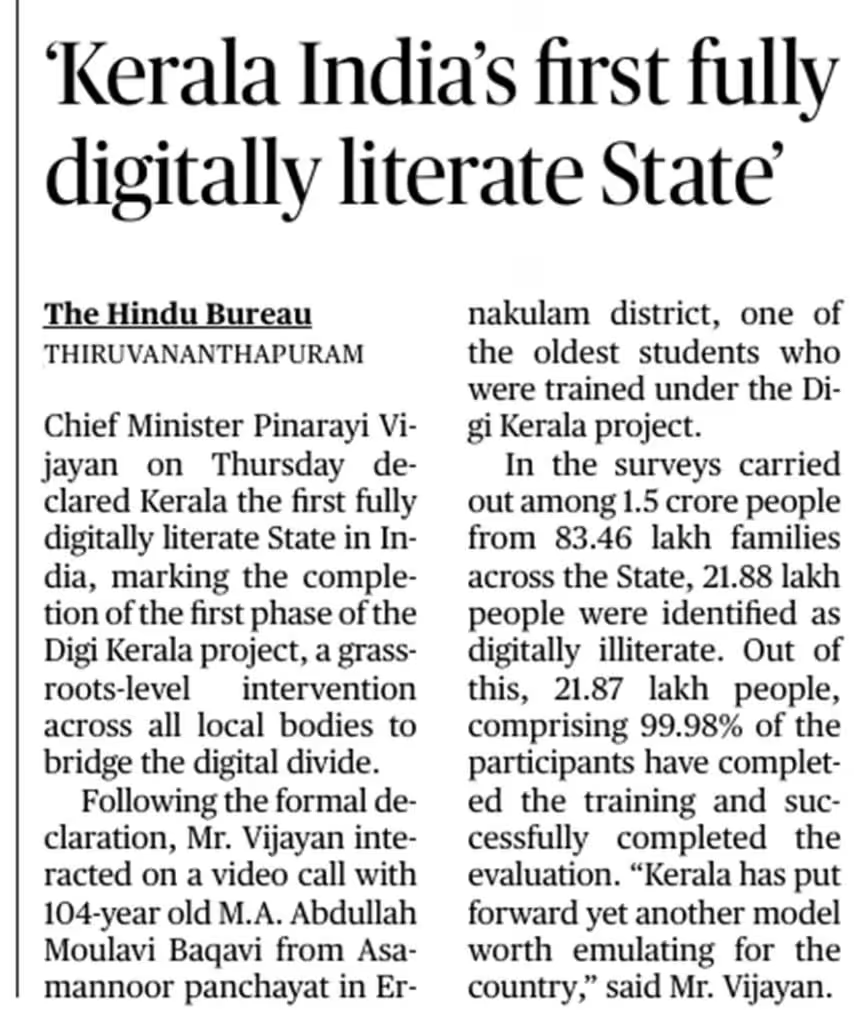
Kerala the first fully digitally literate State in India, marking the completion of the first phase of the Digi Kerala project, a grass roots-level intervention across all local bodies to bridge the digital divide.
UPSC Relevance:
Important aspects of governance, transparency and accountability, e-governance applications, models, successes, limitations, and potential.
UPSC PYQ 2023:
e-governance, as a critical tool of governance, has ushered in effectiveness, transparency and accountability in governments. What inadequacies hamper the enhancement of these features?
About digital literacy:
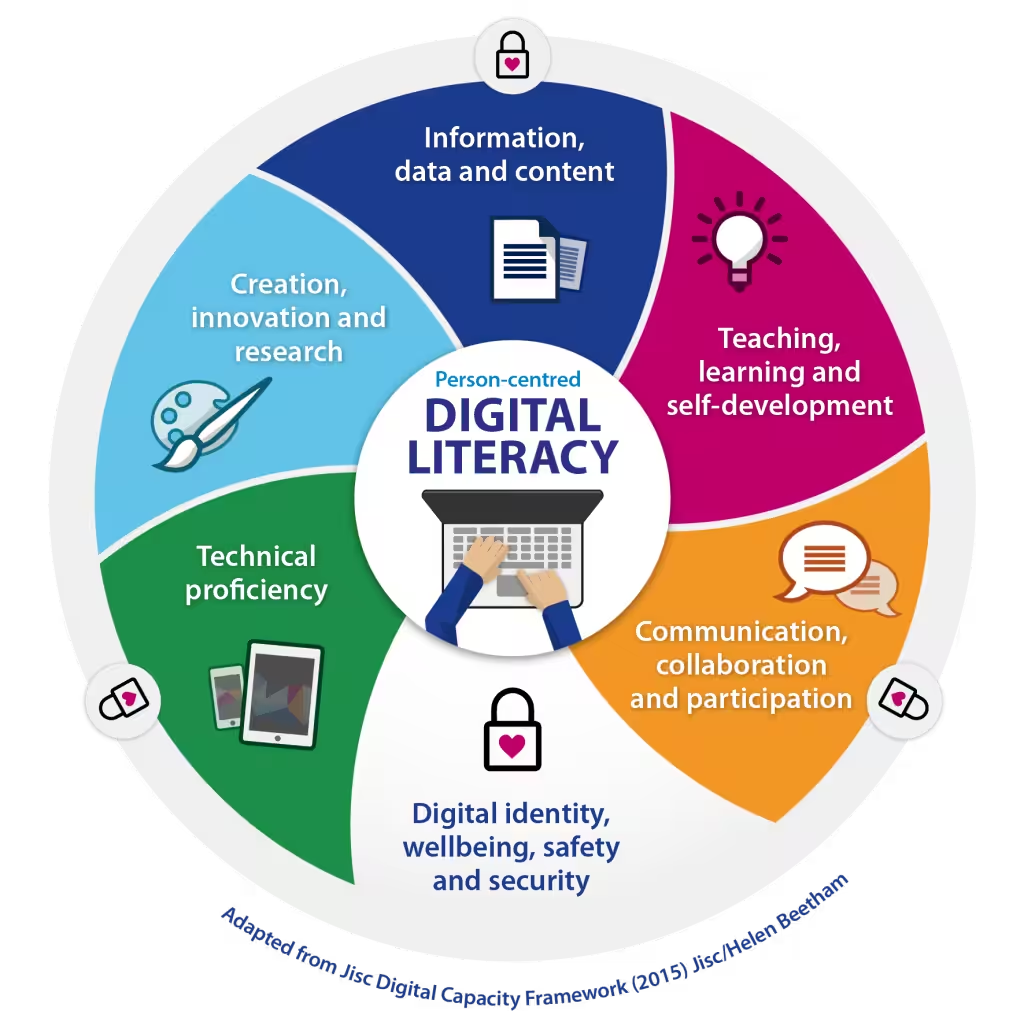
Digital Literacy is the ability of individuals and communities to understand and use digital technologies for meaningful actions within life situations. Simply it is the ability to access the computer/mobile/internet for our day-to-day activities and being connected with others through the internet.
Aspects of Digital Literacy:
The Power of Internet
Use of Emails
Uses of Apps
Uses of Browser
Uses of Government apps like Umang, Yono etc.
Uses of Unified Payment Interface (BHIM)
Ethical Uses of Internet
Threats of Cyber Security
Digitally Literate Household:
If at least one person in the household has the ability to operate a computer and use the internet (among individuals who are 5 years of age and older) is defined as Digitally Literate Household.
Data:
Only 38% of households in India are digitally literate. In urban areas, digital literacy is relatively higher at 61% as compared to just 25% in rural areas.
By occupation profile in rural India, households that reported to have received regular wages/salaries from non-agricultural occupations have the highest percentage of digitally literate households at around 53%.
In contrast, casual workers in the agriculture sector have the lowest level of digital literacy at 13%. Scheduled Tribes have the lowest overall digital literacy at the household level at 21%.
Promotion of Digital Literacy:
During the years 2014 to 2016, Government of India had implemented two Schemes on providing digital literacy to the masses namely “National Digital Literacy Mission (NDLM)” and “Digital Saksharta Abhiyan (DISHA)” with a cumulative target of 52.50 lakh persons (one person from every eligible household) across the country including rural India. Under these two schemes, a total of 53.67 lakh beneficiaries were trained, out of which around 42% candidates were from rural India. Both schemes has been closed now.
In 2011, the BharatNet project was launched to connect 0.25 million panchayats through optical fibre (100 MBPS) and connect India’s villages.
In 2017, the PM Gramin Digital Saksharta Abhiyan was launched to usher in digital literacy in rural India by covering 60 million households.
The National Education Policy (NEP), 2020. This aims at making “India a global knowledge superpower” by introducing several changes from the school to college level in the Indian education system with a special emphasis on digital education.
Unnati Project – Hindustan Petroleum Corporation Limited (HPCL) strives to bridge the digital divide in schools by giving rural students with poor economic and social backgrounds access to computer education.
Study Guides · Study Notes · GS II · Indian Polity · Indian Society
Why in news:
The Kannapuram grama panchayat in Kannur, Kerala, has gained attention for its community-led cancer control model, which has been recognized internationally. This initiative, now popularly called the “Kannapuram Model”, has been featured in the WHO South-East Asia Journal of Public Health as a successful public health strategy.
UPSC Relevance:
Issues relating to development and management of Social Sector/Services relating to Health, Education, Human Resources.
Issue:
In the past 25 years, breast cancer incidence in Kerala has risen 300-fold. Breast cancer accounts for 34% of all cancers in women. Two-thirds of the cases are detected only in Stages 3 & 4, leading to high mortality.
About Kannapuram Model:
Community-Based Approach:
Sustained awareness campaigns on breast cancer.
Culturally sensitive communication to address stigma and fear.
Formation of a women volunteers’ squad (navigators) to help patients undergo screening, navigate the healthcare system, and complete treatment.
Institutional Support:
Initiative led by Kannapuram Grama Panchayat in Kannur district.
Collaboration with Malabar Cancer Centre (MCC).
Recognized by the WHO South-East Asia Journal of Public Health as a successful public health intervention.
Results Achieved:
Breast cancer detection rate: 0.96 per 1,000 women – all in early stages and successfully treated.
96% of women above 30 years underwent breast cancer screening.
6.2% were referred for further tests, out of which 66.5% underwent investigations.
Why the Kannapuram Model Worked:
Prevented women from dropping out of the screening and treatment process.
Women’s volunteer squad motivated and escorted women for follow-up investigations.
Helped them with appointments, emotional support, and handholding.
Acted as a bridge between the community and healthcare system.