Daily Digest
UPSC · Civil Services Examination
Current Affairs · Saturday, 30 May 2026
Current affairs curated and edited by Anantam IAS faculty — pulled from The Hindu, PIB, IDSA, Foreign Affairs and the ministries. Read, annotate, revise.
Old Rajinder Nagar · Delhi 110005 · anantamias.com
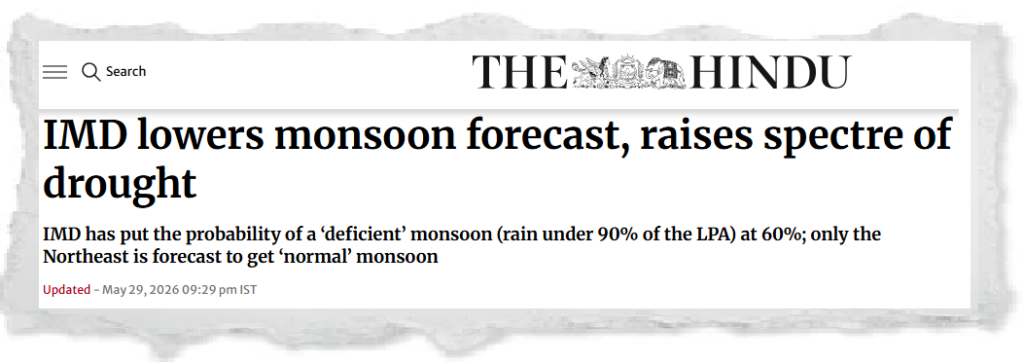
IMD lowers monsoon forecast, raises spectre of drought
Why in News?
The India Meteorological Department (IMD) has revised its 2026 southwest monsoon forecast downward from 92% of the Long Period Average (LPA) to 90% of LPA, placing the season firmly in the “below-normal” category. The IMD has also indicated a 60% probability of a deficient monsoon, raising concerns about drought-like conditions, agricultural stress, water shortages, inflation, and rural economic slowdown.
The forecast comes amid the expected development of El Niño conditions, which are historically associated with weaker Indian monsoons.
UPSC Relevance
Prelims: El Niño, Indian Ocean Dipole (IOD), Madden-Julian Oscillation (MJO), Long Period Average (LPA), southwest monsoon.
Mains:
GS I – Indian climate, monsoon system, droughts;
GS III – Agriculture, food security, disaster management, water resources, climate change.
Background: Why the Monsoon Matters for India
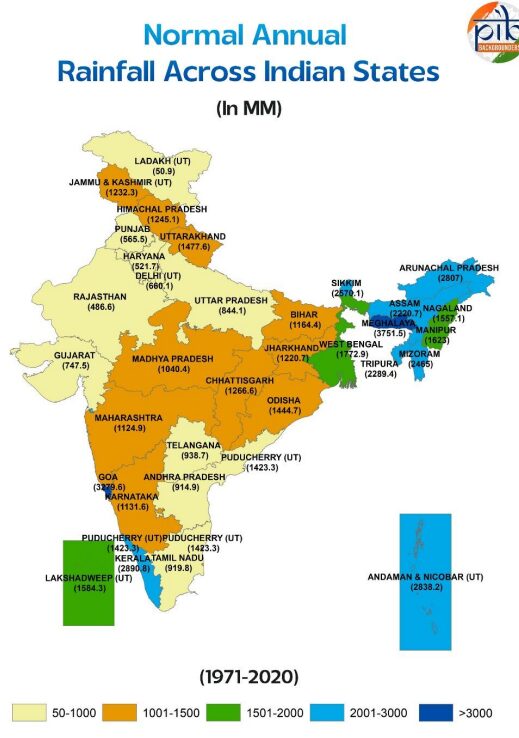
The southwest monsoon, extending from June to September, is the backbone of India’s climate and economy. Nearly 70% of India’s annual rainfall is received during this period.
Despite the growth of irrigation infrastructure, a significant portion of Indian agriculture remains dependent on rainfall. The monsoon therefore directly influences agricultural production, groundwater recharge, reservoir storage, hydropower generation, rural incomes, and food prices.
A weak monsoon often triggers cascading effects across multiple sectors of the economy.
What Has the IMD Forecast Said?
The IMD has revised its seasonal rainfall projection to 90% of the Long Period Average (LPA), compared to its earlier April estimate of 92%. The department has also attached a 60% probability to a deficient monsoon season, meaning rainfall could fall below 90% of the benchmark average.
The forecast indicates that most regions of India, including Central India, Northwest India, the Southern Peninsula, and the monsoon core zone, may receive below-normal rainfall. Only Northeast India is expected to receive normal monsoon precipitation.
The IMD has further suggested that June rainfall itself is likely to remain below average, increasing concerns about delayed sowing and prolonged dry spells during the initial agricultural season.
Delay in Monsoon Onset over Kerala
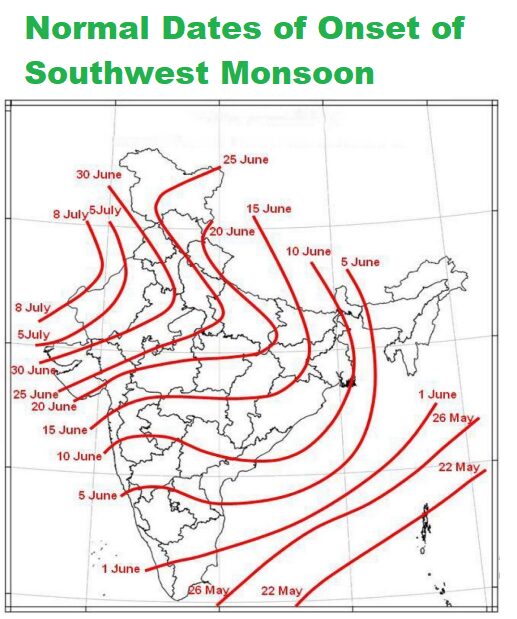
The southwest monsoon usually enters India through Kerala and marks the beginning of the rainy season.
The IMD had initially forecast the onset around May 26, but later acknowledged that the monsoon was unlikely to arrive within the projected window and may now reach Kerala during the first week of June.
Meteorologists attributed the delay to weaker monsoon winds over the Arabian Sea, the westward drift of atmospheric circulations, and the continued influence of mid-latitude western disturbances that temporarily disrupted the northward advance of monsoon currents.
While a delay of a few days is not unusual, prolonged delays combined with weak rainfall often create stress for agriculture and water resources.
What is Long Period Average (LPA)?
The Long Period Average refers to the average rainfall recorded over a long reference period and serves as a benchmark for monsoon forecasts.
The current LPA used by the IMD is based on rainfall data from 1971–2020.
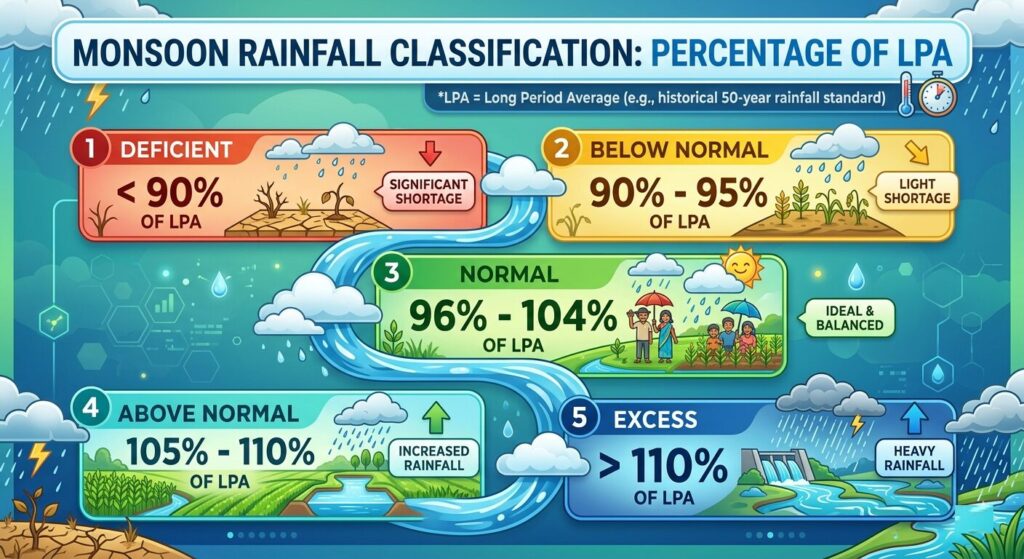
Based on the percentage of LPA received, monsoon rainfall is classified into different categories:
- Deficient: Less than 90% of LPA
- Below Normal: 90%–95% of LPA
- Normal: 96%–104% of LPA
- Above Normal: 105%–110% of LPA
- Excess: More than 110% of LPA
A forecast of 90% of LPA places the monsoon at the boundary between deficient and below-normal categories.
El Niño: The Biggest Concern
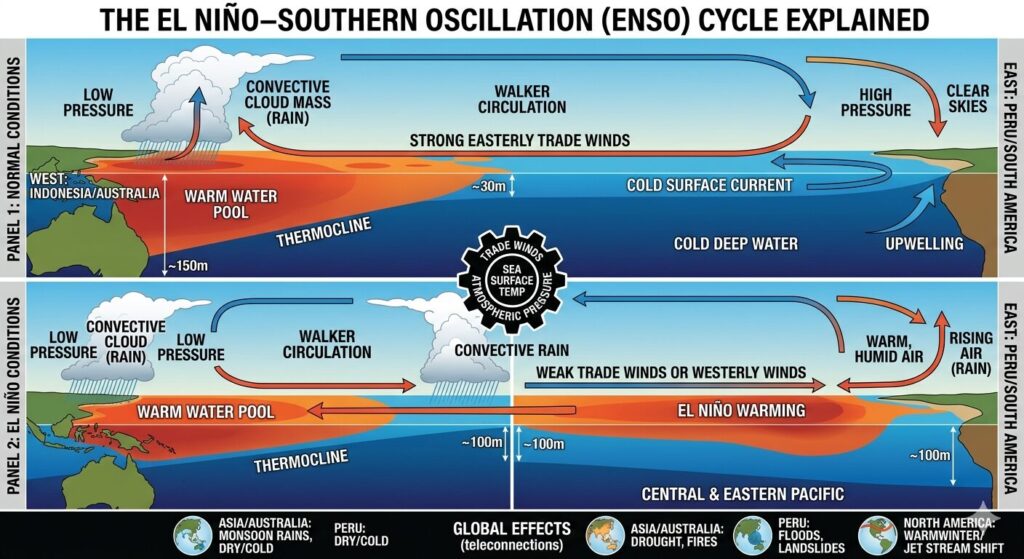
The IMD estimates a very high probability of El Niño conditions developing during the monsoon season. El Niño refers to the abnormal warming of sea surface temperatures in the central and eastern Pacific Ocean.
This warming weakens the Walker Circulation and alters global atmospheric circulation patterns. For India, El Niño often reduces monsoon rainfall by weakening moisture-bearing winds over the subcontinent.
Historically, several major drought years such as 2002, 2009, 2014, and 2015 have been associated with El Niño events.
However, the relationship is not absolute. Other climatic factors can either worsen or partially offset El Niño’s impact.
Role of Indian Ocean Dipole (IOD)
The Indian Ocean Dipole (IOD) refers to irregular changes in sea surface temperatures between the western and eastern Indian Ocean.
A positive IOD generally strengthens the Indian monsoon by enhancing moisture transport toward the Indian subcontinent. In several past years, positive IOD conditions have partly compensated for the adverse effects of El Niño.
At present, no strong positive IOD signal has emerged. This has added to concerns regarding monsoon performance during the season.
Madden-Julian Oscillation (MJO)
The Madden-Julian Oscillation is an eastward-moving atmospheric disturbance characterised by clouds, rainfall, winds and pressure anomalies that travel around the equatorial region roughly every 30–60 days.
A favourable phase of the MJO can strengthen rainfall activity over India and improve monsoon performance even during otherwise weak years.
Meteorologists therefore continue to closely monitor MJO behaviour because intraseasonal weather systems can significantly influence the final seasonal outcome.
Why Deficient Rainfall Does Not Always Mean Drought
A common misconception is that lower total rainfall automatically translates into drought.
The distribution of rainfall is often more important than the seasonal total itself.
Agriculture can withstand a moderate reduction in total rainfall if rains are evenly distributed. However, prolonged dry spells during critical crop-growth stages can cause severe agricultural losses even when seasonal rainfall appears adequate.
Therefore, delayed onset, uneven distribution, and repeated dry spells are often more damaging than a simple reduction in seasonal averages.
Possible Impact on Agriculture
Stress on Kharif crops
The kharif season begins with the arrival of the southwest monsoon. Crops such as rice, maize, pulses, cotton, soybean, and groundnut depend heavily on monsoon rainfall during sowing and early growth stages.
A delayed onset or prolonged dry spells may reduce sowing acreage and lower crop productivity.
Impact on rain-fed farming regions
Large parts of central and peninsular India continue to depend on rainfall rather than irrigation. Farmers in these regions are particularly vulnerable to monsoon fluctuations.
Lower rainfall can increase crop failure risks and reduce farm incomes.
Reduced groundwater recharge
Weak rainfall affects not only current crops but also future agricultural seasons.
Insufficient recharge of groundwater and reservoirs can reduce irrigation availability for both kharif and rabi crops, creating longer-term water stress.
Economic Implications
India’s economy remains significantly influenced by monsoon performance despite rapid industrialisation and urbanisation.
A weak monsoon can lead to:
- Lower agricultural output and rural incomes.
- Reduced demand in rural markets.
- Increased food inflation due to supply shortages.
- Pressure on water resources and electricity generation.
- Greater fiscal burden through drought relief and agricultural support measures.
Several economists have warned that a deficient monsoon could complicate inflation management and affect broader economic growth prospects.
Climate Change and Increasing Monsoon Uncertainty
Climate change is making monsoon behaviour increasingly unpredictable.
Recent decades have witnessed:
- More frequent extreme rainfall events,
- Longer dry spells,
- Erratic onset and withdrawal patterns,
- Rising temperatures,
- Increased heatwave intensity.
This suggests that future climate risks may arise not only from deficient rainfall but also from greater variability in rainfall distribution.
The challenge is therefore shifting from merely forecasting total rainfall to managing climate uncertainty and improving resilience.
Way Forward
Strengthening climate-resilient agriculture
Promotion of drought-resistant crop varieties, climate-smart farming techniques, and diversified cropping systems can reduce agricultural vulnerability.
Expanding irrigation coverage
Greater investment in micro-irrigation, watershed development, and rainwater harvesting can reduce dependence on monsoon variability.
Improving weather advisories
Timely district-level weather forecasts and agro-advisories can help farmers make informed sowing and irrigation decisions.
Enhancing groundwater management
Efficient groundwater recharge programmes and sustainable extraction practices are essential to strengthen long-term water security.
Building drought preparedness
Governments should strengthen contingency planning, crop insurance coverage, and early-warning systems to reduce the impact of deficient rainfall years.
Conclusion
The IMD’s downward revision of the 2026 monsoon forecast has revived concerns about drought-like conditions, agricultural stress, and inflationary pressures. While a deficient monsoon is not yet certain, the combination of a delayed onset, high probability of El Niño, and below-normal rainfall projections has increased risks for the economy and rural livelihoods.
The ultimate outcome will depend on the interaction of multiple climatic factors such as El Niño, the Indian Ocean Dipole, and the Madden-Julian Oscillation. As climate variability increases, India’s long-term resilience will depend not only on accurate forecasting but also on stronger water management, climate-adaptive agriculture, and disaster preparedness.
Practice Questions
Prelims Question 1 (Inference-based)
Consider the following statements with reference to the 2026 southwest monsoon forecast:
I. The IMD has revised the monsoon forecast downward and indicated a high probability of deficient rainfall.
II. Agricultural stress depends not only on the total amount of rainfall received but also on its temporal distribution during the cropping season.
III. Climatic phenomena such as El Niño, the Indian Ocean Dipole, and the Madden-Julian Oscillation can collectively influence monsoon performance.
Which of the following relationships among the above statements is/are correct?
- Statement II explains why a season with near-normal rainfall can still create agricultural distress.
- Statement III suggests that monsoon outcomes cannot be determined solely by the presence of El Niño.
- Statement I contradicts Statement III because a deficient monsoon forecast rules out the influence of other climatic factors.
(a) 1 and 2 only
(b) 2 and 3 only
(c) 1 only
(d) 1, 2 and 3
Answer: (a)
Explanation: Rainfall distribution is often more important than total rainfall for agriculture, making Statement II a valid explanation. Statement III correctly indicates that multiple climatic drivers influence the monsoon. Statement 3 is incorrect because El Niño is only one among several influencing factors.
Prelims Question 2
Consider the following statements:
- El Niño is associated with warming of sea surface temperatures in the central and eastern Pacific Ocean.
- A positive Indian Ocean Dipole generally strengthens monsoon conditions over India.
- The Madden-Julian Oscillation is a seasonal reversal of winds between land and sea.
- Long Period Average (LPA) serves as a benchmark for classifying monsoon rainfall performance.
Which of the statements given above are correct?
(a) 1, 2 and 4 only
(b) 1 and 3 only
(c) 2, 3 and 4 only
(d) 1, 2, 3 and 4
Answer: (a)
Explanation: Statement 3 is incorrect because the Madden-Julian Oscillation is an eastward-moving atmospheric disturbance involving rainfall and cloud activity near the equator. It is not a seasonal wind reversal.
Mains Questions
- Discuss the role of El Niño, the Indian Ocean Dipole (IOD), and the Madden-Julian Oscillation (MJO) in influencing the Indian southwest monsoon.
- Examine the economic and agricultural implications of a deficient monsoon in India. How can climate-resilient policies reduce vulnerability to monsoon variability?
Source: https://anantamias.com/current-affairs/imd-lowers-monsoon-forecast-raises-spectre-of-drought/
India is ‘powerful’ and ‘modernising’ its military, says U.S. Secretary of War Pete Hegseth
Why in News?
At the 2026 Shangri-La Dialogue in Singapore, U.S. Secretary of War Pete Hegseth described India as a “powerful” nation that is rapidly modernising its military and building industrial and logistics capabilities to sustain high-end military operations. He also highlighted growing India-U.S. defence co-production efforts and India’s role in maintaining the balance of power in the Indian Ocean region.
UPSC Relevance
Prelims: Shangri-La Dialogue, Indo-Pacific, defence co-production, Quad, Indian Ocean Region (IOR), defence industrial ecosystem.
Mains:
GS-II: India-U.S. Relations, International Relations, Regional Groupings,
GS-III: Defence Modernisation, Internal and External Security, Defence Manufacturing, Maritime Security.
Background
The Indo-Pacific has emerged as the primary geopolitical theatre of the 21st century. Increasing strategic competition, particularly involving the United States and China, has elevated the importance of regional powers such as India.
India’s defence modernisation efforts over the last decade have focused on strengthening military capabilities, enhancing indigenous defence production, improving logistics infrastructure, and expanding strategic partnerships. These developments have positioned India as a key stakeholder in maintaining regional stability and maritime security.
The annual Shangri-La Dialogue serves as one of the most important forums for discussing security challenges in the Indo-Pacific region.
What is the Shangri-La Dialogue?
The Shangri-La Dialogue is a premier defence and security summit organised annually by the International Institute for Strategic Studies (IISS) in Singapore.
It brings together defence ministers, military leaders, policymakers, and strategic experts from across the world to discuss emerging security challenges.
The forum has increasingly focused on issues such as:
- Maritime security in the Indo-Pacific.
- Strategic competition among major powers.
- Defence partnerships and military modernisation.
- Regional stability and conflict management.
The 2026 edition witnessed participation from representatives of 44 countries.
India’s Ongoing Military Modernisation
India’s military transformation is driven by the need to address both conventional and emerging security challenges.
Strengthening Indigenous Defence Manufacturing
A major pillar of India’s defence strategy is the push for self-reliance under the Atmanirbhar Bharat initiative.
The government has undertaken measures such as expanding defence production corridors, increasing indigenous procurement, restricting imports of selected defence equipment, and encouraging private-sector participation. The objective is to reduce dependence on foreign suppliers while developing a globally competitive defence-industrial base.
Expansion of Defence Co-Production
The United States has increasingly shifted from a traditional buyer-seller relationship towards defence technology cooperation and co-production with India.
Initiatives such as the India-U.S. Defence Acceleration Ecosystem (INDUS-X), the Initiative on Critical and Emerging Technologies (iCET), and agreements on jet engine and defence technology collaboration reflect this transition. Such partnerships are expected to strengthen India’s technological capabilities and defence manufacturing ecosystem.
Building Logistics and Operational Capacity
Modern warfare depends not only on weapons platforms but also on the ability to sustain prolonged operations.
India has invested significantly in logistics networks, strategic infrastructure, border roads, ammunition reserves, military transportation systems, and integrated theatre logistics. These capabilities improve operational readiness and enable sustained military deployments across multiple theatres.
Maritime Capability Enhancement
Given India’s geographical location, maritime security remains a strategic priority.
India has expanded naval capabilities through aircraft carriers, nuclear-powered submarines, anti-submarine warfare systems, maritime surveillance assets, and coastal security infrastructure. These measures strengthen India’s ability to secure critical Sea Lines of Communication (SLOCs) and protect its interests in the Indian Ocean Region.
India’s Role in the Indo-Pacific
Maintaining the Balance of Power
The Indo-Pacific has witnessed growing strategic competition due to China’s expanding military and maritime footprint.
India’s growing capabilities contribute to a multipolar regional order by ensuring that no single power dominates the Indian Ocean and adjoining maritime spaces. This role has been increasingly acknowledged by partners such as the United States, Japan, Australia, and several ASEAN countries.
Strategic Partnerships and Minilateralism
India has adopted a collaborative approach to regional security through mechanisms such as:
- Quad
- India-U.S. strategic partnership.
- India-Japan security cooperation.
- India-France maritime cooperation.
- Engagement with ASEAN countries.
These partnerships focus on maritime domain awareness, disaster relief, cybersecurity, critical technologies, and supply-chain resilience.
SAGAR Vision
India’s maritime approach is guided by the SAGAR (Security and Growth for All in the Region) doctrine.
The initiative emphasises:
- Regional maritime cooperation.
- Capacity-building among littoral states.
- Sustainable use of ocean resources.
- Collective maritime security.
This framework has strengthened India’s position as a net security provider in the Indian Ocean Region.
India-U.S. Defence Cooperation: Recent Developments
The India-U.S. defence partnership has evolved significantly over the past two decades.
Key milestones include:
- Designation of India as a Major Defense Partner.
- Signing of foundational defence agreements such as LEMOA, COMCASA, and BECA.
- Growing military exercises such as Yudh Abhyas, Tiger Triumph, and Malabar.
- Expansion of defence technology cooperation.
- Increased intelligence sharing and maritime cooperation.
The emphasis on defence co-production indicates a transition from transactional arms sales to long-term strategic collaboration.
What is the Significance for India?
Strategic Significance
India’s military modernisation enhances deterrence against potential adversaries and strengthens its ability to protect national interests across multiple domains.
Economic Significance
Defence manufacturing generates employment, promotes technological innovation, and contributes to industrial growth through backward and forward linkages.
Geopolitical Significance
A stronger India contributes to regional stability and strengthens the collective security architecture of the Indo-Pacific.
Maritime Significance
Enhanced naval and maritime capabilities enable India to secure vital trade routes that carry a significant share of global commerce and energy supplies.
Way Forward
Accelerate Defence Indigenisation
India should deepen research and development capabilities, strengthen public-private partnerships, and enhance domestic manufacturing of critical defence technologies.
Strengthen Defence Innovation
Greater investment in artificial intelligence, cyber security, quantum technologies, drones, and space capabilities will be essential for future military competitiveness.
Expand Strategic Partnerships
India should continue building mutually beneficial defence partnerships while preserving strategic autonomy.
Enhance Maritime Preparedness
Given the growing importance of the Indian Ocean, maritime infrastructure, naval modernisation, and coastal security must remain priority areas.
Conclusion
The remarks made at the Shangri-La Dialogue reflect the growing international recognition of India’s military transformation and strategic relevance. As the Indo-Pacific becomes the centre of global geopolitical competition, India’s defence modernisation, industrial capacity, and strategic partnerships will play a crucial role in shaping regional stability. The challenge ahead lies in balancing military preparedness, technological self-reliance, and strategic autonomy while contributing to a secure and multipolar regional order.
Practice Questions
Prelims Question 1 (Inference-Based)
Consider the following statements:
I. India’s growing defence manufacturing and logistics capabilities enhance its ability to sustain military operations over extended periods.
II. Defence co-production partnerships can contribute to both military modernisation and technological advancement.
III. A stronger maritime capability can improve a country’s role in maintaining regional balance of power.
Which of the following relationships among the above statements is/are correct?
- Statement II complements Statement I by providing a pathway to strengthen domestic military capabilities.
- Statement III can be viewed as a strategic outcome of the capabilities referred to in Statement I.
- Statement I contradicts Statement III because logistics capacity reduces the need for maritime power.
(a) 1 only
(b) 1 and 2 only
(c) 2 and 3 only
(d) 1, 2 and 3
Answer: (b)
Explanation: Defence co-production supports capability enhancement, while stronger logistics and military capacity contribute to maritime influence and regional balancing. Statement 3 is incorrect because logistics and maritime power are complementary rather than contradictory.
Prelims Question 2
With reference to India’s defence partnerships and strategic agreements, consider the following statements:
- LEMOA facilitates reciprocal logistics support between India and the United States.
- COMCASA enables secure communication interoperability between the armed forces of the two countries.
- BECA provides access to geospatial intelligence and navigation data.
- INDUS-X aims to strengthen defence innovation cooperation between India and the United States.
Which of the statements given above are correct?
(a) 1 and 2 only
(b) 2, 3 and 4 only
(c) 1, 2, 3 and 4
(d) 1, 3 and 4 only
Answer: (c)
Explanation: All four statements are correct. LEMOA, COMCASA, and BECA are foundational defence agreements, while INDUS-X promotes defence innovation and technology collaboration.
Mains Questions
- Discuss the significance of India’s military modernisation in the context of emerging geopolitical challenges in the Indo-Pacific region.
- Examine the role of defence industrial capacity, logistics infrastructure, and strategic partnerships in strengthening India’s national security and strategic autonomy.
Supreme Court sets 3-month deadline for High Courts to pronounce judgments after reserving orders
Why in News?
The Supreme Court of India, on May 29, 2026, directed that High Courts should pronounce judgments within three months of reserving a case for orders. The Court also laid down timelines for bail orders, communication to prisons, and publication of judgments, aiming to address delays that often undermine access to justice and judicial efficiency.
UPSC Relevance
Prelims: Article 21, Article 141, Article 142, High Courts, Judicial Reforms, Bail Jurisprudence.
Mains:
GS-II: Judiciary, Constitutional Bodies, Judicial Reforms, Access to Justice, Governance and Accountability.
Background
Indian courts have traditionally followed the principle that judgments should be delivered within a reasonable time after arguments conclude. However, there is no constitutional or statutory provision prescribing a fixed timeline for pronouncing judgments.
Over the years, several instances have emerged where judgments remained reserved for months or even years. Such delays have raised concerns regarding:
- Access to justice.
- Rights of litigants.
- Prolonged incarceration of undertrials.
- Judicial accountability and transparency.
Against this backdrop, the Supreme Court issued binding guidelines to ensure timely disposal of cases and strengthen public confidence in the justice delivery system.
What Did the Supreme Court Direct?
The Bench headed by Chief Justice Surya Kant prescribed several procedural safeguards.
Three-Month Limit for Reserved Judgments
The Court held that High Courts should ordinarily pronounce judgments within three months from the date a case is reserved for orders.
This seeks to prevent situations where litigants remain uncertain about the outcome of their cases for prolonged periods.
Special Timelines for Bail Cases
Recognising that liberty is at stake in bail matters, the Court directed that:
- Bail orders should ideally be pronounced the next day after hearing.
- Orders should be communicated to jail authorities on the same day.
- Release of undertrials should ordinarily occur on the same day or, at the latest, the following day after grant of bail.
The objective is to ensure that procedural delays do not continue the incarceration of individuals who have already secured judicial relief.
Transparency Measures
The Court further directed that:
- High Court websites must display the date on which a judgment was reserved.
- The operative portion of judgments should be pronounced in open court.
- Detailed reasons should preferably be uploaded within one week.
These measures aim to improve transparency and public accountability in judicial functioning.
Consequences of Non-Compliance
If the prescribed guidelines are not followed, the matter may be reassigned to another Bench through the administrative authority of the Chief Justice concerned.
The Supreme Court also directed that copies of its judgment be circulated to all High Courts.
Constitutional Basis of the Decision
Article 21: Right to Life and Personal Liberty
The Supreme Court has repeatedly interpreted Article 21 broadly to include the right to speedy justice.
Hussainara Khatoon and subsequent judgments established that unreasonable delays in judicial proceedings violate fundamental rights.
A judgment that remains reserved indefinitely can effectively deny meaningful justice, particularly in criminal cases where personal liberty is involved.
Article 141
Under Article 141, the law declared by the Supreme Court is binding on all courts within India.
Therefore, these directions are expected to serve as authoritative guidelines for judicial administration across the country.
Judicial Accountability and Constitutional Governance
The ruling reflects the principle that judicial independence must be accompanied by institutional accountability. While judges enjoy decisional independence, timely delivery of judgments remains essential for maintaining public trust.
Why Timely Judgments Matter
Justice Delayed Can Become Justice Denied
A litigant may win a case eventually, but excessive delays can diminish the practical value of that victory. In civil disputes, delayed judgments may affect property rights, business decisions, and contractual relationships.
In criminal matters, prolonged uncertainty can severely affect both victims and accused persons.
Impact on Undertrials
India continues to have a large undertrial population in prisons.
Delays in pronouncing bail orders often mean that individuals remain incarcerated despite having successfully argued their case before the court. The Supreme Court’s directions seek to bridge this gap between judicial decision-making and actual implementation.
Improving Judicial Efficiency
Time-bound pronouncement of judgments can:
- Reduce case backlogs.
- Improve court management.
- Increase predictability in judicial proceedings.
- Strengthen public confidence in the legal system.
Previous Judicial Concerns Regarding Delayed Judgments
Anil Rai v. State of Bihar (2001)
The Supreme Court expressed concern over prolonged delays in pronouncing judgments and suggested that decisions should ordinarily be delivered within a reasonable period after conclusion of arguments.
Balaji Baliram Mupade v. State of Maharashtra (2020)
The Court observed that delayed judgments weaken litigants’ confidence in the judicial process and affect the quality of justice.
The 2026 ruling builds upon these earlier concerns by introducing a clearer and more structured framework.
Way Forward
Strengthening Judicial Capacity
Filling judicial vacancies, increasing research support, and enhancing court infrastructure can help judges meet timelines without compromising quality.
Technology-Driven Monitoring
Digital dashboards tracking reserved judgments can improve transparency and allow timely administrative intervention where delays occur.
Institutional Best Practices
High Courts may develop internal mechanisms to periodically review reserved judgments and ensure compliance with prescribed timelines.
Focus on Bail Administration
Effective coordination between courts, prison authorities, and police departments is essential to ensure that bail orders translate into immediate release.
Conclusion
The Supreme Court’s decision represents a significant step toward reinforcing the constitutional promise of timely justice. By imposing a three-month timeline for reserved judgments and prioritising speedy implementation of bail orders, the Court has sought to strengthen judicial accountability while protecting individual liberty. The success of these reforms, however, will ultimately depend on institutional capacity, administrative efficiency, and consistent implementation across the judicial system.
Practice Questions
Prelims Question 1 (Inference-Based)
Consider the following statements:
I. Timely pronouncement of judgments is closely linked to the constitutional principle of access to justice.
II. Delays in delivering reserved judgments may affect the effectiveness of judicial remedies even when the final decision is legally sound.
III. The Supreme Court’s directions regarding timelines for judgments seek to improve both judicial accountability and public confidence in courts.
Which of the following relationships among the above statements is/are correct?
- Statement II explains why the principle mentioned in Statement I is important.
- Statement III can be seen as a policy response to concerns highlighted in Statements I and II.
- Statement I contradicts Statement III because judicial accountability compromises judicial independence.
(a) 1 only
(b) 1 and 2
(c) 2 and 3
(d) 1, 2 and 3
Answer: (b)
Explanation: Statement II logically explains the significance of Statement I, while Statement III addresses the concerns arising from delayed justice. Statement I and III are complementary, not contradictory.
Prelims Question 2
Assertion (A): The Supreme Court directed that bail orders should ideally be pronounced the next day and communicated immediately to prison authorities.
Reason (R): Article 21 encompasses protection of personal liberty, and procedural delays after grant of bail can continue deprivation of liberty.
(a) Both A and R are true and R is the correct explanation of A.
(b) Both A and R are true but R is not the correct explanation of A.
(c) A is true but R is false.
(d) A is false but R is true.
Answer: (a)
Explanation: The directions are rooted in the constitutional protection of personal liberty under Article 21 and seek to prevent unnecessary detention after bail has been granted.
Mains Questions
- The effectiveness of judicial remedies depends not only on the quality of judgments but also on their timely delivery. Examine in the context of the Supreme Court’s recent directions to High Courts regarding reserved judgments. (250 words)
- Discuss the constitutional significance of the right to speedy justice under Article 21. How can judicial reforms improve both efficiency and accountability in India’s justice delivery system? (250 words)
International law, ‘optional’ for powerful states
Why in News?
Recent geopolitical developments, including the Russia–Ukraine conflict, tensions in West Asia, disputes in the South China Sea, and growing challenges to multilateral institutions, have revived concerns about the effectiveness of international law. Increasing instances of states disregarding international norms have raised questions about whether the rules-based international order is weakening in the face of power politics.
UPSC Relevance
Prelims: United Nations, UN Charter, UNCLOS, International Court of Justice (ICJ), International Criminal Court (ICC), Geneva Conventions, Paris Agreement, JCPOA.
Mains:
GS-II: International Relations, International Institutions, Global Governance and Multilateralism,
GS-III: Security Challenges.
Background
International law developed over centuries as an attempt to regulate relations among sovereign states and reduce the likelihood of conflicts. Following the devastation of two World Wars, a comprehensive framework of treaties, conventions, institutions, and norms emerged to promote peace, stability, human rights, and international cooperation.
Key pillars of this framework include:
- The United Nations Charter governing the use of force.
- International humanitarian law regulating conduct during armed conflicts.
- Maritime law under UNCLOS.
- Human rights conventions.
- Arms control and non-proliferation agreements.
- International environmental agreements.
However, the effectiveness of these frameworks depends largely on voluntary compliance and collective enforcement. In recent years, repeated violations by both major and regional powers have exposed structural weaknesses in the international legal order.
Understanding International Law
What is International Law?
International law refers to the set of rules, norms, and principles that govern relations among states, international organisations, and, in certain cases, individuals.
Unlike domestic law, there is no global government possessing a monopoly over enforcement. Compliance largely depends on:
- Treaty obligations, Reciprocity among states, Diplomatic pressure, Economic sanctions, International institutions and courts.
This makes international law fundamentally different from municipal law.
Sources of International Law
Under Article 38 of the Statute of the International Court of Justice, major sources include:
- International treaties and conventions.
- International customs and state practices.
- General principles of law recognised by civilised nations.
- Judicial decisions and scholarly writings as subsidiary sources.
The Rules-Based International Order
The post-1945 international system sought to replace raw power politics with institutionalised cooperation.
United Nations Charter
The UN Charter prohibits aggressive use of force and upholds:
- Sovereign equality of states, Territorial integrity, Peaceful settlement of disputes, Collective security.
The Charter remains the foundation of contemporary international law.
International Humanitarian Law
The Geneva Conventions and their protocols regulate warfare by protecting:
- Civilians, Prisoners of war, Medical personnel, Humanitarian operations.
These rules seek to minimise human suffering even during armed conflicts.
UNCLOS
The United Nations Convention on the Law of the Sea provides a legal framework governing:
- Territorial waters.
- Exclusive Economic Zones (EEZs).
- Freedom of navigation.
- Deep-sea resources.
UNCLOS is often described as the “Constitution of the Oceans.”
Why Is International Law Facing Challenges?
Rise of Geopolitical Competition
The return of great-power rivalry has weakened consensus within global institutions.
Strategic competition among major powers increasingly influences interpretations of international law and often obstructs collective action.
Selective Compliance
States frequently invoke international law when it supports their interests but disregard it when perceived national security or geopolitical objectives are involved.
This selective approach undermines the credibility of legal norms.
Weak Enforcement Mechanisms
Unlike domestic legal systems, international law lacks a central enforcement authority.
International courts often depend on state cooperation for implementing judgments, limiting their effectiveness.
Security Council Paralysis
The veto powers of permanent members often prevent collective responses to major international crises.
As geopolitical divisions deepen, the Security Council’s ability to enforce international norms has weakened.
Major Areas of Concern
Use of Force and Sovereignty
One of the most significant challenges concerns the prohibition on the use of force.
The UN Charter permits military action only under limited circumstances such as self-defence or Security Council authorisation.
Recent conflicts have generated debates over:
- Sovereignty.
- Territorial integrity.
- Humanitarian intervention.
- Pre-emptive self-defence.
Such controversies have exposed differing interpretations of international law among major powers.
Maritime Disputes and UNCLOS
The South China Sea remains one of the most contested maritime regions in the world.
Competing territorial claims, artificial island construction, and naval deployments have raised questions about:
- Freedom of navigation.
- Maritime boundaries.
- Compliance with arbitration awards.
These disputes highlight the difficulties of enforcing maritime law against powerful actors.
Human Rights Violations
Numerous conflicts and internal security operations across the world continue to generate allegations involving:
- Civilian casualties, Forced displacement, Arbitrary detention, Suppression of dissent, Ethnic persecution.
The ability of international institutions to address such violations remains limited by political considerations.
Nuclear Non-Proliferation and Arms Control
Several arms control agreements that contributed to Cold War stability have weakened in recent years.
Concerns include:
- Collapse of key arms-control treaties.
- Expansion of missile programmes.
- Modernisation of nuclear arsenals.
- Emerging technologies such as hypersonic weapons.
These developments increase strategic uncertainty and raise the risk of arms races.
Environmental Governance Challenges
Climate change represents one of the greatest tests of international cooperation.
Although frameworks such as the Paris Agreement provide a common platform, implementation gaps remain substantial.
Challenges include:
- Rising greenhouse gas emissions.
- Uneven burden-sharing.
- Financing constraints.
- Biodiversity loss.
- Marine ecosystem degradation.
Why International Law Still Matters
Despite its limitations, international law continues to play a crucial role.
Predictability in International Relations: Shared rules reduce uncertainty and provide a basis for diplomatic engagement even among rivals.
Protection of Smaller States: International legal norms offer smaller and weaker countries a framework to defend their rights against more powerful actors.
Conflict Management: International law creates mechanisms for peaceful dispute resolution through negotiation, arbitration, and adjudication.
Global Commons Governance: Issues such as climate change, oceans, outer space, and cyberspace require collective regulation that only international legal frameworks can provide.
India’s Perspective on International Law
India has traditionally supported:
- Strategic autonomy.
- Respect for sovereignty.
- Peaceful dispute resolution.
- Reform of multilateral institutions.
- Rule-based international order.
India’s positions on maritime security, climate justice, counter-terrorism, and global governance generally emphasise adherence to international law while seeking greater representation for developing countries in global institutions.
India’s Role in Strengthening Multilateralism
India advocates:
- Reform of the UN Security Council.
- Greater voice for the Global South.
- Strengthening international cooperation.
- Respect for international maritime law.
- Equitable climate governance.
Through platforms such as the G20, BRICS, SCO, Quad, and the United Nations, India seeks to balance national interests with support for a stable international order.
Challenges Before the International Legal Order
Power Asymmetry: Powerful states often possess greater ability to evade legal consequences than weaker states.
Politicisation of Institutions: International institutions sometimes face accusations of selective application and geopolitical bias.
Lack of Enforcement Capacity: Many international legal bodies lack independent enforcement mechanisms.
Emerging Domains: New challenges such as cyber warfare, artificial intelligence, space militarisation, and autonomous weapons require updated legal frameworks.
Way Forward
Strengthening Multilateral Institutions
International organisations must become more representative, transparent, and effective to maintain legitimacy.
Reforming Global Governance
Reforms in institutions such as the UN Security Council can improve their responsiveness to contemporary realities.
Enhancing Accountability Mechanisms
Greater support for international courts, arbitration systems, and monitoring bodies can improve compliance.
Promoting Cooperative Security
States should prioritise diplomacy, confidence-building measures, and peaceful dispute resolution over coercive approaches.
Developing Rules for Emerging Technologies
International cooperation is needed to establish legal norms governing cyberspace, artificial intelligence, and outer space activities.
Conclusion
International law remains imperfect, but it continues to provide the most viable framework for managing relations among states in an increasingly interconnected world. While recent geopolitical developments have exposed weaknesses in the rules-based order, abandoning international law would risk a return to unrestrained power politics. The challenge before the international community is not merely to preserve existing institutions, but to reform and strengthen them so that law, rather than power alone, continues to shape global affairs.
Practice Questions
Prelims Question 1 (Inference-Based)
Consider the following statements:
I. International law largely depends on the willingness of states to comply with agreed norms and treaties.
II. Weak enforcement mechanisms can reduce the effectiveness of international legal frameworks.
III. Strengthening multilateral institutions may improve compliance with international norms.
Which of the following relationships among the above statements is/are correct?
- Statement II explains a limitation inherent in the system described in Statement I.
- Statement III can be viewed as a potential solution to the concern raised in Statement II.
- Statement I contradicts Statement III because stronger institutions eliminate the need for state consent.
(a) 1 only
(b) 1 and 2
(c) 2 and 3
(d) 1, 2 and 3
Answer: (b)
Explanation: Statement II logically identifies a weakness arising from the state-consent-based nature of international law. Statement III seeks to address that weakness. Statement I and III are complementary, not contradictory.
Prelims Question 2
Match List-I with List-II:
| List-I | List-II |
|---|---|
| A. UNCLOS | 1. Regulation of armed conflict |
| B. Geneva Conventions | 2. Law of the Sea |
| C. Paris Agreement | 3. Climate Change |
| D. New START Treaty | 4. Strategic nuclear arms limitation |
Select the correct answer using the code below:
(a) A-2, B-1, C-3, D-4
(b) A-1, B-2, C-4, D-3
(c) A-2, B-3, C-1, D-4
(d) A-4, B-1, C-3, D-2
Answer: (a)
Explanation: UNCLOS governs maritime affairs; Geneva Conventions regulate armed conflicts; Paris Agreement deals with climate change mitigation; New START concerns strategic nuclear arms reduction.
Mains Questions
- The effectiveness of international law depends less on legal texts and more on political will. Critically examine in the context of contemporary global conflicts and geopolitical rivalries. (250 words)
- Discuss the challenges confronting the rules-based international order in the 21st century. How can multilateral institutions be strengthened to improve compliance with international law? (250 words)
Source: https://anantamias.com/current-affairs/international-law-optional-for-powerful-states/