Daily Digest
UPSC · Civil Services Examination
Current Affairs · Saturday, 6 June 2026
Current affairs curated and edited by Anantam IAS faculty — pulled from The Hindu, PIB, IDSA, Foreign Affairs and the ministries. Read, annotate, revise.
Old Rajinder Nagar · Delhi 110005 · anantamias.com
Maulana Barkatullah: India’s 1st PM-in-exile
Why in News?
A proposal to rename Bhopal’s Barkatullah University as Vagdevi Bhojpal University has set off a controversy, with critics accusing it of erasing the legacy of freedom fighter Maulana Barkatullah Bhopali.
Maulana Barkatullah Bhopali was a revolutionary freedom fighter from Bhopal who served as the Prime Minister of the Provisional Government of India established in Kabul in 1915.
| UPSC Relevance: GS-1 Modern Indian History; Freedom Struggle; Contributions of different personalities. Prelims: Maulana Barkatullah Bhopali |
Background:
- Barkatullah University was established in 1970 as Bhopal University. In 1988, it was renamed Barkatullah Vishwavidyalaya in memory of Prof. Barkatullah, a freedom fighter who belonged to Bhopal.
- The recent proposal argues that the new name, Vagdevi Bhojpal University, would better reflect Bhopal’s cultural and historical heritage. Vagdevi refers to Goddess Saraswati, while Bhojpal is associated with Raja Bhoj, the 11th-century ruler traditionally linked with the founding of Bhopal.
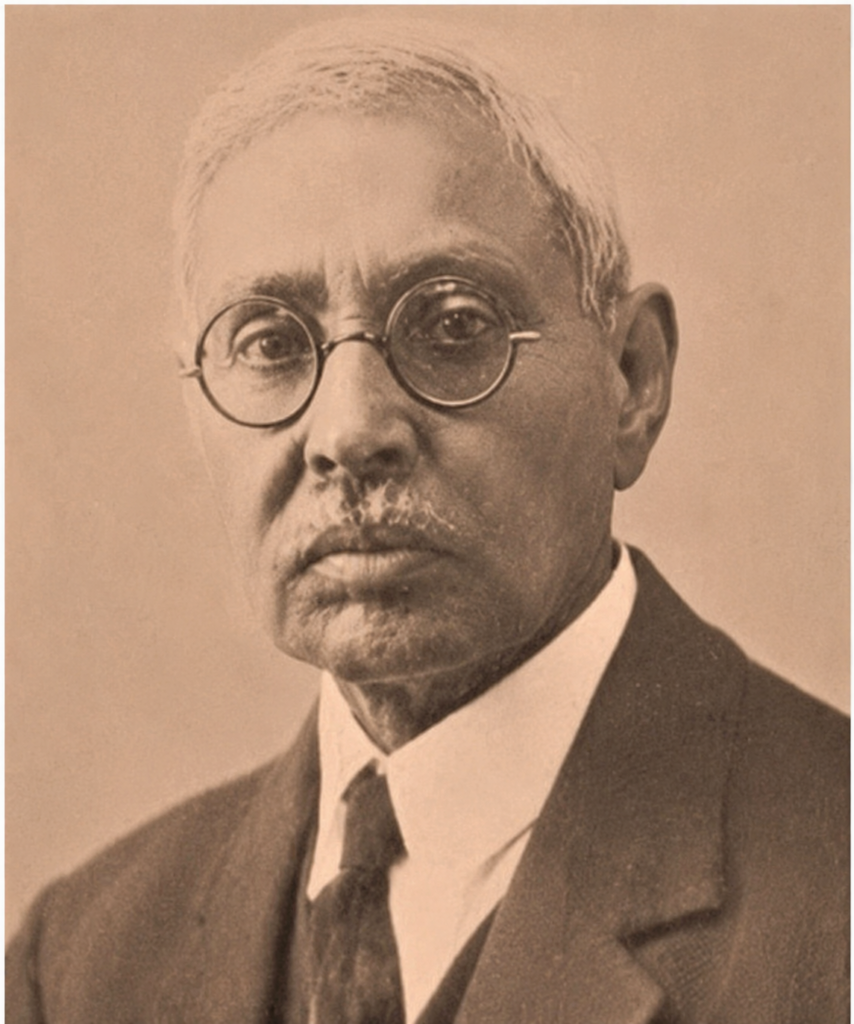
Who was Maulana Barkatullah Bhopali?
- Maulana Barkatullah, also known as Abdul Hafiz Mohammad Barkatullah, was born in Bhopal in the 19th century, commonly cited as 1854.
- He was a scholar, teacher, journalist, revolutionary and internationalist who spent much of his life outside India mobilising support for India’s independence. He travelled and worked in England, Japan, the United States, Germany, Afghanistan and Russia.
- His political activity was shaped by anti-colonialism, international diplomacy, revolutionary nationalism and a strong belief in Hindu-Muslim unity.
- He died in 1927 in the United States, far away from India. This partly explains why his contribution did not receive the same popular recognition as that of many other freedom fighters.
Role in the Freedom Struggle:
Internationalisation of India’s Freedom Struggle:
He was among the early Indian revolutionaries who understood that India’s freedom movement had to be internationalised. He sought support from global anti-imperial forces and tried to build alliances against British rule.
- In England, he came into contact with Indian revolutionaries and used speeches and writings to criticise British colonialism.
- In Japan, he worked as a professor and wrote anti-British material in Urdu and English.
- In the United States, he became associated with revolutionary networks of the Indian diaspora.
Association with the Ghadar Movement:
- Barkatullah was one of the founding members of the Ghadar Party in 1913 in San Francisco. The Ghadar movement aimed to overthrow British rule through armed struggle and mass mobilisation of Indian expatriates, especially in North America. Barkatullah’s involvement reflected the transnational character of revolutionary nationalism.
Prime Minister of the Provisional Government of India in Kabul:
- Maulana Barkatullah’s most significant contribution came during the First World War. On 1 December 1915, the Provisional Government of India was established in Kabul, Afghanistan. Raja Mahendra Pratap became its President, while Maulana Barkatullah became its Prime Minister.
- This government-in-exile attempted to mobilise support from Afghanistan, Germany, Turkey, Russia, China and Japan against British rule in India. Although it did not succeed militarily, it represented one of the earliest attempts to create an alternative sovereign Indian authority outside British control.
Advocacy of Hindu-Muslim Unity:
- Barkatullah strongly believed that India could not become free unless Hindus and Muslims fought together against colonial rule. He criticised British divide-and-rule policies and emphasised unity among Indian communities.
Source: https://anantamias.com/current-affairs/maulana-barkatullah-indias-1st-pm-in-exile/
India launches E85 Fuel for Flex-Fuel Vehicles
Why in News?
India launched E85 fuel, a high-ethanol blended fuel, on World Environment Day 2026 as part of its broader strategy to reduce crude oil imports, promote cleaner fuels and build a domestic flex-fuel mobility ecosystem. The fuel has been priced nearly Rs 20 per litre lower than conventional petrol.
| UPSC Relevance: GS-3 Economy: Energy; GS-3 Environment and Biodiversity: Pollution Prelims: Biofuels, Ethanol blending, E20, E85, flex-fuel vehicles, National Policy on Biofuels, Ethanol Blended Petrol Programme. |
What is E85 Fuel?
- E85 is a high-ethanol fuel blend containing around 80-85% ethanol and 14-19% petrol. It is meant only for flex-fuel vehicles that can operate on a wide range of ethanol-petrol blends, generally from E20 to E85 or even E100, depending on vehicle design.
- Ethanol is an alcohol-based biofuel produced from sugarcane molasses, sugarcane juice, maize, damaged food grains and other biomass-based feedstocks.
Unlike ordinary petrol vehicles, flex-fuel vehicles have modified engines, fuel systems and sensors that can automatically adjust combustion depending on the ethanol-petrol ratio in the tank.
India’s Ethanol Blending Journey:
India’s ethanol blending programme has moved from being a limited fuel-substitution effort to a major energy security strategy.
- Ethanol blending in petrol rose from about 1.5% in 2014 to 20% by 2025-26, achieving the E20 target ahead of the original 2030 timeline.
- The National Policy on Biofuels 2018, amended in 2022, advanced the target of 20% ethanol blending from 2030 to 2025-26.
- The Ethanol Blended Petrol Programme has been supported through administered procurement prices, lower GST on ethanol for blending, expanded feedstock options, interest subvention for distilleries and long-term offtake agreements.
The ethanol blending programme has reportedly saved ₹1.84 lakh crore in foreign exchange, substituted 302 lakh metric tonnes of crude oil and reduced 909 lakh metric tonnes of CO₂ emissions.
Significance of E85 for India:
- Strengthening Energy Security: India imports over 85% of its crude oil requirement. By replacing a larger share of petrol with domestically produced ethanol, E85 can reduce India’s dependence on imported fossil fuels.
- Reducing Foreign Exchange Outgo: The ethanol blending programme has already generated substantial foreign exchange savings by substituting crude oil imports. Scaling up E85 can deepen this benefit, especially if flex-fuel vehicles expand in two-wheelers and passenger vehicles.
- Supporting Farmers and Rural Economy: Ethanol demand creates a new market for sugarcane, maize, damaged grains and other agricultural feedstocks. It can also support sugar mills, distilleries and rural employment.
- Climate and Pollution Benefits: Ethanol has lower lifecycle greenhouse gas emissions than petrol, especially when produced efficiently from appropriate feedstocks. It also has a higher octane rating, which can support cleaner combustion and lower particulate emissions. This makes E85 relevant for India’s climate commitments and net-zero target by 2070.
- Complementing Electric Mobility: E85 does not replace electric vehicles but complements them. India’s mobility transition will likely require a mix of electric vehicles, biofuels, green hydrogen, compressed biogas and public transport. Flex-fuel vehicles can be useful in segments where EV adoption is slower due to charging infrastructure, battery costs or range concerns.
- Faster Infrastructure Rollout: E85 can use modified versions of existing fuel distribution infrastructure. This may allow faster rollout compared to a completely new charging network, especially in regions where fuel stations are already dense.
Concerns and Challenges:
- Lower Fuel Efficiency: Ethanol has a lower energy density than petrol. Therefore, vehicles running on E85 may cover fewer kilometres per litre compared to petrol. The ₹20/litre lower price is meant to offset this disadvantage, but consumer economics will depend on mileage, vehicle cost and fuel availability.
- Vehicle Compatibility: E85 is not suitable for ordinary petrol vehicles. It requires flex-fuel-compatible engines and fuel systems. Misfuelling can create technical problems. Therefore, public awareness and clear labelling at fuel stations are essential.
- Feedstock Sustainability: India must avoid excessive dependence on water-intensive crops such as sugarcane. Ethanol production from sugarcane can have a high water footprint. A more sustainable ethanol strategy should promote maize, damaged grains, agricultural residues and second-generation biofuels.
- Regional Imbalance: Sugarcane-based ethanol production is concentrated in states such as Uttar Pradesh, Maharashtra and Karnataka. A national E85 ecosystem will require balanced feedstock sourcing, ethanol storage, logistics and distillery capacity across regions.
- Fiscal and Taxation Issues: For E85 to succeed, its price must remain attractive to consumers. State-level taxation, GST treatment, excise structure and incentives for flex-fuel vehicles will play an important role.
E85 should therefore be seen not as a standalone solution, but as one pillar of India’s multi-fuel, low-carbon and energy-secure future.
Source: https://anantamias.com/current-affairs/india-launches-e85-fuel-for-flex-fuel-vehicles/
India’s 100th Ramsar Site: Jai Prakash Narayan Bird Sanctuary (Surha Tal)
Why in News?
On World Environment Day 2026, India designated the Jai Prakash Narayan Bird Sanctuary (Surha Tal) in Ballia district of Uttar Pradesh as its 100th Ramsar Site under the Ramsar Convention on Wetlands.
| UPSC Relevance: GS-3 Environment and Biodiversity: Conservation Prelims: Ramsar Convention, Wetlands, Important Bird Areas |
Location of Jai Prakash Narayan Bird Sanctuary (Surha Tal)
- Location: Ballia district of Uttar Pradesh. Situated about 17 km from Ballia. Lies within the middle Ganga River basin. Locally known as Surha Tal.
- Origin and Geomorphology:
- Surha Tal is a freshwater oxbow lake. An oxbow lake is formed when a river cuts through a meander neck, leaving behind a crescent-shaped water body disconnected from the main channel.
- It originated from an ancient meander of the Ganga River that became detached from the main river channel.
- The wetland receives freshwater through three channels connected to the Ganga system.
- The surrounding landscape consists of Floodplains, Marshes, seasonally inundated areas, & Agricultural fields, particularly rice fields.
Ramsar Recognition: Why is Surha Tal Important?
The Ramsar Convention recognised Surha Tal for meeting multiple criteria related to biodiversity conservation and ecological significance.
- Ecological Importance:
- Provides critical habitat for migratory and resident birds.
- Acts as a refuge during the summer when smaller wetlands in the region dry up.
- Supports aquatic biodiversity and wetland-dependent species.
- Functions as an important feeding and breeding ground.
- Rich Biodiversity of the Wetland
- Avifaunal Diversity.
- Important Species:
- Avifauna: Common Pochard (IUCN: Vulnerable), Indian River Tern
- Flora: The sanctuary supports over 200 plant species. Diverse aquatic and semi-aquatic vegetation. Wetland grasses and floodplain flora.
- Fauna: The sanctuary hosts mammals, reptiles and amphibians. Notable species: Fishing Cat (Vulnerable)
Ramsar Convention:
- Adopted in 1971 in the city of Ramsar, Iran and entered into force in 1975. It is the only global treaty dedicated specifically to wetlands.
- Objective: To promote conservation of wetlands and wise use of wetland resources.
- Membership: 172 countries, including India.
India’s Ramsar Journey:
- India added 74 new Ramsar Sites in approximately 12 years.
- 2014: 26 Ramsar sites
- 2026: 100 Ramsar sites
- India’s Global Position: India possesses the highest number of Ramsar Sites in Asia, and ranks 3rd in the world after the United Kingdom and Mexico.
Wetlands are land areas covered by water, either temporarily/ seasonally or permanently. These are critical ecosystems that play a significant role in supporting biodiversity and providing various ecosystem services, such as flood control, water supply, food, fibre, and raw materials. The designation marks a significant milestone in India’s wetland conservation efforts.
Nilgiri Tahr Population rises in Tamil Nadu
Why in News?
Tamil Nadu’s Nilgiri tahr population has increased to 1364 in 2026, according to the findings of the third synchronised Nilgiri tahr survey. This marks a rise of over 32% from 2024, when 1031 individuals were recorded.
| UPSC Relevance: GS-3 Environment and Biodiversity: Conservation, Species in News Prelims: Nilgiri Tahr |
About Nilgiri Tahr:
- The Nilgiri tahr is a mountain ungulate endemic to the Western Ghats, mainly found in Tamil Nadu and Kerala. It is Tamil Nadu’s State Animal and is locally known as Varai Aadu.
- Habitat: High-altitude montane grasslands, rocky cliffs and shola-grassland mosaics.
- Protection Status:
- IUCN status: Endangered
- Wildlife (Protection) Act, 1972: Schedule I
- CITES: Appendix I
- Indicator of high-altitude grassland ecosystem health.
The total population of the endangered Nilgiri Tahr in the Western Ghats is estimated to be around 2,668 individuals. The Eravikulam National Park in the Anamalai hills, Kerala, is home to the largest population of the Nilgiri Tahr.
Project Nilgiri Tahr was launched by Tamil Nadu in 2022 to protect, restore and expand Nilgiri tahr habitats and improve scientific understanding of the species.
Major Threats to Nilgiri Tahr:
Despite the population increase, the species remains highly vulnerable.
- Habitat Fragmentation: Nilgiri tahr habitats are scattered across isolated high-altitude grasslands. Fragmented populations face genetic isolation and local extinction risks.
- Forest Fires: Large-scale fires in parts of the Tahr habitat affected the population growth in 2026. Grassland fires can reduce forage availability and disturb breeding habitats.
- Invasive Species: Invasive plants such as wattle and eucalyptus can alter native grasslands and reduce suitable habitat.
- Climate Change: High-altitude species are especially vulnerable to warming because they have limited scope to move further upward.
- Infrastructure and unregulated tourism can disturb tahr habitats. Plantation activities affect the Nilgiri Tahr habitat, which includes grasslands and sholas.
The 2026 survey marked a technological improvement with the use of the Android-based mobile application VARUDAI. It enabled real-time transmission of field observations, improved GPS-based tracking of sightings and evidence-based conservation planning.
Source: https://anantamias.com/current-affairs/nilgiri-tahr-population-rises-in-tamil-nadu/