A year after Operation Sindoor tensions, India and Azerbaijan decide to reset ties
Why in News?
- India and Azerbaijan are trying to reset strained bilateral ties after recent tensions.
- A high-level meeting took place in Baku
- Both sides agreed to start a Confidence Building Mechanism (CBM).
UPSC Relevance:
GS-II: India Azerbaijan relations, Confidence Building Measures (CBM), Energy Security, Multi-alignment diplomacy
Why were relations strained? (Cause of tension)
1. Pakistan Factor
- Azerbaijan supported Pakistan during India’s Operation Sindoor (2025)
- This created diplomatic friction between India and Azerbaijan
- This shows how third-country alignments affect bilateral relations
2. Political vs Economic Gap
- Political ties were weak
- BUT economic ties (trade, investment) were still growing
3. Multilateral Fallout:
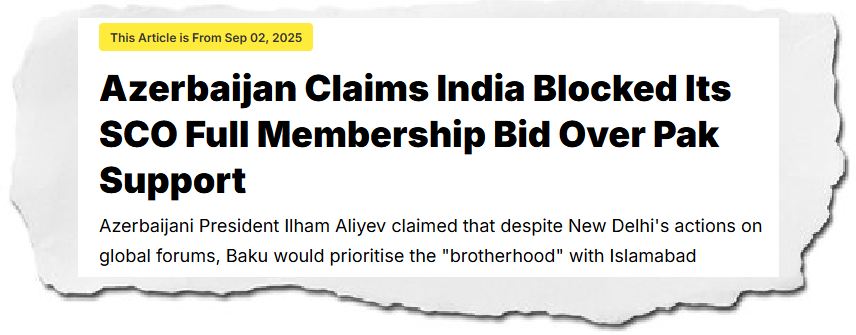
The discord spilled into international forums, most notably when India blocked Azerbaijan’s bid for full membership in the SCO in September 2025, a move Azerbaijan’s president publicly attributed to his country’s ties with Pakistan
What does “Reset of ties” mean?
Key steps taken:
- High-level diplomatic talks resumed
- Launch of Confidence Building Measures (CBMs)
- Focus on:
- Trade
- Energy cooperation
- Regional security
Aim: Move from conflict → cooperation
Areas of Cooperation
1. Energy Security
- Azerbaijan is an oil & gas rich country
- India imports crude oil from Azerbaijan (earlier disrupted, now improving)
Energy diversification is key for India
2. Trade & Investment
- India increasing investments despite political issues
3. Strategic Location
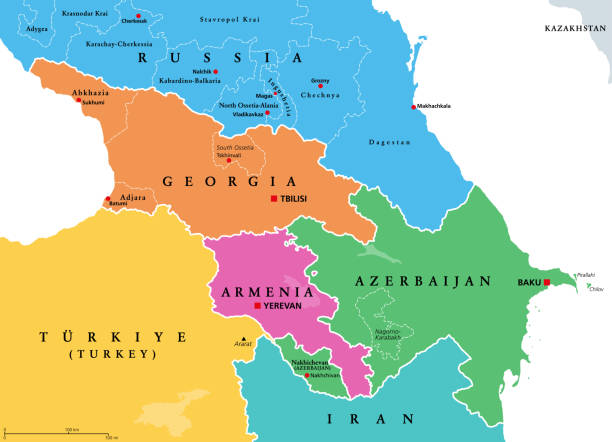
- Azerbaijan lies in:
- Caucasus region
- Between Europe & Asia
Important for Connectivity corridors and access to Central Asia
4. Crisis Cooperation
- Azerbaijan helped India evacuate citizens from Iran recently
- It shows even during tensions, functional cooperation continues
Broader Geopolitical Significance
1. India’s Balanced Diplomacy
- India is engaging even with countries that support Pakistan
- It shows Issue-based alignment, not bloc politics
2. Armenia-Azerbaijan Conflict:
India must balance its “strategic partnership” with Armenia with its “pragmatic engagement” with Azerbaijan.
3. Energy + Connectivity Strategy
- Important for International North-South Transport Corridor (INSTC) and Access to Eurasia
- Azerbaijan is a key node on the INSTC, a 7,200 km multi-modal network connecting India to Russia, Central Asia, and Europe via Iran. Stable ties with Baku are crucial for the corridor’s success
4. Cultural & Historical Links
- Ateshgah (Fire Temple): Located near Baku, this 18th-century temple features inscriptions in Sanskrit and Punjabi, proving ancient trade links with Indian merchants (Multanis and Khatris).
- Nizami Ganjavi: The 12th-century Azerbaijani poet who influenced Indian literature, including the works of Amir Khusrau
Conclusion:
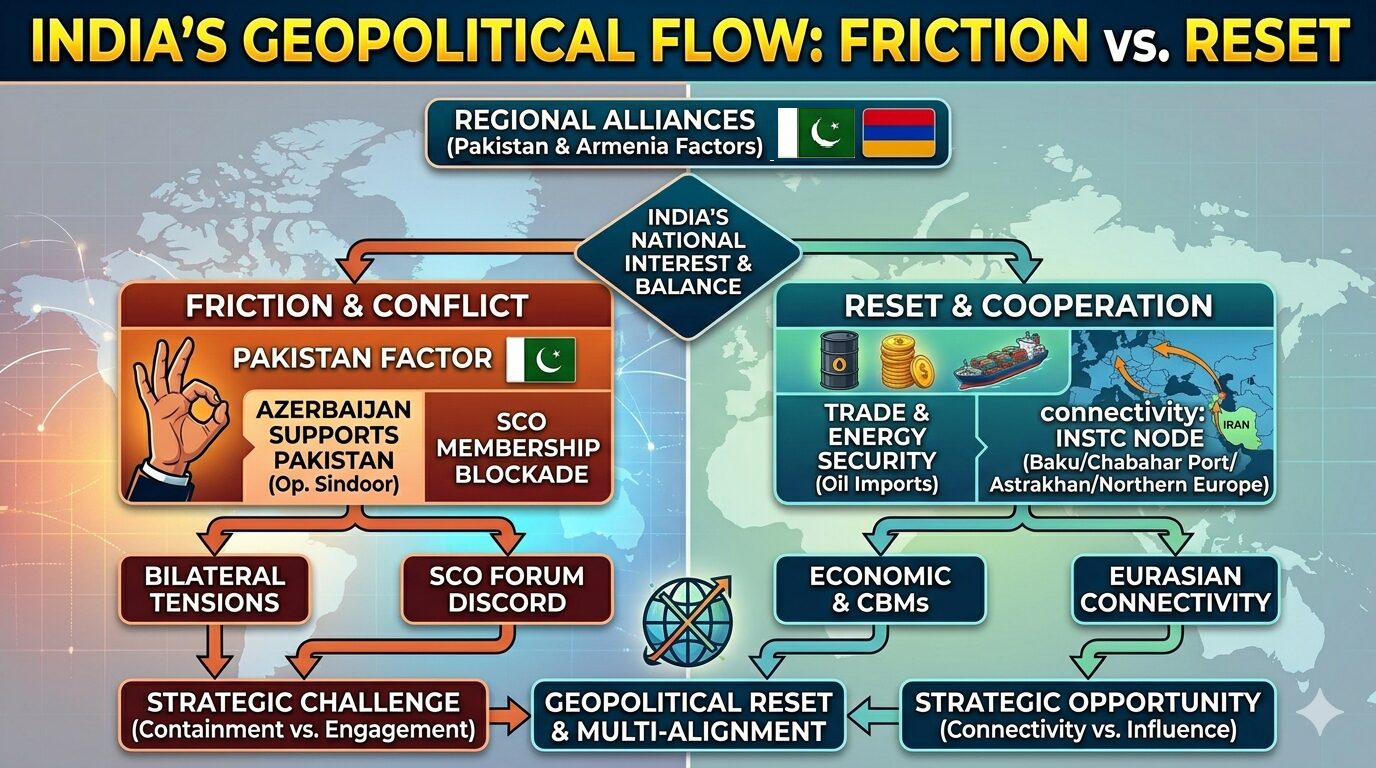
The 2026 reset is a pragmatic, interest-driven move, not an end to geopolitical rivalry. Its success will depend on whether both sides can compartmentalize their differences (Pakistan-Armenia) and focus on tangible economic and connectivity benefits. This approach aligns with India’s doctrine of “strategic autonomy” and “multi-alignment”—pursuing ties with all major players based on national interest. In an era of “Multi-alignment,” India is demonstrating that it can maintain robust ties with Armenia while simultaneously resetting relations with Azerbaijan to secure its energy and connectivity interests in Eurasia.