Antibiotic Resistance
Context:
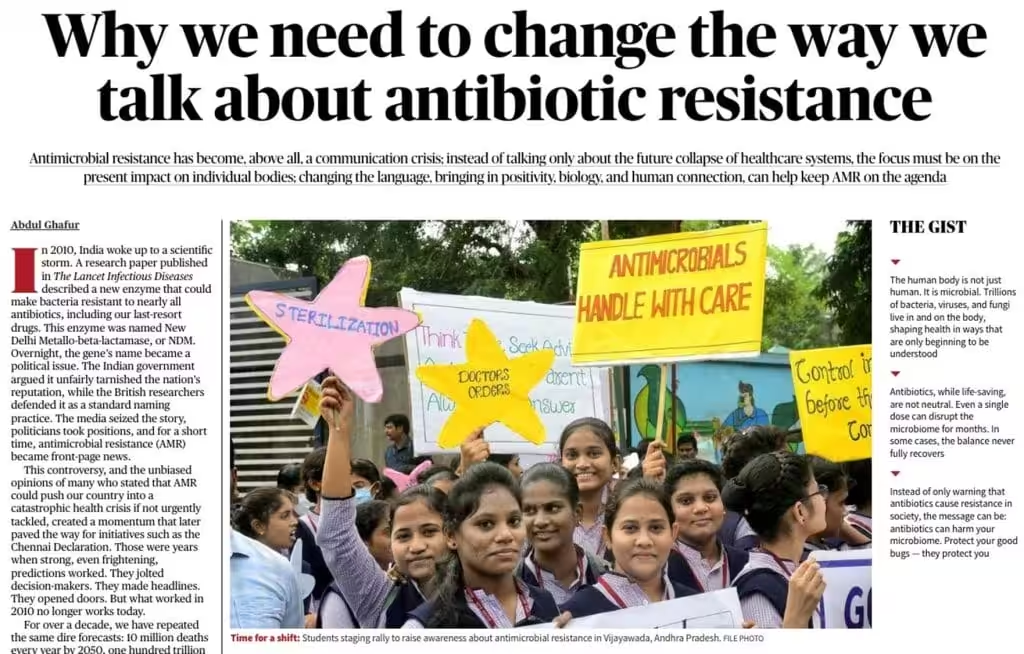
The article revisits the Antimicrobial Resistance (AMR) debate, first sparked in 2010 when the New Delhi Metallo-beta-lactamase (NDM) enzyme was discovered.
UPSC Relevance:
Disease (GS3- Science and Tech.)
UPSC PYQ:
Q. Which of the following are the reasons for the occurrence of multi-drug resistance in microbial pathogens in India? (2019)
- Genetic predisposition of some people
- Taking incorrect doses of antibiotics to cure diseases
- Using antibiotics in livestock farming
- Multiple chronic diseases in some people
Select the correct answer using the code given below.
(a) 1 and 2
(b) 2 and 3 only
(c) 1, 3 and 4
(d) 2, 3 and 4
Mains
Q. Can overuse and free availability of antibiotics without Doctor’s prescription, be contributors to the emergence of drug-resistant diseasesin India? What are the available mechanisms for monitoring and control? Critically discuss the various issues involved. (2014)
About Antimicrobial Resistance:

Antimicrobials – including antibiotics, antivirals, antifungals, and antiparasitics – are medicines used to prevent and treat infectious diseases in humans, animals and plants.
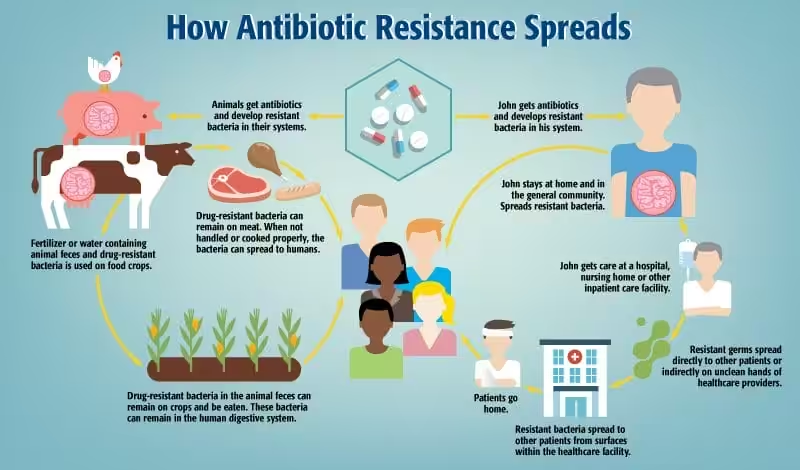
Antimicrobial Resistance (AMR) occurs when bacteria, viruses, fungi and parasites no longer respond to antimicrobial medicines. As a result of drug resistance, antibiotics and other antimicrobial medicines become ineffective and infections become difficult or impossible to treat, increasing the risk of disease spread, severe illness, disability and death.
Key facts:
- Antimicrobial resistance (AMR) is one of the top global public health and development threats. It is estimated that bacterial AMR was directly responsible for 1.27 million global deaths in 2019 and contributed to 4.95 million deaths.
- In addition to death and disability, AMR has significant economic costs. The World Bank estimates that AMR could result in US$ 1 trillion additional healthcare costs by 2050, and US$ 1 trillion to US$ 3.4 trillion gross domestic product (GDP) losses per year by 2030.
- Each year in the US, more than 2.8 million infections occur from antibiotic-resistant bacteria, and more than 35,000 people die as a result
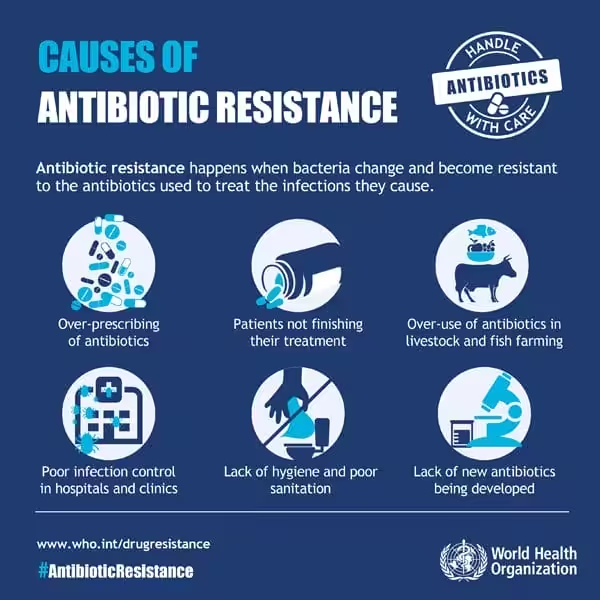
Causes:
Measures:
- National programme on AMR containment was launched during 12th FYP in 2012-17. Under this programme, AMR Surveillance Network has been strengthened by establishing labs in State Medical College.
- National Action Plan on Antimicrobial Resistance (NAP-AMR) focusing on One Health approach was launched on 19th April 2017 with the aim of involving various stakeholder ministries/departments. Delhi Declaration on AMR– an inter-ministerial consensus was signed by the ministers of the concerned ministries pledging their support in AMR containment.
- Initiatives to control overuse or misuse of antibiotics:
- ICMR has initiated antibiotic stewardship program (AMSP) on a pilot project basis in 20 tertiary care hospitals across India to control misuse and overuse of antibiotics in hospital wards and ICUs.
- On the recommendations of ICMR, DCGI has banned 40 fixed dose combinations (FDCs) which were found inappropriate.
- ICMR worked in collaboration with Indian Council of Agriculture Research, Department of Animal Husbandry, Dairy and Fisheries and the DCGI to ban use of Colistin as growth promoter in animal feed in poultry.
- The Red Line campaign is an Indian Ministry of Health and Family Welfare (MoHFW) initiative to combat antimicrobial resistance (AMR) by educating the public to never use medicines marked with a red vertical line without a doctor’s prescription.