Biochar

Why in news:
Context: With the Indian carbon market set to be launched in 2026, CO2 removal technologies such as biochar are expected to play a crucial role according to experts.
UPSC Relevance :
Fuel and Energy has been a recurrent theme in Prelims.
Prelims 2020
What is the use of biochar in farming?
1. Biochar can be used as a part of the growing medium in vertical farming.
2. When biochar is a part of the growing medium, it promotes the growth of nitrogen-fixing microorganisms.
3. When biochar is a part of the growing medium, it enables the growing medium to retain water for a longer time.
Which of the statements given above is/are correct?
(a) 1 and 2 only
(b) 2 only
(c) 1 and 3 only
(d) 1, 2 and 3
Prelims 2023
With reference to green hydrogen, consider the following statements:
1.It can be used directly as a fuel for internal combustion.
2.It can be blended with natural gas and used as fuel for heat or power generation.
3.It can be used in the hydrogen fuel cell to run vehicles.
How many of the above statements are correct?
a) Only one
b) Only two
c) All three
d) None
About Biochar:
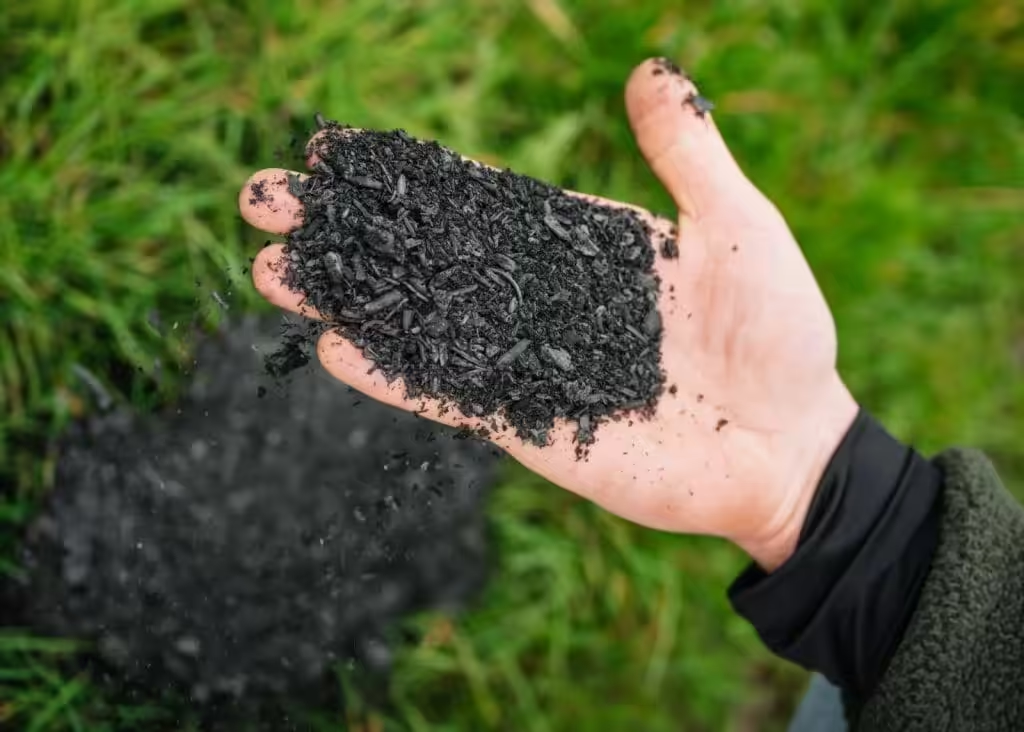
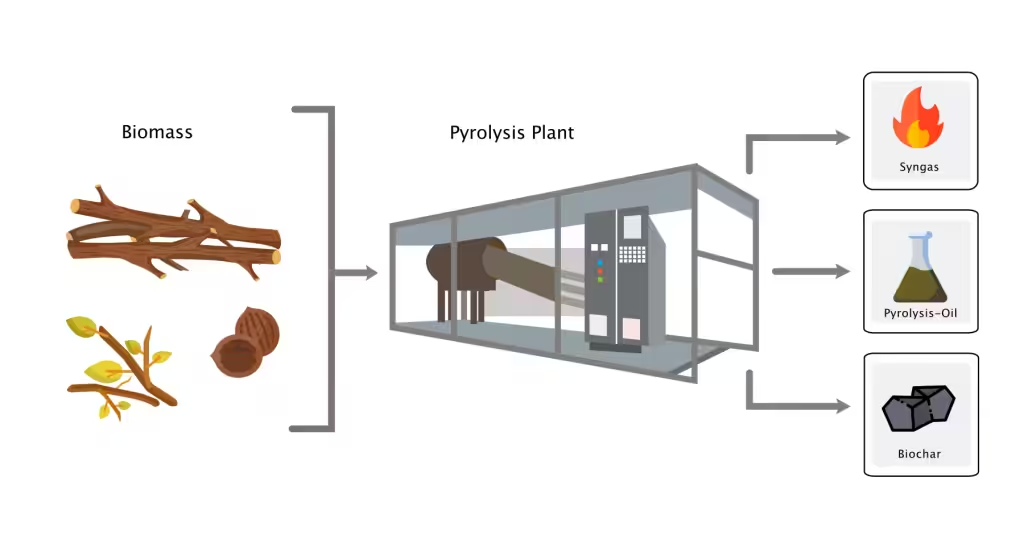
- Biochar is a charcoal-like substance produced by heating organic material (biomass) in a low-oxygen environment, a process known as pyrolysis. It is produced from agricultural residue and organic municipal solid waste.
- Its by-products like syngas and bio oil can also be used as fuel.
- It offers a sustainable alternative to manage waste and capture carbon.
Properties of Biochar:-
- High Carbon Content and Stability: Biochar is composed of a large amount of stable carbon, which doesn’t easily decompose allowing it to remain in the soil for centuries, making it an effective tool for carbon sequestration.
- Porous Structure: Its highly porous, sponge-like structure gives it a large surface area enabling it to absorb and hold water and nutrients, improving the soil’s water retention and nutrient-holding capacity.
- Alkaline pH: Biochar generally has an alkaline pH, which can help to neutralize acidic soils.
- High Cation Exchange Capacity (CEC): Biochar’s high CEC helps it retain positively charged nutrients like calcium, magnesium, and potassium, preventing them from leaching out of the soil and making them more available for plants.
- Microbial Habitat: The porous structure provides a safe haven for beneficial soil microorganisms, enhancing microbial activity and overall soil fertility.
What are Biochar’s potential applications and benefits?
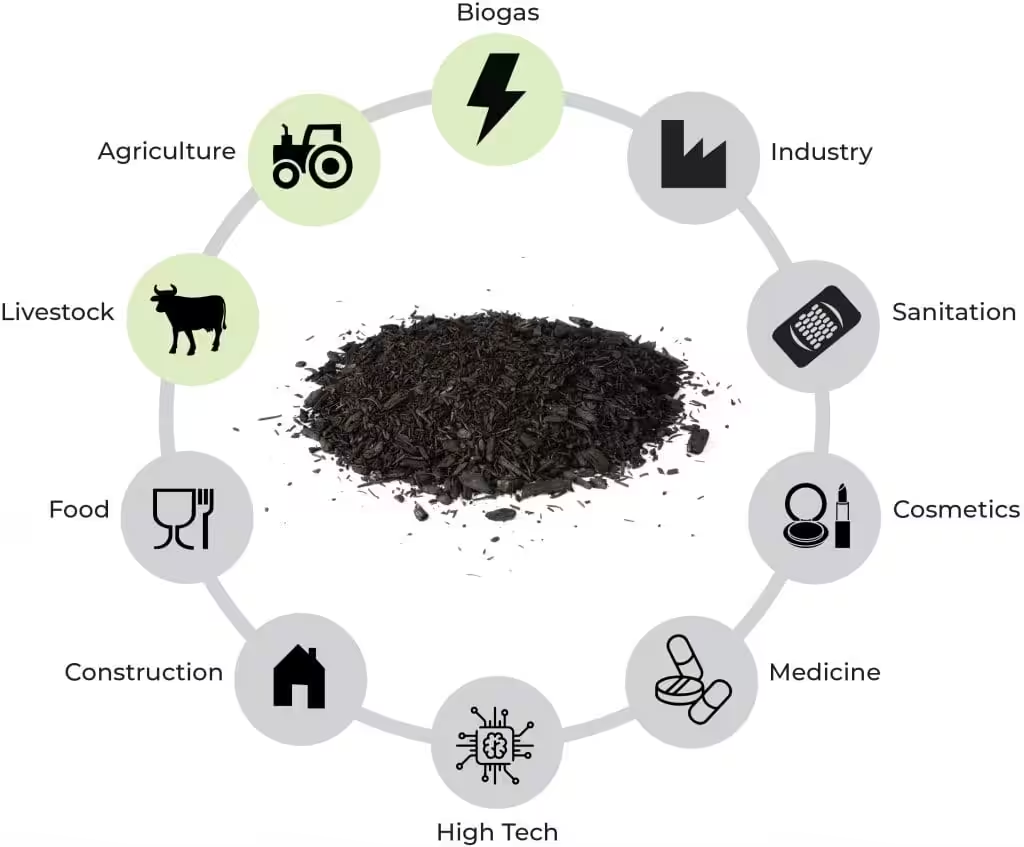
- Huge generation of waste in India: India generates over 600 million metric tonnes of agricultural residue and over 60 million tonnes of municipal solid waste every year. A significant portion of both is burnt openly or dumped in landfills, leading to air pollution from particulate matter and greenhouse gases such as methane, nitrous oxide, and CO2.
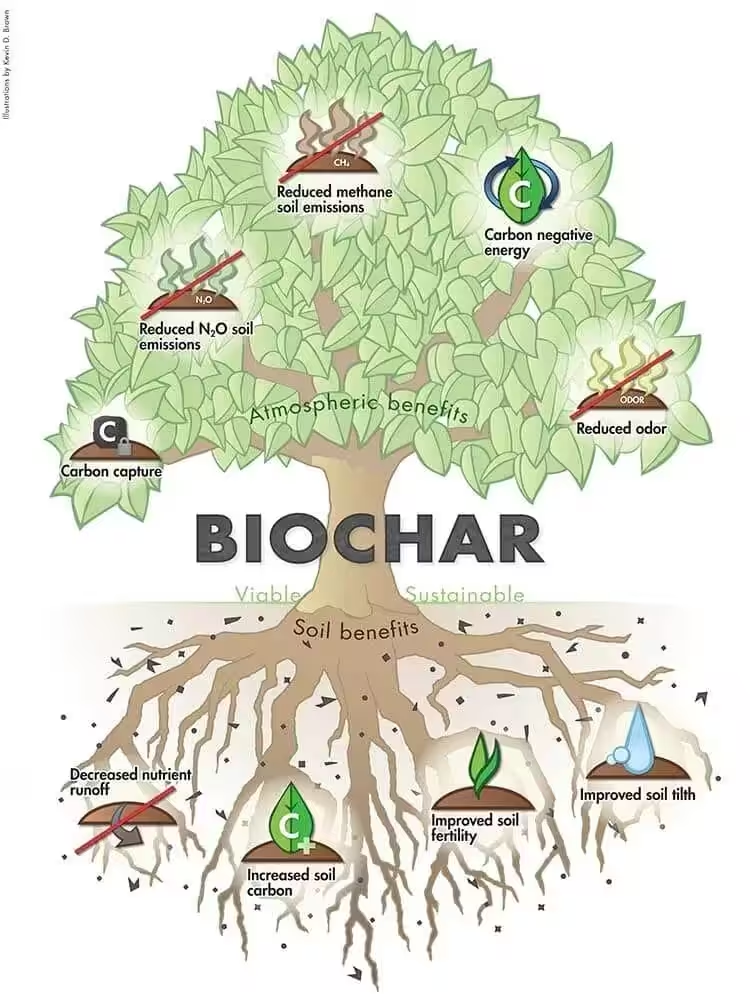
- Reduce fossil fuel import and lower emissions enabling ‘just transition’ : By using 30% to 50% of this surplus waste, India can produce 15-26 million tonnes of biochar and remove 0.1 gigatonnes of CO2-equivalent annually.
- Utilising syngas could generate around 8-13 TWh of power, equivalent to 0.5-0.7% of India’s annual electricity generation, replacing 0.4-0.7 million tonnes of coal per year.
- Bio-oil can likewise potentially offset 8% of diesel or kerosene production annually, leading to lower crude oil imports and reducing more than 2% of India’s total fossil-fuel-based emissions.
- An effective long-term carbon sink : Biochar can hold carbon in the soil for 100-1,000 years due to its strong and stable characteristics.
- In agriculture :
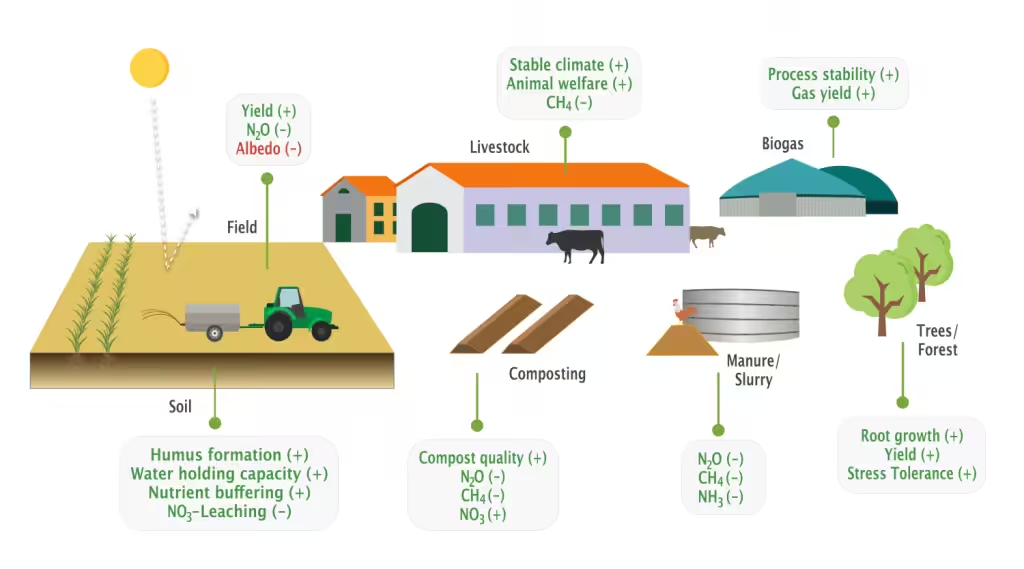
- applying biochar can improve water retention, particularly in semi-dry and nutrient-depleted soils.
- This, in turn, can abate nitrous oxide emissions by 30-50%.
- Biochar can also enhance soil organic carbon, helping restore degraded soils.
- lower fertilizer requirement (by 10-20%), and higher crop yield (by 10-25%)
- In carbon capture applications, modified biochar can adsorb CO₂ from industrial exhaust gases. However, its carbon removal efficiency is currently lower than that of conventional methods.
- In the construction sector, biochar can be explored as a low-carbon alternative to building materials. Adding 2-5% of biochar to concrete can improve mechanical strength, increase heat resistance by 20%, and capture 115 kg of CO₂ per cubic metre, making building materials a stable carbon sink.
- In wastewater treatment, biochar offers a low-cost and effective option to reduce pollution. A kilogram of biochar, along with other substances, can treat 200-500 litres of wastewater, implying a biochar demand potential of 2.5-6.3 million tonnes.
- India generates more than 70 billion litres of wastewater every day, of which 72% waste water is left untreated.
Challenges in Biochar Application:
- A lack of coordination across areas such as agriculture, energy, and climate policy.
- Absence of standardised feedstock markets and lack of consistent carbon accounting methods, a problem common across carbon market initiatives.
- Limited resources, evolving technologies, market uncertainties, and insufficient policy support.
- Viable business models are yet to emerge for large-scale adoption.
- Limited awareness among stakeholders about the potential usages of Biochar.
- Weak ‘monitoring, reporting, verification frameworks of biochar efficiency and benefits in terms of carbon captured etc.’ to claim incentives and credits.
Way Ahead:
- Sustained support for R&D is essential to create region-specific feedstock standards and to optimise biomass utilisation rates based on agro-climatic zones and crop types.
- Biochar should be systematically integrated into existing and upcoming frameworks, including crop residue management schemes, bioenergy initiatives in both urban and rural contexts, and state-level climate strategies under the State Action Plans on Climate Change.
- Recognising biochar as a verifiable carbon removal pathway within the Indian carbon market will generate additional income for investors and farmers through carbon credits.
- Deploying biochar production equipment at the village level has the potential to create approximately 5.2 lakh rural jobs, linking climate action with inclusive economic development.
In sum, although biochar is not a silver bullet, it offers a science-backed multisectoral pathway for India to achieve its climate and development goals and enable a ‘just transition’ towards cleaner fuel while going Net Zero by 2070.