BRICS Traditional Medicine Proposal: Evidence, Safety and Regulation
Why in News?
An Ayush release on 13 September 2026 highlighted BRICS support for a proposed traditional medicine expert group, with cooperation centred on research, evidence and regulatory approaches.
- The declaration welcomed the proposed establishment of a BRICS Expert Working Group on Traditional, Complementary and Integrative Medicine under the Health Track.
- A Chandigarh meeting on 21 July 2026 had reached consensus on the proposed group’s Terms of Reference.
- The cooperation agenda includes medicinal plants, herbal preparations, pharmacopoeial knowledge and evidence-informed quality, safety and efficacy assessment.
- The release does not demonstrate an operational working group, common binding regulations or approval of a particular treatment.
- Traditional use can identify research questions, but cannot alone establish whether a preparation produces a particular health benefit.
- Integration into healthcare requires evidence and appropriate regulation; international recognition is not a substitute for evaluating products and practices.
UPSC Relevance
Prelims Relevance
- TCIM: Traditional, Complementary and Integrative Medicine.
- Efficacy: whether an intervention produces the intended benefit under defined conditions.
- Safety: assessment of possible harms and risks.
- Quality: identity, purity and consistency of a product or preparation.
- Pharmacopoeial standards: specifications and methods supporting medicine quality assessment.
Mains Relevance
GS Paper 2
- Examine evidence-informed integration and regulation within health systems.
- Assess international research cooperation without conflating it with regulatory approval.
GS Paper 3
- Distinguish traditional knowledge, product standardisation and evidence of clinical benefit.
Essay
- Respect for inherited knowledge and rigorous scientific scrutiny can reinforce each other.
Background and Context
What the proposed group would do
The proposal creates a possible channel for research and technical exchange; its current status must remain distinct from an operational institution or a medicine-approval decision.
- The proposed expert group is envisaged as a platform for dialogue and collaboration among BRICS members. Its purpose is to bring researchers, experts and policymakers into sustained engagement on traditional, complementary and integrative medicine.
- Terms of Reference describe the intended framework for a group’s work. Consensus on that framework and political support for establishment are meaningful steps, but neither proves that meetings, programmes or technical outputs are already operational.
- National regulatory contexts remain explicit in the release. Countries may exchange approaches to evidence and quality without immediately adopting identical laws, sharing product approvals or accepting every therapeutic claim made in another member state.
- India’s opportunity lies in research cooperation, quality assurance and scientific validation through its Ayush ecosystem. The analytical question is what evidence and standards emerge, rather than whether diplomatic recognition alone validates a whole medical tradition.
- The broader declaration supplies the political setting, covered in our BRICS declaration explainer. This health proposal has a separate practical test: whether structured cooperation improves research methods and regulatory decisions about specific products and practices.
Efficacy, safety and quality answer different questions
A preparation can meet a quality specification without proving a health benefit; keeping these questions separate prevents technical standards from becoming exaggerated therapeutic claims.
- Efficacy asks whether an intervention produces its intended benefit in defined conditions. Research must specify the preparation, claimed outcome and population; evidence about one formulation cannot automatically validate every product carrying a similar traditional name.
- Safety asks what harms may occur and under what circumstances. A long history of use is relevant context, but it does not remove the need to examine adverse effects, interactions and risks in different users.
- Quality concerns what a product contains and whether its identity, purity and consistency meet appropriate specifications. A well-characterised preparation allows more meaningful testing, but consistent manufacture does not by itself establish that a treatment works.
- Pharmacopoeial standards support this quality function through agreed specifications and testing methods. The enoxaparin reference-standard example illustrates the separate role of reliable measurement; its specific tests should not be transferred uncritically to unrelated herbal preparations.
- Medicinal-plant research needs documentation of the material and preparation being studied. Without that foundation, apparently similar samples may not support meaningful comparison, making it harder to interpret whether different research findings address the same intervention.
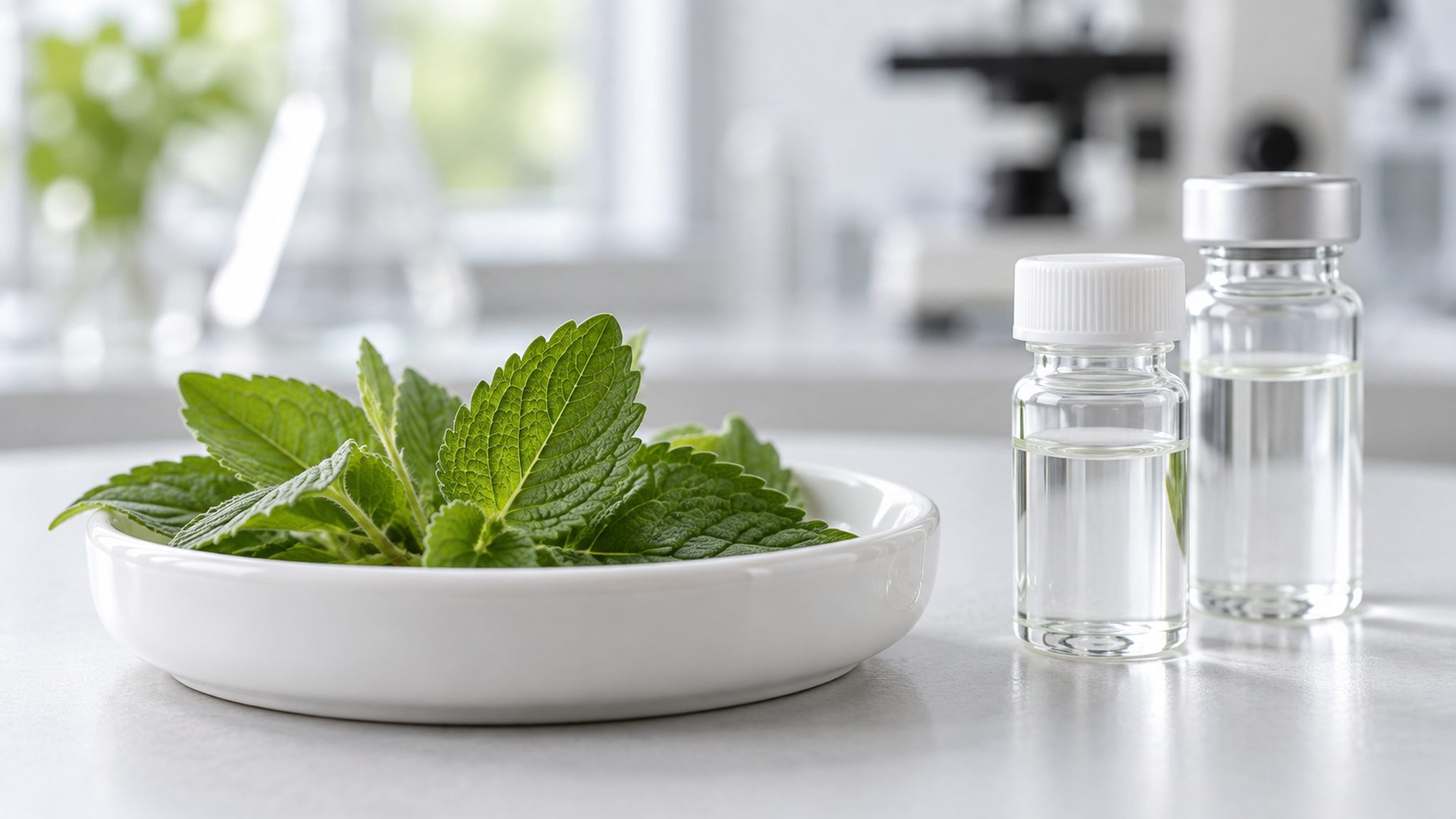
From traditional knowledge to evidence-informed care
Traditional knowledge can guide investigation, while scientific evaluation determines what particular claims are supported and whether a health system should incorporate a product or practice.
- Research begins with a question, not an assumed cure. A record of traditional use may suggest what to investigate; the next task is to test a clearly defined claim with methods appropriate to that question.
- Laboratory findings can help identify mechanisms or properties worth investigating. A result in a laboratory system is not automatically evidence of benefit in patients, whose relevant outcomes and potential harms require separate clinical evaluation.
- Evidence synthesis should assess the strengths and limitations of the available studies. Repeating favourable conclusions across documents does not make the underlying evidence stronger if methods are weak or results cannot be independently scrutinised.
- WHO’s approach supports evidence, safety, quality and appropriate integration, as its traditional-medicine guidance explains. International cooperation can strengthen this evaluation process, but it should not be presented as universal endorsement of all therapies or preparations.
- Health-system integration requires an assessment of evidence and national circumstances. The proposal creates space to exchange research and regulatory experience; it does not establish that a particular product is effective, approved or ready for routine care.
Way Forward
Make the cooperation evidence-led
- Define research questions around identified preparations and meaningful outcomes, with methods and limitations open to scrutiny.
- Keep assessments separate: report quality testing, safety findings and evidence of benefit without allowing one category to stand in for another.
- Track institutional progress through actual mandates, programmes and outputs before calling the proposed expert group operational.
Conclusion
- The BRICS traditional medicine proposal offers a route to better research and regulatory exchange. Its value should be judged by the evidence and quality practices it strengthens, rather than by interpreting diplomatic support as proof of therapeutic efficacy.
- For a balanced answer, distinguish respect for traditional knowledge from acceptance of untested claims, and separate quality, safety and efficacy. A proposal for cooperation becomes useful when it improves decisions about specific products, practices and health outcomes.
UPSC Practice Questions
Prelims MCQ 1
With reference to traditional medicine assessment, consider the following statements:
- Meeting a quality specification automatically proves therapeutic efficacy.
- Safety and efficacy assessment address different questions.
- Traditional use can provide a starting point for research without proving a particular clinical claim.
How many of the above statements are correct?
(a) Only one (b) Only two (c) All three (d) None
Answer: (b) Only two
Explanation:
Statements 2 and 3 are correct. Quality concerns characteristics such as identity and consistency; efficacy requires evidence of the intended benefit.
Prelims MCQ 2
Which description most accurately reflects the announced BRICS TCIM mechanism?
(a) A proposed expert group welcomed for research and cooperation (b) A regulator issuing binding medicine approvals across every BRICS member (c) A completed clinical trial proving all herbal products effective (d) A common law replacing national medicine regulation
Answer: (a) A proposed expert group welcomed for research and cooperation
Explanation:
The release describes proposed establishment and consensus on Terms of Reference, not operational regulatory harmonisation or approval of therapies.
UPSC Mains Questions
- Distinguish quality, safety and efficacy in the evaluation of traditional medicine. Why must health policy assess each separately?
- Evaluate the opportunities and limits of the proposed BRICS expert group on traditional, complementary and integrative medicine.
Sources: PIB, Ministry of Ayush and World Health Organization.
Frequently Asked Questions
What is the proposed BRICS TCIM expert group?
It is a proposed platform under the BRICS Health Track for dialogue, research and technical cooperation on traditional, complementary and integrative medicine. The announcement does not establish that it is already operational.
Does traditional use prove that a medicine works?
No. Traditional use can identify promising research questions and provide context. A specific claim still requires suitable evidence about the preparation, intended benefit and relevant users, together with assessment of potential harms.
How does quality differ from efficacy?
Quality concerns characteristics such as identity, purity and consistency. Efficacy concerns whether the intended benefit occurs under defined conditions. A consistently manufactured preparation can meet quality requirements without having established therapeutic efficacy.
Will the proposal create one binding BRICS medicine regulator?
The release does not establish a common regulator or binding harmonised rules. It describes cooperation and evidence-informed regulatory approaches in accordance with national contexts, leaving individual product approvals and legal arrangements unproven.