Defence Test Ranges: Opening Shared Facilities for Development
Why in News?
On 7 October 2026, the Ministry of Defence announced a revised Standard Operating Procedure governing Indian defence industry access to its proof ranges, field firing ranges and laboratory test facilities.
- Testing charges are waived for iDEX, TDF, Make and other developmental projects of the Ministry of Defence.
- A three-day slot per quarter is reserved at proof ranges for government-sponsored developmental projects and developmental projects undertaken on the Indian industry’s own initiative.
- The revised procedure explains allotment, documentation and applicable charges, and replaces the earlier arbitration provision with a conciliation agreement clause.
- Access to test infrastructure can determine whether an indigenous design moves from an engineering proposal to evidence that can be assessed.
- Development support needs clear boundaries: easier access helps generate evidence, but does not itself establish product readiness or create a purchase commitment.
UPSC Relevance
Prelims Relevance
- Proof ranges, field firing ranges and laboratory test facilities are covered by the revised SOP.
- The listed facilities belong to DRDO, government quality-assurance agencies and the three Services.
- Charge waivers apply to specified Ministry of Defence developmental projects.
- Reserved proof-range slots also cover industry’s own-initiative developmental projects.
- Conciliation and arbitration are different mechanisms for addressing disputes.
Mains Relevance
GS Paper 3
- Shared testing infrastructure and indigenous defence development.
- Distinguishing support for innovation from evidence-based procurement decisions.
GS Paper 2
- Transparent administrative procedures and proportionate dispute resolution.
Essay
- Public infrastructure creates value when access rules help ideas become verifiable results.
Background and Context
What Shared Test Facilities Provide
A development programme needs evidence about equipment, and access rules determine how industry can obtain the facilities needed to produce it.
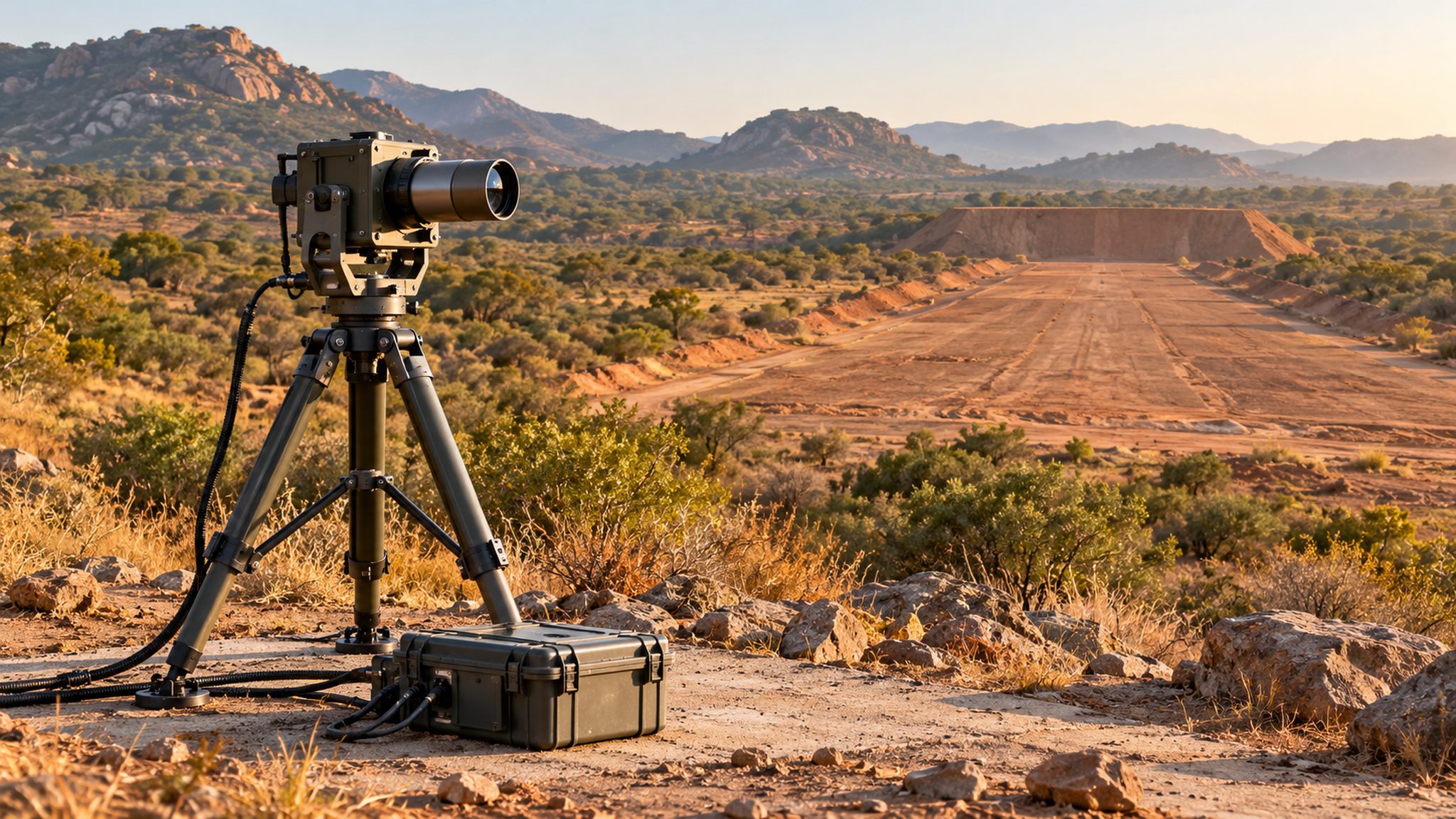
- Proof ranges and test laboratories provide a setting for examining equipment against specified requirements. Their value lies in producing observations that can be reviewed, rather than merely displaying a working prototype to potential buyers.
- The revised SOP lists facilities held by DRDO, government quality-assurance agencies and the three Services. A defined list helps industry identify available public infrastructure instead of treating every organisation as an entirely separate starting point.
- Allotment and utilisation procedures connect a request with an available facility and its conditions of use. Clear formats make the information expected from an applicant more predictable before a development team seeks a testing slot.
- Repeatable evidence matters because a successful demonstration answers only the question actually tested. Developers and assessors must distinguish an observed result from broader claims about reliability, suitability or readiness in conditions that were not examined.
- The shared-infrastructure principle also appears in I-STEM coordination. Here, however, the substantive change concerns defence-specific access rules, including charges, reserved proof-range time and the procedure for resolving disagreements arising under the SOP.
How the Revised SOP Changes Access
The announcement addresses the cost, timing and administrative terms of testing, with different eligibility boundaries for each form of support.
- The charge waiver covers iDEX, TDF, Make and other Ministry of Defence developmental projects. It should be read as support for the specified project categories, not as an announcement that every private test becomes free.
- A three-day quarterly slot is reserved at proof ranges for government-sponsored development and industry’s own-initiative developmental projects. This gives development work an identified place in scheduling, without establishing unlimited access whenever a firm requests it.
- Slot eligibility and fee eligibility are separate questions. The release expressly includes industry’s own-initiative projects in the reserved-slot provision, but does not extend the stated charge waiver to every such project merely because it qualifies.
- Where charges still apply, the SOP incorporates a procedure for their calculation and payment. This addresses transaction clarity: an applicant needs to understand the financial terms alongside the documents and arrangements required for facility use.
- The earlier arbitration provision is replaced by a conciliation agreement clause. Conciliation seeks an agreed resolution between the parties; it is distinct from asking an arbitrator to determine the dispute through an adjudicatory decision.
Why Testing Access Is Not a Purchase Decision
The policy supports evidence generation during development; the announcement does not merge testing with the separate decisions involved in buying and using equipment.
- Facility access permits a project to undertake relevant testing under the applicable procedure. It does not establish that the equipment has passed every requirement, secured all necessary approvals or become suitable for every intended operational role.
- Test results need to be assessed against the purpose and conditions of the test. A favourable result cannot automatically answer questions outside that scope, including performance in a different environment or compatibility with another system.
- A procurement decision concerns whether and on what terms equipment will be acquired. As the SAT-SAAW contract note explains, even a purchase contract and subsequent operational induction represent different stages, with their own conditions.
- Export readiness also cannot be inferred from access to a public range. Although the ministry links the SOP to wider export ambitions, the announcement does not grant a blanket export approval to participating firms.
- Implementation quality should be judged through usable access and clear decisions, not the announcement alone. The release describes the revised framework; it does not supply evidence that industry waiting times or development costs have already fallen.
Way Forward
Make Access Predictable and Results Usable
- Publish clear facility capabilities and application requirements so firms can select an appropriate test before spending time on a request that cannot answer their engineering question.
- Explain charge-waiver eligibility separately from reserved-slot eligibility, reducing disputes caused by treating these distinct benefits as interchangeable.
- Track request processing and actual development-slot use while protecting sensitive information; assess whether the revised procedure improves access in practice.
Conclusion
- Shared defence testing infrastructure can support indigenous development when firms can understand the access procedure, applicable charges and available time. The revised SOP changes these enabling conditions rather than certifying a particular product.
- The central distinction is between supporting a test and accepting its outcome: charge relief or a reserved slot helps generate evidence, while procurement and operational decisions still require their own assessment.
UPSC Practice Questions
Prelims MCQ 1
With reference to the revised SOP for industry use of Ministry of Defence test facilities, consider the following statements:
- The reserved quarterly proof-range slot covers industry’s own-initiative developmental projects.
- Every project qualifying for a reserved slot is automatically covered by the announced testing-charge waiver.
- The revised SOP replaces an arbitration provision with a conciliation agreement clause.
How many of the above statements are correct?
(a) Only one (b) Only two (c) All three (d) None
Answer: (b) Only two
Explanation:
Statements 1 and 3 are correct. The waiver is stated for specified Ministry of Defence developmental projects; reserved-slot eligibility has a broader stated scope.
Prelims MCQ 2
Which conclusion follows most accurately from a firm receiving access to a Ministry of Defence proof range?
(a) Its equipment has been approved for export. (b) The armed forces are committed to buying its equipment. (c) It can undertake testing under the applicable access arrangements. (d) Its equipment has completed operational induction.
Answer: (c) It can undertake testing under the applicable access arrangements.
Explanation:
Range access enables testing. It does not itself confer procurement, export or operational approval.
UPSC Mains Questions
- Explain how predictable access to public test infrastructure can support indigenous defence innovation. Distinguish such support from procurement approval. (150 words)
- The scope of a fee waiver need not match the scope of a reserved testing slot. Discuss this distinction using the revised defence test-facility SOP. (150 words)
Source: PIB, Ministry of Defence.
Frequently Asked Questions
What does the revised defence testing SOP cover?
It governs Indian defence industry access to Ministry of Defence proof ranges, field firing ranges and laboratory facilities, including allotment procedures, relevant formats, applicable charges and arrangements for resolving issues.
Are all private defence projects entitled to free testing?
No. The announced waiver covers iDEX, TDF, Make and other Ministry of Defence developmental projects. The broader reserved-slot provision should not be treated as an automatic fee waiver for every industry project.
What is the reserved proof-range provision?
A three-day slot per quarter is reserved for government-sponsored developmental projects and developmental projects undertaken on the Indian defence industry’s own initiative. The release does not promise unlimited or immediate access.
Does successful testing guarantee an order from the armed forces?
No. Testing supplies evidence for a defined purpose. A purchase decision remains separate, and the announcement does not give participating firms a guaranteed order, blanket export approval or automatic operational induction.