Why in News?
The Office of the Principal Scientific Adviser convened the first I-STEM State Governments Nodal Officers Meeting on September 21 to strengthen shared access to publicly funded research infrastructure.
- The meeting focused on state universities and laboratories joining the national equipment-sharing ecosystem as users and facility providers.
- State nodal officers were asked to support institutional onboarding, equipment listing, access and practical coordination.
- PIB says similar platforms, including CSIR’s ANALYTICS portal, are being integrated with I-STEM through API linkages; this is ongoing work, not confirmed completion.
- An institution may possess expensive scientific equipment while nearby researchers lack access to the same experimental capability.
- Shared access can connect existing assets to wider demand, but discovery alone does not ensure that an experiment can actually be carried out.
UPSC Relevance
Prelims Relevance
- I-STEM connects scientific equipment and facilities with potential users across institutions.
- The Office of the Principal Scientific Adviser supports the platform.
- State nodal officers connect state institutions with the national ecosystem.
- API linkages allow compatible digital systems to exchange information.
- One Nation One Subscription concerns scholarly resources; I-STEM addresses scientific infrastructure access.
Mains Relevance
GS Paper 3
- Research infrastructure sharing and efficient public investment.
- Access barriers faced by smaller research institutions, startups and MSMEs.
GS Paper 2
- State-level coordination in a national research ecosystem.
Essay
- Public investment creates greater value when useful capacity can serve people beyond the institution that owns it.
Background and Context
What sharing research infrastructure means
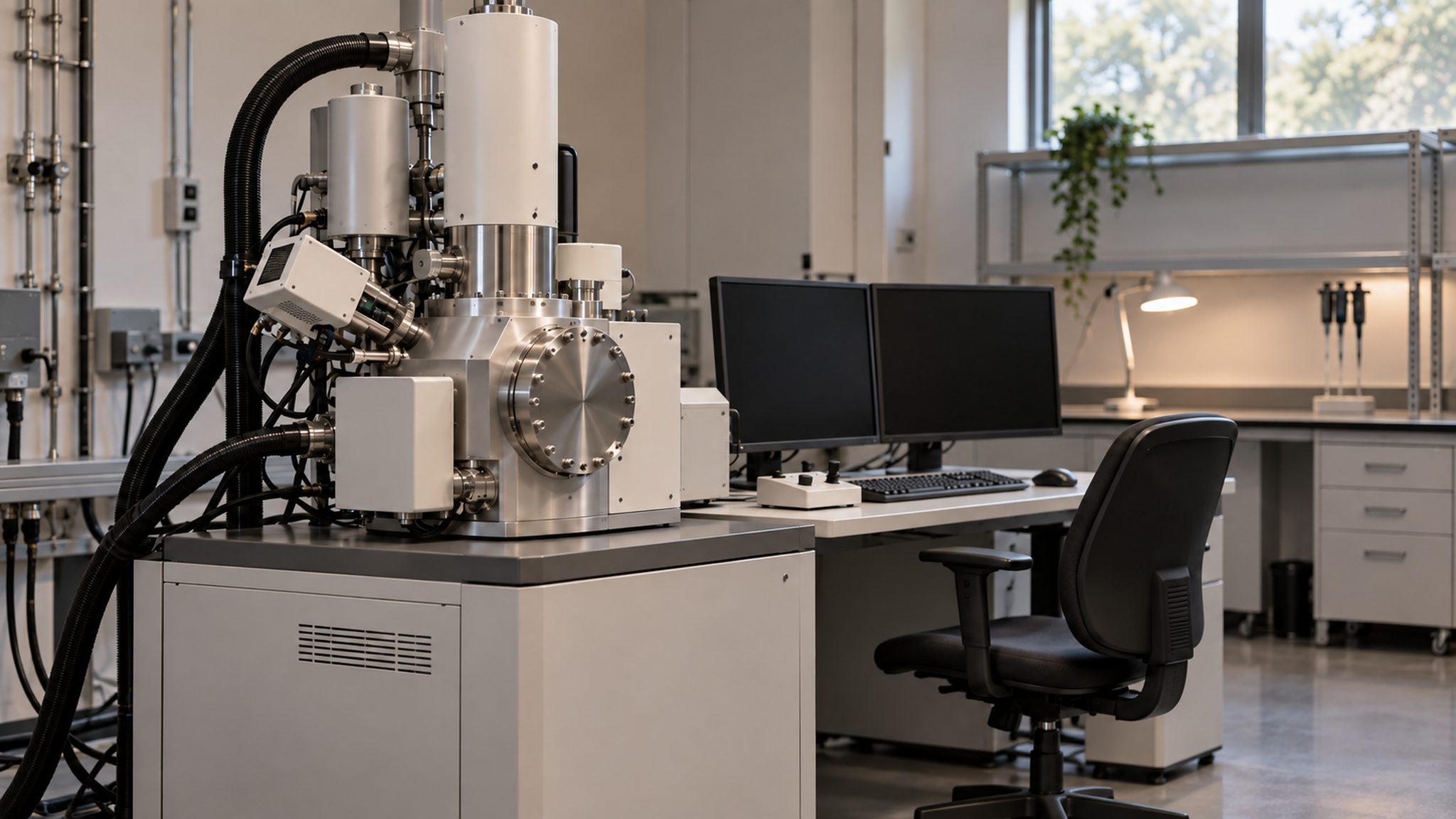
I-STEM addresses an access problem: researchers need specific experimental capabilities, even when their own institution cannot purchase or operate every instrument.
- A shared facility remains physically located at its host institution while serving users from elsewhere. Sharing access does not mean transferring ownership of the equipment or distributing the instrument among participating institutions.
- The national listing helps users discover available scientific infrastructure beyond their immediate campus. For a researcher, knowing that a suitable instrument exists is the starting point for exploring access, rather than proof of guaranteed availability.
- The PIB release identifies researchers, startups, MSMEs and industry as intended users. The access problem spans academic research and innovation: specialised equipment may be needed before an organisation can justify purchasing its own.
- State universities and laboratories can participate as providers as well as users. Their existing assets can support outside work, while their own researchers can seek capabilities available elsewhere in the national ecosystem.
- Shared access can reduce unnecessary repeat purchases when suitable capacity already exists. This is a planning rationale, not evidence that every duplicate instrument is wasteful: distance, demand and specialised requirements can still justify additional capacity.
Why state nodal officers matter
A national platform needs institutions to contribute usable information and resolve local access problems; the meeting puts state coordination at that interface.
- Nodal officers are intended to link state governments, their institutions and the national I-STEM ecosystem. Their coordination role matters because laboratories across a state may have different administrative procedures and levels of readiness.
- Institutional onboarding brings a facility into the shared system; equipment listing makes its assets discoverable. These are related but different tasks: registering an institution does not automatically create accurate descriptions of every usable instrument.
- API integration connects existing digital platforms through defined interfaces for exchanging information. PIB describes linkages with similar portals as work underway; the meeting does not establish that every system or equipment record has already been integrated.
- Infrastructure planning can use the national equipment landscape to identify existing capacity before approving new purchases. A listing is one input into that decision, alongside demand, location, reliability and the suitability of the instrument.
- The September meeting concerned wider participation and implementation, not the creation of a new research portal or a new law. Its stated priorities should be reported as priorities, rather than demonstrated utilisation gains or quantified savings.
A discoverable instrument must also be usable
The implementation test is whether an outside user can obtain a reliable service, not simply whether the instrument appears in search results.
- Availability information should distinguish an operational instrument from one awaiting repair. Otherwise a researcher may discover the correct equipment but still be unable to schedule work; this is an operational risk, not a reported nationwide finding.
- Trained operators and calibration matter for dependable measurements. Sharing a listing cannot replace the technical work that makes an instrument useful; access arrangements need to account for the people and maintenance behind a scientific service.
- Booking and cost rules should be clear before a user commits time or sends material. Public funding of an instrument does not, by itself, establish free, unlimited or immediate access for every potential external user.
- Sample handling and research requirements may affect whether a facility can accept a request. A useful access system must help the user and provider establish suitability, rather than equating every listed instrument with an interchangeable service.
- One Nation One Subscription was also mentioned at the meeting, but it addresses access to scholarly resources. Keep that knowledge-access initiative distinct from I-STEM’s equipment-sharing function; reading research and performing experiments require different supporting arrangements.
Way Forward
Measure whether access actually works
- Keep equipment status and contact information current so users can distinguish discoverable assets from available services.
- Track completed access requests and unresolved obstacles alongside new registrations; a larger catalogue alone cannot demonstrate improved research access.
- Use recurring access problems to guide operator support, maintenance and investment decisions, rather than treating every unmet request as a reason to buy another instrument.
Conclusion
- I-STEM’s state coordination effort connects publicly funded research capacity with a wider user base. Its practical value depends on institutions making equipment discoverable and translating discovery into reliable access.
- For an examination answer, connect shared infrastructure with efficient investment and broader research participation. Distinguish the announced coordination priorities from measured outcomes, and equipment access from access to scholarly publications.
UPSC Practice Questions
Prelims MCQ 1
With reference to I-STEM, consider the following statements:
- It supports discovery of scientific equipment across institutions.
- State institutions can participate as both users and facility providers.
- Listing publicly funded equipment guarantees free and immediate access to every user.
How many of the above statements are correct?
(a) Only one (b) Only two (c) All three (d) None
Answer: (b) Only two
Explanation:
The first two statements reflect the platform’s intended role. Public funding and listing do not establish universal free or immediate access.
Prelims MCQ 2
Which distinction between I-STEM and One Nation One Subscription is correct?
(a) Both primarily transfer ownership of laboratory equipment (b) I-STEM concerns scientific infrastructure access, while ONOS concerns scholarly resources (c) I-STEM replaces all institutional laboratories, while ONOS purchases instruments (d) Both automatically guarantee free access to all research services
Answer: (b) I-STEM concerns scientific infrastructure access, while ONOS concerns scholarly resources
Explanation:
The meeting discussed both initiatives, but their functions differ: physical research infrastructure versus scholarly knowledge resources.
UPSC Mains Questions
- How can shared scientific infrastructure improve the value of public research investment? Examine the role of state-level coordination.
- Explain why discoverability of scientific equipment is necessary but insufficient for effective research access.
Source: PIB, Office of the Principal Scientific Adviser.
Frequently Asked Questions
What is the purpose of I-STEM?
I-STEM helps connect researchers and other users with scientific equipment and facilities across institutions. The state coordination effort seeks wider institutional participation and more effective use of existing publicly funded research infrastructure.
What will state nodal officers do?
The meeting identified nodal officers as links between state governments, their institutions and the national ecosystem. Their role includes supporting onboarding, equipment listing, wider access and resolution of practical coordination problems.
Does public funding mean equipment access is always free?
No. A publicly funded instrument’s listing does not itself establish free, unlimited or immediate access. Users still need clear information about availability, access arrangements and any applicable service costs at the host institution.
Is I-STEM the same as One Nation One Subscription?
No. I-STEM concerns access to scientific infrastructure such as laboratory equipment. One Nation One Subscription concerns scholarly resources. Both can support research, but they address different requirements of the research process.
Tell Google you want more of this.
Add Anantam IAS as a preferred sourceOne tap, and this site shows up more often in your own Top Stories, AI Overviews and AI Mode. Remove it any time.