Digital Constitutionalism

Context:
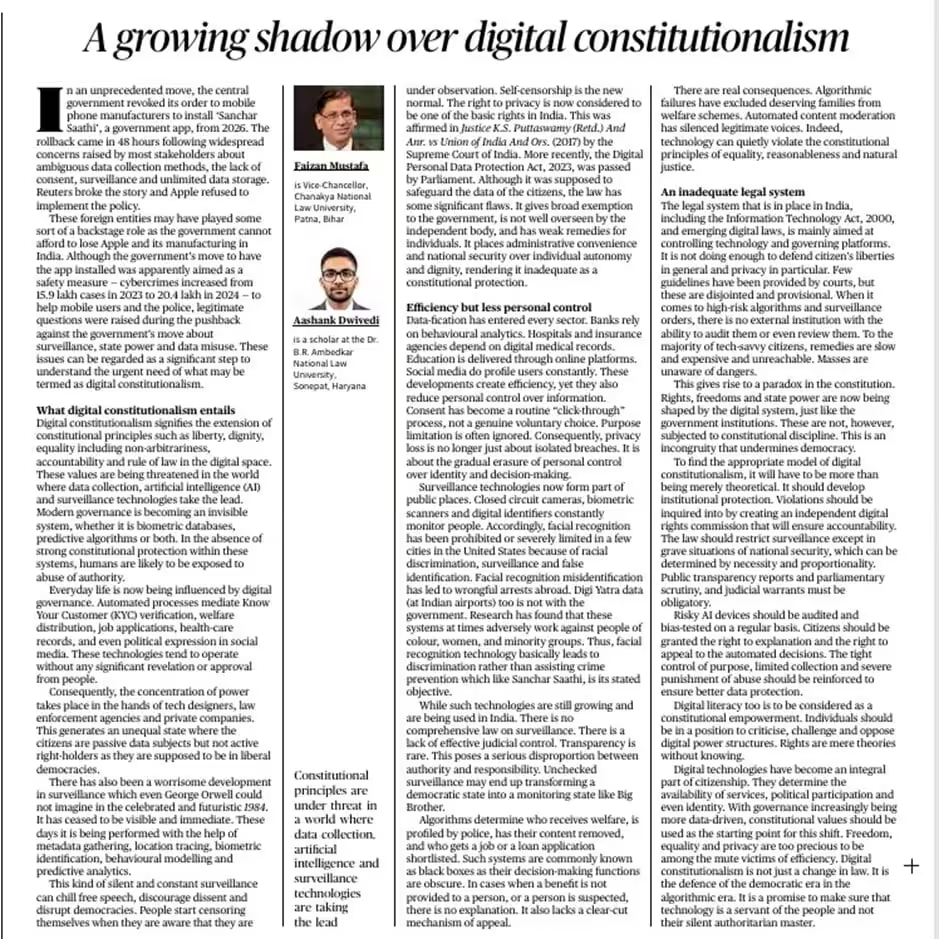
The Central Government issued an order asking all mobile phone manufacturers to pre-install the Sanchar Saathi app on phones sold in India from 2026. Within 48 hours, the government revoked (rolled back) the order.
Why the rollback?
- Strong pushback from stakeholders:
- Phone manufacturers (including Apple) raised concerns about surveillance, unclear data flows, and unlimited data collection.
- Apple refused to implement the mandate.
- Fear of harming manufacturing ecosystem:
- Apple, Samsung, and other foreign manufacturers are crucial to India’s global electronics export ambitions.
- The government did not want to disrupt investments in the Make in India electronics sector.
- Public debate over privacy and digital surveillance.
UPSC Relevance:
Polity and Governance
UPSC PYQ 2023:
Q. “The Constitution of India is a living instrument with capabilities of enormous dynamism. It is a constitution made for a progressive society.” Illustrate with special reference to the expanding horizons of the right to life and personal liberty.
Constitutionalism v/s Digital Constitutionalism:
Constitutionalism in India refers to the principle that government authority is derived from and limited by a constitution, which serves as the supreme law of the land.
v/s
Digital constitutionalism is the idea of extending constitutional values, like liberty and equality, into the digital space to prevent abuses in governance driven by technologies such as artificial intelligence (AI) and mass surveillance.
- Constitutional Basis:
- The idea gained strength after the Supreme Court in Justice K.S. Puttaswamy (2017) held that privacy is a fundamental right and that any restriction on it must be legal, necessary, and proportionate. This judgment created a constitutional basis for protecting individual rights in the digital age.
Digital Constitutionalism is Needed:
1. Silent Surveillance:
- Modern surveillance (e.g. metadata, biometrics) is invisible.
- Leads to self-censorship and weakens freedom of speech.
2. Meaningless Consent:
- Consent = checkbox culture.
- Users often unaware how their data is used → loss of autonomy.
3. Power Concentration:
- Tech companies, law enforcement control data.
- Citizens reduced to data subjects, not rights-holders.
4. Discriminatory Technologies:
- Facial recognition, AI show bias against women, minorities.
- Results in wrongful profiling, denial of services.
5. No Transparency or Remedy:
- Automated systems make critical decisions (e.g. welfare, policing).
- Citizens lack explanation & appeal → violates natural justice.
6. Outdated Legal Framework:
- IT Act 2000 not fit for AI/data-driven age.
- No independent authority to audit algorithms or surveillance tools.
7. Democratic Risk:
- Data governance bypasses Constitution → rise of “monitoring state”.
Key Initiatives:
India:
- Puttaswamy Case (2017): Privacy = Fundamental Right.
- DPDP Act 2023: Sets data rules but wide State exemptions.
- Sanchar Saathi Rollback: Public pushback on forced installation.
- NITI Aayog AI Principles: Talk of ethics, but lacks enforcement.
Global:
- EU GDPR: Strongest data protection law.
- EU AI Act 2024: Risk-based regulation, bans harmful AI.
- UN Resolutions: Human-centric, rights-based AI approach.
Civil Society:
Internet Freedom Foundation, journalism, tech resistance (e.g. Apple) play watchdog role.