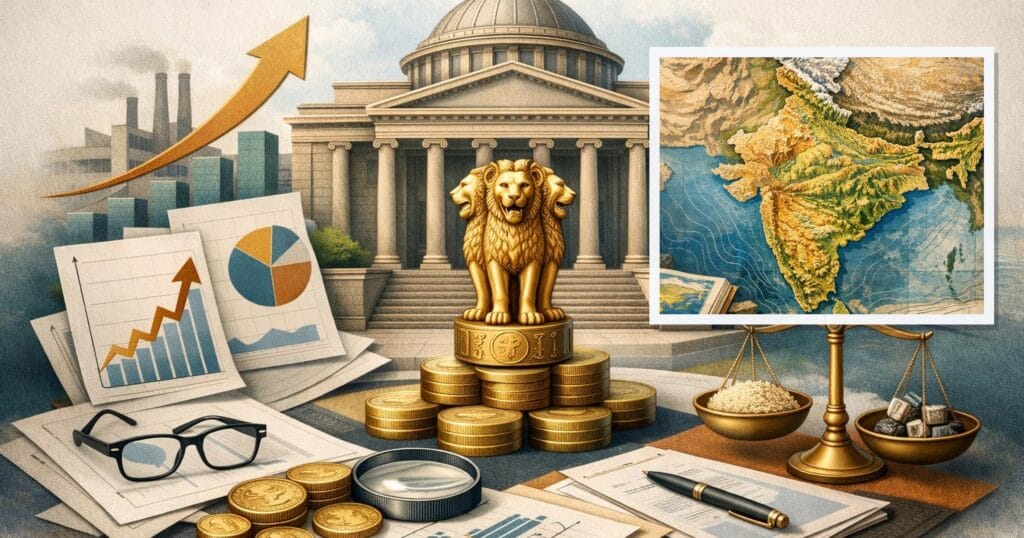
Make in India is the Government of India's manufacturing push — a comprehensive initiative to position India as a global manufacturing hub, attract foreign and domestic investment, boost manufacturing's share of GDP, and create 100 million jobs in the sector by 2022. Launched on September 25, 2014 by Prime Minister Narendra Modi, it covers 25 focus sectors spanning manufacturing and services.
For UPSC, Make in India connects to economic growth (GS-3 economy), FDI policy, industrial policy, employment, and India’s global positioning. It underpins several related schemes — PLI, Startup India, and the defence indigenisation push.
Background: Why Manufacturing Needed a Push
India's Manufacturing Problem
India's manufacturing sector contributed only 15-16% of GDP — far below China (28%), South Korea (27%), and even peers like Vietnam (16%+). But Vietnam was accelerating while India stagnated.
Key structural problems:
- Complex regulations: Dozens of central and state laws governing factories, environment, land, labour
- Infrastructure gaps: Unreliable power, poor road/rail connectivity, inadequate ports
- Land acquisition difficulties: The Land Acquisition Act 2013 raised costs and timelines
- Skilled labour shortage: ITIs and polytechnics were producing graduates mismatched with industry needs
- Ease of doing business: India ranked 142nd globally in 2014 on the World Bank EoDB index
Make in India attacked these on multiple fronts — policy reform, infrastructure (smart cities, industrial corridors), and targeted investment facilitation.
The 25 Focus Sectors
Make in India covers 25 sectors — combining manufacturing and select services:
Manufacturing Sectors (15)
| Sector | Why It Matters |
|---|---|
| Automobiles | India is 3rd-largest car market; export potential |
| Auto components | Integrated into global supply chains |
| Aviation | Growing middle-class demand; MRO sector |
| Biotechnology | Pharma-biotech integration |
| Chemicals | Bulk chemicals, specialty chemicals |
| Construction | Infrastructure demand |
| Defence manufacturing | Import substitution; security self-reliance |
| Electrical machinery | Transformers, switchgear |
| Electronic systems | Mobile phones, consumer electronics |
| Food processing | Agricultural value chain |
| IT and BPM | India's largest service export |
| Leather | Labour-intensive; export potential |
| Media and entertainment | Soft power + economy |
| Mining | Mineral resources |
| Oil and gas | Energy security |
| Pharmaceuticals | Generic medicines; global supply chain |
| Ports | Maritime logistics |
| Railways | Equipment + infrastructure |
| Renewable energy | Solar, wind manufacturing |
| Roads and highways | Infrastructure |
| Space | ISRO commercialisation |
| Textiles and garments | Employment-intensive |
| Thermal power | Energy |
| Tourism and hospitality | Service sector |
| Wellness | Healthcare and wellness |
FDI Reforms Under Make in India
Attracting Foreign Direct Investment was central to Make in India. The government undertook sweeping FDI liberalisation:
| Sector | Pre-2014 FDI limit | Post-2014 FDI limit |
|---|---|---|
| Defence manufacturing | 26% (automatic route) | 74% automatic; 100% via government approval |
| Railways (infrastructure) | Not permitted | 100% automatic |
| Medical devices | Limited | 100% automatic |
| Insurance | 26% | 74% |
| Telecom | 74% | 100% |
| Single-brand retail | 51% automatic | 100% automatic |
| Construction (townships) | Restricted | Substantially liberalised |
| Civil aviation (scheduled air transport) | 49% | 100% for NRI; 49% automatic for others |
FDI Inflows
| Year | FDI Inflows (USD billion) |
|---|---|
| 2014-15 | 45.1 |
| 2016-17 | 60.2 |
| 2019-20 | 73.5 |
| 2021-22 | 83.6 (record high) |
| 2022-23 | 71.0 |
| 2023-24 | 70.9 |
India became the 3rd-largest FDI recipient globally in 2021-22. Services (IT, financial services), electronics, and pharmaceuticals attracted the most FDI.
Production-Linked Incentive (PLI) Scheme
The PLI scheme is the flagship instrument within Make in India’s second phase — announced in 2020 and 2021. It provides financial incentives linked to incremental sales from products manufactured in India.
PLI Across 14 Sectors
| Sector | PLI Outlay (₹ crore) |
|---|---|
| Mobile phones and electronics | 40,951 |
| Pharmaceuticals | 15,000 |
| Medical devices | 3,420 |
| Automobiles and auto components | 25,938 |
| Advanced chemistry cell (battery) | 18,100 |
| Textile (MMF and technical) | 10,683 |
| Food processing | 10,900 |
| Telecom and networking products | 12,195 |
| White goods (AC, LED) | 6,238 |
| Specialty steel | 6,322 |
| Solar PV modules | 4,500 |
| Drone manufacturing | 120 |
Total PLI outlay: ~₹1.97 lakh crore across 14 sectors.
How PLI Works
A company commits to a threshold production/investment level. If it exceeds that and achieves incremental sales, it gets a fixed percentage of the incremental sales as incentive — typically 4–6% for mobile phones, up to 20% for some pharmaceuticals. The incentive is paid over 5 years.
PLI Impact
- Mobile phone exports: Rose from ₹1,566 crore (2014-15) to over ₹1 lakh crore (2023-24)
- Apple now manufactures iPhones in India (through Foxconn and Tata)
- India became the 2nd-largest mobile phone manufacturer globally
- Pharmaceutical PLI attracting bulk drug API manufacturing — reducing China dependence
Industrial Corridors
India has created several industrial corridor projects to cluster manufacturing with world-class infrastructure:
| Corridor | States Covered | Anchor Node |
|---|---|---|
| Delhi-Mumbai Industrial Corridor (DMIC) | UP, Haryana, Rajasthan, Gujarat, Maharashtra | DMIC Trust/NICDC |
| Bengaluru-Mumbai Economic Corridor | Karnataka, Maharashtra | New industrial cities |
| Chennai-Bengaluru Industrial Corridor | Tamil Nadu, Andhra, Karnataka | Aerospace, electronics |
| Amritsar-Kolkata Industrial Corridor | Punjab, UP, Bihar, Jharkhand, WB | Eastern region manufacturing |
| Vizag-Chennai Industrial Corridor | Andhra Pradesh | Petroleum, chemicals |
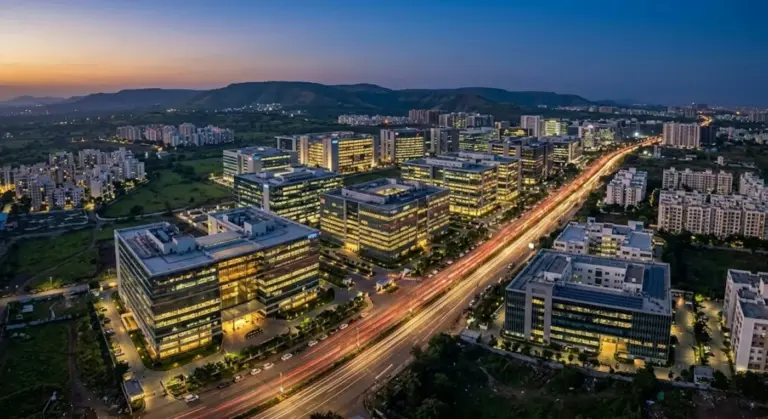
Industrial nodes within DMIC — like Dholera (Gujarat) and AURIC (Aurangabad, Maharashtra) — are being developed as greenfield smart industrial cities with plug-and-play infrastructure.
Defence Manufacturing: Make in India's Strategic Dimension
Defence is perhaps the sector where Make in India has had the most strategic impact.
Defence FDI and Policy
Before 2014, India was the world's largest arms importer — importing 70%+ of its defence equipment. The vision under Make in India:
- Reduce imports, build domestic defence industrial base
- Two Defence Industrial Corridors: Uttar Pradesh (Lucknow-Agra-Aligarh-Jhansi-Kanpur) and Tamil Nadu (Chennai-Coimbatore-Hosur-Salem-Tiruchirappalli)
Positive Indigenisation Lists
The Ministry of Defence has published three Positive Indigenisation Lists — covering over 400 items that cannot be imported; must be sourced domestically. Items include artillery guns, assault rifles, helicopters, radars, and armoured vehicles.
Defence Exports
| Year | Defence Exports (₹ crore) |
|---|---|
| 2016-17 | 1,521 |
| 2019-20 | 9,115 |
| 2022-23 | 15,920 |
| 2023-24 | 21,083 |
India's defence exports crossed ₹21,000 crore in 2023-24 — more than a 10x increase since 2016-17. The government has set a target of ₹50,000 crore in defence exports by 2025. India now exports to 85+ countries.
Ease of Doing Business Reforms
Make in India required parallel reforms in ease of doing business:
| Reform | Impact |
|---|---|
| Jan Vishwas Act 2023 | Decriminalised 183 provisions across 42 Acts |
| Single window clearance (NSWS) | Integrated central approval portal |
| Shops and Establishments Act | Self-certification in many states |
| Environmental approvals | Timeline limits set (max 120 days for most projects) |
| Land records digitisation | Bhoomi and similar state systems |
India's World Bank EoDB rank improved from 142nd in 2014 to 63rd in 2019 — a 79-place jump. Note: The World Bank discontinued the EoDB index in 2021 following a data manipulation controversy; India was not implicated in the controversy.
Manufacturing GDP Share: The Challenge
Despite all the above, manufacturing's share of GDP has not risen dramatically:
| Year | Manufacturing % of GDP |
|---|---|
| 2014-15 | 16.5% |
| 2018-19 | 16.3% |
| 2021-22 | 14.8% (COVID dip) |
| 2023-24 | 17.3% (recovery) |
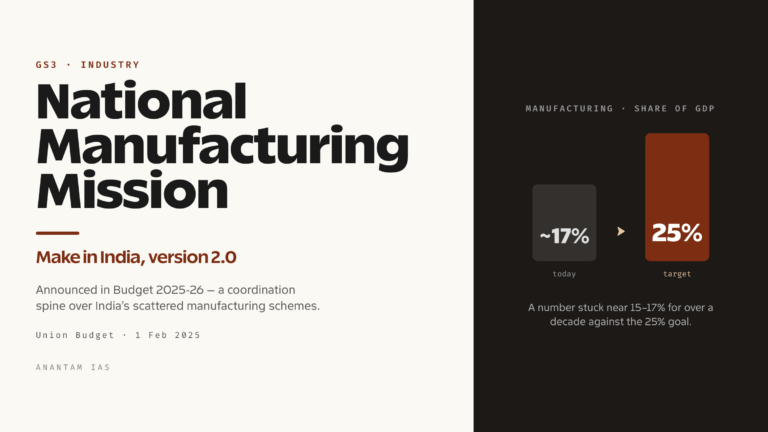
The target was 25% of GDP by 2025. That target remains unmet. Services have continued to dominate India's GDP growth. But the 2023-24 rise to 17.3% and the PLI-driven manufacturing surge in electronics suggests a real, if slower-than-hoped, shift.
Critical Evaluation for UPSC
What Has Worked
- FDI inflows reached record highs by 2021-22
- Mobile phone manufacturing transformed — India is now 2nd-largest producer globally
- Defence exports multiplied 10x
- PLI created credible incentive structures that attracted real investment decisions
What Hasn't Worked
- Manufacturing GDP share has not hit the 25% target
- Job creation in manufacturing has been modest — capital-intensive manufacturing (electronics, defence) creates fewer jobs per rupee than expected
- Labour reforms remain incomplete — the 4 Labour Codes have been enacted but most states haven't notified rules, stalling implementation
- Land acquisition is still slow and legally contentious
- China+1 opportunity has been partially captured (Vietnam, Bangladesh captured more textile orders)
Related: Startup India: Registration, Benefits & Eligibility Related: Digital India Programme: Initiatives & Impact
Key Facts Summary for UPSC
| Feature | Detail |
|---|---|
| Launched | September 25, 2014 |
| Ministry | Commerce and Industry (DPIIT) |
| Focus sectors | 25 |
| Manufacturing GDP target | 25% of GDP by 2025 |
| Current manufacturing GDP (2023-24) | ~17.3% |
| PLI sectors | 14 |
| Total PLI outlay | ₹1.97 lakh crore |
| FDI record (2021-22) | USD 83.6 billion |
| India's EoDB rank (2019) | 63rd (from 142nd in 2014) |
| Mobile phone production (2023-24) | ₹4.10 lakh crore |
| Mobile phone exports (2023-24) | ₹1 lakh crore+ |
| Defence exports (2023-24) | ₹21,083 crore |
| Positive indigenisation list items | 400+ |
| Defence corridors | 2 (UP and Tamil Nadu) |
Frequently Asked Questions
What is Make in India and which sectors does it focus on?
Make in India was launched on September 25, 2014 to position India as a global manufacturing hub and increase manufacturing's share of GDP to 25%. It covers 25 focus sectors including electronics, defence, automobiles, pharmaceuticals, textiles, food processing, aviation, and renewable energy — combining manufacturing and select service sectors.
What is the PLI scheme and how does it work?
PLI (Production-Linked Incentive) provides financial incentives to companies based on incremental sales from products manufactured in India. Companies commit to minimum production thresholds; if they exceed these, they receive 4-20% of incremental sales as incentives over 5 years. PLI covers 14 sectors with a combined outlay of ₹1.97 lakh crore. It has driven India's mobile phone manufacturing transformation.
How has Make in India impacted defence manufacturing?
India reduced its dependence on defence imports by publishing three Positive Indigenisation Lists (400+ items that must be sourced domestically), creating two Defence Industrial Corridors (UP and Tamil Nadu), and liberalising FDI in defence to 74% automatic. Defence exports grew from ₹1,521 crore (2016-17) to ₹21,083 crore (2023-24) — a 10x increase. India now exports to 85+ countries.
What FDI reforms were made under Make in India?
Major FDI reforms include 100% automatic FDI in railways, single-brand retail, telecom, and medical devices; defence FDI raised to 74% automatic (100% via government approval); insurance raised to 74%. India's FDI inflows rose from USD 45 billion (2014-15) to a record USD 83.6 billion (2021-22), making India the 3rd-largest FDI recipient globally.
Has Make in India achieved its manufacturing GDP target?
No. The target was to raise manufacturing's share of GDP to 25% by 2025. As of 2023-24, manufacturing contributes ~17.3% of GDP. While this is an improvement from 16.5% in 2014-15, it falls well short of the target. Labour reforms stalled, land acquisition challenges persisted, and services continued to dominate GDP growth. PLI-driven electronics manufacturing is the brightest spot.
Tell Google you want more of this.
Add Anantam IAS as a preferred sourceOne tap, and this site shows up more often in your own Top Stories, AI Overviews and AI Mode. Remove it any time.