Dolphin

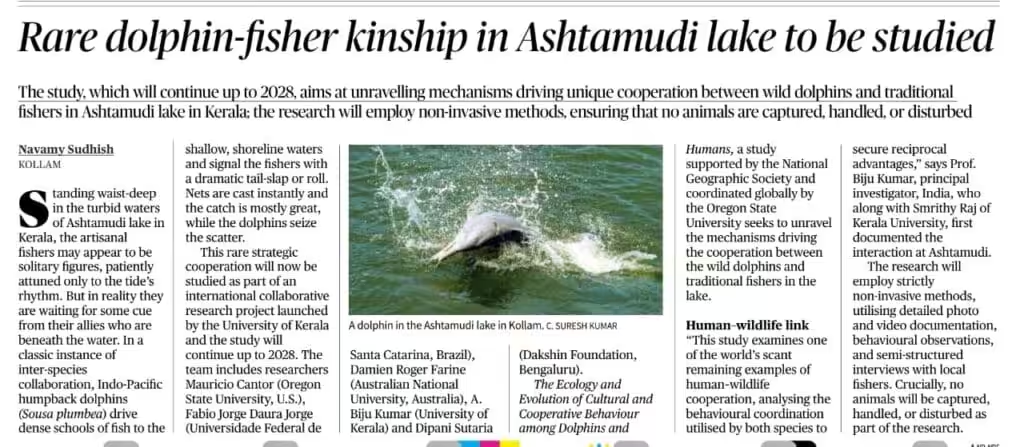
Context:
A long-term international research project (till 2028) has been launched by the University of Kerala and global collaborators to study the unique human–dolphin cooperative behaviour in Ashtamudi Lake, Kerala, one of the world’s rarest examples of inter-species fishing collaboration.
UPSC Relevance:
Species in news (Environment)
UPSC PYQ:
Q. Which one of the following is the national aquatic animal of India? (2015)
(a) Saltwater crocodile
(b) Olive ridley turtle
(c) Gangetic dolphin
(d) Gharial
Ganges River dolphins:
- Dolphins are one of the oldest creatures in the world along with some species of turtles, crocodiles and sharks. The Ganges river dolphin was officially discovered in 1801.
- The Ganges river dolphin can only live in freshwater and is essentially blind.
- They hunt by emitting ultrasonic sounds, which bounces off of fish and other prey, enabling them to “see” an image in their mind.
- Females are larger than males and give birth once every two to three years to only one calf.
- The government of India declared it the National Aquatic Animal in 2009.
- Females are larger than males.
- The gestation period is 9-11 months and a female gives birth to only one calf, once in 2-3 years.
Habitat and Distribution:
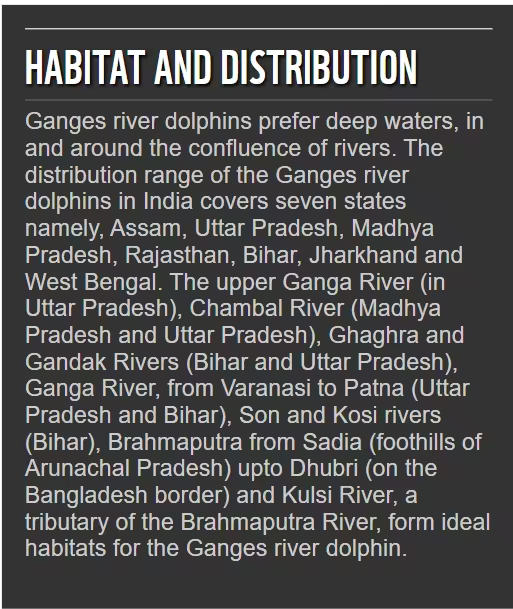
Humpback dolphins:
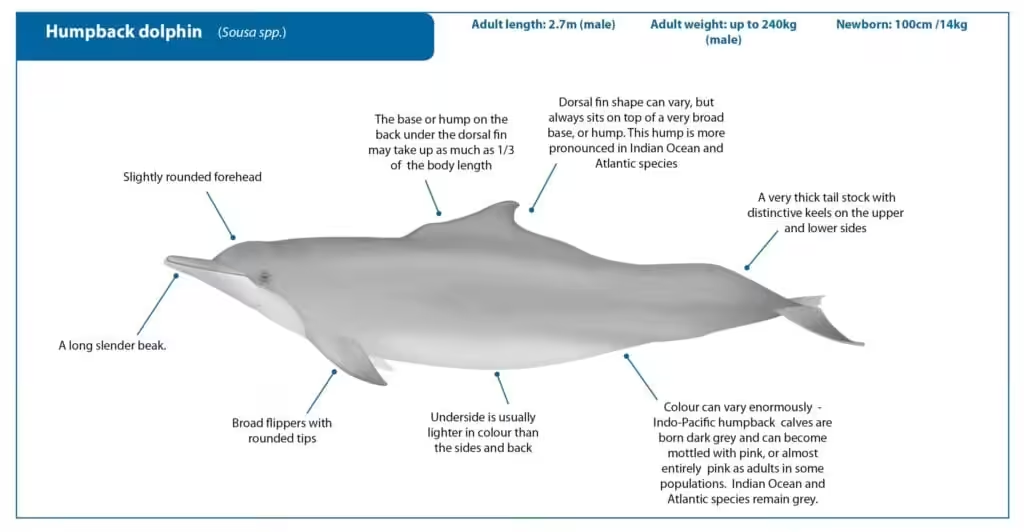
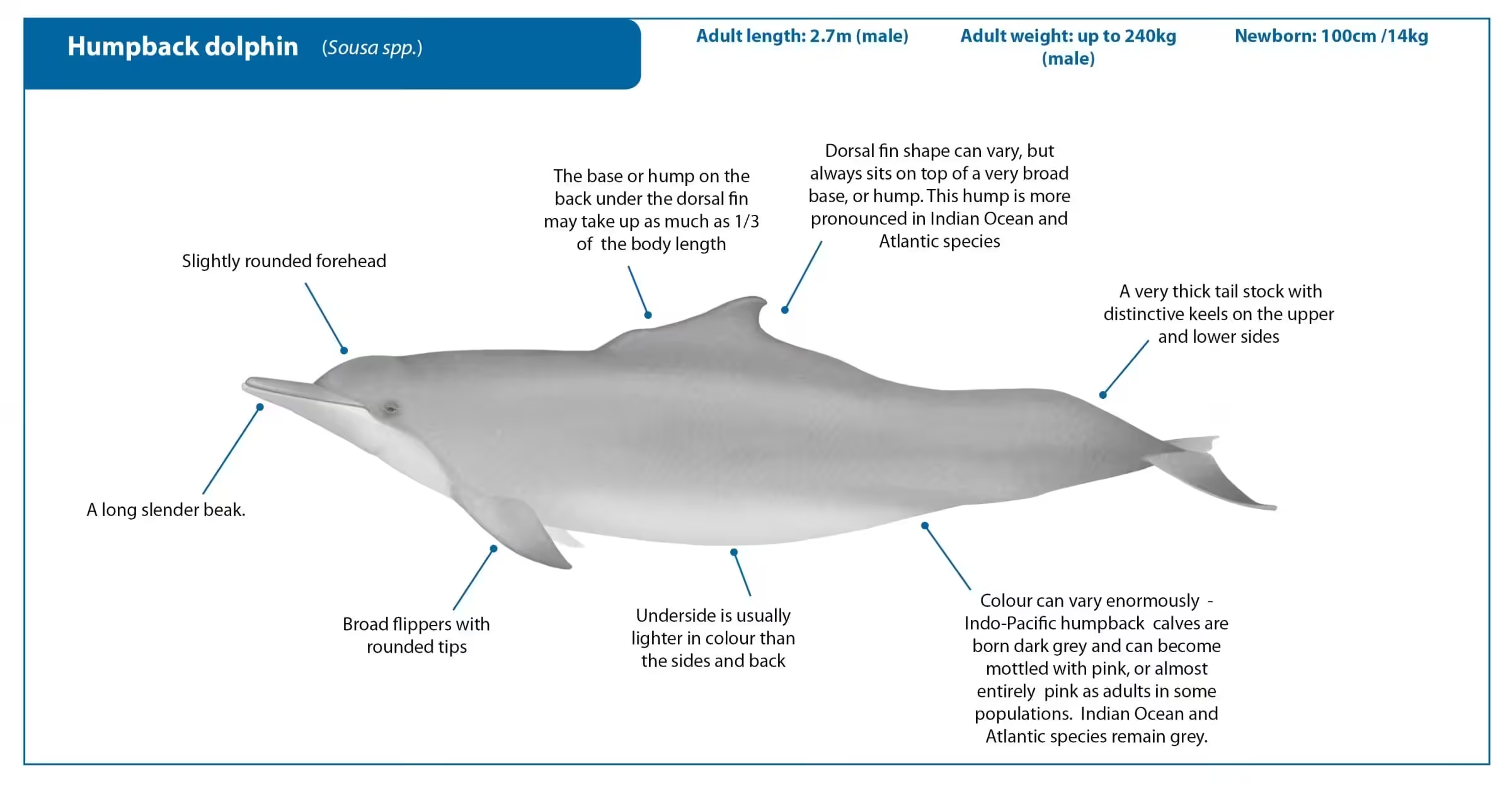
- Humpback dolphins are found in relatively shallow nearshore waters throughout their range which includes most of the coastlines in Australia, Africa and Asia.
- There are four recognized species of humpback dolphins with very little overlap between their ranges: the, Indo-Pacific humpback dolphin (Sousa chinensis), the Indian Ocean humpback dolphin (S. plumbea) the Atlantic humpback dolphin (S. teuszi) and the Australian humpback dolphin (S. sahulensis)
Distribution:
- Indian Ocean humpback dolphins are native to: Bahrain; Bangladesh; Comoros; Djibouti; Egypt, Eritrea; India; Iran; Iraq; Israel; Kenya; Kuwait; Madagascar; Mayotte; Mozambique; Myanmar; Oman; Pakistan; Qatar; Saudi Arabia; Somalia; South Africa; Sri Lanka; Sudan; Tanzania; UAE; Yemen.
Feeding:
Humpback dolphins seem to be fairly adaptable in their diet, with studies from South Africa, Hong Kong, Australia and Oman revealing a variety of fish species, and sometimes crustaceans, squids, octopus and cuttlefish in the stomachs of by-caught or stranded animals.
Conservation status:
- Indian ocean humpback dolphin -endangered