India’s Cotton Production Faces Prolonged Decline
Why in News?
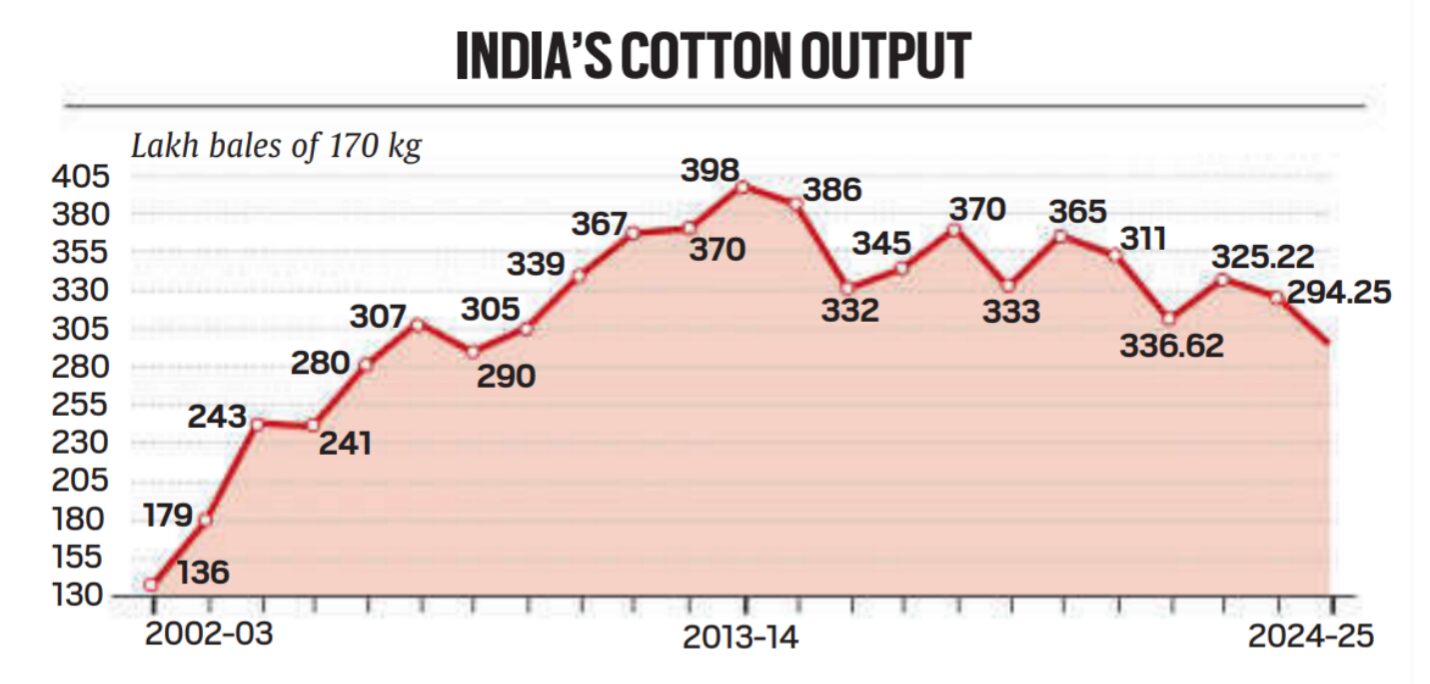
India’s cotton production has been declining since the peak of 398 lb (lakh bales) in 2013-14. A combination of factors, including adverse climatic conditions and the resurgence of major pests like pink bollworm and whitefly, along with increased incidence of diseases such as cotton leaf curl virus, boll rot, Tobacco Streak Virus have affected cotton production and yield in recent years.
| UPSC Relevance: GS-3 Economy: Major crops & Cropping pattern; GS-3 Science and Technology: Biotechnology (GM Crops) Prelims & Mains: Cotton (facts, production trends, challenges, govt. schemes); Bt Cotton/ GM crops |
Key Facts about Cotton:
- Nature: Tropical fibre Kharif crop.
- Cash crop known as White Gold.
- Soil: Grows best in well-drained black soil (Regur), which retains moisture.
- Climate: Tropical/subtropical crop that requires a warm climate (21-30°C).
- Rainfall: Thrives in areas with 50-100 cm of rainfall, often in drier parts of the black cotton soil region.
- Frost-free days: Requires at least 210 frost-free days and bright sunshine for its bolls to mature.
- Challenges: Prone to pests such as pink bollworm and whitefly. Impacted by sudden changes in weather conditions.
- India is a dominant global player in cotton production, contributing roughly 23-25% of global output.
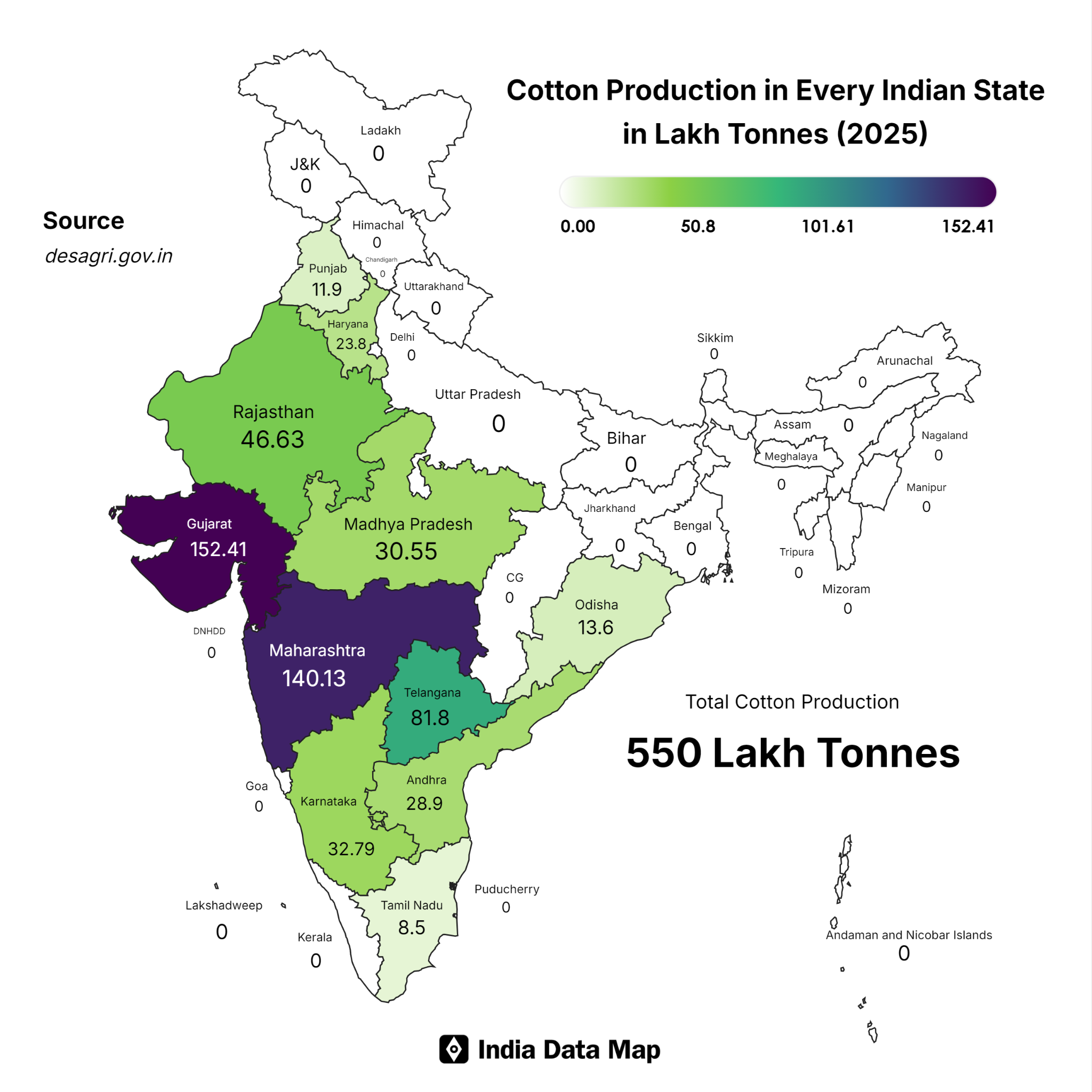
- Key Regions: The central zone (Gujarat, Maharashtra, and Madhya Pradesh) is the largest producer, often referred to as the “Cotton Basket of India”.
What is Bt Cotton?
Genetically Modified (GM) crops have their DNA modified (altered) through genetic engineering. It involves inserting new DNA into the genome of the plant.
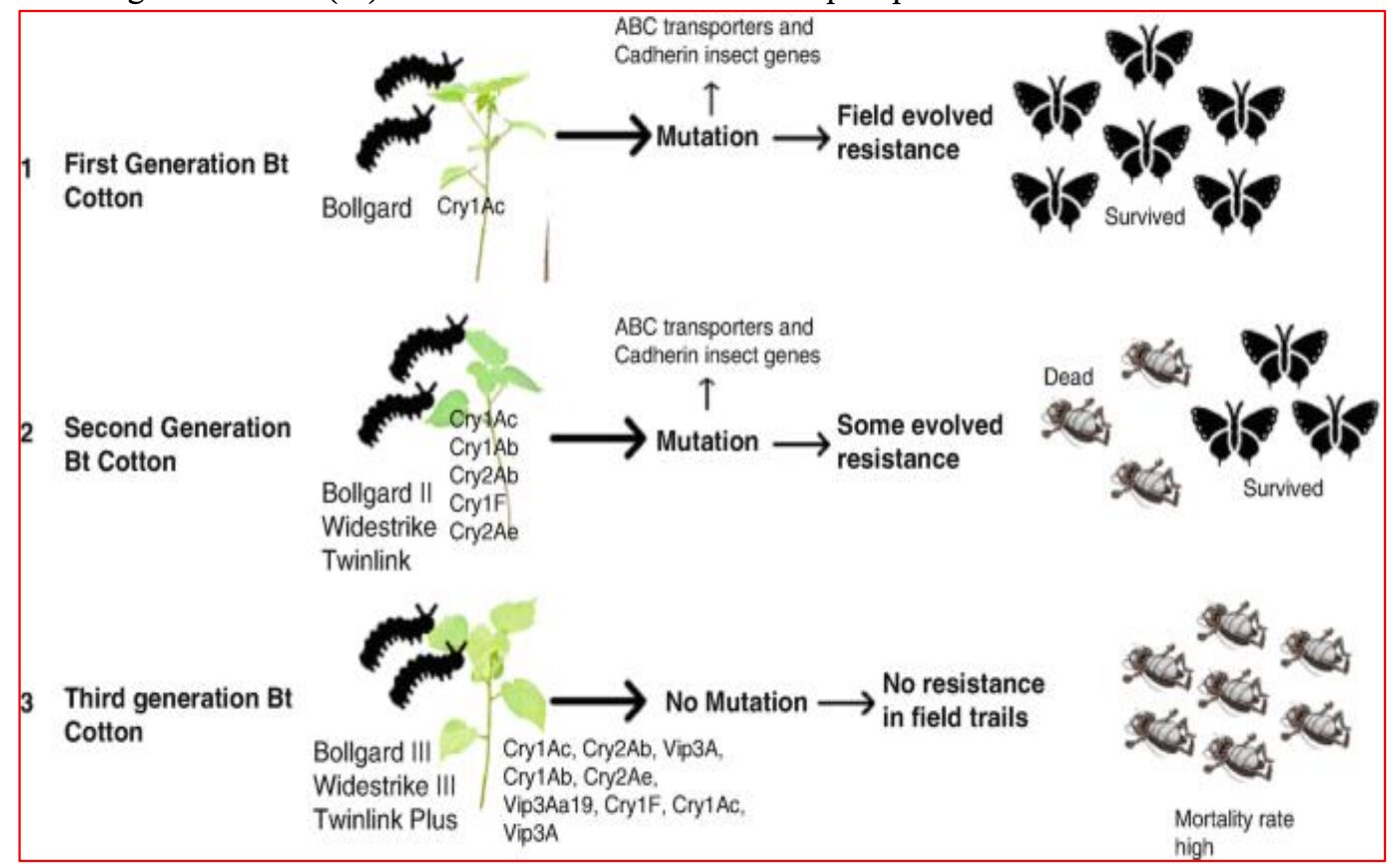
- Bt cotton is a genetically modified pest-resistant variety of cotton. It was genetically modified by the insertion of one or more genes (Cry1 Ac) from the soil bacterium Bacillus thuringiensis.
- Strains of the bacterium Bacillus thuringiensis produce toxins harmful to a variety of insects (like American bollworm) that commonly attack cotton crops.
- Bt cotton is India’s first transgenic crop formally approved for commercial cultivation in 2002.
- Aim: To reduce the amount of insecticide needed in farming cotton.
What is Pink Bollworm?
- Pink Bollworm is one of the most destructive pests infesting cotton. It is native to India but is now found worldwide.
- Description: The larvae have distinctive pink bands. They are most destructive at the larval stage. The larvae burrow into the developing fruits (bolls) of cotton plants, eat the seeds and damage cotton fibres.
Resistance to GM Bt Cotton:
- Historically, cotton faced threats from pests like spotted bollworm, American bollworm, and pink bollworm. The introduction of GM Bt cotton seeds initially mitigated the pink bollworm menace. However, the pest developed significant resistance by 2014, leading to devastating yield losses.
- Pink Bollworm adapted faster as its exclusive diet (cotton only) allowed faster genetic resistance. A short life cycle (25-35 days) enabled 3-4 generations per crop season, thus speeding up resistance evolution.
Crisis in Cotton Production & Associated Challenges:
- Decline in total area under cotton cultivation: The area under cotton cultivation across India has decreased by 14.84% between 2019-20 and 2024-25. The production is down from 36.07 million bales (170 kg in each bale) to 29.72 million bales.
- Pink bollworm infestation: The resurgence of Pink Bollworm since 2014 has reduced the effectiveness of Bt cotton in some regions due to pest resistance. Long-duration hybrid varieties increase the exposure window for pest infestation.
- Low productivity: Pre-pink bollworm, crop yields ranged from 10-12 quintals per acre; now they range around 3-4 quintals per acre.
- Lower return on investment: High average cost of growing cotton per acre, factoring in the costs of seeds, fertilisers, diesel, and harvesting. This has reduced profitability, particularly for small farmers.
- MSP procurement constraints: Although Minimum Support Price provides price assurance, farmers often face quality-based procurement rejection, limited procurement centres and delayed payments. This leads to distress sales to private traders.
- Net negative Exports: Once a major exporter, India’s cotton imports (30 lb) now exceed exports (17 lb). This shift raises concerns for India’s textile and spinning industries.
- Socio-economic challenges: Decline in cotton production has reduced the demand for seasonal labour over the years, particularly for women who drive much of the cotton-picking process. This eventually drives migration of workers towards urban areas and strains urban infrastructure.
Way Forward:
- Emphasising local cotton variety development: Local varieties require significantly less water, are resilient to climate challenges and have an average yield per hectare that remains at par. However, they face challenges like lower prices compared to Bt cotton and have inconsistent market demand.
- Planting rainfed short-season high-density (SS-HD) cotton: The early maturation of SS-HD cotton (150–160 days) reduces the pest exposure window. This would reduce the usage of insecticides and has the potential to increase yields.
- Expediting development of New GM Hybrids: Indian seed companies are developing hybrids using new Bt genes to combat bollworm resistance. E.g., cry8Ea1 gene hybrids; synthetic cry1c gene; chimeric Bt protein, etc. The challenges include bureaucratic delays in regulatory clearances and opposition from environmental groups.
- Government Mission for Cotton Productivity: The Union Budget 2025-26 launched a dedicated “Mission for Cotton Productivity” under the Ministry of Textiles. This Rs 500 crore five-year program aims to improve cotton productivity, sustainability, and promote Extra-Long Staple (ELS) cotton.
The crisis needs urgent, coordinated action to revive the crop’s viability, and requires stakeholders to work in close-coordination to tackle pest pressures and restore cotton’s profitability.
UPSC PYQ (2021)
Q. Bollgard I and Bollgard II technologies are mentioned in the context of:
(a) clonal propagation of crop plants
(b) developing genetically modified crop plants
(c) production of plant growth substances
(d) production of biofertilizers
Answer: (b)
UPSC PYQ (2020)
Q. “The crop is subtropical in nature. A hard frost is injurious to it. It requires at least 210 frost-free days and 50 to 100 centimetres of rainfall for its growth. A light, well-drained soil capable of retaining moisture is ideally suited for the cultivation of the crop.” Which one of the following is that crop?
(a) Cotton
(b) Jute
(c) Sugarcane
(d) Tea
Answer: (a)
UPSC PYQ (2013)
Q. Consider the following crops:
1. Cotton
2. Groundnut
3. Rice
4. Wheat
Which of these are Kharif crops?
(a) 1 and 4
(b) 2 and 3 only
(c) 1, 2 and 3
(d) 2, 3 and 4
Answer: (c)