India's agricultural calendar is divided into three cropping seasons — Kharif, Rabi, and Zaid. Kharif crops are sown with the onset of the southwest monsoon (June–July) and harvested after the monsoon retreats (September–October). They are also called monsoon crops because their growth depends primarily on monsoon rainfall.
For UPSC, the Kharif-Rabi-Zaid classification is fundamental to Indian Agriculture (GS3) and Geography (GS1). Questions test both factual knowledge (which crop belongs to which season) and analytical understanding (why certain crops grow in certain seasons).
What Are Kharif Crops?
The word "Kharif" comes from the Arabic word "kharif" meaning autumn — referring to the autumn harvest time.
Growing season:
- Sowing: June–July (with the onset of the southwest monsoon)
- Growing: July–September (during the monsoon)
- Harvesting: September–October (as the monsoon retreats)
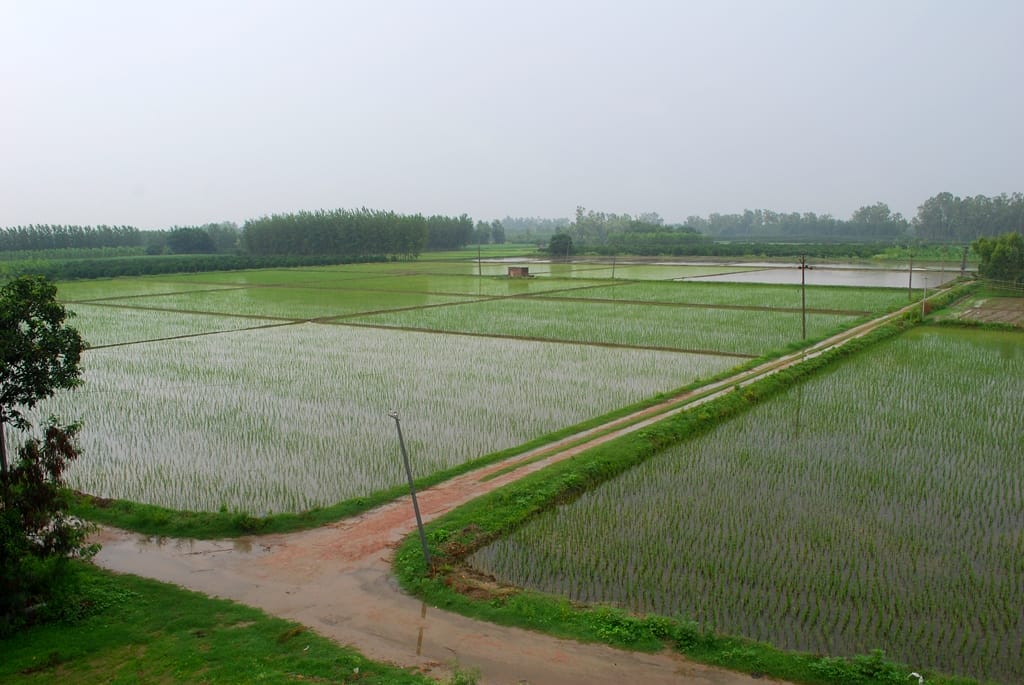
Water requirement: High — Kharif crops require abundant water, which is supplied by monsoon rainfall. They are water-intensive compared to Rabi crops.
Temperature: Warm and humid conditions (25–35°C). The combination of high rainfall and high temperature during the Indian monsoon is ideal for Kharif crops.
Major Kharif Crops
| Crop | Type | Major Producing States | Soil/Climate Needs |
|---|---|---|---|
| Rice (Paddy) | Cereal | West Bengal, UP, Punjab, Andhra Pradesh, Tamil Nadu | Alluvial soil; needs standing water; 20–37°C; >100 cm rainfall |
| Maize | Cereal | Karnataka, Madhya Pradesh, Bihar, Rajasthan, UP | Well-drained loamy soil; moderate rainfall (50–100 cm) |
| Jowar (Sorghum) | Millet | Maharashtra, Karnataka, Madhya Pradesh, Rajasthan | Grows in both Kharif and Rabi; drought-resistant; black/red soil |
| Bajra (Pearl Millet) | Millet | Rajasthan, Gujarat, UP, Haryana, Maharashtra | Sandy/loamy soil; very drought-resistant; <50 cm rainfall sufficient |
| Cotton | Fibre | Gujarat, Maharashtra, Telangana, Madhya Pradesh, Rajasthan | Black (regur) soil; 21–30°C; 50–100 cm rainfall; 210 frost-free days |
| Jute | Fibre | West Bengal, Bihar, Assam, Odisha | Alluvial soil; hot and humid; >150 cm rainfall; flood plains |
| Groundnut | Oilseed | Gujarat, Rajasthan, AP, Tamil Nadu, Karnataka | Sandy loam soil; 20–30°C; 50–75 cm rainfall |
| Soybean | Oilseed | Madhya Pradesh, Maharashtra, Rajasthan | Black soil; 26–30°C; 60–100 cm rainfall |
| Tur/Arhar (Pigeon Pea) | Pulse | Maharashtra, Karnataka, MP, UP, Jharkhand | Various soils; drought-tolerant; 60–100 cm rainfall |
| Moong (Green Gram) | Pulse | Rajasthan, Maharashtra, MP, UP | Light sandy soil; warm conditions; short duration crop |
| Sugarcane | Cash crop | UP, Maharashtra, Karnataka, Tamil Nadu | Alluvial/black soil; hot and humid; 75–150 cm rainfall; 12–18 month crop |
| Turmeric | Spice | Telangana, Maharashtra, Tamil Nadu, Karnataka | Loamy/alluvial soil; 20–30°C; 150 cm rainfall |
Note on Sugarcane: Sugarcane is technically planted in the Kharif season but takes 12–18 months to mature. It does not fit neatly into the Kharif-Rabi classification. Some sources classify it separately.
Note on Jowar: Jowar is grown in both Kharif (Maharashtra, Karnataka) and Rabi seasons, making it a dual-season crop. UPSC may test this nuance.
Kharif vs. Rabi vs. Zaid: Comprehensive Comparison
| Parameter | Kharif | Rabi | Zaid |
|---|---|---|---|
| Meaning | Arabic: autumn | Arabic: spring | Arabic: surplus/extra |
| Sowing | June–July | October–November | March–April |
| Harvesting | September–October | March–April | May–June |
| Water source | Monsoon rainfall | Winter rain + irrigation | Irrigation (primarily) |
| Temperature | Warm (25–35°C) | Cool growing season (10–25°C) | Hot (25–40°C) |
| Major crops | Rice, maize, cotton, jute, groundnut, soybean, tur dal | Wheat, barley, gram (chana), mustard, peas, linseed | Watermelon, muskmelon, cucumber, moong dal, vegetables |
| Key cereal | Rice | Wheat | — |
| Key oilseed | Groundnut, soybean | Mustard, linseed | — |
| Key pulse | Tur (arhar), moong, urad | Gram (chana), masur | Moong, urad |
| Key fibre | Cotton, jute | — | — |
| Dominant region | Eastern India, Western India, Deccan | Northwestern India (Indo-Gangetic Plain) | Irrigated areas (UP, Bihar, WB) |
UPSC trap: Cotton is a Kharif crop but is harvested over a longer period extending into winter. Similarly, sugarcane spans multiple seasons.
Climatic Requirements
Kharif crops share common climatic needs:
Rainfall: Most Kharif crops need 50–200 cm of rainfall. Rice requires the most (>100 cm); millets like bajra can survive on less than 50 cm.
Temperature: 25–35°C during the growing season. High temperatures combined with humidity promote rapid vegetative growth.
Soil moisture: Continuous soil moisture is essential. Dry spells during the monsoon (monsoon breaks) can devastate Kharif crops — especially rice, which needs standing water.
Photoperiod: Many Kharif crops are short-day plants — they flower when day length decreases (as happens in late monsoon and early autumn in India).
Challenges Facing Kharif Crops
| Challenge | Impact |
|---|---|
| Monsoon variability | Late onset, early withdrawal, or monsoon breaks can destroy crops; El Nino years typically bring below-normal monsoon |
| Floods | Excessive rainfall causes waterlogging and crop destruction, especially in eastern India |
| Pest and disease pressure | High humidity during monsoon favours fungal diseases and pest multiplication |
| Input costs | Seeds, fertilisers, and pesticides have become increasingly expensive |
| Market price volatility | Post-harvest gluts can crash prices below MSP; storage infrastructure is inadequate |
| Climate change | Shifting monsoon patterns, increased frequency of extreme weather events |
Government Support: MSP for Kharif Crops (2025–26)
The government announces Minimum Support Prices (MSP) for Kharif crops before the sowing season. MSP aims to ensure farmers receive a minimum guaranteed price.
| Crop | MSP 2025–26 (Rs/quintal) | MSP 2024–25 (Rs/quintal) | Increase |
|---|---|---|---|
| Paddy (Common) | 2,450 | 2,300 | 6.5% |
| Jowar (Hybrid) | 3,371 | 3,180 | 6.0% |
| Bajra | 2,625 | 2,500 | 5.0% |
| Maize | 2,090 | 2,090 | 0% |
| Tur (Arhar) | 7,550 | 7,000 | 7.9% |
| Moong | 8,682 | 8,558 | 1.4% |
| Groundnut | 6,377 | 6,377 | 0% |
| Soybean (Yellow) | 4,892 | 4,892 | 0% |
| Cotton (Medium Staple) | 7,121 | 7,121 | 0% |
Note: These are illustrative figures. Verify latest MSP announcements from the official CCEA release for the current exam year.
Key UPSC point: MSP is recommended by the Commission for Agricultural Costs and Prices (CACP). The government has committed to setting MSP at 1.5 times the cost of production (A2+FL formula — actual paid-out costs plus imputed value of family labour). Whether this formula is adequate or should use the more comprehensive C2 cost (which includes rental value of land and interest on capital) remains a major policy debate.
Related Government Schemes
| Scheme | Relevance to Kharif |
|---|---|
| PM-KISAN | Direct income support — Rs. 6,000/year to all farmer families |
| PM Fasal Bima Yojana (PMFBY) | Crop insurance against natural calamities — particularly important for monsoon-dependent Kharif crops |
| Soil Health Card Scheme | Soil testing to recommend appropriate fertiliser use |
| National Mission on Sustainable Agriculture | Climate-resilient farming practices |
| e-NAM | National electronic market for agricultural produce — better price discovery |
UPSC Relevance
GS1 (Geography): Cropping seasons, crop distribution, climatic factors.
GS3 (Agriculture): MSP, food security, agricultural challenges, government schemes.
Prelims factual questions:
- "Which of the following is NOT a Kharif crop?" — know the full list
- "Bajra is predominantly grown in which season?" — Kharif
- "Which crop requires standing water for cultivation?" — Rice
- "Jowar is grown in both Kharif and Rabi seasons" — True
Mains themes:
- Monsoon dependency and agricultural vulnerability
- MSP adequacy and farmer distress
- Climate change impact on Kharif production
- Food security and crop diversification
Quick Revision
- Kharif = Monsoon crops (June–October)
- Key crops: Rice, maize, cotton, jute, groundnut, soybean, tur dal, bajra
- Water source: Southwest monsoon rainfall
- Compare with Rabi: Wheat, barley, mustard, gram (October–March, winter crops)
- Zaid: Short summer crops between Rabi harvest and Kharif sowing
- MSP: Announced before sowing season; recommended by CACP
- Biggest risk: Monsoon variability (El Nino = drought risk for Kharif)
Tell Google you want more of this.
Add Anantam IAS as a preferred sourceOne tap, and this site shows up more often in your own Top Stories, AI Overviews and AI Mode. Remove it any time.