Cetacean Conservation: Reducing Bycatch and Vessel Collision Risks
Why in News?
India called for scientific evidence and international cooperation in cetacean conservation during its opening statement at IWC-70 in Hobart on 28 September 2026.
- India identified population status, distribution and movements as essential evidence for conservation decisions, alongside breeding ecology and information about threats affecting particular populations.
- The statement called for cooperation among range countries, scientific institutions and local communities, with practical measures suited to conditions where animals and human activities overlap.
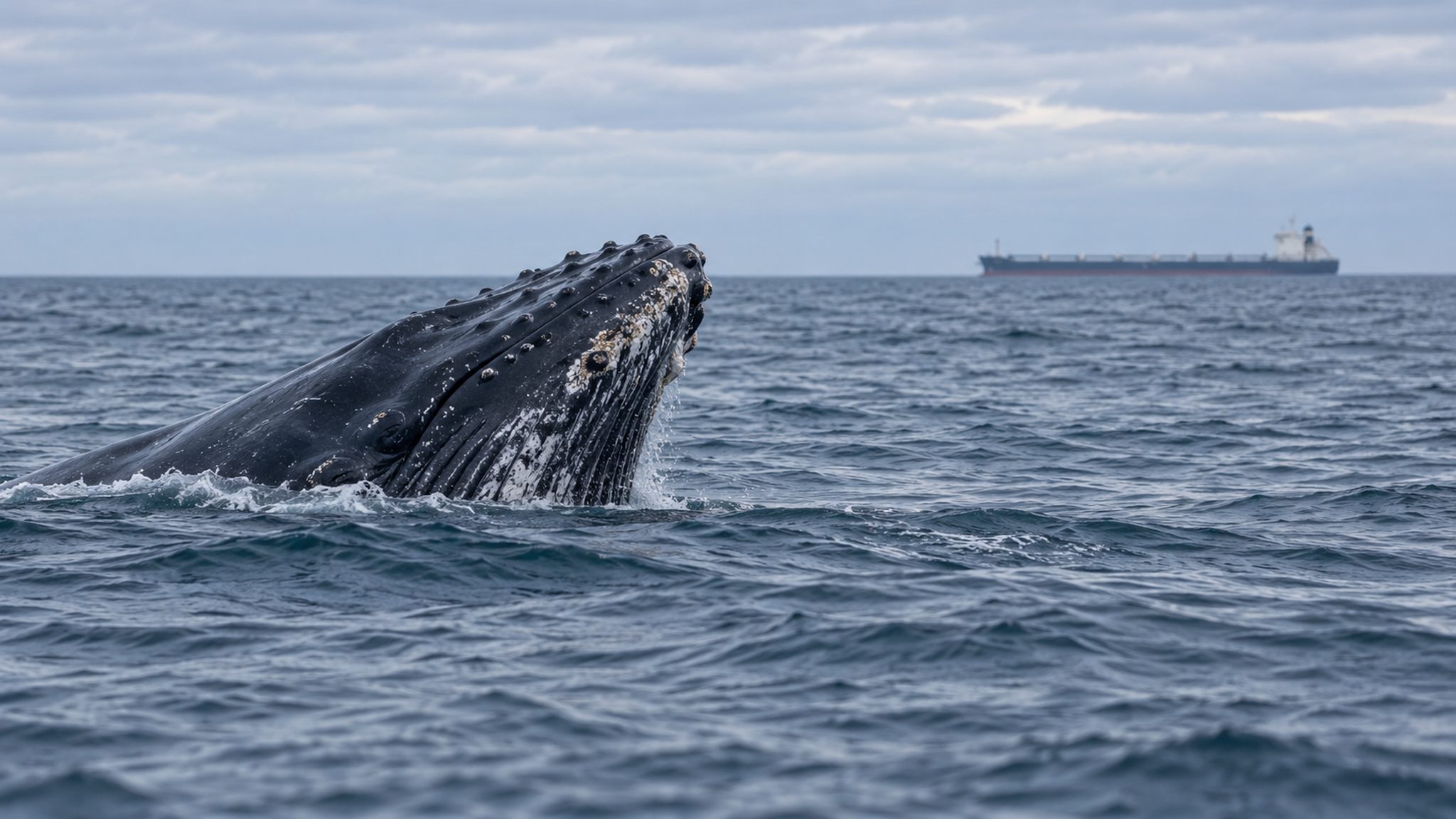
- India highlighted the Arabian Sea humpback whale as a conservation priority and described Project Dolphin as covering dolphins, whales, porpoises and associated aquatic ecosystems.
- This was an opening statement outlining priorities; the release does not announce a new treaty, an adopted resolution or newly mandatory shipping restrictions.
- A protected-area boundary cannot by itself prevent encounters with fishing gear or vessels when animals move beyond it; the activity causing harm also needs management.
- The policy challenge combines species protection and livelihoods: fishers and vessel operators need workable measures whose effects can be checked, rather than identical restrictions across different settings.
UPSC Relevance
Prelims Relevance
- Cetaceans: whales, dolphins and porpoises
- Bycatch and fishing-gear entanglement
- Vessel-strike risk and spatial overlap
- International Whaling Commission and range-state cooperation
- Dugongs belong to Sirenia, not Cetacea
Mains Relevance
GS Paper 3
- Threat-specific marine biodiversity protection alongside fisheries and shipping.
- Using imperfect population and incident evidence to prioritise conservation.
GS Paper 2
- Cooperation among range states and international specialist institutions.
Essay
- Shared oceans require responsibility beyond jurisdictional boundaries.
Background and Context
Which animals and institutions are involved?
Cetaceans share a biological grouping, but their habitats and exposure to human activities differ.
- Whales, dolphins and porpoises are cetaceans. Dugongs are marine mammals belonging to Sirenia; appearing together in a marine biodiversity list does not make these groups taxonomically identical.
- The International Whaling Commission addresses whaling management and whale conservation. Its scientific and conservation work includes contemporary pressures such as fishing interactions and vessel collisions.
- Range countries share responsibility when a population uses waters across jurisdictions. Compatible observations help connect local risks with the wider population rather than treating each sighting as an isolated event.
- India’s statement links conservation with local ecological evidence. Knowing where animals occur, and when, makes it possible to identify the human activities that require closer investigation.
- Movement evidence also matters inland: the published Chambal dolphin study concerns river conditions, whereas the present marine challenge centres on fishing and shipping encounters.
How fishing gear creates bycatch risk
Bycatch occurs when fishing gear captures an animal that the fishing operation was not targeting.
- Incidental capture can affect cetaceans in industrial and small-scale fisheries. A conservation response must identify the relevant fishery and gear rather than assuming vessel size alone determines danger.
- Gillnets and entangling nets are particularly important sources of cetacean bycatch. Gear interaction is the mechanism to investigate; a collision-prevention measure does not directly remove that exposure.
- The IWC’s bycatch guidance discusses gear modification, acoustic deterrents and temporary closures. These are options for assessment, not a universally effective package or a newly announced Indian requirement.
- Local trials should test both animal protection and fishing practicality. A device or gear change that works in one fishery cannot automatically be assumed suitable elsewhere.
- Reporting gaps make priorities difficult to establish. Working with fishing communities improves the evidence needed to judge where mitigation is necessary and whether a tested measure succeeds.
How vessel collisions demand a different response
Vessel-strike prevention reduces dangerous overlap between animals and moving vessels.
- A vessel strike is a collision, distinct from capture in fishing gear. Whales can be injured or killed; vessels and people aboard can also suffer harm.
- Spatial separation is central: the IWC identifies keeping vessels and whales apart as the most effective approach, with slowing and lookout measures where separation is impractical.
- Risk mapping combines animal distribution with shipping activity. A busy route through important habitat warrants attention even when recorded collisions are few, because many incidents remain unobserved.
- Incident reports are incomplete evidence, not a census of mortality. The IWC’s vessel-strike database helps identify patterns, but reported totals cannot establish the full scale of harm.
- Cleaner shipping addresses another pressure: Kandla’s e-methanol initiative concerns fuel emissions. Lower-emission propulsion does not itself prevent a vessel from colliding with a whale.
Way Forward
Match prevention to the encounter
- Combine cetacean observations, fishing effort and shipping routes to identify local priorities before selecting interventions.
- Co-design gear trials and operational changes with fishers and vessel operators, recording conservation effects and practical costs.
- Share comparable incident and movement records across range countries; assess mitigation against population risk rather than publicity around individual sightings.
Conclusion
- Effective cetacean conservation connects the animal, the harmful encounter and a tested prevention measure; legal protection and protected areas need complementary action in working seas.
- An exam answer should distinguish fishing-gear interaction from vessel collision, then explain why local evidence and cooperation across jurisdictions determine the appropriate response.
UPSC Practice Questions
Prelims MCQ 1
With reference to cetacean conservation, consider the following statements:
- Whales, dolphins and porpoises are cetaceans.
- Dugongs belong to the same cetacean grouping.
- Bycatch involves incidental capture of non-target species in fishing gear.
How many of the above statements are correct?
(a) Only one (b) Only two (c) All three (d) None
Answer: (b) Only two
Explanation:
Statements 1 and 3 are correct. Dugongs are sirenians, although they too are marine mammals.
Prelims MCQ 2
Which approach most directly addresses vessel-strike risk in an area where whale habitat overlaps a busy shipping route?
(a) Replacing marine fuel alone (b) Increasing fishing-net mesh size alone (c) Separating vessel routes from whale concentrations where feasible (d) Treating reported collisions as a complete mortality census
Answer: (c) Separating vessel routes from whale concentrations where feasible
Explanation:
Spatial separation reduces exposure to collisions. Where separation is impractical, speed and lookout measures can be considered; fuel changes alone do not prevent strikes.
UPSC Mains Questions
- Distinguish fishing-related bycatch from vessel strikes. Explain why cetacean conservation needs interventions tailored to each threat. (150 words)
- Why are protected areas insufficient by themselves to conserve mobile marine mammals? Discuss the role of range-state cooperation and evidence about human activities. (250 words)
Sources: PIB, Ministry of Environment, Forest and Climate Change and International Whaling Commission.
Frequently Asked Questions
What is cetacean bycatch?
Cetacean bycatch is the incidental capture of whales, dolphins or porpoises in fishing gear. It can occur in industrial and small-scale fisheries, requiring measures adapted to the species, gear and local fishing operation.
Are dugongs cetaceans?
No. Dugongs are marine mammals belonging to Sirenia, whereas whales, dolphins and porpoises are cetaceans. Their shared inclusion in marine biodiversity conservation programmes does not make them members of the same biological group.
How can vessels reduce collision risk with whales?
The IWC emphasises keeping vessels and whales apart where feasible. Where separation is impractical, slowing and maintaining a lookout can help. Suitable measures depend on local whale distribution, vessel activity and operational conditions.
Did India’s IWC-70 statement create new mandatory restrictions?
The reported opening statement sets out India’s conservation priorities and support for scientific cooperation. It does not itself establish a new treaty or announce newly mandatory speed restrictions for ships in Indian waters.