Justice delayed is justice denied

Why in News:
The issue of judicial pendency and timely justice is once again in national focus due to the massive backlog of over 5 crore cases across India’s judicial system and the President of India’s recent remarks on the “black coat syndrome” — a metaphor highlighting citizens’ hesitation in approaching the judiciary due to long delays and fear of legal complexities.
UPSC CSE Relevance:
UPSC CSE in mains and prelims examination has focused on Judiciary System and issues arising in judiciary system. A case in point is a following PYQ.
UPSC 2023 mains PYQ:
“Constitutionally guaranteed judicial independence is a prerequisite of democracy.” Comment.
UPSC 2021 mains PYQ:
Discuss the desirability of greater representation to women in the higher judiciary to ensure diversity, equity and inclusiveness.
Current situation of delayed justice:
- Over 86,700 cases are pending in the Supreme Court (SC), over 63.3 lakh cases in High Courts (HCs), and 4.6 crore cases in district and subordinate courts.
- Added up, the total number of pending cases in India amounts to more than 5 crore

Causes:
- Inadequate infrastructure and staff in courts like District courts, which handle 90% of total litigation, have only 18 judges per 10 lakh people, against the Law Commission’s 1987 recommendation of 50 judges per 10 lakh.
- Frequent adjournments and absence of strict timelines for case stages (filings, hearings, witness examination).
- Poor case management systems — no uniform scheduling or bundling of similar cases.
- Lack of tracking and monitoring mechanisms.
- Complexity of civil disputes, especially property and family matters.
- Inadequate cooperation from key stakeholders (litigants, lawyers, witnesses).
- All High Courts in the country normally have 210 working days only in a year.
An analysis of the justice delivery timeline in Indian courts:
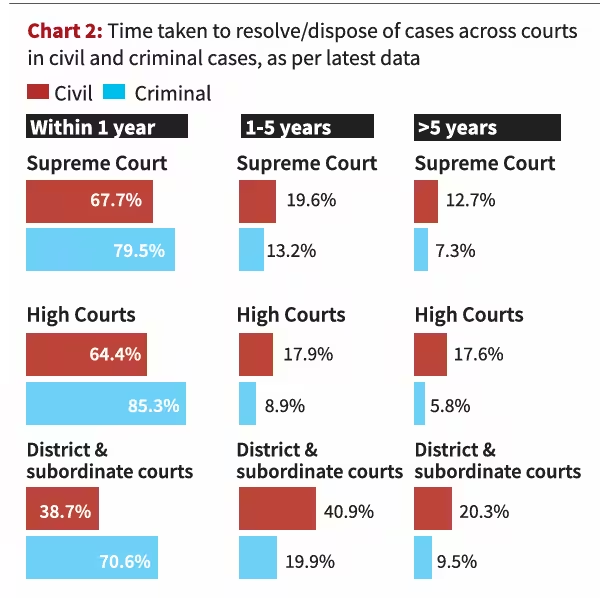
- Criminal cases, generally considered as offences against the State, are resolved faster than civil ones, such as property, family or contractual disputes at every tier.
- HC disposes 85.3% criminal cases within a year, followed by the SC at 79.5%, and district courts at 70.6%.
- The real concern lies in civil litigation at the district level, which handles the bulk of India’s pending cases, where only 38.7% civil cases are resolved with-in a year, and nearly 20% stretch beyond five years.
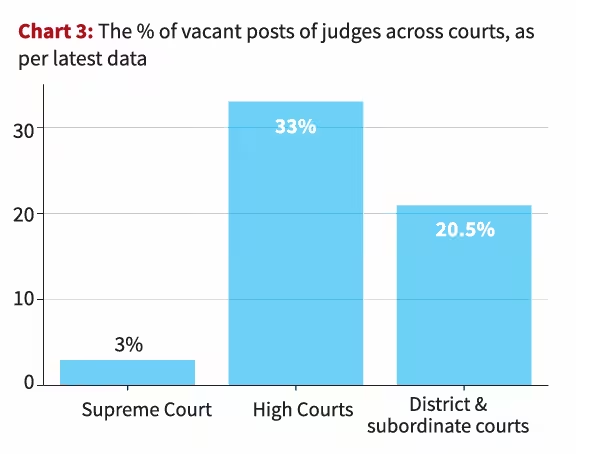
- A major systemic cause of judicial delay is the persistent gap between the sanctioned and actual strength of judges across courts
- India’s judiciary functions at just 79% of its capacity.
- Out of 26,927 sanctioned posts, 5,665 are vacant, resulting in overwhelming workloads.
Alternative dispute resolution:
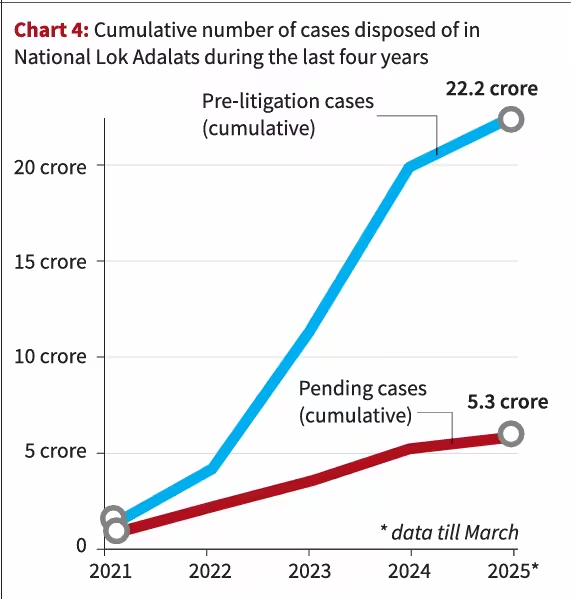
The success of National Lok Adalats, which are organised simultaneously in all taluks, district courts, and HCs on a pre-fixed date, demonstrates this potential, they resolved over 27.5 crore cases, including 22.21 crore pre-litigation and 5.34 crore pending court cases between 2021 to May 2025.
Reform measures Taken to resolve pending cases:
Increasing Judicial Strength:
- Filling vacant judicial positions and potentially hiring retired judges to handle the backlog of cases are crucial steps.
Modernizing the Judiciary:
- e-Courts and IT Enablement: Digitizing court records, online case filing, and virtual courts can streamline processes and improve efficiency.
National Judicial Data Grid (NJDG):
- Expanding the NJDG can improve case tracking and analysis.
Streamlining Case Management:
- Time-bound disposal of cases: Establishing timelines for case resolution can prevent delays and ensure timely justice.
Financial penalties on frivolous litigation:
- Discouraging meritless cases can reduce the burden on courts.
Improving Infrastructure:
- Upgrading court infrastructure, including better facilities for courtrooms and judicial staff, is essential for a conducive environment.
Legal Aid and Access to Justice:
- Strengthening legal aid services, particularly for marginalized communities, can ensure that everyone has access to justice.
Judicial Outreach and Public Education:
- Enhancing public awareness about legal processes and rights can reduce unnecessary litigation.
Fast-Track Courts:
- Setting up fast-track courts to expedite the resolution of specific types of cases, such as those involving women and children, can help reduce pendency.
Legislative Amendments:
- Reviewing and amending outdated laws can eliminate unnecessary legal complications and streamline procedures.
Timely justice is not merely an administrative challenge but a foundational requirement for a functional democracy. The massive pendency in the Indian judiciary erodes citizens’ confidence in the legal system and restricts access to justice, especially for the marginalized.
Justice hurried is justice burried