No ‘Phool Walon Ki Sair’ in 2025
Why in News:
Delhi’s centuries-old festival Phool Walon Ki Sair — symbolizing communal harmony — has been postponed to March 2026 due to delay and partial permissions from the Delhi Development Authority (DDA) for its venue at Aam Bagh, Mehrauli.
UPSC Relevance
Prelims, Questions are often asked about India’s cultural heritage and festivals.
PYQ
2017 Prelims
Consider the following pairs:
Traditions – Communities
1. Chaliha Sahib Festival – Sindhis
2. Nanda Raj Jaat Yatra – Gonds
3. Wari-Warkari – Santhals
Which of the pairs given above is/are correctly matched?
a) 1 only
b) 2 &3 only
c) 1 & 3 only
d) None of the above
2014 Prelims
Every year, a month-long ecologically important campaign/festival is held during which certain communities/tribes plant samplings of fruit-bearing trees. Which of the following are such communities/tribes?
a) Bhutia and Lepcha
b) Gond and Korku
c) Irula and Toda
d) Sahariya and Agariya
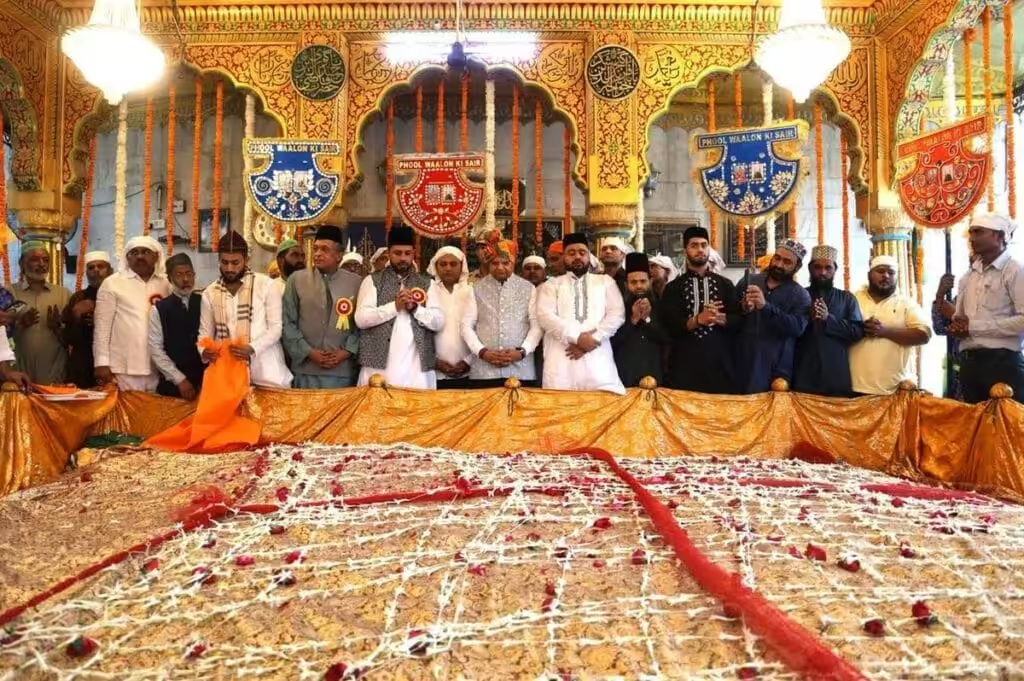
Phool Walon Ki Sair
Meaning: “Procession of the Flower Sellers.”
Celebrated in: Mehrauli, Delhi.
Nature: Week-long festival of Hindu–Muslim unity, reflecting Delhi’s Ganga–Jamuni tehzeeb.
Main Rituals: Floral offerings at Dargah of Khwaja Bakhtiar Kaki (Muslim site), and Temple of Goddess Yogmaya (Hindu site).
Organizer: Anjuman Sair-e-Gul Faroshan society.
Participants: Local citizens, artisans, and flower sellers.
Historical Background
Origin (1811): Started under Mughal Emperor Akbar Shah II; initiated by Queen Mumtaz Mahal Begum after fulfillment of a wish.
Banned (1942): Stopped by British during Quit India Movement.
Revived (1962): By PM Jawaharlal Nehru to promote secularism and India’s pluralistic ethos.
- Phool Walon Ki Sair is a living symbol of India’s secular and syncretic heritage that links Mughal heritage with modern Delhi. It has also supported local artisans and flower sellers. Its postponement highlights tensions between urban governance and cultural freedom, underlining the need for sensitive heritage management.