Ramsar Convention

Context:
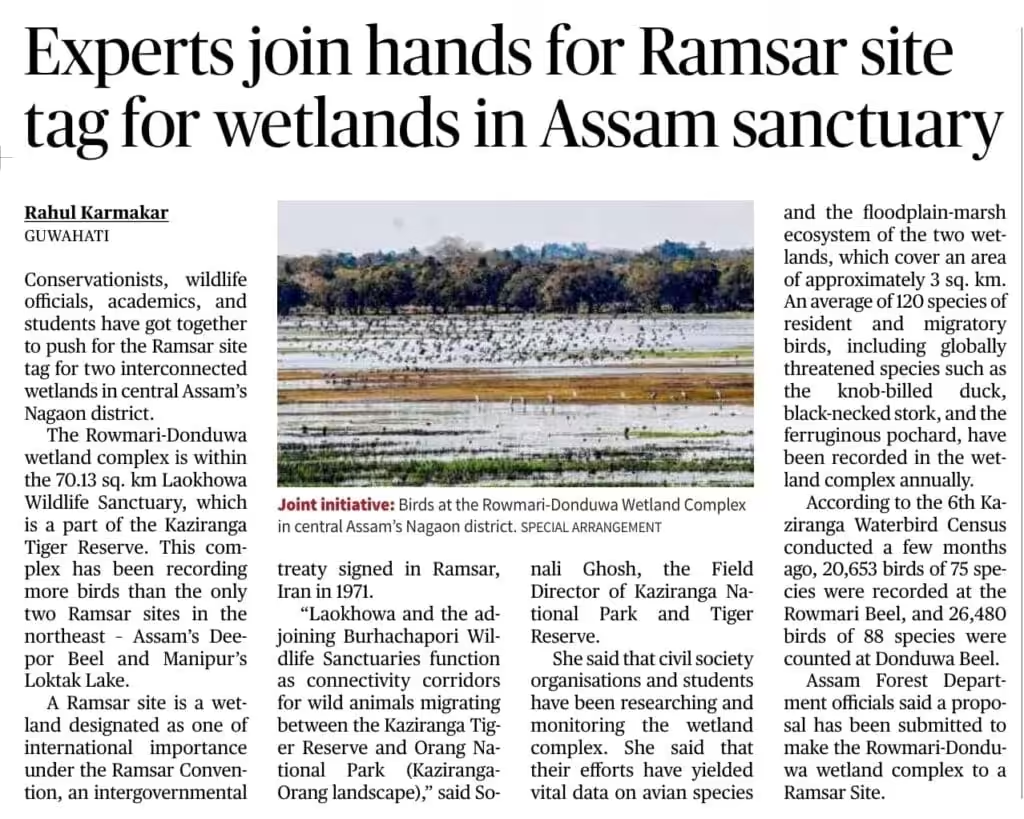
Experts, conservationists, and wildlife officials have come together to push for Ramsar site recognition for the Rowmari-Donduwa Wetland Complex located within the Laokhowa Wildlife Sanctuary in Nagaon district, Assam.
Wetland Complex:
The Rowmari-Donduwa complex lies within the 70.13 sq. km Laokhowa Wildlife Sanctuary, which forms part of the Kaziranga Tiger Reserve.
Ecological Importance:
- The wetlands form a floodplain-marsh ecosystem covering nearly 3 sq. km.
- Home to over 120 bird species, including migratory and globally threatened species like:
- Knob-billed Duck
- Black-necked Stork
- Ferruginous Pochard
- Acts as a connectivity corridor for wildlife moving between Kaziranga Tiger Reserve, Orang National Park, and other protected areas (Kaziranga-Orang landscape).
UPSC Relevance:
Environment(GS3)
UPSC PYQ:
Mains:
Q. What is wetland? Explain the Ramsar concept of ‘wise use’ in the context of wetland conservation. Cite two examples of Ramsar sites from India.
Prelims:
Q. Consider the following statements
- Under Ramsar Convention, it is mandatory on the part of the Government of India to protect and conserve all the wetlands in the territory of India.
- The Wetlands (Conservation and Management) Rules, 2010 were framed by the Government of India based on the recommendations of Ramsar Convention.
- The Wetlands (Conservation and Management) Rules, 2010 also encompass the drainage area or catchment regions of the wetlands as determined by the authority.
Which of the statements given above is/ are correct?
(a) 1 and 2 only
(b) 2 and 3 only
(c) 3 only
(d) 1, 2 and 3
About Ramsar Convention:
- The ‘Convention on Wetlands’, signed in Ramsar, Iran in 1971 is an intergovernmental treaty which provides the framework for national action and international cooperation for the conservation and wise use of wetlands and their resources.
- Wetlands are the only ecosystem to have a dedicated multilateral environmental agreement of their own, the Ramsar Convention.
Under the “three pillars” of the Convention, the Contracting Parties commit to:
- work towards the wise use of all their wetlands.
- Designate suitable wetlands for the list of Wetlands of International Importance (the “Ramsar List”) and ensure their effective management.
- Co-operate internationally on trans-boundary wetlands, shared wetland systems and shared species.
The Convention’s mission is “the conservation and wise use of all wetlands through local and national actions and international cooperation, as a contribution towards achieving sustainable development throughout the world”.
What is Wetland:
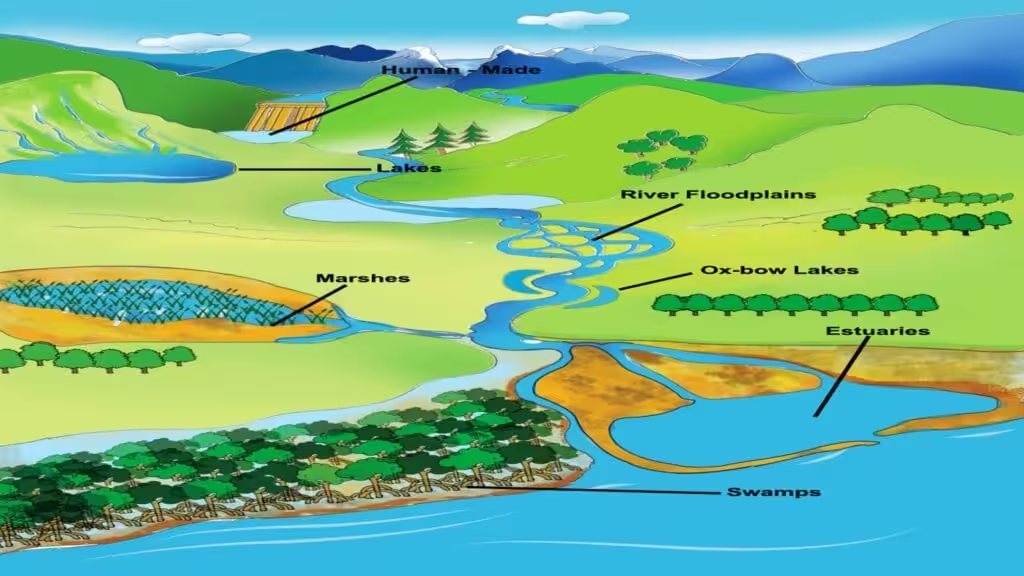
The Convention uses a broad definition of wetlands. It includes all lakes and rivers, underground aquifers, swamps and marshes, wet grasslands, peatlands, oases, estuaries, deltas and tidal flats, mangroves and other coastal areas, coral reefs, and all human-made sites such as fish ponds, rice paddies, reservoirs and salt pans.
Wise use of wetland:
- Developing integrated management plans at wetland sites.
- Adopting national wetland policies, either separately or as a component of wider initiatives such as national environmental action plans;
- Developing programmes covering wetland inventory, monitoring, research, training, education and public awareness;
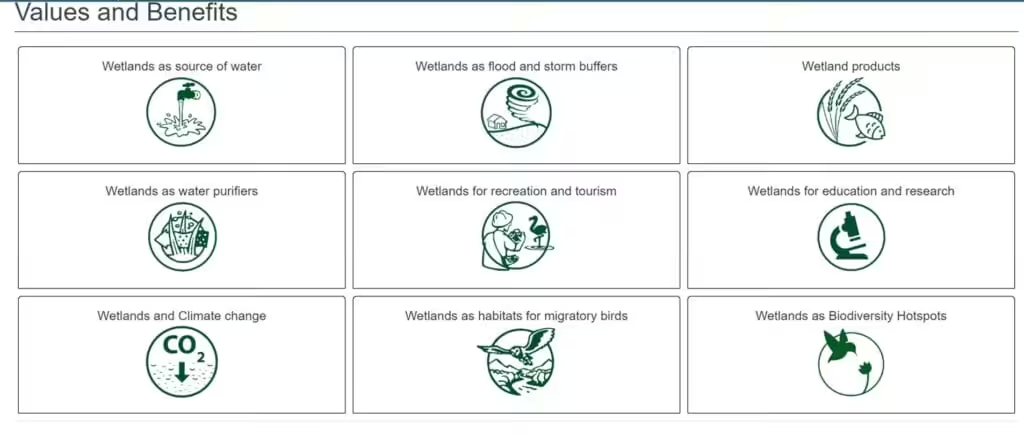
Valuable Benefits of Wetland:
Montreux Record:
The Montreux Record is a register of wetland sites on the List of Wetlands of International Importance where changes in ecological character have occurred, are occurring, or are likely to occur as a result of technological developments, pollution or other human interference. It is maintained as part of the Ramsar List.
India and the Ramsar Convention:
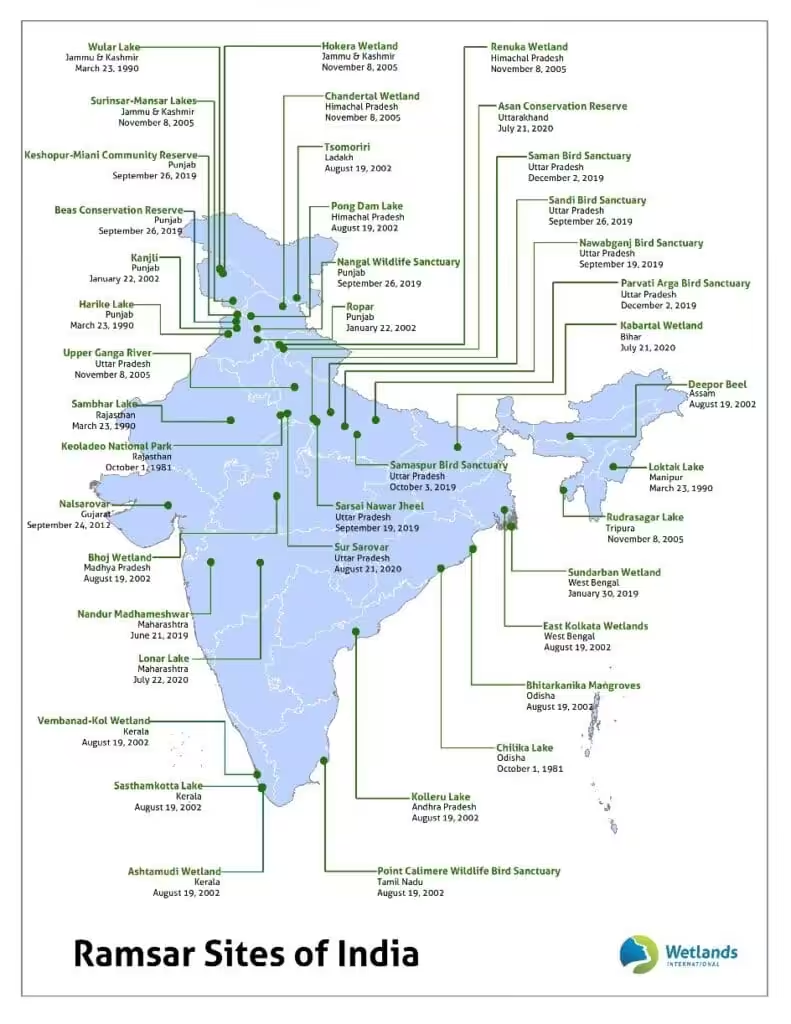
- India became a party to the Convention on 01.02.1982 and has so far designated more than 41 wetlands.
Challenges:
- Siltation – Each year, approximately 3 million tonnes of silt are deposited in Chilika Lake.
- Pollution – These issues are especially severe in urban wetlands such as Hussain Sagar (Hyderabad, Andhra Pradesh), Lower Lake (Bhopal, Madhya Pradesh), Dal Lake (Srinagar, Kashmir), and others.
- Urbanization
- Encroachment – Because wetlands contain different value systems, parts of them have been changed for agriculture and other development purposes.
- Eutrophication: Except for high altitude transHimalayan glacial lakes, the process of water quality degradation caused by excessive nutrients is a severe challenge that all wetlands in India face.
- Climate change
Steps for Wetland Conservation:
International Level:
- Ramsar Convention
- Montreux Record
- World Wetlands Day
National Level:
- Wetlands (Conservation and Management) Rules, 2017:- Sustainably conserve and manage wetlands in India by shifting management from a central authority to decentralized, state-level authorities, enforcing the principle of “wise use,” and prohibiting activities like encroachment and industrial discharge.
- Action Plan of MoEFCC: The Ministry of Environment, Forest and Climate Change (MoEFCC) supports the implementation of management action plans for over 250 wetlands under schemes such as National Plan for Conservation of Aquatic Ecosystems, Mangroves and Coral Reefs, and Integrated Development of Wildlife Habitats.
- Mission Participation: Effectively manage 75 wetlands of national and international importance by 2022, Ministry of Environment, Forest and Climate Change.
- National Wetland Committee: To advise the Central Government on proposals received from States/Union Territories for removal of prohibited activities. To lay down guidelines for integrated management of wetlands based on the principle of wise use.
The government aims to conserve wetlands to avoid the impact of natural disasters, it emphasizes its preservation due to the role wetlands play in reducing the impact of floods and storms. It stresses the need to integrate state participation in policy, planning, and regulation of wetlands and highlights the importance of including the local communities in the effort to preserve the wetlands which includes undertaking awareness.