SHANTI Bill


Context:
The Government has introduced the Sustainable Harnessing of Advanced Nuclear Energy for Powering India (SHANTI) Bill, 2025 in the Lok Sabha.
UPSC Relevance:
Science & Technology
UPSC PYQ:
Q. With growing energy needs should India keep on expanding its nuclear energy programme? Discuss the facts and fears associated with nuclear energy. (2018)
About Nuclear Energy:
Nuclear energy is the fifth-largest source of electricity for India. Nuclear power contributes about 3% to India’s total electricity.
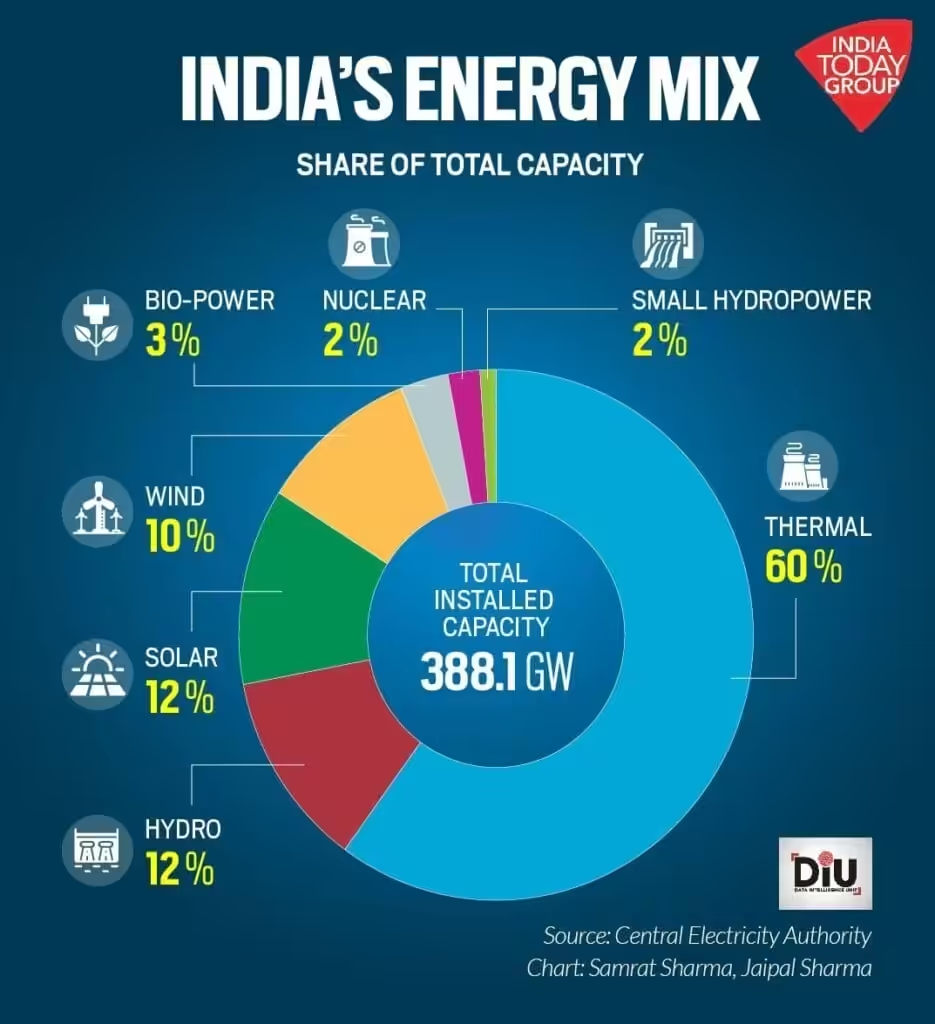
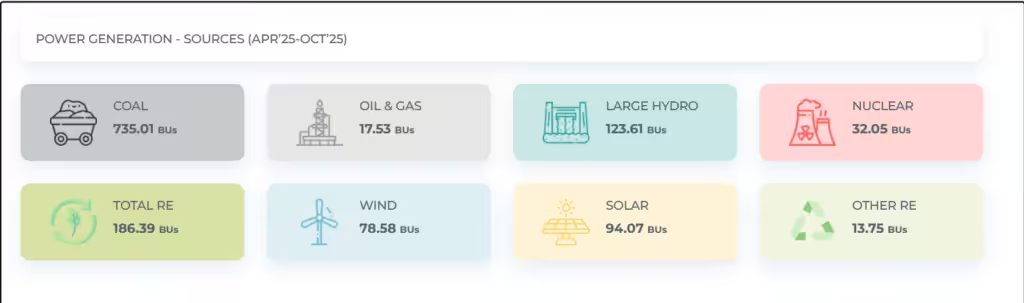
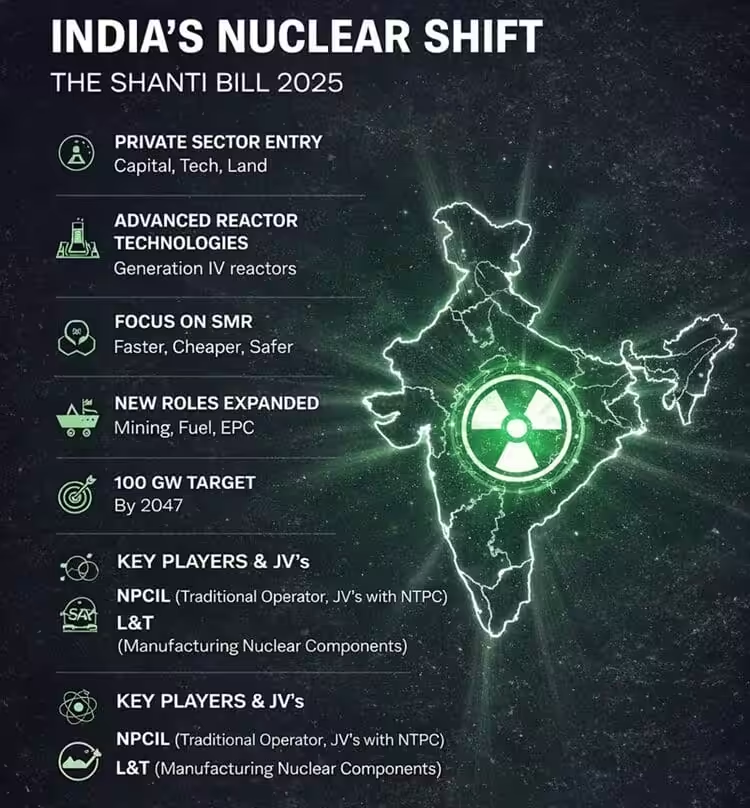
- The Union Budget 2025-26 outlines a significant push towards nuclear energy as part of India’s long-term energy transition strategy. The government has set an ambitious target of 100 GW nuclear power capacity by 2047, positioning nuclear energy as a major pillar in India’s energy mix.
Significance:
- 24/7 low-carbon electricity
- Very high energy density with minimal land footprint
- Long-term price stability
- Strategic energy security by reducing fossil fuel dependence
About SHANTI Bill:

- Minister of State of Science & Technology Jitendra Singh introduced the landmark Sustainable Harnessing and Advancement of Nuclear Energy for Transforming India Bill, 2025 (SHANTI Bill) in Parliament on Monday. The Bill aims to repeal both, the Atomic Energy Act, 1962 and the Civil Liability for Nuclear Damage Act, 2010 and open India’s highly restricted nuclear power sector to private participation.
Key Features of the SHANTI Bill, 2025:
Opening of the Nuclear Ecosystem to Private Participation:
- The Bill allows private entities to participate across multiple segments of the nuclear sector, including uranium prospecting under safeguards, fuel processing, manufacture of reactor components, and engineering–construction activities, subject to licensing.
- This represents a decisive departure from decades of exclusive state control, aiming to introduce competition, technological upgrading, and operational efficiency.
Integrated Legal and Regulatory Framework:
- SHANTI Bill brings together licensing, regulatory approvals, inspections, and enforcement within a unified legal structure.
- By replacing fragmented and overlapping regulations, it seeks to reduce procedural delays that have historically slowed nuclear project execution.
Restructured Nuclear Liability Regime:
- The Bill redesigns the liability framework by clearly distinguishing the responsibilities of operators and suppliers, introducing defined liability limits supported by compulsory insurance, and providing for government intervention in extreme accident scenarios.
- This approach aligns India’s liability system with international nuclear norms, while safeguarding public compensation interests.
Creation of an Independent Nuclear Safety Regulator:
- A new statutory nuclear safety authority is proposed, institutionally separate from organisations involved in nuclear power generation.
- This reform enhances regulatory independence, transparency, and safety credibility, bringing India closer to IAEA-recommended governance standards.
Specialised Nuclear Dispute Resolution Mechanism:
- The Bill establishes a dedicated Nuclear Tribunal to handle accident-related claims, liability issues, and contractual disputes.
- This ensures speedy adjudication, reduces legal uncertainty, and improves the overall investment climate.
Explicit Support for Small Modular Reactors (SMRs):
- The legislation provides policy backing for research, approval, and deployment of SMRs, recognising their role in India’s future energy mix.
- SMRs are valued for their lower capital requirements, flexibility, suitability for remote and industrial applications, and better integration with renewable-dominated grids.
Strategic Significance of the SHANTI Bill, 2025:
Strengthening Energy Security:
- Lowers India’s over-reliance on coal and imported natural gas.
- Broadens the national energy mix by expanding dependable nuclear capacity.
- Insulates the economy from international fuel price volatility and supply disruptions.
Advancing Climate and Sustainability Goals:
- Provides a scalable pathway for large-scale carbon reduction.
- Enables India to pursue its net-zero commitments while sustaining economic growth.
- Acts as a stable complement to variable renewables such as solar and wind, alongside green hydrogen.
Boosting Industrial Growth and Investment:
- Encourages inflow of long-term, capital-intensive investments.
- Generates high-skill employment across engineering, advanced manufacturing, and research sectors.
- Reinforces domestic capabilities in heavy engineering and high-precision industrial production.
Enhancing Strategic Autonomy:
- Strengthens indigenous nuclear technology development and operational capacity.
- Improves India’s leverage in global climate negotiations and international energy partnerships.
- Positions India as an emerging centre for advanced nuclear technologies.
Concerns:
Safety Perception and Public Confidence
- Expansion of nuclear power requires clear, transparent communication on safety standards and risk management.
- Gaining and sustaining community acceptance, along with strict environmental safeguards, will be essential for long-term viability.
Institutional and Regulatory Strength
- The proposed independent nuclear regulator must be well-resourced, professionally staffed, and legally empowered to function effectively.
- Safeguards are needed to prevent undue influence from either industry stakeholders or the government, ensuring credible oversight.
Radioactive Waste Management
- The challenge of safe, long-term disposal of nuclear waste remains unresolved.
- Nuclear expansion must be supported by robust policies, infrastructure, and technological solutions for waste handling and storage.
Centre–State and Local Governance Issues
- Nuclear projects have implications for land use, water resources, and local livelihoods.
- Effective implementation will depend on cooperative federalism, involving close coordination between the Centre, States, and affected communities.