Sir C V Raman (UPSC Science & Tech)
UPSC guide to Sir C V Raman: early life, Raman effect, applications of Raman spectroscopy, Nobel Prize, institution-building, legacy and UPSC relevance.
Chandrasekhara Venkata Raman (1888-1970) was the first Asian — and the first non-white person — to win a Nobel Prize in any branch of science. He won the 1930 Nobel Prize in Physics for the discovery of what is now universally called the Raman effect, the inelastic scattering of light by matter. Almost a century later, the Raman effect powers cancer diagnostics, drug authentication, planetary rovers and forensic labs. India celebrates National Science Day every year on 28 February to mark the date of his discovery.
What makes Raman's achievement extraordinary is the context. He worked in a colonised country with minimal funding, in laboratories that European peers would have called primitive, with apparatus he built or improvised himself. Most of India's later Nobel laureates have done their winning work in foreign institutions; Raman's was done in Calcutta (now Kolkata), in the Indian Association for the Cultivation of Science (IACS), with Indian collaborators.
For UPSC, his life is essential ground for GS III — Science & Technology, with overflow into Indian Society and Personalities (GS I) and Essay territory.
Early life
C V Raman was born on 7 November 1888 in Tiruchirapalli (then Trichinopoly) in Tamil Nadu, into a Tamil Brahmin family steeped in academic and musical traditions. His father, Chandrasekhara Iyer, was a lecturer in mathematics and physics. The family soon moved to Visakhapatnam when his father took a teaching post at Mrs A.V.N. College. As a child Raman read voraciously — physics texts, English literature and Sanskrit classics — and displayed a knack for music and curiosity about the natural world.
He passed his matriculation at age 11 and his FA examination by 13. By 15 he had earned a B.A. with honours in physics from Presidency College, Madras, topping his class and winning multiple gold medals. At 18 he completed his M.A. in physics, again with the highest distinction. While still a student he published a paper in the Philosophical Magazine of London on diffraction — at age 17.
Education and career
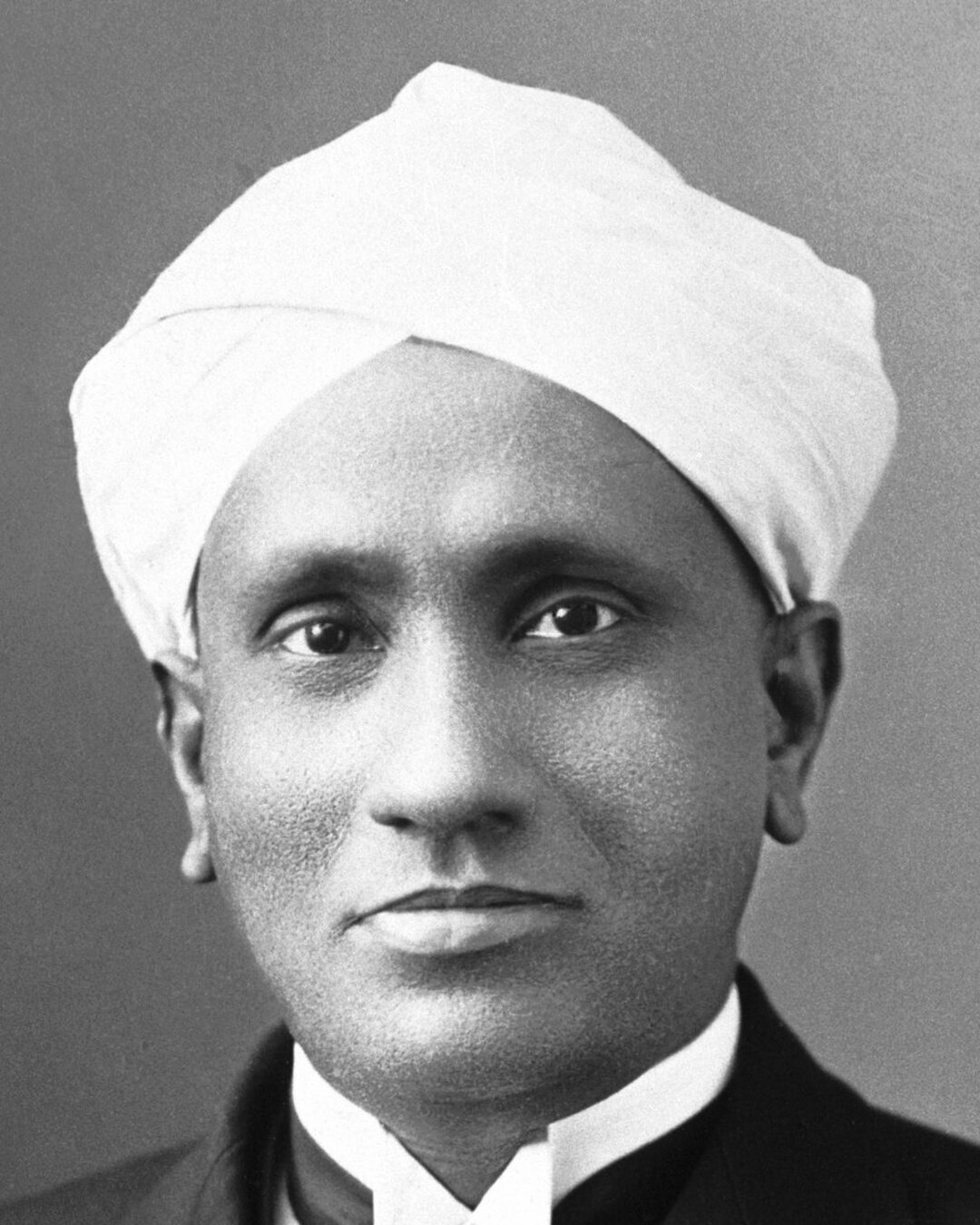
In Raman's time, an Indian student could not realistically pursue a research career in India. Routine careers led to either teaching or the prestigious Indian Finance Service (IFS). Raman, despite a clear scientific gift, chose the safer path. He topped the IFS examination in 1907 and was posted as Assistant Accountant General in Calcutta.
But Calcutta proved providential. He discovered the Indian Association for the Cultivation of Science (IACS) at 210 Bowbazar Street — founded in 1876 by Mahendra Lal Sircar as the first scientific research institution in Asia. Every evening after office hours, Raman walked to IACS and ran experiments late into the night, working without pay or formal position.
In 1917, the University of Calcutta offered him the Palit Chair of Physics. Raman gave up the prestigious civil service for a teaching post at half the salary — and never looked back. He served as Palit Professor for 15 years (1917-1933), then as Director of the Indian Institute of Science (IISc), Bangalore from 1933-1937. He later set up the Indian Academy of Sciences in 1934 and finally the Raman Research Institute (RRI) in 1948, which remained his scientific home until his death.
The Raman effect — what it is and how it was discovered
In 1921, on a sea voyage to Britain, Raman puzzled over the deep blue colour of the Mediterranean Sea. The accepted explanation — that it merely reflected the colour of the sky, which is blue due to Rayleigh scattering — did not satisfy him. He carried out experiments aboard ship using a small Nicol prism and confirmed that the blue colour arose from molecular scattering of light by water itself.
This stray observation set him on a research programme that would consume the rest of the decade. Working with collaborators including K S Krishnan, Raman built increasingly precise spectrographs in Calcutta to study how light interacts with transparent media.
On 28 February 1928, Raman announced his discovery: when monochromatic light passes through a transparent material — solid, liquid, or gas — a small fraction of the scattered light has a wavelength different from the incident light. The shift, now called the Raman shift, corresponds to characteristic vibrational modes of the scattering molecule.
In the language of quantum mechanics, the photon either loses energy to a molecular vibration (creating a Stokes line) or gains energy from a thermally excited vibration (creating an anti-Stokes line). Both effects are inelastic, distinguishing them from the classical Rayleigh scattering where the photon retains its original wavelength.
This was, at the time, only the second confirmation of the quantum nature of light in a tabletop experiment, after the Compton effect. Within two years, Raman won the Nobel Prize in Physics for 1930 — the first Asian to do so, and famously the only one out of the year's contenders to have done his work entirely in his own country.
Applications of the Raman effect — Raman spectroscopy
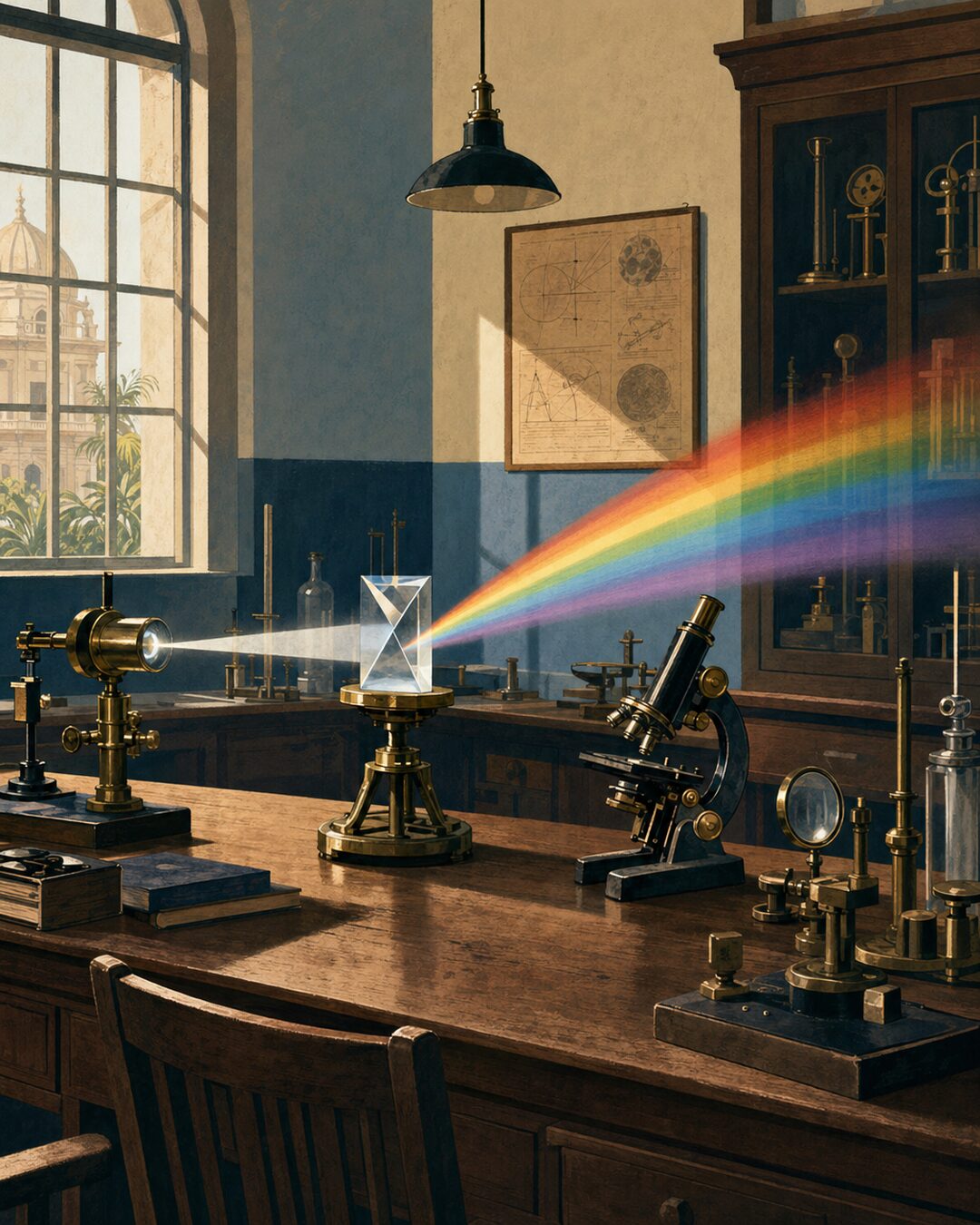
In Raman's lifetime, the Raman effect was a beautiful curiosity. Today it powers a multibillion-dollar global instrumentation industry. Raman spectroscopy is non-destructive, requires no sample preparation in many cases, and reveals the molecular fingerprint of any sample.
Major application areas
| Field | Use |
|---|---|
| Material science | Characterising graphene, polymers, ceramics, alloys, semiconductors |
| Pharmaceutical industry | Identification of active ingredients, polymorph detection, counterfeit drug screening |
| Forensic science | Identifying explosives, narcotics, fibres, paints |
| Cancer diagnostics | In vivo Raman probes detect malignant tissue without biopsy |
| Geology and mineralogy | Identifying minerals; NASA's Perseverance rover carries a Raman spectrometer (SHERLOC) |
| Cultural heritage | Authenticating paintings, manuscripts, gemstones non-destructively |
| Food and water safety | Detecting adulterants, pesticide residues |
| Defence | Stand-off detection of explosives at distance |
| Industrial process control | Real-time monitoring of chemical reactions |
Variants such as Surface-Enhanced Raman Spectroscopy (SERS), Tip-Enhanced Raman Spectroscopy (TERS), Coherent Anti-Stokes Raman Spectroscopy (CARS) and Stimulated Raman Scattering (SRS) push sensitivity down to single molecules.
Other scientific contributions
Raman was a polymath of physics and his Nobel-winning work was only one chapter:
- Acoustics of musical instruments — he studied the science behind the veena, mridangam, tabla and violin, explaining the harmonic richness of Indian percussion instruments.
- Optics of diamonds and gemstones — pioneering work on light propagation, fluorescence and X-ray diffraction in crystals.
- Theory of the colour of the sea — disproving the "reflected sky" hypothesis.
- Crystal physics — vibrational modes in crystals, magnetic and elastic properties.
- X-ray diffraction — particularly the diffuse scattering by ionic crystals.
- Studies on flowers and butterflies — investigating structural colour in nature.
He was an unusually visual physicist — much of his work began with simple observation of the everyday world.
Institution building
Raman's deepest legacy may not be the Raman effect at all but the institutions he built or shaped:
- Indian Association for the Cultivation of Science (IACS) — Raman as Honorary Secretary helped transform it from a popular-science forum into a research powerhouse.
- University of Calcutta — built the physics department into a cluster that produced future giants like K S Krishnan, S N Bose, M N Saha, S K Mitra.
- Indian Institute of Science (IISc), Bangalore — first Indian Director (1933-1937), modernised research culture.
- Indian Academy of Sciences (1934) — founded after disagreement with the older Asiatic Society of Bengal; gave Indian scientists their own peer-reviewed forum (Proceedings of the Indian Academy of Sciences).
- Raman Research Institute (1948), Bangalore — funded with his Nobel earnings and donations; he served as Director till his death in 1970.
- Indian Journal of Physics (1926) — founded to give Indian physicists a peer-reviewed publication outlet.
Awards and recognitions
| Year | Award |
|---|---|
| 1924 | Fellow of the Royal Society |
| 1929 | Knighted by King George V (Sir C V Raman) |
| 1930 | Nobel Prize in Physics |
| 1941 | Franklin Medal |
| 1954 | Bharat Ratna — among the first three recipients along with Sarvepalli Radhakrishnan and C Rajagopalachari |
| 1957 | Lenin Peace Prize |
Legacy in modern Indian science
Raman's life answered the colonial question of whether Indians could do "world-class" science with finality. His scientific descendants populate every Indian institution. His students and grand-students — G N Ramachandran, Vikram Sarabhai, Homi Bhabha, Subrahmanyan Chandrasekhar (Raman's nephew, Nobel 1983) — built post-independence Indian science.
His foundational contributions resonate today through:
- Raman spectrometers on the moon (Chandrayaan rovers carry indirect Raman-based instruments) and on Mars (NASA's Perseverance).
- Indian Raman start-ups designing portable spectrometers for pharma and food testing.
- Raman scattering as a tool for graphene quality control, COVID-19 detection (research stage), and quantum-information experiments.
- National Science Day (28 February each year) celebrating his discovery.
His institution-building is reflected in the modern incarnation of IACS, IISc, RRI and the Indian Academy of Sciences — all premier research bodies.
UPSC relevance
GS Paper III — Science & Technology
- Raman effect, Raman spectroscopy, applications in diagnostics, defence, planetary exploration.
- Indian scientific institutions and the role of personalities in nation-building.
GS Paper I — Personalities and modern Indian society
- Indian scientists who shaped the freedom struggle's intellectual confidence.
- Institution-building in colonial India.
Essay
- "Doing world-class science in resource-poor settings" — Raman as exemplar.
- "Curiosity as a public good" — the value of basic research.
Prelims pointers
- C V Raman — born 7 November 1888 at Tiruchirapalli; died 1970.
- Discovery of Raman effect — announced 28 February 1928.
- Nobel Prize in Physics 1930 — first Asian Nobel laureate in science.
- Bharat Ratna 1954 — among the inaugural cohort of three.
- Raman effect — inelastic scattering of monochromatic light by matter; involves Stokes and anti-Stokes lines.
- National Science Day — 28 February, marking discovery of the Raman effect.
- Indian Academy of Sciences — founded by Raman in 1934, headquartered in Bengaluru.
- Raman Research Institute (RRI) — founded 1948 in Bengaluru.
- First Indian Director of IISc, Bangalore — 1933-1937.
- Subrahmanyan Chandrasekhar — Raman's nephew; Nobel 1983 for stellar evolution.
- Mars rover Perseverance — carries SHERLOC, a Raman-based instrument.
C V Raman's life is a masterclass in how science, when nourished by curiosity and institutional vision, can outgrow the constraints of the lab in which it begins. The aspirant who studies Raman not just for facts but for the texture of his work — the sea voyage, the late-night experiments at IACS, the founding of journals and institutes — will write essays that have weight and truth. National Science Day every year is a reminder that fundamental discovery is still possible from anywhere, by anyone, given the will.