Essay Writing in Hindi for UPSC Mains Hindi Compulsory
Complete Hindi essay (निबंध) guide for UPSC Mains: structure templates, linking phrases, sample paragraphs, quotations, and a 7-day practice plan to score 60+ out of 100.
The essay section carries 100 out of 300 marks in the UPSC Hindi Compulsory paper — one-third of the total. Clearing the 25% cutoff becomes almost impossible if you score poorly here. Yet most aspirants treat this section as an afterthought.
This guide walks you through how to write a structured, mark-fetching Hindi essay (निबंध) in under 75 minutes, with real phrase banks, structure templates, and sample paragraphs.
What UPSC Expects in the Essay
The examiner looks for four things: (1) clear thinking, (2) organised structure, (3) correct Hindi usage, and (4) relevant content with examples. You do not need literary flair — simple, correct, and coherent Hindi is enough to comfortably cross the cutoff.
Essay Length and Time
- Expected length: 500–700 words (roughly 3–4 full pages).
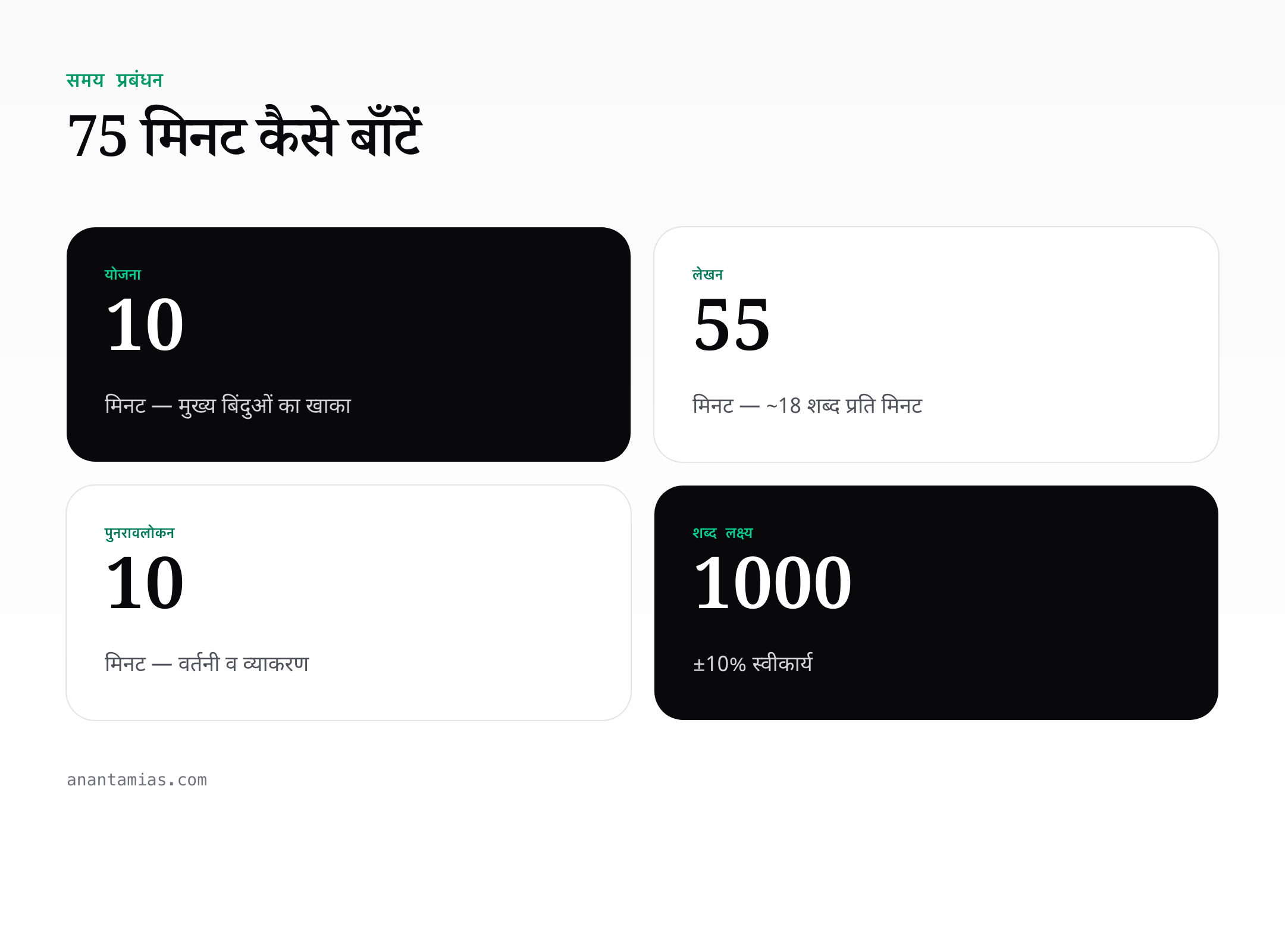
- Time to spend: 60–75 minutes.
- Paragraph count: 5–7 paragraphs.
The 5-Part Essay Structure
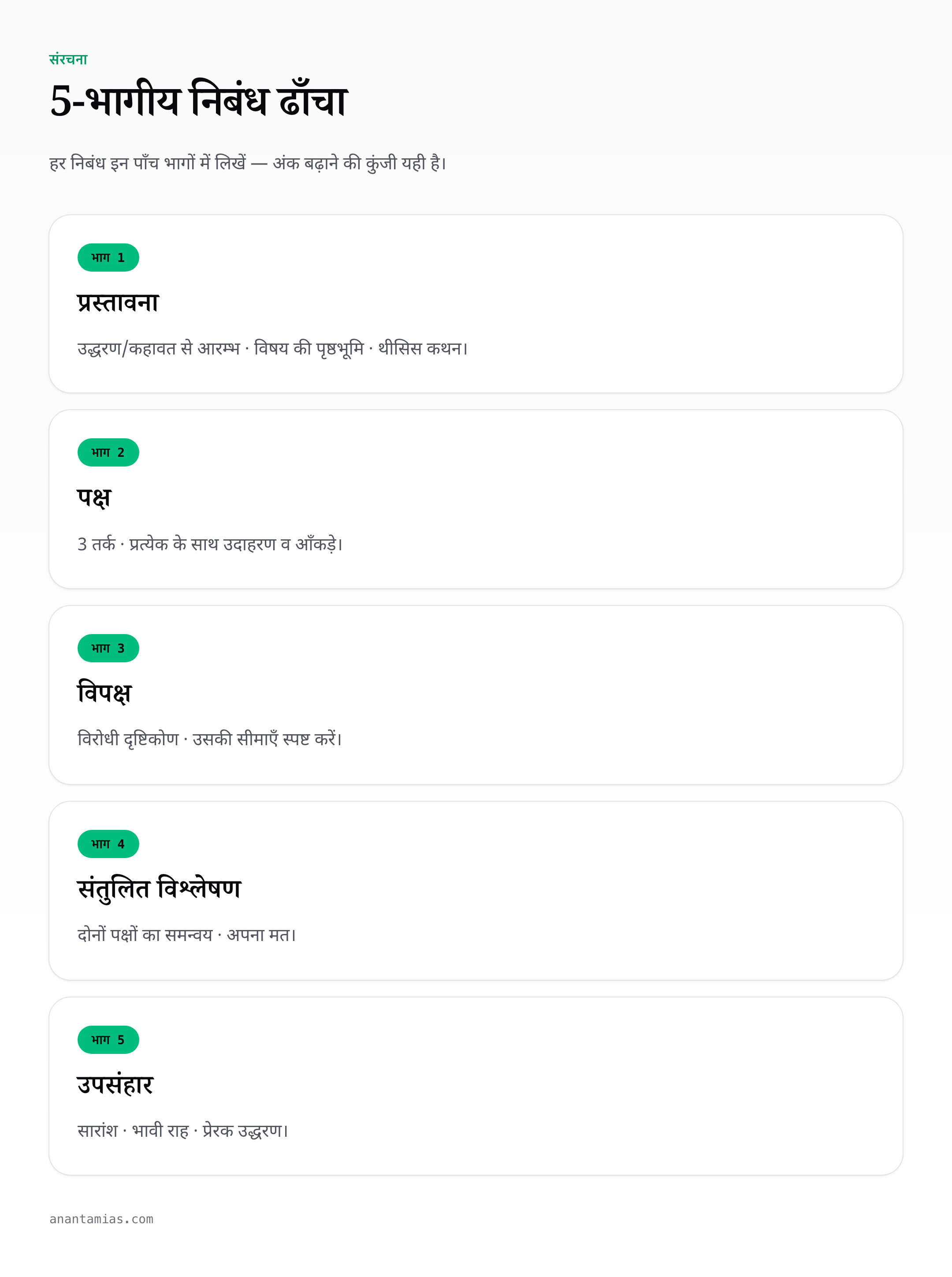
| Part | Purpose | Length |
|---|---|---|
| भूमिका (Intro) | Introduce topic, hook, thesis | 80–100 words |
| मुख्य पक्ष (Main body 1) | Positive / descriptive side | 150 words |
| अन्य पक्ष (Main body 2) | Problems / counter-view | 150 words |
| समाधान (Solutions) | What can be done | 120 words |
| उपसंहार (Conclusion) | Summarise, forward-looking line | 80 words |
Common Essay Topics (PYQ Pattern)
Past papers show UPSC prefers broad societal and philosophical themes over current political events. Examples:
- विज्ञान वरदान है या अभिशाप (Is science a boon or a curse)
- महिला सशक्तिकरण (Women empowerment)
- भारतीय संस्कृति की विशेषताएँ (Features of Indian culture)
- पर्यावरण संरक्षण (Environmental protection)
- डिजिटल भारत (Digital India)
- भ्रष्टाचार: कारण और निवारण (Corruption: causes and remedies)
Sample Opening Paragraph
मानव सभ्यता के विकास में विज्ञान की भूमिका अत्यंत महत्वपूर्ण रही है। पहिए के आविष्कार से लेकर कृत्रिम बुद्धिमत्ता तक, विज्ञान ने हमारे जीवन को सरल, सुविधाजनक और उत्पादक बनाया है। परंतु जहाँ एक ओर विज्ञान ने हमें अद्भुत उपहार दिए हैं, वहीं दूसरी ओर इसके दुरुपयोग ने पर्यावरण, समाज और मानवीय मूल्यों के समक्ष गंभीर चुनौतियाँ भी खड़ी की हैं।
Notice how the intro introduces both sides of the debate, signalling that the essay will cover merits and demerits — a structure examiners reward.
Useful Linking Phrases (वाक्यांश बैंक)
| Function | Hindi Phrase |
|---|---|
| To begin | सर्वप्रथम यह समझना आवश्यक है कि… |
| To add a point | इसके अतिरिक्त / दूसरी ओर… |
| To contrast | इसके विपरीत / परंतु… |
| To give example | उदाहरणस्वरूप / जैसे कि… |
| To conclude | अंततः कहा जा सकता है कि… |
| To suggest a remedy | इस समस्या के समाधान हेतु… |
Strong Conclusion Template
इस प्रकार स्पष्ट है कि {विषय} आज के समय की एक ज्वलंत समस्या/विषय है। यदि सरकार, समाज और व्यक्ति तीनों मिलकर प्रयास करें तो हम एक उज्जवल भविष्य की ओर बढ़ सकते हैं। जैसा कि महात्मा गाँधी ने कहा था — ‘विश्व में जो परिवर्तन आप देखना चाहते हैं, पहले स्वयं वैसा बन जाइए।’
Replace {विषय} with your topic, plug in a relevant quote (Gandhi, Vivekananda, Tagore, Nehru, Kabir all work), and you have a ready conclusion that feels substantive.
Grammar Traps to Avoid
- Gender agreement: लड़की खा रही है (not खा रहा है)।
- Verb with plural subjects: छात्र पढ़ते हैं (not पढ़ता है)।
- Correct use of ने: मैंने किताब पढ़ी (not मैंने किताब पढ़ा)।
- Avoid mixing English words in Devanagari unnecessarily.
- Watch out for शुद्ध वर्तनी — common spelling errors: संसार (not संशार), सौरभ (not शौरभ), आशीर्वाद (not आर्शीवाद)।
Quotations Worth Memorising
- स्वामी विवेकानंद — उठो, जागो और तब तक मत रुको जब तक लक्ष्य प्राप्त न हो जाए।
- महात्मा गाँधी — विश्व में जो परिवर्तन आप देखना चाहते हैं, पहले स्वयं वैसा बन जाइए।
- रवींद्रनाथ टैगोर — शिक्षा वह है जो हमें केवल जानकारी ही नहीं देती, बल्कि हमारे जीवन को अस्तित्व के साथ सामंजस्य में लाती है।
- सुभाष चंद्र बोस — तुम मुझे खून दो, मैं तुम्हें आज़ादी दूँगा।
Last-Week Essay Practice Plan
- Day 1–2: Pick 6 broad topics. Write outlines only (headings + key points).
- Day 3–4: Convert two outlines into full essays, within 75 minutes each.
- Day 5: Get one essay evaluated if possible; else self-review against this structure.
- Day 6: Revise idioms, quotations, and linking phrases.
- Day 7: Write one final full mock essay. Do not exceed 75 minutes.
Quick Checklist Before Submission
- Word count is 500–700 words, not wildly more or less.
- You have used at least 4 linking phrases.
- Introduction and conclusion are clearly visible.
- At least 2 examples/quotes included.
- Handwriting is legible — do not over-decorate.
Treat the essay as a well-argued letter to an intelligent friend. Clarity beats vocabulary. Structure beats length. Simple Hindi beats forced Sanskrit.
Frequently Asked Questions
How many words should a UPSC Hindi essay be?
Aim for 500–700 words in 5–7 paragraphs. Writing much less than 500 words signals under-preparation; much more wastes time needed for precis and translation.
Can I write the essay in simple Hindi?
Yes, absolutely. Simple, correct, and coherent Hindi scores better than complex Sanskritised Hindi with errors. UPSC examiners reward clarity, not difficulty.
Are quotations important in the Hindi essay?
One or two well-placed quotations from Gandhi, Vivekananda, or Tagore strengthen intros and conclusions. Do not overdo — more than three feels forced.
How much time should I spend on the essay?
60–75 minutes out of the 180-minute paper. That leaves 100+ minutes for comprehension, precis, translation, and grammar combined.
What if I do not know the topic?
Pick the topic where you can structure at least three sub-points. Even with limited knowledge, a well-structured essay with correct language will fetch qualifying marks.