UPSC Answer Writing Copy: sheet layout, margins और evaluators कैसे पढ़ते हैं
UPSC Mains में fixed booklet space ही असली word limit है। Margin, layout, handwriting, bullets, diagrams और timed practice को exam-ready बनाइए।
सबसे पहले उस constraint को समझिए जो बाकी सब कुछ shape करती है। UPSC Mains evaluator एक दिन में बहुत बड़ी संख्या में scripts देखता है, tight schedule में और एक तय scheme के हिसाब से marks देता है। आपके answer को लगभग डेढ़ minute मिलता है।
यह system की शिकायत नहीं, operating condition है। जिस answer का argument खोजने के लिए evaluator को खुदाई करनी पड़ेगी, वह answer अपना असर खो देगा। जो argument तुरंत सामने रख देगा, वही काम करेगा। आगे की ज़्यादातर बातें mechanical हैं और पूरे exam में सबसे सस्ते marks भी यही देते हैं।
Booklet असल में क्या होती है
UPSC एक bound answer booklet देती है। हर question के लिए space fixed होती है और वही असली word limit है, stated limit से भी ज़्यादा binding।
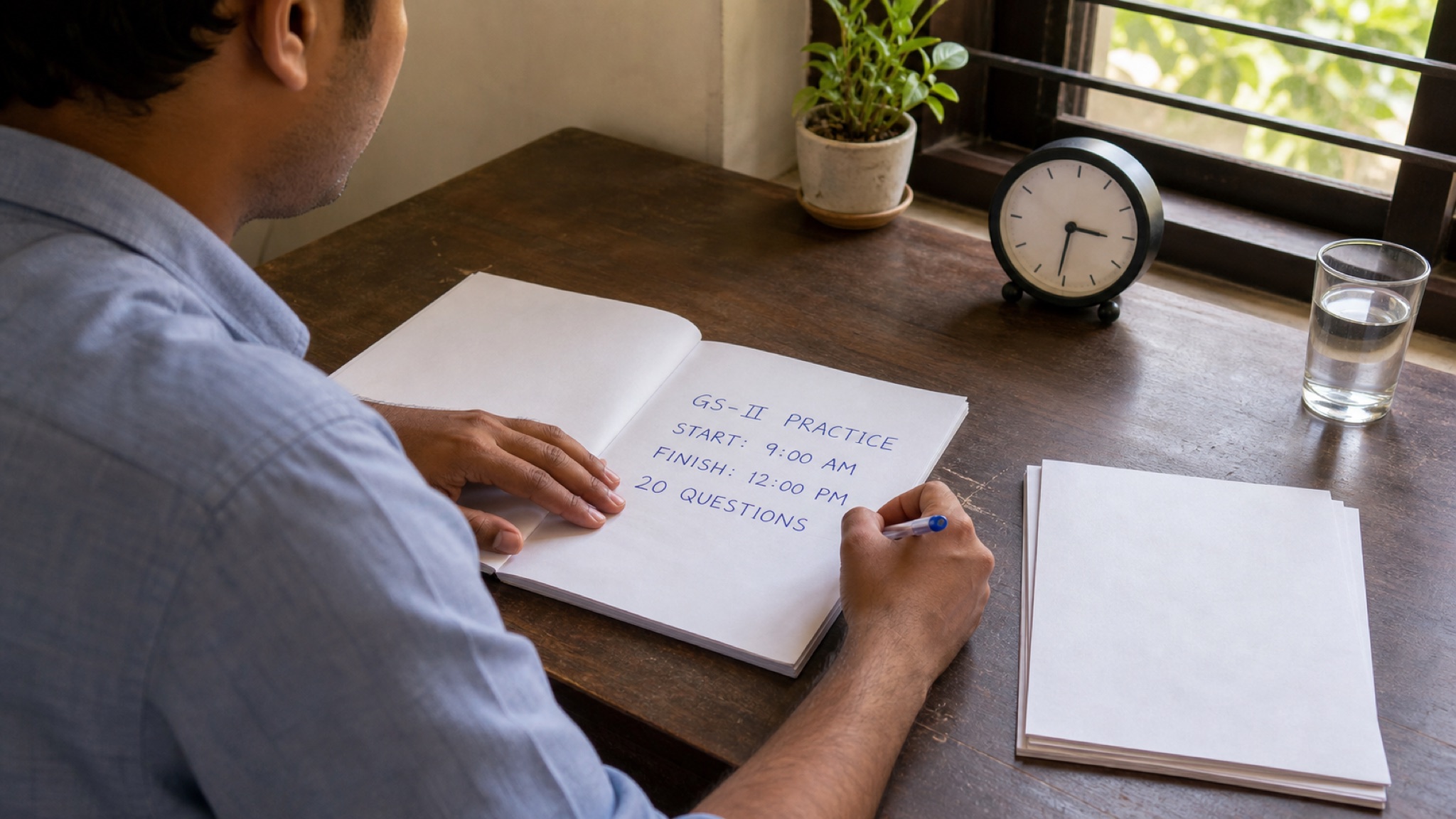
Practical numbers यह हैं: 10-mark question के लिए करीब 150 words और 15-mark question के लिए करीब 250 words। GS-1 से GS-3 तक 20 questions के लिए तीन hours मिलते हैं, यानी reading और thinking समेत हर question के लिए लगभग नौ minutes। GS-4 का structure अलग है वहाँ ज़्यादातर questions 20-markers होते हैं और लगभग आधे case studies। इसलिए planning के लिए ज़्यादा time और writing speed के लिए कम time चाहिए।
Extra sheets माँग नहीं सकते। अगर space से बाहर लिखते हैं, तो व्यवहार में marks से भी बाहर लिख रहे हैं।
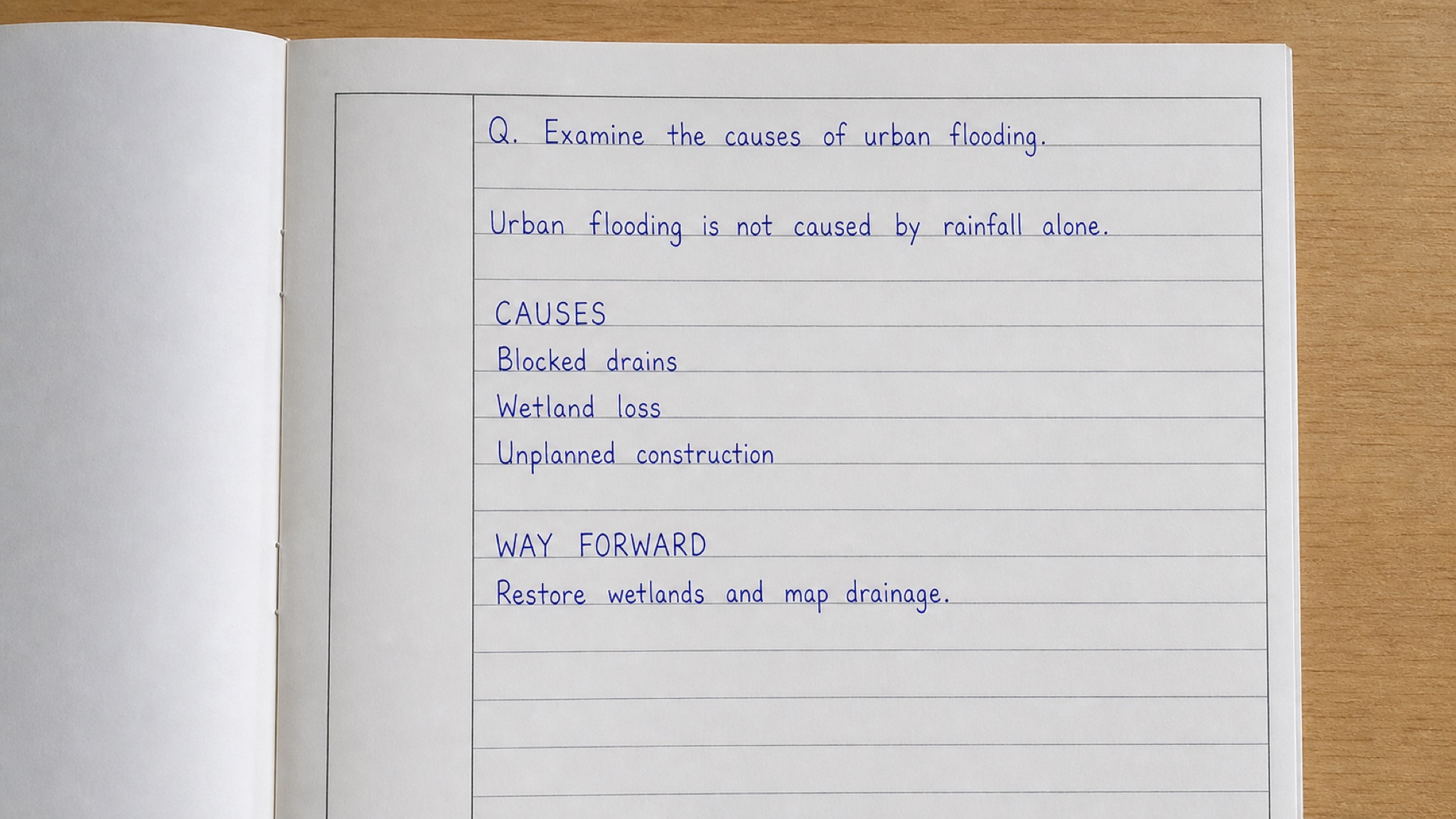
Marks दिलाने वाली layout habits
Margin खाली छोड़िए। Printed margin evaluator के लिखने के लिए होता है। उसे भरने से evaluator का काम मुश्किल होता है और आपकी script वही बनती है जिससे वह परेशान हो।
बाकी जगह की पूरी width इस्तेमाल कीजिए। Text की narrow columns उस space को waste करती हैं जो आपको ration करके मिली है।
Question number साफ़ लिखिए और हर answer को fresh page से शुरू कीजिए अगर space allow करे। गलत question के नाम चला गया answer सबसे महँगी avoidable mistake है।
Answer को दिखने वाले हिस्सों में बाँटिए। दो या तीन lines का intro, labelled segments वाला body और दो lines का conclusion। Evaluator को एक शब्द पढ़ने से पहले ही structure दिख जाना चाहिए।
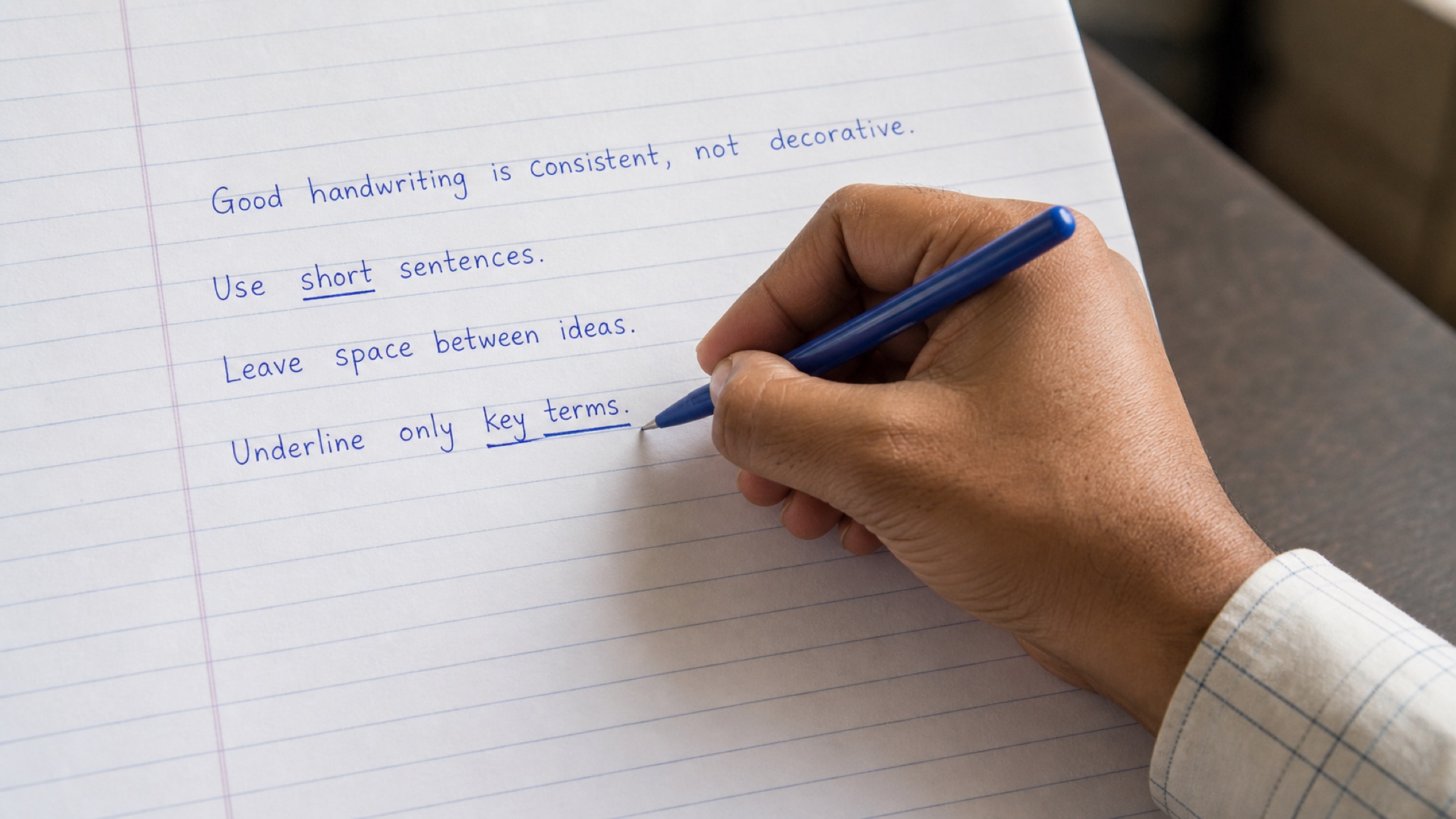
Underline कम और सोच-समझकर कीजिए। हर answer में दो या तीन underlines, सिर्फ़ उन terms पर जो argument उठाती हैं। 15 underlines वाले answer में असल में कोई underline ध्यान नहीं खींचती।
Sections के बीच एक blank line छोड़िए। White space waste नहीं है। यही 90-second reading को possible बनाती है।
Handwriting: legible होना beautiful होने से ज़्यादा ज़रूरी है
Elegance के marks नहीं हैं और plain handwriting के लिए penalty नहीं है। Illegibility की असली penalty है, क्योंकि evaluator जो sentence पढ़ नहीं सकता उसे marks नहीं दे सकता।
Speed में handwriting बिगड़ती है, और लगभग सबकी बिगड़ती है। Fix धीरे लिखना नहीं है। Fix कम लिखना है: छोटे sentences, कम clauses और ज़्यादा structure। Speed बनाने के तरीके के लिए Daily Answer Writing Practice देखिए, ताकि writing तेज़ होने पर भी legibility बची रहे।
Pen का चुनाव आपकी अपेक्षा से ज़्यादा मायने रखता है। उसी pen का इस्तेमाल कीजिए जिससे आप हजारों words लिख चुके हैं। Exam day पर नए pen के skip करने का पता चलना बहुत देर हो जाएगी।
UPSC Mains के लिए कोई एक universal best pen नहीं है। अगर आपका हाथ liquid ink के साथ comfortable है, तो Pilot V5 cartridge set में दो 0.5 mm blue pens और long practice के लिए spare cartridges मिलते हैं। पहले एक पूरा three-hour paper इसी से test कीजिए। Brand से ज़्यादा comfort, drying time और legibility मायने रखते हैं।
Bullets या paragraphs?
दोनों, लेकिन अलग-अलग questions के लिए। यह stylistic choice नहीं है।
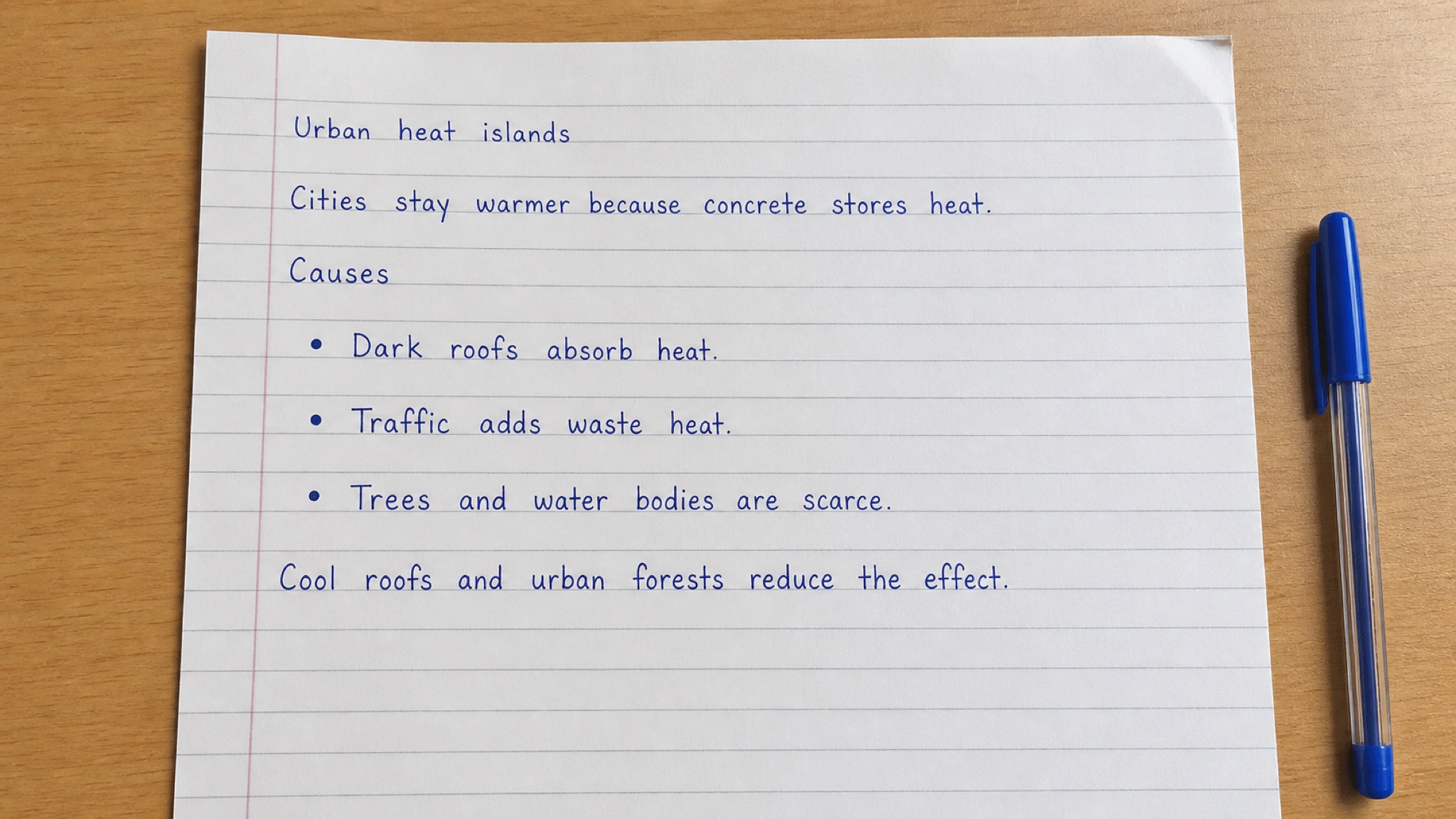
Bullets enumerable content के लिए अच्छे हैं: problem के dimensions, impact की categories, act के provisions और process के steps। इन्हें लिखना और पढ़ना दोनों तेज़ होता है।
Paragraphs argument के लिए अच्छे हैं, जहाँ दो ideas के बीच का connection है यही answer है। किसी claim का evaluation माँगने वाले question को bullets में लिखेंगे, तो marks दिलाने वाली reasoning खो जाएगी।
एक reliable default यह है: frame करने के लिए छोटा paragraph, enumerable middle के लिए bullets और conclusion के लिए छोटा paragraph। जो काम नहीं करता, वह है हर चीज़ को bullet बना देना। इससे evaluative answer list बन जाता है और score की सीमा आ जाती है।
Diagrams, maps और tables
इनसे लगने वाले time की तुलना में marks disproportionate मिलते हैं और ज़्यादातर candidates इनका कम इस्तेमाल करते हैं। Process का flowchart, two-column comparison या तीन labels वाला sketch map, paragraph की तुलना में seconds में वह बात कह देता है जिसे paragraph कहने में संघर्ष करता है।
इनका सबसे बड़ा लाभ GS-1 geographyमें है, जो उस paper का 31.9% है। Comparative structure वाले किसी भी question में ये काम आते हैं। कब और क्या draw करना है, इसके लिए Diagrams in UPSC Mains Answers देखिए।
Diagrams छोटे रखिए, labels दीजिए और जिसे practice नहीं किया है उसे कभी मत draw कीजिए।
सबसे महँगी गलतियाँ
- Question की जगह topic का answer लिखना। यह सबसे common failure है। “Discuss the impact” का मतलब “describe the scheme” नहीं होता।
- बहुत लंबा introduction। तीन lines। इससे ज़्यादा body को खा जाता है।
- Conclusion नहीं दिया। पूरा length लिखने के बाद भी जो answer close होने के बजाय रुक जाता है, वह अधूरा पढ़ता है।
- Space से बाहर निकल जाना। Space असली limit है। Question twenty के marks, question one के marks जितने ही मूल्यवान हैं।
- Overwriting और काट-छाँट। पहले 30 seconds plan कीजिए। बाद में correction करने से यह सस्ता पड़ता है।
- हर answer को एक जैसी density में लिखना। अगर page पर हर answer एक जैसा दिखता है, तो कोई भी answer अलग से नहीं उभरता।
असली booklet पर practice कीजिए
Ordinary ruled paper गलत habits सिखाता है। ऐसी booklets या sheets पर practice कीजिए जिनमें असली allotment जैसी space हो। इससे आप यह सीखेंगे कि आपकी handwriting में 150 words कैसे दिखते हैं न कि सिर्फ़ यह कि उनकी गिनती कितनी है। कुछ हफ़्तों बाद आपको length आँख से judge होनी चाहिए। Hall में transfer होने वाली असली skill यही है।
हमारा Daily Answer Writing programme real previous-year questions पर चलता है और Mains PYQ analysis दिखाता है कि किन themes की practice सबसे ज़्यादा करनी चाहिए।
सामान्य प्रश्न
UPSC Mains answer copy कैसी दिखती है? एक bound booklet, जिसमें हर question के लिए fixed space और evaluator के लिए printed margin होता है। Extra sheets नहीं माँग सकते, इसलिए यही space effective word limit है।
UPSC Mains answer कितने words का होना चाहिए? 10-mark question के लिए करीब 150 words और 15-mark question के लिए करीब 250 words। व्यवहार में words गिनने से ज़्यादा ज़रूरी space में fit करना है।
UPSC Mains में bullets या paragraphs में लिखना चाहिए? Enumerable content के लिए bullets और argument के लिए paragraphs। एक असरदार common pattern है: छोटा framing paragraph, बीच में bullets और छोटा concluding paragraph।
क्या UPSC Mains में handwriting मायने रखती है? Legibility बहुत मायने रखती है, beauty नहीं। Elegant writing के marks नहीं हैं, लेकिन evaluator जो पढ़ नहीं सकता उसके लिए भारी cost है।
क्या UPSC Mains answers में diagrams इस्तेमाल कर सकते हैं? हाँ, और इनका कम इस्तेमाल होता है। छोटा labelled diagram, map या table writing time के हर second में prose से ज़्यादा content दिखाता है, ख़ासकर geography और comparative questions में।
UPSC Mains में हर answer के लिए कितना time मिलता है? तीन hours में 20 questions के लिए reading और planning समेत लगभग नौ minutes। हर layout recommendation के पीछे यही असली constraint है।