PSIR Optional for UPSC: Complete Strategy & Booklist
Complete PSIR optional strategy for UPSC with paper-wise preparation plan, booklist, answer writing tips, PYQ analysis, and scoring strategy for 2026.
Political Science and International Relations (PSIR) is among the most popular and high-scoring optional subjects for UPSC, chosen by approximately 15–18% of all Mains candidates. The subject carries 500 marks across two papers and offers significant overlap with GS Paper 2 (governance, polity, international relations). When prepared strategically, PSIR can yield 300+ marks — creating a decisive advantage in the final merit.
PSIR's appeal lies in its manageable syllabus, strong overlap with GS, predictable question patterns, and the availability of excellent study material. It's particularly suited for candidates with humanities backgrounds, though science and engineering graduates have also scored well with dedicated preparation.
Why Choose PSIR as an Optional?
Advantages of PSIR
| Factor | Advantage |
|---|---|
| GS Overlap | 40–50% of Paper 1 overlaps with GS 2 (Polity, Governance) |
| Syllabus Size | Manageable — can be covered in 4–5 months |
| Current Affairs Integration | IR topics benefit from newspaper reading already done for GS |
| Scoring Potential | 300+ achievable; toppers have scored 320+ |
| Availability of Resources | Excellent books, notes, and coaching material available |
| Predictable Questions | PYQ analysis shows recurring themes and patterns |
| Answer Writing Style | Analytical writing (same skill as GS answers) |
Comparison with Other Popular Optionals
| Parameter | PSIR | Geography | Pub Ad | Sociology | History |
|---|---|---|---|---|---|
| Syllabus Volume | Medium | Large | Medium | Medium | Very Large |
| GS Overlap | Very High | High (GS 1) | High (GS 2) | Low | High (GS 1) |
| Scoring Average | High | High | Medium-High | Medium | Medium |
| Current Affairs Need | Very High | Medium | High | Low | Low |
| Diagram Requirement | Low | Very High | Low | Low | Low |
| Answer Writing Style | Analytical | Factual + Maps | Conceptual | Theoretical | Narrative |
Related: UPSC Optional Subjects: Which One to Choose?
PSIR Syllabus: Paper 1 and Paper 2
Paper 1: Political Science (Indian Politics)
| Section | Topics |
|---|---|
| Political Theory | Western (Plato, Aristotle, Machiavelli, Hobbes, Locke, Rousseau, Marx, Rawls) and Indian (Kautilya, Gandhi, Ambedkar, Lohia, JP) |
| Indian Government & Politics | Constitution, federalism, political parties, electoral system, judiciary |
| Political Processes | Social movements, pressure groups, regionalism, communalism |
| Institutions | Parliament, Executive, Bureaucracy, Judiciary |
Paper 2: International Relations
| Section | Topics |
|---|---|
| IR Theory | Realism, liberalism, Marxist approaches, constructivism |
| Cold War & Post-Cold War | Bipolar world, unipolarity, multipolarity |
| India's Foreign Policy | Non-alignment, NAM, neighbourhood policy, Act East, Look West |
| Contemporary Issues | Nuclear proliferation, terrorism, climate change, global governance |
| International Organizations | UN, WTO, IMF, World Bank, regional organizations |
| India's Relations | With US, China, Russia, Pakistan, neighbours, EU, ASEAN |
Marks Distribution
| Paper | Total Marks | Questions | Time |
|---|---|---|---|
| Paper 1 | 250 | 8 questions (5 compulsory + 3 choice) | 3 hours |
| Paper 2 | 250 | 8 questions (5 compulsory + 3 choice) | 3 hours |
| Total | 500 | — | — |
Paper 1 Strategy: Political Science
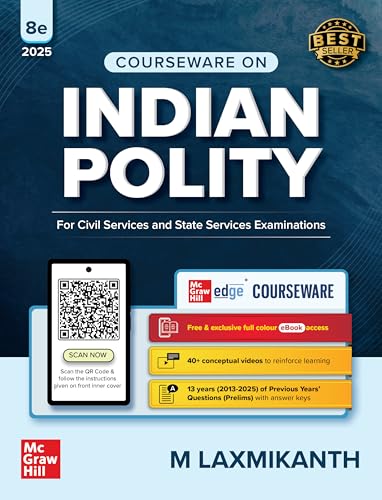
Indian Polity — M. Laxmikanth (8th Edition)
- McGraw Hill courseware edition, 856 pages
- Covers the full Prelims and Mains polity syllabus in one volume
- Solved Prelims PYQs from 2013–25 plus 12 years of Mains questions
Building the Foundation
Political Theory (Western): This section forms 30–35% of Paper 1. Focus on understanding each thinker's core philosophy and its contemporary relevance.
| Thinker | Key Concepts | Resources |
|---|---|---|
| Plato | Philosopher king, justice, ideal state | O.P. Gauba |
| Aristotle | Virtue ethics, classification of governments | O.P. Gauba |
| Machiavelli | Separation of ethics from politics, statecraft | O.P. Gauba |
| Hobbes | Social contract, state of nature, Leviathan | S.L. Verma |
| Locke | Natural rights, consent, property | S.L. Verma |
| Rousseau | General will, popular sovereignty | S.L. Verma |
| Marx | Historical materialism, class struggle, alienation | O.P. Gauba + Bhargava & Acharya |
| Rawls | Justice as fairness, veil of ignorance | O.P. Gauba |
- Kautilya: Pragmatic statecraft, Arthashastra
- Gandhi: Satyagraha, trusteeship, decentralization
- Ambedkar: Social justice, constitutional morality, annihilation of caste
- Lohia: Socialist democracy, backwardness, anti-colonialism
- J.P. Narayan: Total revolution, participatory democracy
Indian Government and Politics: This overlaps heavily with GS 2. Cover:
- Constitutional framework (Laxmikanth provides the base)
- Federalism and centre-state relations
- Judicial activism and PIL
- Political parties and electoral politics
- Caste, religion, and language in Indian politics
- Social movements (Dalit, women's, environmental, tribal)
Paper 1 Booklist
| Book | Author | Coverage |
|---|---|---|
| An Introduction to Political Theory | O.P. Gauba | Western political thought |
| Western Political Thought | S.L. Verma | Deeper treatment of thinkers |
| Indian Government and Politics | B.L. Fadia | Indian politics |
| Indian Political Thought | V.R. Mehta | Indian thinkers |
| Political Theory | Rajeev Bhargava & Ashok Acharya | Concepts + Indian application |
| Indian Polity | M. Laxmikanth | Constitutional framework |
| India After Gandhi | Ramachandra Guha | Post-independence politics |
Paper 1 Answer Writing Tips
- Political theory answers: Define the concept, explain the thinker's position, apply to contemporary India
- Indian politics answers: Use constitutional provisions, SC judgments, and recent examples
- Always compare: Western vs Indian perspective, or compare two thinkers on the same issue
- Use PYQ analysis: Identify which thinkers appear most frequently and prepare them deeply
Related: UPSC Mains GS 2 Strategy: Governance & Polity
Paper 2 Strategy: International Relations
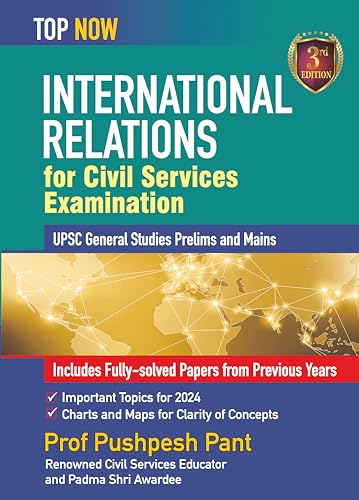
International Relations for Civil Services — Pushpesh Pant
- 552 pages, the one foundational IR textbook for the exam
- Historical grounding before contemporary policy
- Written for candidates, not for IR postgraduates
The IR Framework
Paper 2 is where PSIR candidates can score the highest. IR questions are often current-affairs-heavy and reward candidates who read newspapers analytically.
Core Areas to Master
IR Theory:
- Realism (Morgenthau, Waltz, Mearsheimer) — power politics, national interest
- Liberalism (Kant, Keohane, Nye) — cooperation, institutions, interdependence
- Constructivism (Wendt) — ideas and identity in international politics
- Marxist/Dependency approaches — core-periphery, world-systems theory
India's Foreign Policy Doctrine: This is the backbone of Paper 2. Know:
- Evolution: Non-alignment → Strategic autonomy → Multi-alignment
- Neighbourhood First policy and its implementation
- Act East policy (from Look East)
- India's nuclear doctrine (credible minimum deterrence, no first use)
- Maritime strategy (Indo-Pacific, QUAD, IONS)
Bilateral Relations:
| Relationship | Key Issues | Recent Developments |
|---|---|---|
| India-US | Strategic partnership, QUAD, defence, trade | ICET, iCET, semiconductor cooperation |
| India-China | LAC disputes, trade deficit, competition | Galwan aftermath, diplomatic normalization |
| India-Russia | Legacy partnership, energy, defence | Ukraine war impact, oil trade |
| India-Pakistan | Kashmir, terrorism, trade suspension | Diplomatic stalemate, backchannel talks |
| India-Japan | Economic partnership, infrastructure | Bullet train, defence cooperation |
| India-ASEAN | Act East, connectivity, trade | RCEP debate, maritime cooperation |
International Organizations:
- UN system: UNSC reform (India's case for permanent membership), UNGA, peacekeeping
- WTO: Doha Round, fisheries subsidies, dispute settlement
- IMF/World Bank: Quota reform, special drawing rights
- Regional: BRICS, SCO, G20, SAARC, BIMSTEC
Paper 2 Booklist
| Book | Author | Coverage |
|---|---|---|
| International Politics | Pavneet Singh | Comprehensive IR + India |
| International Relations | Pushpesh Pant | Theory + institutions |
| India's Foreign Policy | Rajiv Sikri | Doctrinal understanding |
| The India Way | S. Jaishankar | Contemporary foreign policy |
| MEA Annual Report | Government of India | Bilateral relations data |
| World Politics | Goldstein & Pevehouse | IR theory (reference) |
Paper 2 Answer Writing Tips
- Always use current examples: An IR answer without recent developments looks outdated
- Reference MEA statements, joint communiques, and bilateral agreements by name
- Use the theory: Frame answers through realist or liberal lenses where appropriate
- India-centric perspective: Always bring the answer back to India's interests and position
- Data matters: Trade volumes, FDI flows, defence deals — numbers strengthen IR answers
PYQ Trends in PSIR (2018–2025)
Paper 1 Recurring Topics
| Topic | Frequency |
|---|---|
| Gandhi vs Ambedkar | Very High |
| Marx and his relevance | High |
| Indian federalism | Very High |
| Judicial activism | High |
| Social movements (Dalit, women's) | High |
| Rawls' theory of justice | Medium-High |
| Caste in Indian politics | High |
Paper 2 Recurring Topics
| Topic | Frequency |
|---|---|
| India-China relations | Very High |
| India-US partnership | Very High |
| UNSC reform | High |
| Non-alignment and its relevance | High |
| Nuclear proliferation | Medium |
| India's neighbourhood policy | Very High |
| Indo-Pacific strategy | High |
| Climate diplomacy | Growing |
Preparation Timeline for PSIR
| Month | Focus |
|---|---|
| Month 1 | Political Theory (Western thinkers) |
| Month 2 | Indian Political Thought + Indian Government |
| Month 3 | IR Theory + Cold War/Post-Cold War |
| Month 4 | India's Foreign Policy + Bilateral Relations |
| Month 5 | Revision + PYQ solving + Answer writing |
| Month 6 | Mock tests + Final revision + Current affairs integration |
Daily PSIR Schedule During Preparation
| Activity | Time |
|---|---|
| Study new topics | 2 hours |
| Answer writing (2–3 questions) | 1 hour |
| Current affairs (IR focus) | 30 minutes |
| Revision of previous topics | 30 minutes |
Scoring Strategy
Target Score Distribution
| Paper | Target | Strategy |
|---|---|---|
| Paper 1 | 140–160 | Strong theory + current Indian politics |
| Paper 2 | 150–170 | Current IR + India's foreign policy depth |
| Total | 300–320 | — |
What Separates 250 from 300+ Scores
| Element | 250 Score | 300+ Score |
|---|---|---|
| Theory knowledge | Basic definitions | Thinkers compared, applied to India |
| Current affairs | Mentioned | Integrated into every answer |
| Answer structure | Lists | Analytical paragraphs with evidence |
| IR data | General statements | Specific agreements, trade data, summits |
| Original analysis | Textbook reproduction | Independent perspective with evidence |
Frequently Asked Questions
Watch on YouTube
Related video from the Anantam IAS YouTube channel.
Is PSIR suitable for science or engineering graduates?
PSIR is accessible to candidates from any academic background. The subject doesn't require prior knowledge of political science — standard textbooks cover everything from scratch. Science graduates may initially find political theory abstract, but the IR paper (which is more current-affairs-driven) plays to everyone's strengths. Several PSIR toppers have been from engineering backgrounds.
How much does PSIR overlap with GS preparation?
The overlap is substantial — roughly 40–50%. Indian polity, governance, and international relations content prepared for PSIR directly feeds into GS 2 answers. Thinkers prepared for PSIR theory also serve GS 4 (Ethics) essay requirements. This dual utility makes PSIR one of the most synergistic optional choices.
Can PSIR be prepared without coaching?
Self-study is entirely viable for PSIR. The booklist is well-established, PYQs are available, and current affairs coverage through newspapers serves the IR paper. However, answer evaluation from an experienced evaluator (even online) is strongly recommended. The analytical answer style requires feedback to refine.
How to handle PSIR questions where opinions differ among scholars?
Present multiple scholarly perspectives rather than picking one. Write: "While realists like Mearsheimer argue [X], liberal scholars like Keohane contend [Y]. The Indian experience suggests [Z]." This multi-perspective approach scores higher than one-sided answers.
What current affairs sources are essential for PSIR Paper 2?
The Hindu's international affairs section, MEA press releases, IDSA/ORF policy briefs, and monthly IR compilations from standard UPSC sources cover the necessary ground. Following the External Affairs Minister's speeches and parliamentary statements on foreign policy adds depth that textbooks can't provide.Related: UPSC Mains GS 2 Strategy: Governance & Polity