Aquatic Ecosystem: Types, Components, Zones & Significance (UPSC Notes)
Complete UPSC guide to the aquatic ecosystem — covering freshwater, marine, estuarine types, biotic-abiotic components, zones, food chains, and ecological significance.
An aquatic ecosystem is a water-based ecological community where organisms interact with each other and with the physical and chemical properties of water. These ecosystems cover nearly 71% of the Earth's surface and account for the bulk of the biosphere, housing fish, plankton, aquatic plants, microbes, and mammals. For UPSC aspirants, the aquatic ecosystem is a foundational topic under General Studies Paper III (Environment & Ecology), intersecting with pollution, climate change, wetlands conservation, fisheries, and sustainable development goals. Understanding its types, components, energy flow, and ecological value is essential because wetland degradation, coral bleaching, eutrophication, and ocean acidification dominate current affairs in UPSC Prelims and Mains.
What Is an Aquatic Ecosystem?
An aquatic ecosystem is any ecosystem situated in a body of water — whether flowing or standing, saline or fresh. The water body provides the habitat, the energy pathway, and the chemical medium for nutrient cycling. Unlike terrestrial ecosystems, aquatic ecosystems are shaped primarily by water depth, salinity, dissolved oxygen, light penetration, and temperature stratification.
Aquatic ecosystems are broadly divided into two major categories:
- Freshwater ecosystems — salinity less than 1 part per thousand (ppt).
- Marine ecosystems — salinity of 30–35 ppt.
- A transitional category, brackish/estuarine ecosystems, bridges both.
Types of Aquatic Ecosystems
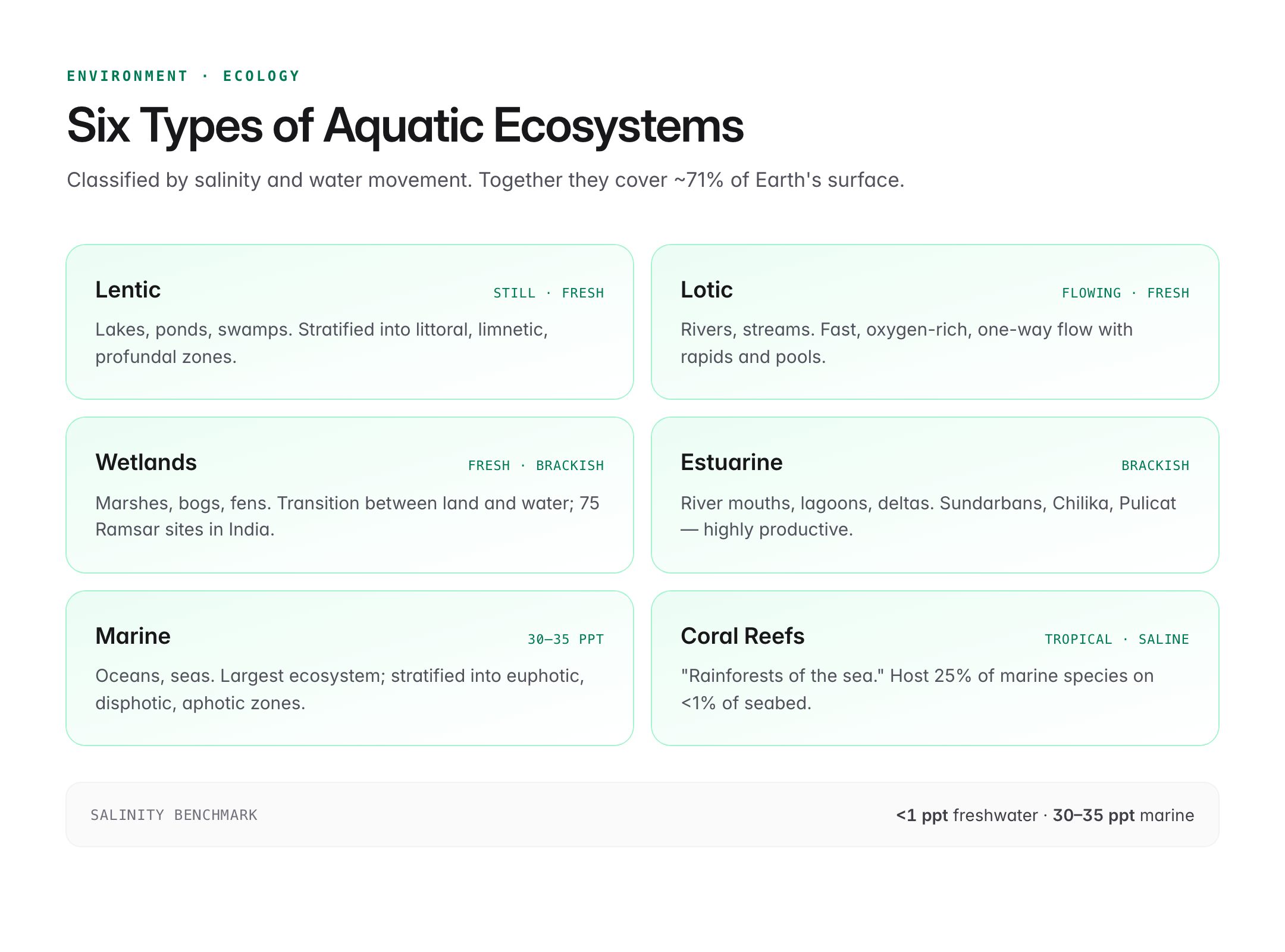
| Type | Salinity | Examples | Key Feature |
|---|---|---|---|
| Lentic (still water) | Fresh | Lakes, ponds, swamps | Stratified thermal zones |
| Lotic (flowing water) | Fresh | Rivers, streams | Continuous one-way flow |
| Wetlands | Fresh/brackish | Marshes, bogs, fens | Transition between land and water |
| Estuarine | Brackish | River mouths, lagoons, deltas | Mixing of river & sea water |
| Marine | Saline | Oceans, seas | Largest, covers ~71% of Earth |
| Coral reefs | Saline | Tropical shallow seas | "Rainforests of the sea" |
Freshwater Ecosystems
- Lentic: Include lakes (oligotrophic, mesotrophic, eutrophic) and ponds; divided into littoral, limnetic, and profundal zones.
- Lotic: Rivers and streams characterized by fast-flowing, oxygen-rich water; divided into rapids and pool zones.
Marine Ecosystems
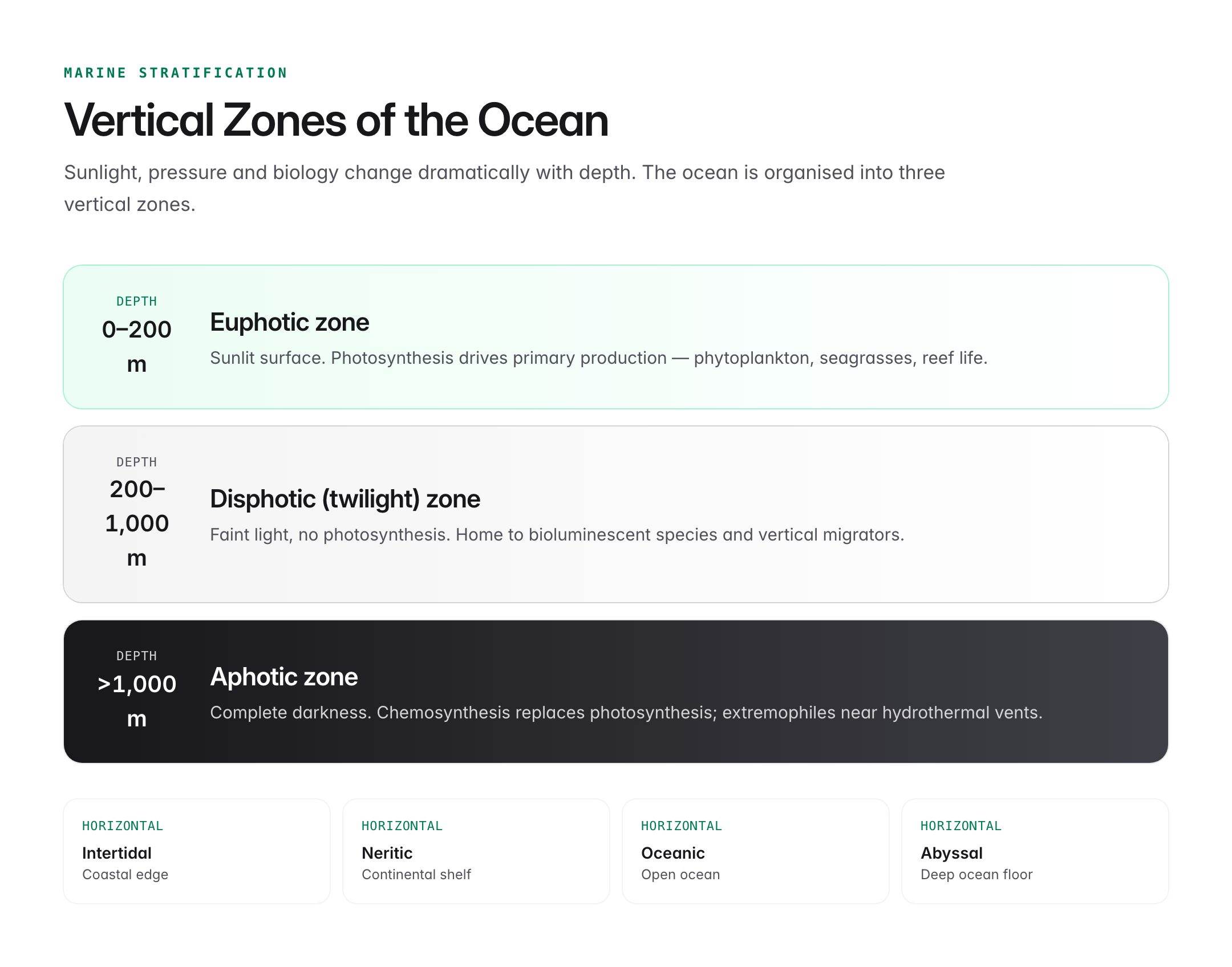
Oceans are stratified into:
- Euphotic zone (0–200 m) — sunlight penetrates, photosynthesis occurs.
- Disphotic zone (200–1,000 m) — twilight zone.
- Aphotic zone (below 1,000 m) — no sunlight, chemosynthetic life.
Horizontally, they are divided into intertidal, neritic, oceanic, and abyssal zones.
Estuarine Ecosystems
Estuaries like the Sundarbans, Chilika, and Pulicat are among the most productive ecosystems on Earth, supporting mangroves, shellfish, and migratory birds.
Components of an Aquatic Ecosystem
Abiotic Components
- Light — limits photosynthesis to the euphotic zone.
- Temperature — influences dissolved oxygen and species distribution.
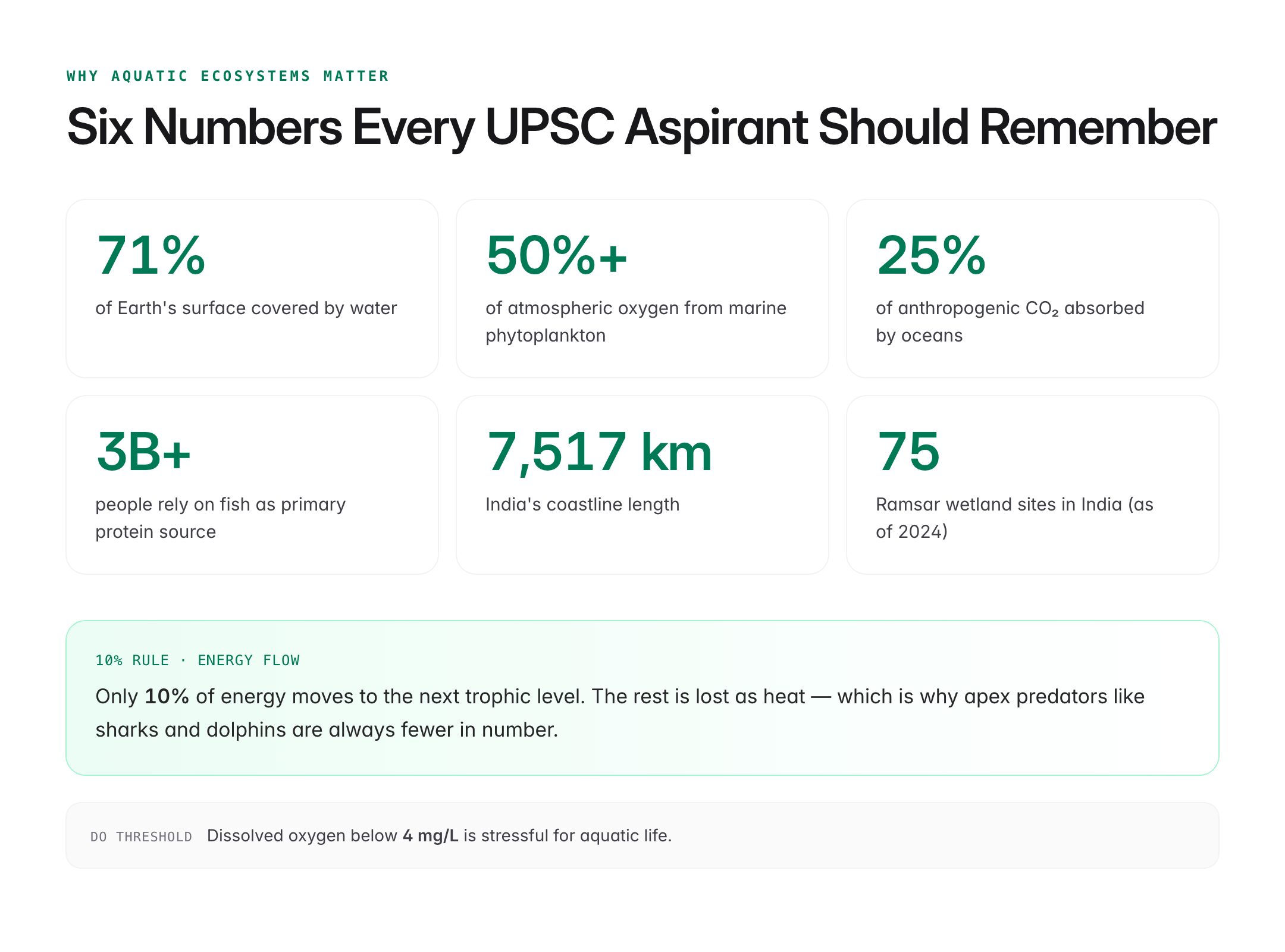
- Dissolved oxygen (DO) — critical indicator of water health; <4 mg/L is stressful.
- Salinity — determines type (fresh/marine/brackish).
- pH, turbidity, nutrients (nitrogen, phosphorus).
Biotic Components
- Producers: Phytoplankton, algae, aquatic plants (Hydrilla, Vallisneria), seagrasses.
- Consumers:
- Primary — zooplankton, small fish.
- Secondary — larger fish, crustaceans.
- Tertiary — sharks, dolphins, crocodiles.
- Decomposers: Bacteria and fungi recycle nutrients.
Ecological Zones and Food Chain
Aquatic ecosystems display vertical zonation governed by light and depth:
- Littoral zone — shallow edges with rooted plants.
- Limnetic zone — open sunlit water where plankton thrives.
- Profundal zone — deep dark waters, rich in decomposers.
- Benthic zone — sediment floor with bottom-dwellers.
A typical aquatic food chain: Phytoplankton → Zooplankton → Small fish → Large fish → Apex predator (shark, dolphin).
Energy flow follows the 10% rule — only 10% of energy passes to each trophic level, with the rest lost as heat.
Significance of Aquatic Ecosystems
Aquatic ecosystems are indispensable to both ecological balance and human well-being:
- Oxygen production: Marine phytoplankton produce over 50% of atmospheric oxygen.
- Carbon sink: Oceans absorb ~25% of anthropogenic CO₂.
- Food security: Over 3 billion people depend on fish as a primary protein source.
- Climate regulation: Oceans moderate global temperature and drive weather.
- Biodiversity hotspots: Coral reefs host 25% of marine species despite covering <1% of the seabed.
- Economic value: Fisheries, tourism, shipping, and pharmaceutical resources.
India's aquatic wealth includes 7,517 km of coastline, major rivers (Ganga, Brahmaputra, Godavari), 75 Ramsar sites (as of 2024), and the Exclusive Economic Zone (EEZ) of over 2 million sq km.
Threats and Conservation
Aquatic ecosystems face unprecedented stress:
- Pollution — untreated sewage, industrial effluents, plastics, oil spills.
- Eutrophication — nutrient runoff triggers algal blooms and dead zones.
- Climate change — warming, acidification, coral bleaching.
- Overfishing and bycatch.
- Invasive species — water hyacinth, African catfish.
- Habitat loss — dam construction, coastal development.
Major Conservation Efforts
- Ramsar Convention (1971) — protection of wetlands of international importance.
- Namami Gange Mission — Ganga rejuvenation.
- National Plan for Conservation of Aquatic Ecosystems (NPCA).
- Coastal Regulation Zone (CRZ) notifications.
- Marine Protected Areas (MPAs) and Biosphere Reserves (Gulf of Mannar, Sundarbans).
- Blue Economy framework under India's Vision 2030.
UPSC Relevance
- Prelims focus: Types of aquatic ecosystems, lentic vs lotic, zonation (euphotic/aphotic), Ramsar sites, coral reefs, mangroves, eutrophication, dissolved oxygen significance.
- Mains GS-III angle: Conservation of aquatic ecosystems; wetland degradation; marine pollution; blue economy; climate impact on oceans; river interlinking; Namami Gange.
- Sample PYQ angle: "How does biodiversity vary in India? How is the Biological Diversity Act, 2002 helpful in the conservation of flora and fauna?" — frame answers around aquatic biodiversity, Ramsar wetlands, and coral reef protection. Also relevant: questions on eutrophication, mangroves, and oceanic dead zones.