Daily Digest
UPSC · Civil Services Examination
Current Affairs · Tuesday, 20 January 2026
Current affairs curated and edited by Anantam IAS faculty — pulled from The Hindu, PIB, IDSA, Foreign Affairs and the ministries. Read, annotate, revise.
Old Rajinder Nagar · Delhi 110005 · anantamias.com
India-UAE Pledge to Double Trade to $200 Billion: CEPA’s Next Phase
Why in News?
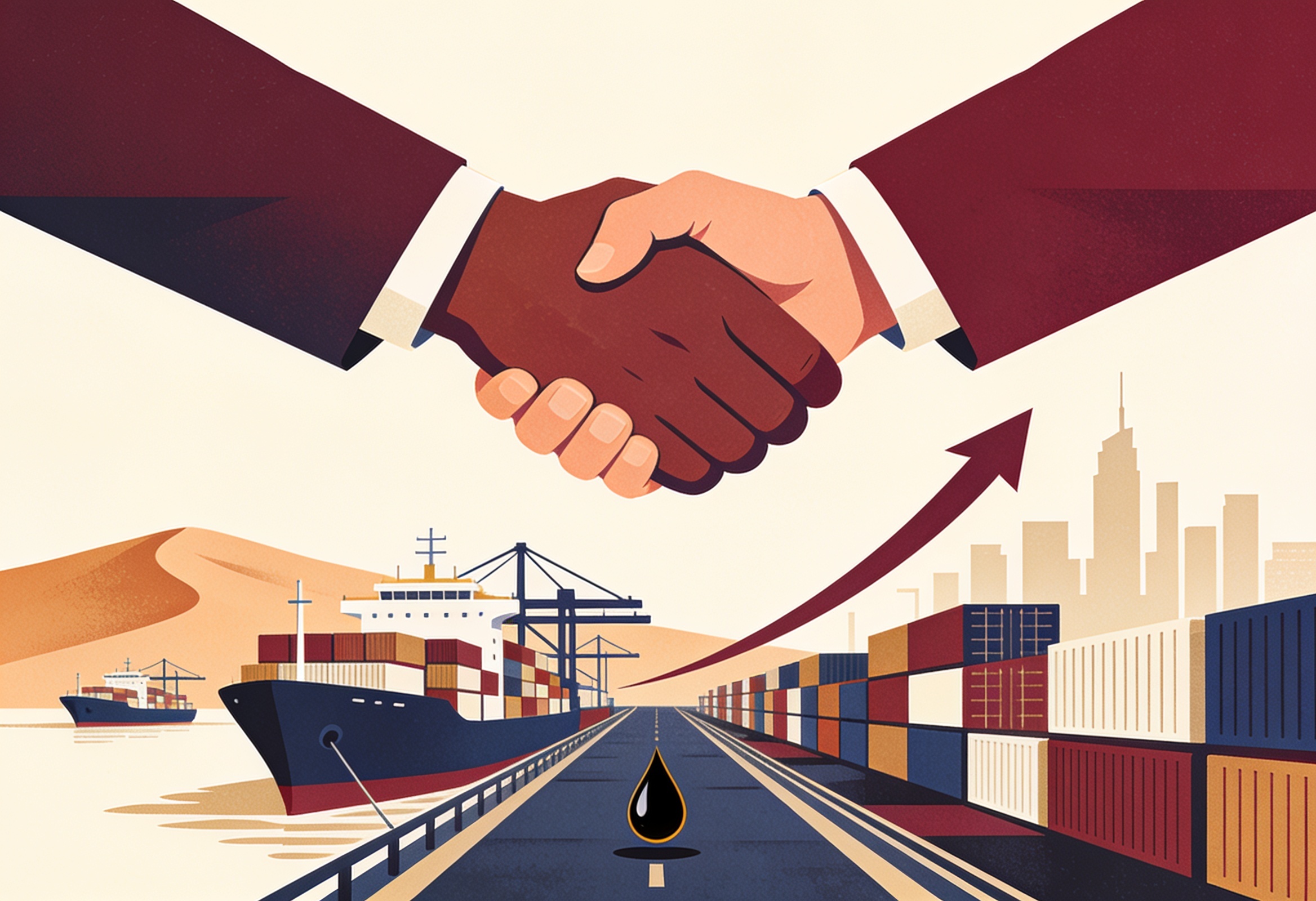
India and the United Arab Emirates (UAE) reaffirmed a shared target to roughly double non-oil bilateral trade to USD 200 billion, building on the Comprehensive Economic Partnership Agreement (CEPA) that entered into force in May 2022 — India’s first such pact with a Gulf state.
The pledge frames the CEPA’s next phase: scaling beyond crude and gold into manufactured goods, food, fintech and logistics, anchored by the Bharat Mart trade hub in Dubai and the India-Middle East-Europe Economic Corridor (IMEC).
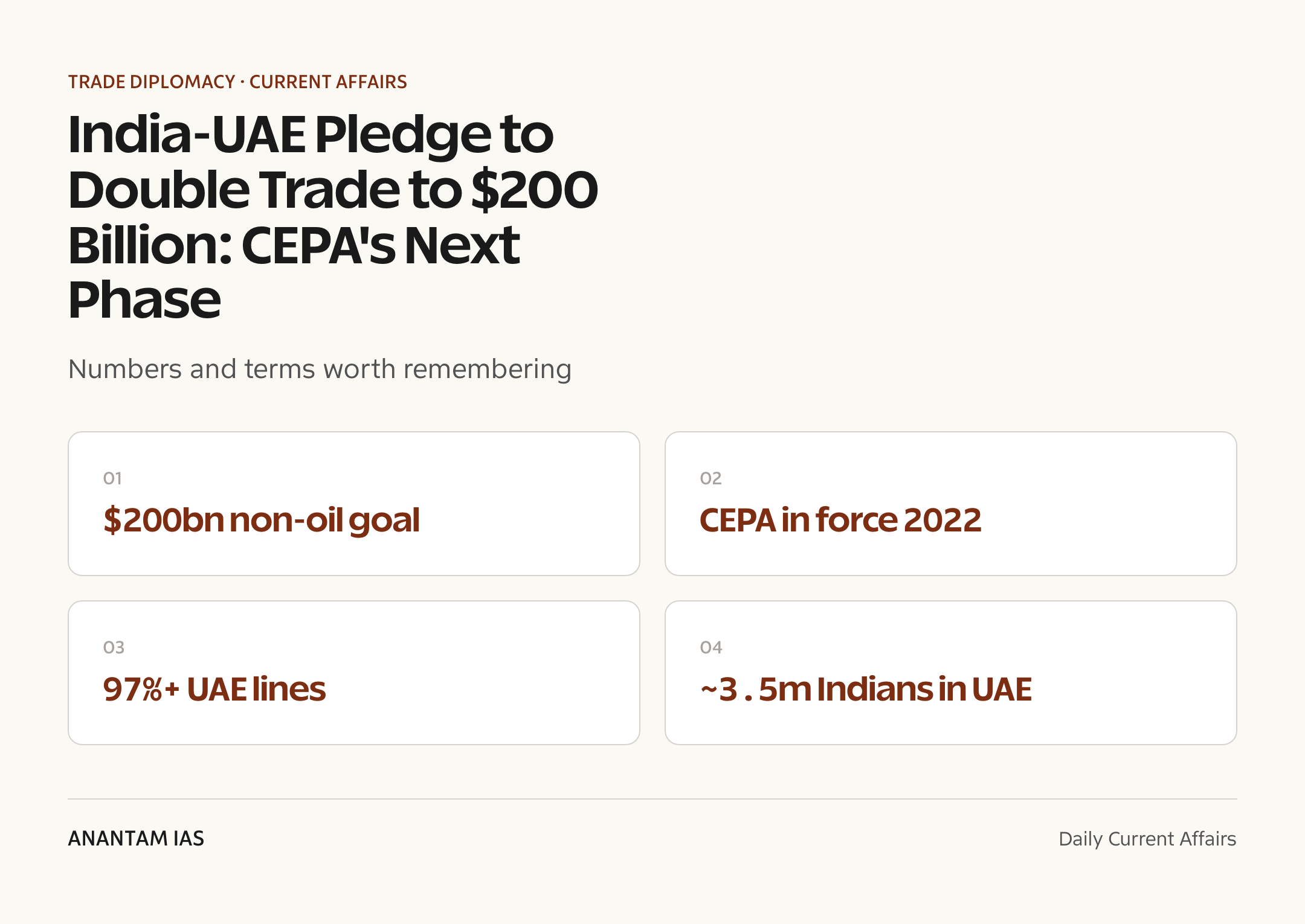
- The headline ambition is a USD 200 billion non-oil trade goal, up from the roughly USD 100 billion baseline measured when CEPA was signed.
- CEPA eliminated or phased down tariffs on over 80% of tariff lines, covering goods, services, government procurement and digital trade.
- The UAE is among India’s top three trading partners and the largest in West Asia, and a leading destination for Indian exports.
- Cooperation spans Bharat Mart (a Dubai warehousing-and-showcase hub for Indian MSMEs), the UPI-RuPay fintech linkage, food corridors, IMEC, energy and defence.
The development matters in the context of:
- It matters because the UAE is a gateway re-export market connecting India to Africa, West Asia and Europe — a force-multiplier for Indian MSMEs.
- It matters because the Gulf hosts roughly 8.9 million Indians and is India’s single largest source of remittances, tying trade to diaspora welfare and energy security.
UPSC Relevance
Prelims Relevance
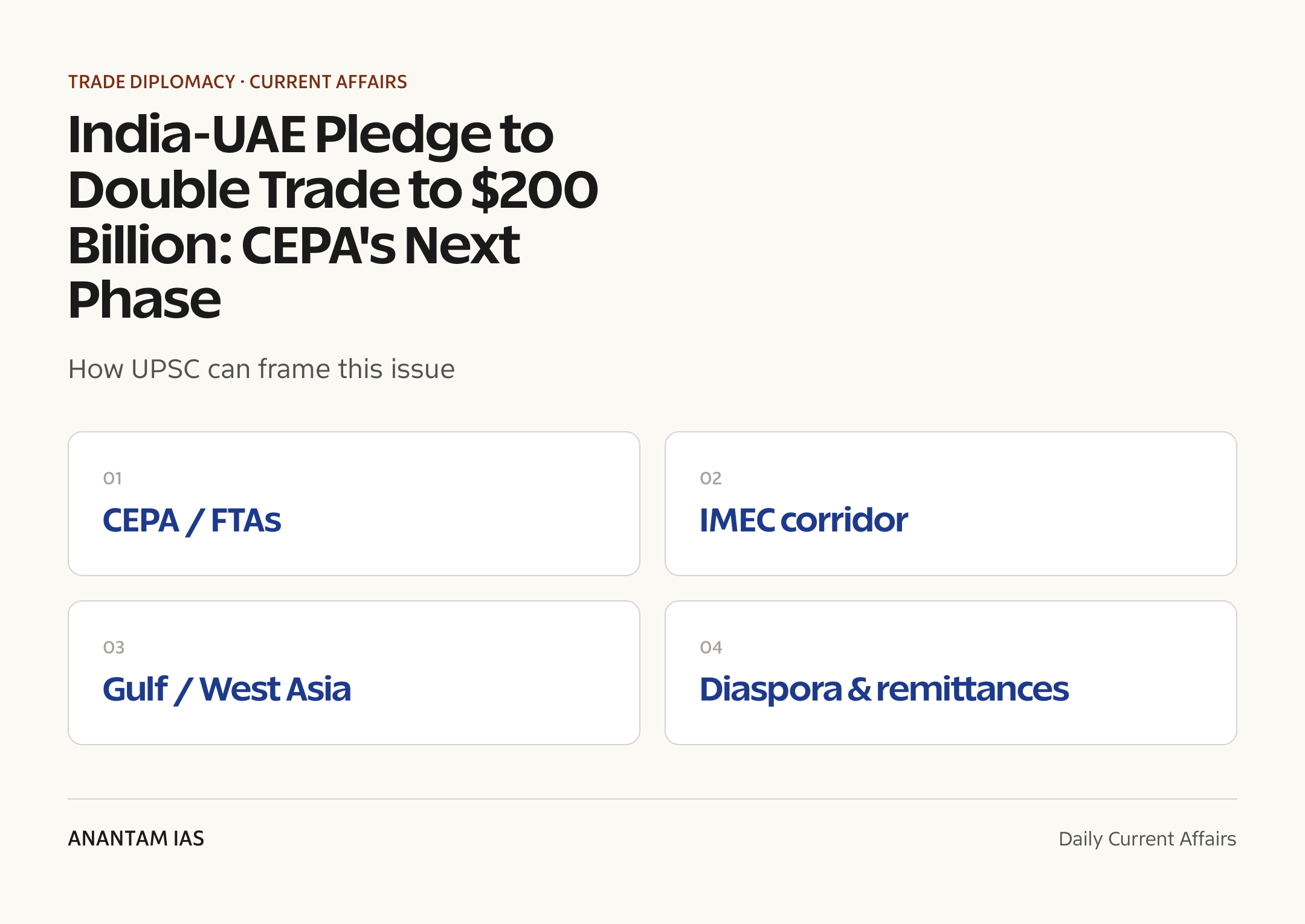
- CEPA — Comprehensive Economic Partnership Agreement; India-UAE pact in force May 2022.
- Distinguish FTA vs PTA vs CEPA vs CECA — depth of liberalisation and coverage of services/investment.
- IMEC — India-Middle East-Europe Economic Corridor, launched at the 2023 G20 Delhi Summit.
- I2U2 grouping — India, Israel, United States, United Arab Emirates.
- Bharat Mart — Indian trade and warehousing hub in Jebel Ali / Dubai.
- UPI-RuPay acceptance and the linkage with the UAE’s domestic card and instant-payment systems.
- UAE as India’s leading West Asia trade partner and a major crude oil and LPG supplier.
- Remittances — India is the world’s top recipient; the Gulf is a dominant source region.
- Non-oil trade as the metric used in the USD 200 billion target.
Mains Relevance
GS Paper 2
- India’s bilateral and regional engagement with West Asia / the Gulf and its strategic stakes.
- Trade agreements as instruments of foreign policy and the role of the diaspora in India-Gulf ties.
GS Paper 3
- Effects of CEPAs/FTAs on India’s external sector, MSME exports and energy security.
- Infrastructure-led connectivity (IMEC, trade hubs) and its bearing on supply-chain resilience.
Essay
- Trade as the quiet diplomacy that outlasts headlines.
- Connectivity corridors and the geo-economics of a multipolar world.
Background and Context
What the CEPA is and why it was a first
The 2022 agreement reset the economic baseline of a long-standing partnership.
- Negotiated in record time and signed in February 2022, the CEPA entered into force on 1 May 2022 — India’s first comprehensive trade pact with a Gulf country.
- It covers goods, services, rules of origin, government procurement, digital trade and dispute settlement, not tariffs alone — a deeper instrument than a plain free trade agreement.
- India offered preferential access on the bulk of UAE tariff lines; the UAE reciprocated on over 97% of its lines by value, opening sectors like gems, textiles, pharma and engineering goods.
- The deal set a declared aim of lifting bilateral trade well past the pre-pact level within five years — the springboard for the USD 200 billion non-oil ambition.
The USD 200 billion non-oil target
The new metric deliberately excludes crude to test the real diversification of trade.
- Total bilateral trade had hovered around USD 80-100 billion, heavily weighted by crude oil and gold.
- Pegging the goal to non-oil trade forces the pivot toward manufactures, food, electronics and services.
- Indian exports gaining ground include engineering goods, gems and jewellery, electronics, textiles and processed food.
- The target functions as a political signal as much as an economic one — a benchmark both governments can be held to.
The new architecture: Bharat Mart, fintech and food corridors
Physical and digital plumbing is being laid to make the headline number reachable.
- Bharat Mart — a Dubai warehousing-cum-showcase hub near Jebel Ali port — gives Indian MSMEs a permanent retail and re-export base into Africa and West Asia.
- The UPI-RuPay linkage extends India’s payment rails into the UAE, easing remittances, tourism spending and small-trade settlement.
- Food corridors position India as a food-security partner for the import-dependent Gulf, with the UAE investing in Indian agri-logistics and warehousing.
- Talks on settling more trade in local currencies (rupee-dirham) aim to cut dollar dependence and transaction costs.
IMEC and the wider connectivity play
The bilateral track sits inside a larger Indo-Gulf-Europe corridor.
- The India-Middle East-Europe Economic Corridor (IMEC), unveiled at the 2023 G20 Delhi Summit, routes goods and data from India through the UAE and Saudi Arabia to Europe.
- It pairs a ship-to-rail logistics spine with energy grids, green-hydrogen pipelines and undersea data cables.
- The UAE is the corridor’s first maritime node west of India, making the bilateral hub investments doubly strategic — see our note on the India-Middle East-Europe Economic Corridor.
- IMEC is widely read as a transparent, market-led alternative to other large connectivity initiatives in the region.
Energy, defence and the strategic frame
Trade rides on a deeper security and energy relationship.
- The UAE is a major supplier of crude oil and LPG and a partner in India’s strategic petroleum reserves.
- Cooperation is growing on clean energy, solar and green hydrogen, with sovereign-fund interest in Indian renewables.
- Defence ties feature joint exercises and the I2U2 (India, Israel, US, UAE) grouping linking food, water, energy and tech.
- The partnership is a pillar of India’s broader ‘Look West’ / West Asia policy.
Diaspora and remittances
People, not just cargo, bind the two economies.
- Roughly 3.5 million Indians live and work in the UAE — among the largest expatriate communities there.
- India is the world’s top recipient of remittances, and the Gulf is a dominant source region for these inflows — a recurring theme in India’s West Asia relations.
- The UPI-RuPay rollout directly lowers the cost of sending money home, raising effective household income.
- Diaspora welfare, fair-recruitment norms and social-security portability are recurring items on the bilateral agenda.
Risks and the critique
The ambition carries real watch-points India must manage.
- Trade-deficit and re-routing concerns — gold and jewellery flows under CEPA drew scrutiny over possible round-tripping and revenue leakage.
- Over-reliance on the Gulf for energy and remittances exposes India to regional instability and oil-price shocks.
- Non-tariff barriers, standards and rules-of-origin enforcement can blunt the headline tariff cuts.
- Geopolitical turbulence in West Asia can disrupt IMEC and shipping lanes, as past Red Sea disruptions showed.
Way Forward
Diversify the basket
- Push non-oil, value-added exports — electronics, pharma, processed food and services — over commodities.
- Use Bharat Mart to onboard MSMEs at scale and convert showroom presence into recurring re-exports.
Tighten safeguards
- Strengthen rules-of-origin checks and customs data-sharing to curb mis-declaration and round-tripping.
- Build a transparent CEPA review mechanism with periodic, published trade-impact assessments.
Operationalise the corridors
- Sequence IMEC investments with port, rail and digital-cable milestones to keep the project bankable.
- Deepen rupee-dirham settlement and the UPI-RuPay rollout to lower friction in everyday trade.
Conclusion
The USD 200 billion pledge is less a forecast than a compass. It commits both capitals to move trade up the value chain — away from crude and bullion and toward manufactures, food, fintech and logistics — with the CEPA as the legal scaffolding and Bharat Mart, IMEC and UPI-RuPay as the working parts.
If India can manage the risks of dependence and mis-routing while delivering on connectivity, the partnership becomes a template for how a CEPA can anchor energy security, diaspora welfare and supply-chain resilience at once — the kind of durable, multi-domain tie that outlives any single summit.
UPSC Practice Questions
Prelims MCQ 1
With reference to the India-UAE Comprehensive Economic Partnership Agreement (CEPA), consider the following statements:
- It was India’s first comprehensive trade agreement with a member of the Gulf Cooperation Council.
- It entered into force in May 2022.
- Its coverage is limited only to trade in goods and tariff concessions.
How many of the above statements are correct?
(a) Only one (b) Only two (c) All three (d) None
Answer: (b) Only two
Explanation:
Statements 1 and 2 are correct — the CEPA was India’s first such pact with a Gulf state and came into force on 1 May 2022. Statement 3 is wrong: it also covers services, government procurement, rules of origin and digital trade.
Prelims MCQ 2
The India-Middle East-Europe Economic Corridor (IMEC) was formally announced on the sidelines of which event?
(a) The 2022 Sharm el-Sheikh COP27 (b) The 2023 G20 Summit in New Delhi (c) The 2023 BRICS Summit in Johannesburg (d) The 2024 Quad Leaders’ Summit
Answer: (b) The 2023 G20 Summit in New Delhi
Explanation:
IMEC was unveiled via a Memorandum of Understanding on the sidelines of the G20 Summit hosted by India in New Delhi in September 2023, linking India through the UAE and Saudi Arabia to Europe.
UPSC Mains Questions
- The India-UAE CEPA is described as the template for India’s engagement with West Asia. Examine how the agreement advances India’s trade, energy and diaspora interests, and the risks it must manage. (250 words)
- Connectivity corridors are emerging as instruments of geo-economics. Discuss the strategic significance of the India-Middle East-Europe Economic Corridor (IMEC) for India, with reference to its bilateral and regional dimensions. (250 words)
- Free trade agreements can deepen dependence as much as they create opportunity. Critically evaluate this statement in the context of India’s economic partnership with the Gulf. (150 words)
Sources: Ministry of Commerce and Industry and Press Information Bureau.
Frequently Asked Questions
What is the India-UAE CEPA?
The Comprehensive Economic Partnership Agreement is a wide-ranging trade pact between India and the United Arab Emirates that entered into force on 1 May 2022. It was India’s first such agreement with a Gulf state, cutting tariffs on most goods and also covering services, government procurement, rules of origin and digital trade.
What does the USD 200 billion target mean?
Both governments have pledged to roughly double their non-oil bilateral trade to about USD 200 billion. The non-oil framing is deliberate — it excludes crude oil and pushes the relationship toward manufactures, food, electronics and services rather than commodities and bullion.
What is Bharat Mart?
Bharat Mart is an Indian trade and warehousing hub being developed near Jebel Ali port in Dubai. It gives Indian MSMEs a permanent showcase, storage and re-export base, helping them reach markets across West Asia, Africa and Europe through the UAE’s logistics network.
How does IMEC relate to India-UAE trade?
The India-Middle East-Europe Economic Corridor, announced at the 2023 G20 Delhi Summit, routes goods, energy and data from India through the UAE and Saudi Arabia to Europe. The UAE is the corridor’s first major maritime node west of India, which is why bilateral hub and port investments are strategically important.
Why are remittances central to the relationship?
Around 3.5 million Indians live and work in the UAE, and the Gulf is a dominant source of the remittances India receives — the largest such inflow of any country. The UPI-RuPay payment linkage lowers transfer costs, directly raising the value of money sent home.
What are the main risks in the partnership?
Key concerns include a widening trade deficit, possible mis-routing of gold and jewellery flows, heavy dependence on the Gulf for energy and remittances, and the exposure of corridors like IMEC to regional instability and shipping disruptions.
Source: https://anantamias.com/current-affairs/india-uae-trade-200-billion-2026/
The Responsible Nations Index: A New Lens on Global Responsibility
Why in News?
India has launched the Responsible Nations Index (RNI), a new assessment framework that ranks countries by their actual conduct as global citizens rather than by income or institutional checklists alone. The launch positions India as a norm-setter that authors its own metrics instead of only being measured by indices designed in the West.
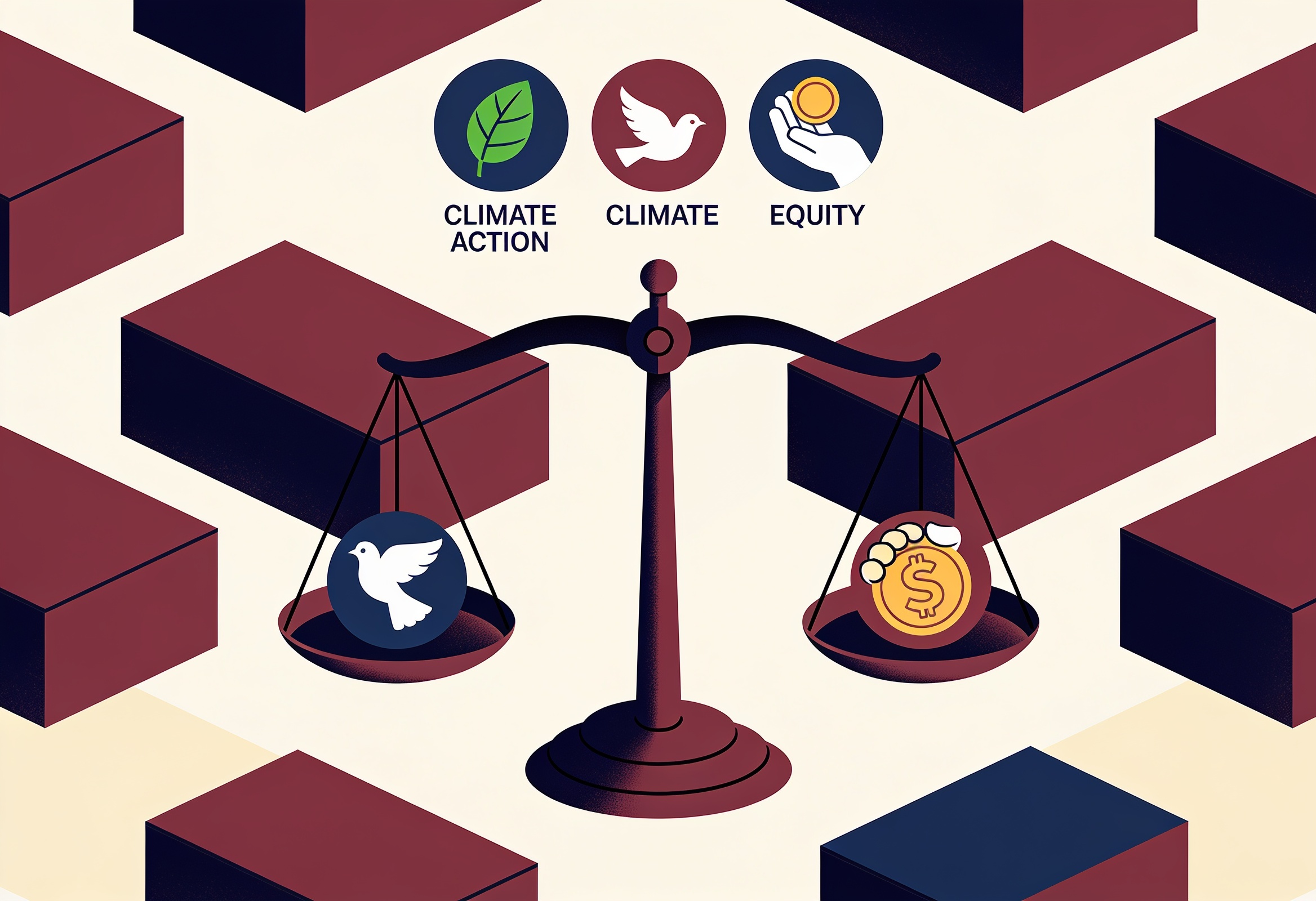
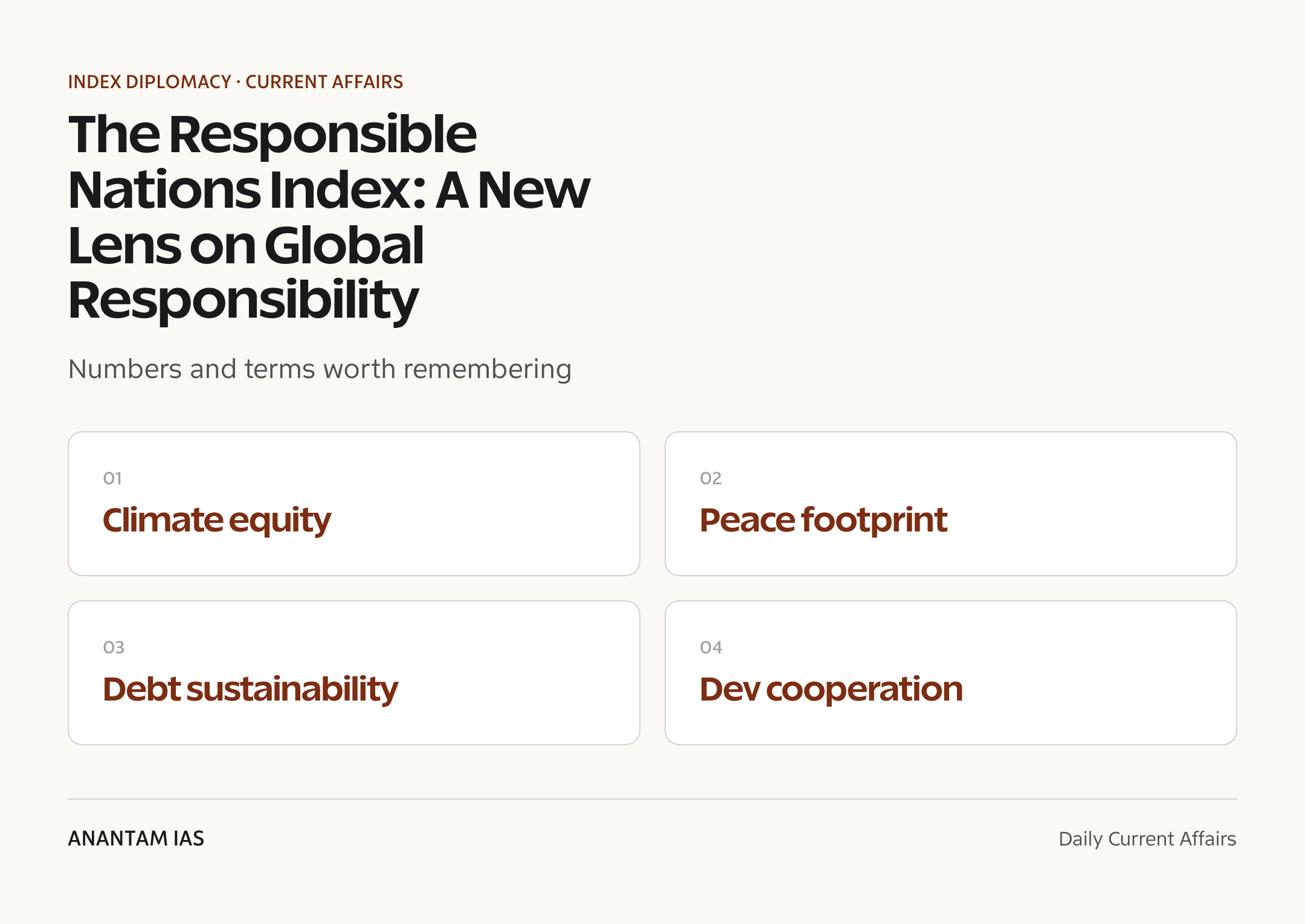
The RNI scores nations across responsibility themes such as climate action and per-capita/historical emissions, equity, contribution to peace, debt sustainability, and development cooperation — reframing ‘responsibility’ around fairness to the developing world rather than compliance with a developed-world template.
- A made-in-India index that judges nations on responsible global conduct, not just GDP or governance optics.
- Core pillars span climate equity, peace and conflict footprint, debt sustainability, and development cooperation.
- Emphasises per-capita and historical emissions, embedding Common But Differentiated Responsibilities (CBDR) into the scoring.
- Advances India’s pitch as the Voice of the Global South and a credible alternative knowledge producer.
- Frames a direct critique of Western-authored indices seen as opaque, ideologically loaded, or biased against developing economies.
The development matters in the context of:
- Global rankings shape credit ratings, aid flows, FDI and diplomatic leverage — so who builds the index wields real power.
- It operationalises ‘Vasudhaiva Kutumbakam’ (the world is one family), the theme India carried through its G20 presidency.
- Lands amid India’s push for reformed multilateralism and a louder developing-world seat at global high tables.
UPSC Relevance
Prelims Relevance
- Responsible Nations Index (RNI) — purpose, broad parameters, India-led origin.
- Common But Differentiated Responsibilities (CBDR) — principle under the UNFCCC and Paris Agreement.
- Distinction between per-capita, absolute and historical (cumulative) emissions.
- Voice of the Global South Summit — India-hosted platform for developing nations.
- Vasudhaiva Kutumbakam — its appearance as India’s G20 theme.
- Major existing indices for comparison — Human Development Index (UNDP), SDG Index, Climate Change Performance Index.
- Soft power and ‘normative power’ as instruments of foreign policy.
- Difference between a composite index and a single-indicator ranking.
Mains Relevance
GS Paper 2
- India’s evolving role in shaping global norms and its bid for reformed multilateralism and Global-South leadership.
- Indices as instruments of foreign policy and soft power — agenda-setting through metrics rather than military or economic coercion.
- Effect of bilateral, regional and global groupings and agreements involving and affecting India’s interests.
GS Paper 3
- Climate-change negotiations through the lens of equity, CBDR and historical responsibility.
- Sustainable development metrics and the politics of measuring environmental and developmental performance.
Essay
- He who controls the measure controls the meaning — on who gets to define global ‘responsibility’.
- Justice without fairness is hollow: equity in the age of climate and debt.
Background and Context
What the Responsible Nations Index sets out to measure
The RNI is a composite framework that scores nations on how responsibly they act toward the planet and toward fellow nations, not on wealth alone.
- Bundles several responsibility themes into one comparable score, in the manner of a composite index (like the HDI).
- Climate responsibility — judged through per-capita and historical emissions, so heavy historical polluters cannot hide behind recent cuts.
- Equity — fairness in trade, technology access and the distribution of global burdens.
- Peace — a nation’s contribution to or disruption of global stability and conflict.
- Debt sustainability — responsible lending and the debt distress faced by developing borrowers.
- Development cooperation — aid, capacity-building and South-South partnership rather than extraction.
Why India is building its own index
The launch reflects a deliberate shift from being only measured by others to authoring the yardstick itself.
- Most influential rankings originate in the Global North or Western think-tanks, embedding their priorities and assumptions.
- India argues several indices are opaque in methodology, subjective in their proxies, and structurally unfavourable to developing economies.
- Authoring a credible index is an act of agenda-setting — it reframes what ‘good behaviour’ on the world stage even means.
- Reinforces India’s self-image as the Voice of the Global South and a bridge between developed and developing blocs.
- Sits alongside India’s call for reformed multilateralism and a fairer global governance architecture.
Climate equity and the CBDR backbone
By weighting per-capita and historical emissions, the RNI hard-codes the equity argument India has long pressed in climate talks.
- CBDR-RC (Common But Differentiated Responsibilities and Respective Capabilities) is a founding principle of the UNFCCC and the Paris Agreement.
- It holds that all nations share the climate burden, but those with greater historical emissions and capacity must do more.
- Ranking by per-capita rather than absolute emissions reframes which countries are the bigger per-head polluters.
- Historical (cumulative) emissions capture the carbon already in the atmosphere from early industrialisers.
- This counters narratives that judge developing nations purely on their current absolute output.
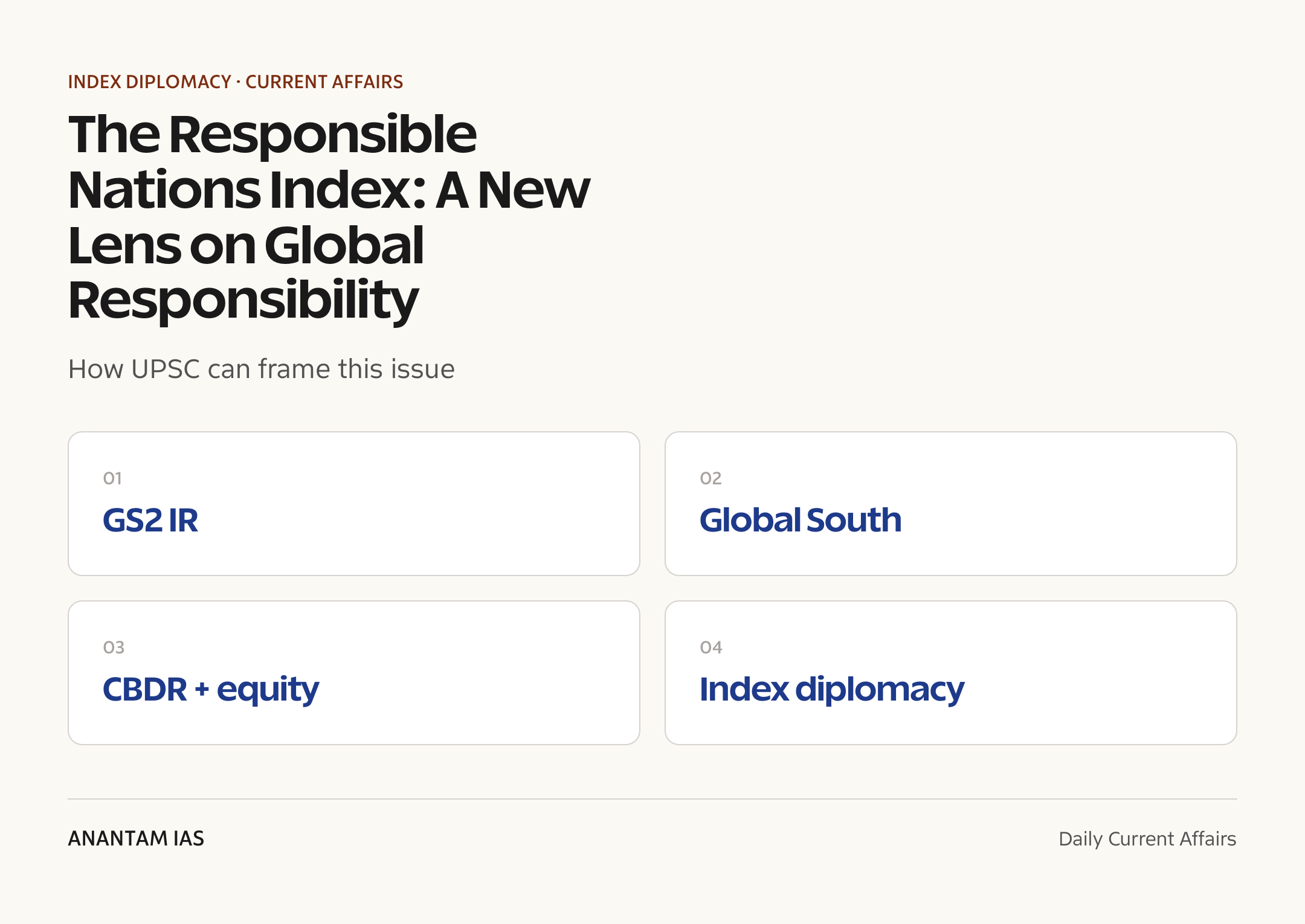
Index diplomacy and soft power
The RNI is an exercise in soft power — shaping global conversation through ideas and metrics, not coercion.
- Soft power is the ability to influence others through attraction, legitimacy and agenda-setting.
- Indices act as normative tools: they reward the behaviour they choose to measure and quietly penalise the rest.
- A widely-cited index gives India a recurring platform to frame debates on climate, debt and development.
- It complements India-led platforms such as the Voice of the Global South Summit and the International Solar Alliance.
- Builds on the goodwill of India’s G20 presidency and its ‘Vasudhaiva Kutumbakam’ framing.
How it compares with existing rankings
Several global indices already rate countries on slices of development and sustainability — the RNI distinguishes itself on framing and authorship.
- Human Development Index (UNDP) — health, education and income, but silent on a nation’s external conduct.
- SDG Index — tracks progress on the Sustainable Development Goals, largely an inward scorecard.
- Climate Change Performance Index — climate policy and emissions, but built by Western civil-society bodies.
- The RNI’s novelty is the ‘responsibility to others’ lens — peace, debt, cooperation — and its Global-South authorship.
- Its credibility will hinge on transparent methodology, verifiable data, and independence from political framing.
Criticisms and credibility risks
Any new index, especially a state-launched one, must guard against the very flaws it accuses others of.
- Perceived bias — a government-backed index risks being dismissed as self-serving unless governance is arm’s-length.
- Data quality — comparable, audited cross-country data on peace and cooperation is genuinely hard to assemble.
- Indicator selection — which themes are weighted, and how, embeds value judgments that critics will probe.
- Index fatigue — the global space is crowded; uptake by other governments and bodies is not guaranteed.
- Long-term influence depends on peer-reviewed transparency, not just diplomatic launch momentum.
Way Forward
Methodological credibility
- Publish a transparent, peer-reviewed methodology with open data sources and clear weightings.
- House the index in an arm’s-length body to insulate it from accusations of political framing.
Coalition-building
- Co-develop and validate the framework with Global-South partners and multilateral institutions to widen ownership.
- Anchor it to existing India-led platforms to give it a recurring institutional home and audience.
Sustained influence will come less from the launch and more from consistent annual releases, independent scrutiny, and demonstrable use of the rankings in real climate, debt and cooperation debates.
Conclusion
The Responsible Nations Index marks a shift from India being only a subject of global rankings to becoming an author of them. By re-centring the conversation on climate equity, peace, debt and cooperation, it embeds the developing world’s fairness concerns into the very act of measurement.
Its lasting value will rest on credibility, not optics. If the RNI stays transparent, evidence-driven and genuinely independent, it can mature into a durable instrument of India’s soft power and its push for reformed, more equitable multilateralism.
UPSC Practice Questions
Prelims MCQ 1
With reference to the principle of Common But Differentiated Responsibilities (CBDR), consider the following statements:
- It is a core principle under the UNFCCC and the Paris Agreement.
- It requires all countries to undertake identical, uniform emission-reduction commitments.
- It recognises the greater responsibility of nations with higher historical emissions and capacity.
How many of the above statements are correct?
(a) Only one (b) Only two (c) All three (d) None
Answer: (b) Only two
Explanation:
Statements 1 and 3 are correct. Statement 2 is wrong — CBDR explicitly rejects identical obligations, differentiating duties by historical contribution and respective capabilities.
Prelims MCQ 2
The ‘Responsible Nations Index’, launched by India, is best described as which of the following?
(a) A credit-rating system issued by the Reserve Bank of India (b) A composite index assessing countries on responsible global conduct such as climate equity, peace, debt sustainability and development cooperation (c) A United Nations treaty binding members to emission targets (d) A ranking of Indian states on environmental performance
Answer: (b) A composite index assessing countries on responsible global conduct such as climate equity, peace, debt sustainability and development cooperation
Explanation:
The RNI is an India-launched composite index ranking nations on their conduct as global citizens — climate equity, peace, debt and cooperation — not a credit rating, a treaty, or a state-level ranking.
UPSC Mains Questions
- Indices are increasingly instruments of foreign policy rather than neutral scorecards. In this context, examine the significance of India launching its own Responsible Nations Index for its Global-South leadership. (250 words)
- Discuss how the principles of climate equity and Common But Differentiated Responsibilities shape India’s stance in global climate negotiations, and how a responsibility-based index could advance that position. (250 words)
- ‘He who frames the metric frames the debate.’ Critically analyse the opportunities and credibility risks of state-launched global indices, with reference to the Responsible Nations Index. (150 words)
Sources: Ministry of External Affairs, Government of India and The Hindu.
Frequently Asked Questions
What is the Responsible Nations Index?
It is a composite index, launched by India, that ranks countries on how responsibly they act as global citizens. Instead of measuring wealth or governance checklists alone, it scores nations on themes such as climate action, equity, contribution to peace, debt sustainability, and development cooperation toward the developing world.
Why did India launch its own index?
Most influential global rankings originate in the West and embed its priorities. India argues several are opaque or biased against developing economies. By authoring its own credible index, India sets the agenda, reframes what ‘responsible’ conduct means, and strengthens its claim to be the Voice of the Global South.
How does the index treat climate responsibility?
It weights per-capita and historical (cumulative) emissions, not just current absolute output. This reflects the Common But Differentiated Responsibilities principle under the UNFCCC and Paris Agreement, ensuring early industrialisers who put most carbon into the atmosphere are judged on that historical burden rather than recent cuts alone.
How is the RNI different from the Human Development Index?
The HDI measures a country’s internal development — health, education and income. The Responsible Nations Index instead looks outward, at a nation’s conduct toward the rest of the world: its climate footprint, peace contribution, debt practices and cooperation. Its other distinction is its Global-South authorship rather than a Western origin.
What is index diplomacy?
Index diplomacy is the use of rankings and metrics as soft-power tools. Because indices reward the behaviour they choose to measure, the body that builds a widely-cited index gains agenda-setting power over global debates. Launching the RNI lets India shape conversations on climate, debt and development without coercion.
What are the main criticisms of such an index?
A government-backed index risks being seen as self-serving unless it is arm’s-length and transparent. Comparable cross-country data on peace and cooperation is hard to assemble, indicator weighting embeds value judgments, and the crowded ranking space makes uptake uncertain. Lasting credibility depends on peer-reviewed, independent methodology.
Source: https://anantamias.com/current-affairs/responsible-nations-index-2026/