Daily Digest
UPSC · Civil Services Examination
Current Affairs · Monday, 8 June 2026
Current affairs curated and edited by Anantam IAS faculty — pulled from The Hindu, PIB, IDSA, Foreign Affairs and the ministries. Read, annotate, revise.
Old Rajinder Nagar · Delhi 110005 · anantamias.com
The Ordinance Question before the SC
Why in News?
The President promulgated the Supreme Court (Number of Judges) Amendment Ordinance, 2026, increasing the number of Supreme Court judges from 33 to 37, excluding the Chief Justice of India, thereby raising the Court’s total sanctioned strength from 34 to 38. The move was justified on the grounds of pendency and the need to improve the efficiency of the apex court.
This move has drawn concern because the Court’s strength was increased by an Ordinance rather than a regular Act of Parliament. This raises a larger question: Can judicial independence be preserved when judges occupy posts created through a temporary executive-made law?
| UPSC Relevance: GS-2 Polity and Governance: Separation of Powers, Judiciary Prelims: Article 123, Article 124, Ordinance-making power, Collegium system Mains: Judicial independence, constitutional morality, ordinance-making power, separation of powers. |
Why was the Ordinance Issued?
- The Supreme Court has been facing a rising pendency burden. As per the National Judicial Data Grid, the Supreme Court had over 93,000 pending cases in early June 2026. The government’s stated rationale for increasing the Court’s strength was to improve case disposal, enable more regular Constitution Benches, and reduce delays.
- The Union Cabinet had earlier approved a Bill to increase the Court’s strength. However, instead of waiting for Parliament’s Monsoon Session, the executive used the Ordinance route under Article 123. This has triggered debate because an Ordinance is temporary and depends on subsequent parliamentary approval.
Constitutional Framework:
- Article 124(1): Strength of the Supreme Court: Article 124(1) provides that the Supreme Court shall consist of the Chief Justice of India and such number of other judges as Parliament may by law prescribe. Therefore, the sanctioned strength of the Supreme Court is not fixed permanently in the Constitution; it can be altered by law.
- Supreme Court (Number of Judges) Act, 1956: The number of judges has historically been increased through amendments to this Act. The latest Ordinance amends this law by increasing the number of puisne judges from 33 to 37.
- Article 123: Ordinance-making Power: Article 123 empowers the President to promulgate an Ordinance when Parliament is not in session, and immediate action is necessary. An Ordinance has the same force and effect as an Act of Parliament, but it must be laid before both Houses and ceases to operate six weeks after Parliament reassembles unless approved.
- Article 124(2): Appointment of Judges: Judges of the Supreme Court are appointed by the President after consultation with judges of the Supreme Court and High Courts. In practice, this has evolved into the Collegium system, where the judiciary has primacy in appointments.
The Core Constitutional Issue:
- The issue is not whether Parliament can increase the number of Supreme Court judges. It clearly can. The deeper issue is whether temporary, executive-made legislation should be used to create judicial seats in the highest constitutional court.
- A regular statute expresses the will of Parliament. An Ordinance, although legally valid for its duration, is an exceptional executive instrument. When judges are appointed to posts created by an Ordinance, their seats remain dependent on whether Parliament later converts the Ordinance into an Act.
- This creates a perception problem: a judge occupying an Ordinance-created post may appear to depend, indirectly, on the executive and Parliament for the continuation of that seat. Judicial independence includes not only actual independence but also the appearance of institutional detachment from the political branches.
Why the Ordinance Route is Controversial?
- Temporary Nature of Ordinances: An Ordinance may be withdrawn by the President, disapproved by Parliament, or lapse six weeks after Parliament reassembles. If the Ordinance creating additional judicial posts lapses, uncertainty may arise about the status of judges appointed to those posts.
- Security of Tenure: Supreme Court judges enjoy constitutional security of tenure. They can be removed only through the special process of impeachment under Article 124(4). However, if the very post to which a judge is appointed ceases to exist, a novel constitutional question arises: does the judge continue, or does the post disappear? This issue is largely untested in Indian constitutional law.
- Appearance of Executive Dependence: Judicial independence is not merely about appointment procedure. It also includes security of tenure, decisional freedom, and freedom from perceived obligation to the executive.
- Ordinance as a Bypass of Parliamentary Deliberation: The Cabinet had already cleared a Bill to expand the Court’s strength. Therefore, critics argue that the executive could have waited for Parliament. The use of an Ordinance in such circumstances raises the question whether there was a genuine urgency or merely administrative convenience.
- Institutional Inconsistency: The Supreme Court has historically warned against excessive use of Ordinances.
- In D.C. Wadhwa v. State of Bihar, the Court criticised repeated repromulgation of Ordinances as a fraud on the Constitution. Ordinances are meant for extraordinary situations, not routine law-making.
- In Krishna Kumar Singh v. State of Bihar, a seven-judge Bench held that ordinance-making power cannot become a parallel source of legislation.
- Separation of Powers: The executive, legislature and judiciary must maintain institutional distance. When the executive creates temporary judicial posts, the balance between cooperation and dependence becomes delicate.
Arguments supporting the Ordinance:
- Pendency Crisis: The Supreme Court’s pendency has crossed 93,000 cases. Additional judges can help increase disposal capacity, especially if supported by better case management.
- Need for Constitution Benches: A larger Court can enable more regular Constitution Benches while allowing smaller benches to continue handling routine appeals and special leave petitions.
- Ordinance has Force of Law: Under Article 123, an Ordinance has the same force and effect as an Act of Parliament during its validity. Therefore, appointments made under it are not automatically unconstitutional.
- Parliamentary Approval Likely: Since the government has the numbers and the Opposition may be reluctant to unsettle already appointed judges, the Ordinance is likely to be replaced by an Act.
- Judicial Appointments followed Collegium Process: The judges were recommended by the Supreme Court Collegium and appointed under Article 124(2). Thus, the appointment process itself was not bypassed.
Parliament should debate and pass the Bill without delay to remove uncertainty over the status of the additional posts. Changes affecting constitutional courts should normally be made through regular parliamentary legislation, not temporary executive law.
The Supreme Court’s authority rests on public confidence, and that confidence requires visible distance from executive convenience.
UPSC Mains Question:
Q. “The use of Ordinance-making power to alter the strength of the Supreme Court raises questions not only of legality but also of constitutional propriety.” Discuss in the context of judicial independence and separation of powers.
Source: https://anantamias.com/current-affairs/the-ordinance-question-before-the-sc/
Indonesia is a key pillar of India’s Act East Policy
Why in News?
The External Affairs Minister of India and his Indonesian counterpart co-chaired the 8th Indonesia-India Joint Commission Meeting in New Delhi.
The Prime Minister of India is scheduled to visit Indonesia in July 2026 as part of a broader three-nation Indo-Pacific tour that will also include stops in New Zealand and Australia.
| UPSC Relevance: GS-2 International Relations: Bilateral Relations Mains: India-Indonesia Relations |
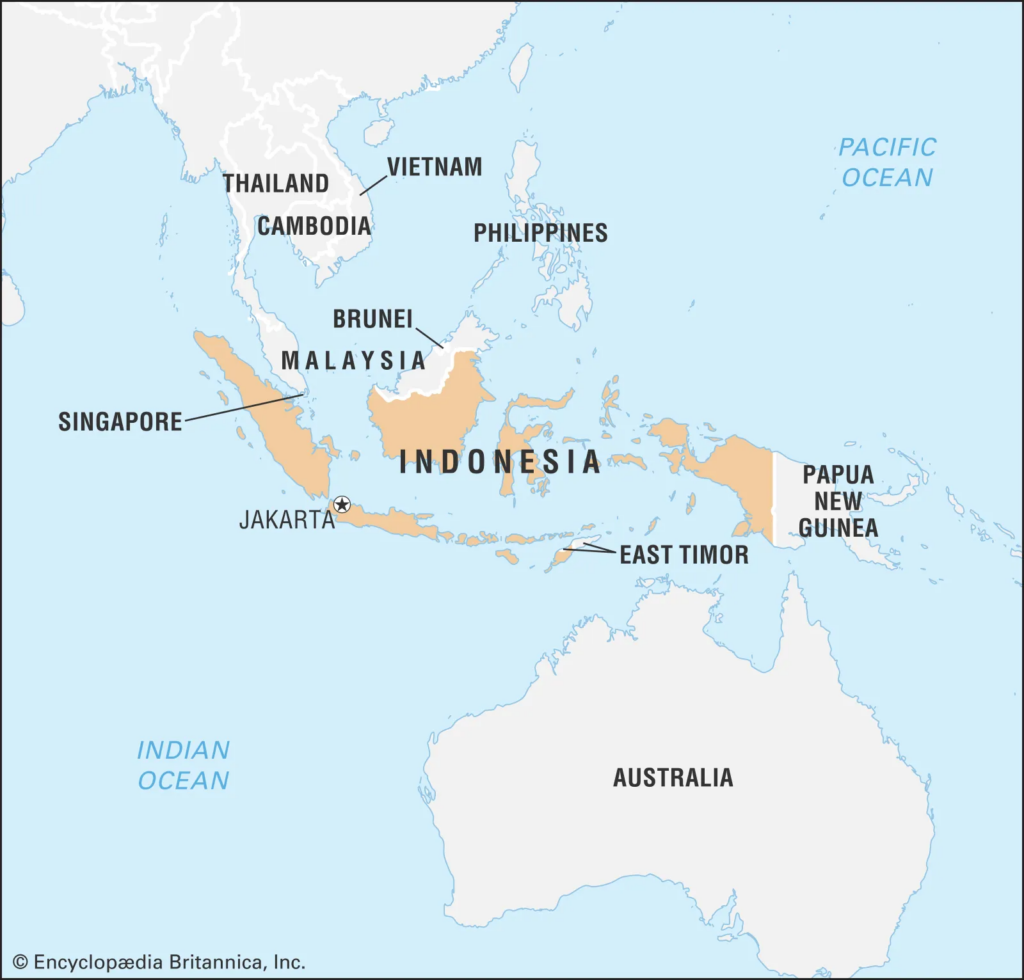
8th India-Indonesia Joint Commission Meeting:
- The two Ministers reviewed the full spectrum of bilateral relations under the India-Indonesia Comprehensive Strategic Partnership and discussed avenues for further strengthening cooperation in political, defence and security, maritime, trade and investment, pharma and healthcare, digital, energy, connectivity, space, education, consular and culture domains, and people-to-people exchanges.
The Ministry of External Affairs (MEA) reaffirmed that Indonesia is a key pillar of India’s Act East Policy.
India-Indonesia Relations: A Key Pillar of India’s Act East Policy
India and Indonesia are two major maritime democracies of the Indo-Pacific. Both are large, developing economies, members of the G20, and important voices of the Global South.
For India, Indonesia is not merely another ASEAN partner. It is central to India’s Act East Policy, Indo-Pacific strategy and maritime security architecture.
For Indonesia, India provides a major economic, defence and diplomatic partner beyond its traditional engagements with China, Japan, Australia and the West.
Historical and Civilisational Linkages:
- India and Indonesia share deep cultural and civilisational ties dating back to ancient maritime trade across the Bay of Bengal and the Indian Ocean.
- The Ramayana and Mahabharata continue to have a strong cultural presence in Indonesia, especially in Java and Bali.
- The Bali Yatra festival in Odisha commemorates ancient maritime links between eastern India and Southeast Asia. These cultural memories provide a soft-power foundation for modern diplomacy.
Evolution of Bilateral Relations:
- India and Indonesia established diplomatic relations in 1950. Both countries were active supporters of decolonisation and played a major role in the Bandung Conference of 1955, which laid the foundation for Afro-Asian solidarity and later the Non-Aligned Movement.
- In the post-Cold War period, relations gained momentum through India’s Look East Policy, later upgraded to the Act East Policy.
- In 2018, during the Indian Prime Minister’s visit to Jakarta, the relationship was elevated to a Comprehensive Strategic Partnership.
- Both countries have adopted the Shared Vision of India-Indonesia Maritime Cooperation in the Indo-Pacific, giving a clear maritime and strategic orientation to the partnership.
Key Pillars of India-Indonesia Relations:
Strategic and Maritime Cooperation:
- Indonesia’s location makes it crucial for India’s maritime strategy. It sits at the junction of the Indian and Pacific Oceans and controls access to key sea lanes, including the Malacca, Sunda and Lombok Straits. These routes are vital for India’s trade, energy security and naval mobility.
- India and Indonesia share concerns over piracy, illegal fishing, trafficking, maritime terrorism and unilateral attempts to alter the status quo in the Indo-Pacific. Their cooperation includes naval exercises such as Samudra Shakti, coordinated patrols, staff-level talks and port calls.
- The 2018 Shared Vision on Maritime Cooperation provides a framework for cooperation in maritime safety, blue economy, disaster risk reduction, connectivity and freedom of navigation.
- The development of Sabang Port near the Strait of Malacca has also been discussed as a strategic connectivity opportunity.
Defence and Security Cooperation:
- A major area of discussion has been Indonesia’s interest in the BrahMos supersonic cruise missile system, jointly developed by India and Russia. If finalised, such a deal would strengthen India’s position as a defence exporter and deepen strategic trust with Indonesia.
- Both countries cooperate on counter-terrorism, cyber security, de-radicalisation and intelligence-sharing, which are significant given the presence of transnational extremist networks in the wider Indo-Pacific region.
Economic and Trade Relations:
- Indonesia is currently India’s second-largest trade partner in the ASEAN grouping, and two-way trade has increased from $4.3 billion in 2005-06 to $28.15 billion in 2024-25. India is the second largest buyer of coal and the biggest buyer of crude palm oil from Indonesia. However, the trade relationship is marked by a large trade deficit for India, mainly due to high imports of coal and palm oil.
- Indonesia is rich in nickel, tin, bauxite and other minerals that are vital for electric vehicles, batteries and clean energy technologies. India’s growing focus on critical mineral security makes Indonesia a natural partner in building resilient supply chains.
ASEAN and Act East Policy:
- Indonesia is the largest country in ASEAN by population, geography and economy. Indonesia can help India deepen its presence in Southeast Asia, especially as India seeks to balance China’s growing influence in the region.
Indo-Pacific and Regional Order:
- India and Indonesia share a vision of an open, inclusive, rules-based Indo-Pacific. Both support freedom of navigation, peaceful settlement of disputes and respect for international law, including the United Nations Convention on the Law of the Sea (UNCLOS). Their partnership can help prevent the Indo-Pacific from becoming a theatre of great-power rivalry alone.
Multilateral Cooperation:
- India and Indonesia cooperate in several multilateral forums, including the United Nations, G20, ASEAN-led mechanisms, the Indian Ocean Rim Association and BRICS.
- Indonesia became a full member of BRICS in 2025, creating an additional platform for India-Indonesia cooperation on Global South issues.
Significance for India:
India-Indonesia relations are significant for five major reasons.
- Indonesia strengthens India’s Act East Policy by serving as a gateway to ASEAN and the wider Indo-Pacific.
- Maritime cooperation with Indonesia helps India secure vital sea lanes and strengthen its presence near the Malacca Strait.
- Indonesia supports India’s energy and critical mineral security through coal, palm oil, nickel and other resources.
- The partnership helps India expand its defence exports and security cooperation in Southeast Asia.
- Cooperation with Indonesia enhances India’s Global South diplomacy, especially in G20, BRICS, ASEAN-led forums and climate negotiations.
Challenges in India-Indonesia Relations:
Despite strong potential, the relationship faces several constraints.
- Trade Imbalance: India runs a significant trade deficit with Indonesia due to high imports of coal and palm oil. Without diversification, economic ties may remain commodity-heavy and vulnerable to price shocks.
- Underdeveloped Connectivity: Direct shipping, air connectivity and business linkages remain below potential. Weak connectivity limits tourism, investment and supply-chain integration.
- China Factor: Indonesia has deep economic ties with China, especially in infrastructure, mining and investment. While Indonesia follows an independent foreign policy, China’s influence can shape its strategic choices.
- Slow Defence Deals: Although defence cooperation is growing, major defence transactions such as the BrahMos deal have moved slowly. Bureaucratic delays, financing issues and competing suppliers remain obstacles.
- Limited Public Awareness: Despite civilisational links, India and Indonesia do not occupy enough space in each other’s public imagination. Cultural diplomacy remains underutilised.
A stronger India-Indonesia partnership can help create a more balanced, inclusive and rules-based Indo-Pacific order.
Mains Practice Question:
India-Indonesia relations are central to India’s Act East Policy and Indo-Pacific vision. Discuss the strategic, economic and maritime dimensions of the partnership.
Source: https://anantamias.com/current-affairs/indonesia-is-a-key-pillar-of-indias-act-east-policy/
From Borderland to India’s Strategic Resource Frontier
Why in News?
The Northeast India has traditionally been viewed through the lens of border security, insurgency, connectivity deficits and geopolitical vulnerability. Recent official references to several northeastern States as mineral-rich frontiers point to an emerging shift.
The region is increasingly being framed not only as a borderland to be secured or a corridor to be connected, but also as a strategic resource frontier.
| UPSC Relevance: GS-2 Polity and Governance: Federalism, Tribal Rights; GS-3 Economy: Critical minerals, Energy Mains: Critical minerals, Tribal Rights, Significance of North-East India |
Critical Minerals:
- Critical minerals are minerals that are:
- Essential for economic and national security.
- Important for emerging technologies and industrial production.
- Vulnerable to supply disruptions due to import dependence or geopolitical risks.
- Examples:
- Lithium: Essential for EV batteries and grid storage.
- Cobalt & Nickel: Key for high-energy-density batteries and superalloys.
- Graphite: Used in lithium-ion battery anodes.
- Rare Earth Elements: Critical for wind turbines, EV motors, and defence electronics.
- Vanadium: Used in grid-scale energy storage (vanadium redox batteries) and as a steel strengthening agent.
- Chromium: Used in stainless steel and defence alloys.
- In 2023, India amended the Mines and Minerals (Development and Regulation) Act, 1957, to designate 24 minerals as critical minerals, and a separate list of 30 critical minerals was released by the Ministry of Mines.
India’s dependence on imports for several critical minerals makes domestic exploration a matter of supply-chain security, not merely economic policy. China currently dominates global REE processing (over 85% of refining capacity), and disruptions in supply chains have underlined the strategic vulnerability of import dependence.
Northeast in India’s Critical Mineral Push:
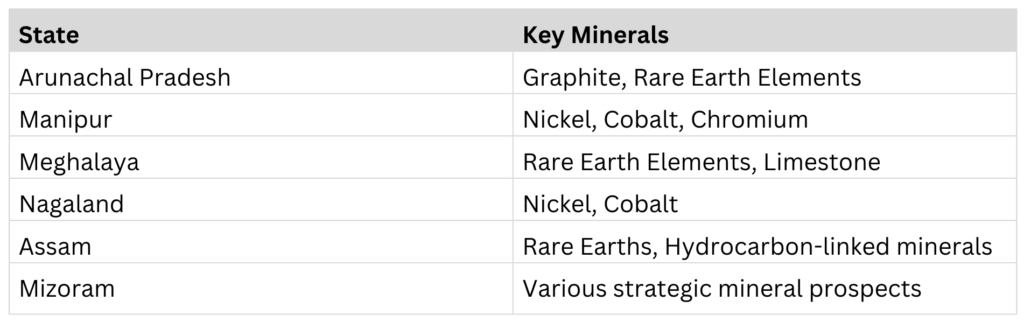
- The Geological Survey of India (GSI) conducted 43 critical mineral exploration projects across the northeastern states during the field seasons of 2022-23, 2023-24, and 2024-25.
- Exploration covers Lithium, Rare Earth Elements, Graphite, Vanadium, Nickel and Cobalt.
Shift from Border Security to Resource Security:
- For decades, National Policy towards the Northeast was shaped by four dominant frames: security, connectivity, insurgency and integration. The region was seen as a sensitive borderland sharing international boundaries with China, Myanmar, Bangladesh, Bhutan and Nepal. Infrastructure development was often justified in terms of military mobility, border management and national integration.
- In the last decade, another frame has gained importance: the Northeast as a corridor under the Act East Policy. Roads, railways, waterways and border trade projects have been linked to India’s economic and strategic outreach towards Southeast Asia.
- The emerging critical-mineral discourse adds a third frame: the Northeast as a resource base for India’s green and technological transition. This marks a significant transformation. Territorial security, connectivity and resource security are now converging.
However, this convergence also creates new tensions. For the local communities, it can evoke fears of extraction, demographic pressure, ecological disruption and loss of control over land.
Key Challenges in Mineral Extraction from North-East India:
- Complex Land Governance: Much of the land in the Northeast is governed by customary ownership systems, not individual land titles. Formal mining laws may not always align with local customary practices. Disputes may arise over who has the authority to give consent for exploration or mining.
- Constitutional and Legal Sensitivities: Several areas are protected under the Sixth Schedule and special provisions, such as Article 371. Autonomous District Councils and traditional institutions have powers over land, forests and local governance. Mining projects may face legal and political resistance if these institutions are bypassed.
- Trust Deficit and Political Sensitivity: The region has a history of insurgency, militarisation, ethnic conflicts and alienation from mainland policy-making. Communities may see mining projects as another form of external control over their land.
- Environmental Fragility: The Northeast lies in one of the world’s most biodiverse and ecologically sensitive zones. Mining can lead to deforestation, habitat loss, soil erosion and biodiversity decline.
- Water and River-System Risks: Mining can contaminate rivers, streams and groundwater through waste discharge, heavy metals and sedimentation. Acid mine drainage and unregulated dumping can cause long-term ecological damage.
- Livelihood Disruption: Local communities depend on forests, shifting cultivation, horticulture, livestock and minor forest produce. Mining may reduce access to common lands, forests and water sources.
- Risk of Displacement: Even limited mining can cause indirect displacement by restricting access to forests, grazing lands and sacred sites. In tribal areas, displacement is not only economic but also cultural and social.
- Infrastructure Deficit: Many mineral-bearing areas lack reliable roads, rail links, power supply and logistics infrastructure. Building infrastructure in mountainous terrain is costly, and poor connectivity can make extraction commercially unviable.
Way Forward:
- Strengthen mandatory Free, Prior and Informed Consent (FPIC) mechanisms, in line with ILO Convention 169 and the UN Declaration on the Rights of Indigenous Peoples (UNDRIP), before initiating mineral exploration in Scheduled and tribal areas.
- Ensure District Mineral Foundation (DMF) funds mandated under the MMDR Act (2015) are transparently governed, locally administered, and directed toward health, education, and livelihood infrastructure in affected communities.
- Develop a Northeast-specific Critical Mineral Policy that integrates geological surveys with prior social impact assessments, environmental impact assessments, and conflict-sensitivity analyses, particularly in areas affected by ongoing ethnic conflict.
- Build local processing and value-addition capacity (rather than extracting raw ore) to prevent the northeast from becoming a supplier of primary commodities while manufacturing benefits accrue elsewhere in the national or global economy.
- Revitalise Autonomous District Councils under the Sixth Schedule, ensuring they have the technical capacity and legal authority to meaningfully participate in (and veto if necessary) mineral development decisions within their jurisdictions.
- Adopt cumulative environmental impact assessments at the river-basin and ecosystem level, rather than project-by-project approvals, to protect the northeast’s biodiversity corridors and the Brahmaputra basin’s hydrology.
The real test of India’s critical mineral strategy will not be whether it can locate minerals beneath the hills, but whether it can build a model of development that respects the people who live above them. Resource security must be built on ecological prudence, constitutional sensitivity and democratic inclusion.
Source: https://anantamias.com/current-affairs/from-borderland-to-indias-strategic-resource-frontier/
Wildlife Trail leads to Prehistoric Past in the Aravalli
Why in News?
A wildlife trail in the Bhondsi stretch of the Aravalli forests in Gurugram has led to the identification of ancient rock markings, cup-shaped depressions known as cupules, geometric engravings, possible stone game boards, a foot-shaped engraving and stone tools.
| UPSC Relevance: GS-1 Indian History: Archaeological sites, Ancient human settlements Prelims: Bhondsi stretch of the Aravalli forests: Location & key findings. |

Prehistoric Past in the Aravalli: Recent Findings
The site is located near the Bhuvneshwari Mata Mandir complex and forms part of the wider Delhi-Gurugram-Faridabad Aravalli landscape. The Bhondsi cluster reportedly contains:
- Petroglyphs: Images or designs carved, engraved or pecked onto rock surfaces.
- Cupules: Cup-shaped depressions carved into stone, often associated with ritual, symbolic or repeated human activity.
- Geometric engravings: Grid-like patterns that may indicate symbolic communication, counting, ritual use or recreational activity.
- Possible stone game boards: Engraved patterns that may point towards later social and leisure practices.
- Foot-shaped engraving: A large foot-like mark, possibly carrying ritual, symbolic or ceremonial significance.
- Stone tools: Artefacts such as hand axes, cleavers or flakes that may belong to different prehistoric phases.
Archaeological Significance:
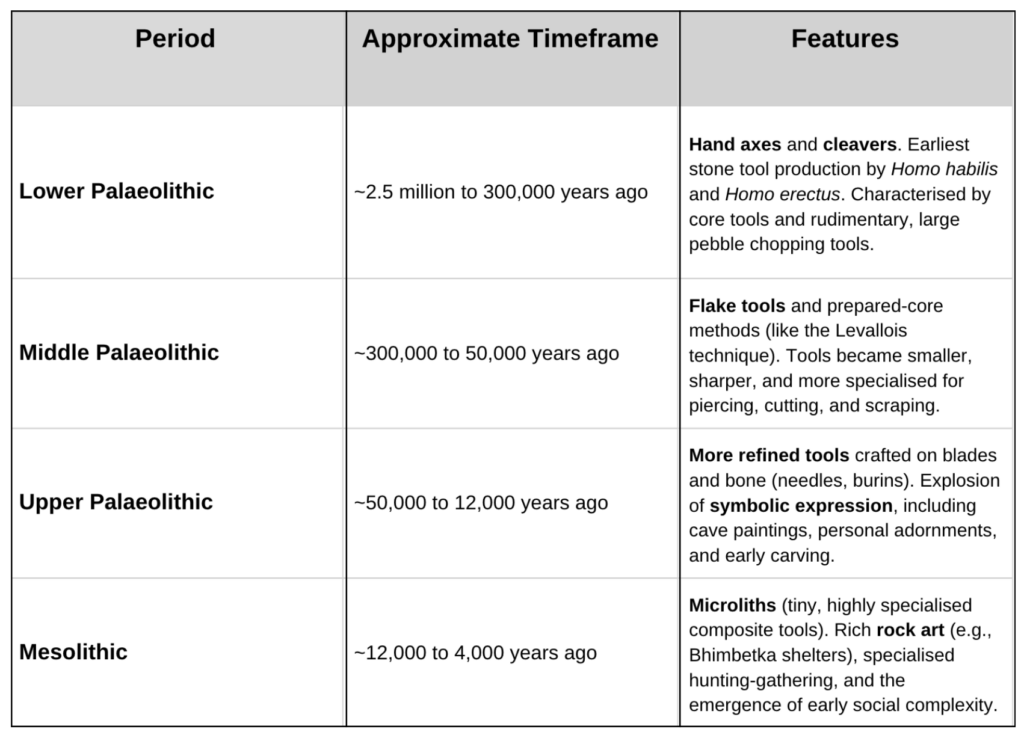
- Evidence of Long Human Presence: The site may indicate continuity of human activity across different prehistoric phases. Stone tools such as hand axes and cleavers are usually associated with early Palaeolithic traditions, while finer tools and symbolic engravings may belong to later phases such as the Middle Palaeolithic, Upper Palaeolithic or Mesolithic.
- Link between Tool-Making and Symbolic Life: Prehistoric studies often distinguish between utilitarian activity and symbolic activity. Stone tools indicate survival-related skills such as cutting, scraping, hunting or processing food. Rock engravings, cupules and foot marks, on the other hand, may indicate ritual behaviour, group identity, memory-making or social communication.
- Aravalli as a Prehistoric Cultural Corridor: The Bhondsi finding is not isolated. Similar prehistoric markers have been reported from the wider Aravalli landscape, including Mangar Bani, Sanjay Van, JNU Ridge, Surajkund, Dhauj, Kot, Mohabatabad and stretches towards Alwar. This suggests that the Aravalli hills may have functioned as a prehistoric cultural corridor, offering early humans raw material, water sources, rock shelters, forest resources and vantage points.
The team has been using LiDAR (Light Detection and Ranging) scanning – a laser-based remote-sensing technique that captures the shape and depth of surfaces in high detail – to create detailed digital records of the petroglyphs.
If confirmed, the Bhondsi evidence may help scholars understand how early humans in the Aravalli region moved from basic tool-making to more complex forms of symbolic expression. However, these findings require systematic dating, stratigraphic study, tool analysis and peer-reviewed publication before firm chronological claims can be made.
Source: https://anantamias.com/current-affairs/wildlife-trail-leads-to-prehistoric-past-in-the-aravalli/