Daily Digest
UPSC · Civil Services Examination
Current Affairs · Sunday, 9 November 2025
Current affairs curated and edited by Anantam IAS faculty — pulled from The Hindu, PIB, IDSA, Foreign Affairs and the ministries. Read, annotate, revise.
Old Rajinder Nagar · Delhi 110005 · anantamias.com
Tropical Forest Forever Facility (TFFF)

Why in News?
India announced it would join the Tropical Forest Forever Facility (TFFF) as an ‘Observer’ at the Leaders’ Summit in Belem, Brazil, held ahead of the climate conference (COP).
UPSC Relevance
Prelims, Environmental initiatives
GS3, Conservation, Environmental Pollution and Degradation, Environmental Impact Assessment.
PYQ
2025
Consider the following statements:
Statement I: At the 28th United Nations Climate Change Conference (COP28), India refrained from signing the “Declaration on Climate and Health”.
Statement II: The COP28 Declaration on Climate and Health is a binding declaration; and if signed, it becomes mandatory to decarbonize health sector.
Statement III: If India’s health sector is decarbonized, the resilience of its health-care system may be compromised.
Which one of the following is correct in respect of the above statements?
a) Both Statement II and Statement III are correct and both of them explain Statement I
b) Both Statement II and Statement III are correct but only one of them explains Statement I
c) Only one of the Statements II and III is correct and that explains Statement I
d) Neither Statement II nor Statement III is correct
What is TFFF?
- An innovative financing mechanism to incentivize long-term forest conservation at scale mooted by Brazil.
- The initiative consists of a secretariat (TFFF) and an investment fund (Tropical Forest Investment Fund) that will:
- Invest sponsor money in emerging market bonds.
- Avoid investments in fossil fuels, coal, and any sector linked to deforestation.
- TFFF could support over 70 Tropical Forest Countries that currently host over 1 billion hectares of moist tropical and subtropical broadleaf forests.
- Successful countries will receive large-scale, predictable, long-term funding to support the conservation of standing tropical forests.
- TFFF sees Tropical Forest Countries as the holders of a critical global public good that provides critical ecosystem services to the whole world.
- Annual payments to Tropical Forest Countries are performance-based and do not rely on short-term, project-based grants subject to political cycles or changing priorities.
- Countries will have sovereignty over how they spend the payments, provided they serve conservation outcomes.
- TFFF will complement other forest finance programs, including REDD+ and forest carbon markets.
The Investment Fund structure

Multifaceted significance of Tropical forests

Ecological & Climatic Importance
- Biodiversity Hotspot: They are the planet’s epicenters of biodiversity. Tropical forests cover less than 7% of the Earth’s land surface but harbor over 50% of the world’s terrestrial plant and animal species, including countless species yet to be discovered.
- Climate Regulation and Carbon Sink: Often called the “Lungs of the Planet,” tropical forests play a paramount role in regulating the global climate. They are enormous carbon sinks, absorbing and storing massive amounts of carbon dioxide (CO2) through photosynthesis, effectively mitigating the effects of global warming. Deforestation, conversely, turns them into a major source of greenhouse gas emissions.
- Hydrological Cycle: They are integral to the global water cycle. Through the process of evapotranspiration, they release vast quantities of water vapor into the atmosphere, which influences rainfall patterns far beyond their physical boundaries, even affecting agriculture in distant regions.
- Soil and Water Conservation: The dense root systems of the trees stabilize soil, preventing erosion and landslides, while the forest canopy intercepts heavy rainfall, reducing flood risk and ensuring a steady, filtered supply of freshwater to millions of people.
- Ecosystem Services: Beyond measurable goods, they provide essential ecosystem services that are difficult to assign a price to, such as air purification, natural pest control, and pollination, which benefit humanity globally.
Economic & Medicinal Value
- Natural Pharmacy: They are a vast source of medicinal plants. Over a quarter of modern medicines, including treatments for conditions like cancer and malaria, are derived from rainforest plants. The destruction of these forests risks the loss of countless potential new drugs and cures.
- Food and Commodities: Many common foods and spices originated in tropical forests, including coffee, cocoa, bananas, sugar, avocados, and vanilla. They also provide valuable raw materials, such as rubber, resins, and high-quality timber (though sustainable harvesting is critical).
- Ecotourism: Properly managed, tropical forests are a magnet for ecotourism, generating significant revenue and providing livelihoods for local communities, which, in turn, creates a powerful economic incentive for conservation.
Socio-Cultural Significance
- Indigenous Livelihoods: Tropical forests are home to millions of Indigenous Peoples and local communities who have lived in harmony with the environment for generations. Their cultures, languages, and traditional knowledge of the forest and its resources are intimately linked to its survival.
What Makes TFFF Innovative?

What does TFFF not do ?
The TFFF will not :
- Generate carbon or biodiversity credits but will help value ecosystem services.
- Finance projects directly.
- Determine how Tropical Forest Countries (TFCs) will use the funds awarded to them.
- Replace other forest finance initiatives and mechanisms, including REDD+ or existing grant programs, but rather complement them by rewarding results in terms of conserving and restoring tropical forests.
- Require sovereign sponsors to make grants to support the Facility.
- Create any financial obligations for TFCs, even in the event of underperformance of the TFFF’s financial model.
Source: https://anantamias.com/current-affairs/tropical-forest-forever-facility-tfff/
Prelims Nuggets
Trishul Exercise (TSE -2025)

- It is a major tri-services exercise (TSE) involving the Indian Army, Navy, and Air Force, which is taking place in October/November 2025.
- Location : along India’s western border, focusing on the desert and Sir Creek regions of Rajasthan and Gujarat.
- The exercise aimed to validate joint operational readiness across land, air, and sea, enhance interoperability between the services, and test integrated capabilities like (Intelligence, Surveillance and Reconnaissance) ISR, electronic warfare, and cyber warfare.
- It was a large-scale drill that involved a variety of assets, including Rafale and Su-30MKI jets, T-90 tanks, and Kolkata-class destroyers, and emphasized the use of indigenous systems to support the “Aatmanirbhar Bharat” initiative.
Operation White Cauldron

- The operation was conducted by the Directorate of Revenue Intelligence (DRI) under the Ministry of Finance, an intelligence and enforcement agency of the Government of India.
- The primary goal was to detect and dismantle a multi-state network involved in the illegal manufacturing of synthetic drugs, specifically Alprazolam, a controlled substance under the NDPS Act, 1985.
- It successfully dismantled a clandestine factory manufacturing the psychotropic substance Alprazolam in Valsad, Gujarat.
- Alprazolam is a prescription medication belonging to the benzodiazepine class of drugs. It acts as a central nervous system (CNS) depressant, working by enhancing the effect of a neurotransmitter called gamma-aminobutyric acid (GABA) in the brain to produce a calming and muscle-relaxing effect.
Rhesus Macaque

- The Standing Committee of the National Board for Wildlife (SC-NBWL), chaired by Union Environment Minister Bhupender Yadav, recommended reinstating the Rhesus Macaque species under Schedule II of the Wildlife (Protection) Act, 1972.
- The goal is to restore statutory protection, enable enforcement against illegal capture and cruelty, and regulate its scientific management.
- State governments have been directed to prepare detailed, site-specific mitigation plans to identify and categorize areas of conflict.
- Ministry officials noted that reinstatement under Schedule II is viable as Section 11 of the Act gives states the power to deal with wildlife species in conflict.
- The Rhesus Macaque (Macaca mulatta), colloquially rhesus monkey, is a species of Old World monkey in the Macaca genus.
- They can live in a wide range of environments, from forests and shrublands to coastal areas and even cities amidst human settlements, as long as there is a food source.
- They live in large, social groups (troops) of 20 to 200 individuals, with a complex, matrilineal social structure.
- Primarily herbivores, they eat fruits, seeds, leaves, and roots, but are omnivores also and also eat insects, spiders, and other small animals.
- They communicate using a variety of facial expressions, vocalizations, and body postures.
- They are diurnal animals that can be both arboreal and terrestrial, spending time in both trees and on the ground. They are also good swimmers.
- Rhesus macaques have been instrumental in scientific breakthroughs due to their genetic similarity to humans, including the development of vaccines.
- A rhesus macaque named Albert II was the first primate astronaut in 1948.
- Experiments have shown that rhesus macaques recognize themselves in a mirror, which indicates self-awareness.
- They have specialized, pouch-like cheeks that allow them to store and carry food.
- Mating in large groups, females may split off to form new groups when the troop size reaches 80 to 100 members.
- IUCN Status : Least Concern
Electromagnetic Aircraft Launch System (EMALS)

- China has officially commissioned its third and most advanced aircraft carrier, the Fujian.
- It is equipped with an Electromagnetic Aircraft Launch System (EMALS), featuring electromagnetic catapults. This technology has so far only been used by the US carrier USS Gerald R. Ford.
- Function: EMALS uses electric power to launch aircraft from the carrier’s deck.
- Advantage: Unlike traditional steam catapults, EMALS provides smoother acceleration, enabling the launch of heavier and more advanced aircraft and providing more power for advanced systems.
| Feature | Electromagnetic Aircraft Launch System (EMALS) | Steam Catapults |
| Mechanism | Uses an electrically powered linear induction motor to propel a carriage along a track. | Uses highly pressurized steam that drives a piston down a cylinder. |
| Acceleration | Smoother and more constant acceleration force. | Force is highest initially (a distinct “jolt”) and drops off as the steam expands. |
| Control / Precision | High precision with a closed-loop feedback system, allowing launch force to be precisely tailored to each aircraft’s weight and type. | Fixed launch force (all-or-nothing); difficult to adjust for different aircraft, which can stress lighter airframes. |
| Aircraft Range | Can launch a wider variety of aircraft, from heavy fighter jets to light Unmanned Aerial Vehicles (UAVs). | Limited range of aircraft; often unable to launch very lightweight UAVs safely. |
| Efficiency & Space | More efficient (up to 90% power conversion), lighter, and requires less space below deck. | Inefficient (around 4-6% useful work), massive, and requires extensive piping and water systems. |
| Maintenance | Requires less maintenance and fewer personnel to operate. | Requires high maintenance and a large crew to operate. |
Brain Atlas

- Scientists have completed a first draft of atlases of the ‘developing’ human and mammalian brain.
- The Allen Brain Atlas was the first to provide a comprehensive, anatomically and genomically complete 3D map of the human brain, released to the public in 2010.
- Developed by the BRAIN Initiative Cell Atlas Network (BICAN), USA’s National Institute of Health.
- Goal: To comprehensively map how various types of brain cells emerge and mature from early embryonic/fetal stages through to adulthood.
- Subjects: The research focused on human and mouse brain cells.
- Methodology: Scientists mapped the development of different brain cell types and tracked how genes are turned on or off within the cells.
- Discoveries:
- Identified key genes controlling brain processes.
- Uncovered commonalities between human and animal brains.
Source: https://anantamias.com/current-affairs/prelims-nuggets-4/
The Crisis of Incarceration: India’s Undertrial Dilemma

Context: The Indian criminal justice system faces a profound challenge in the form of its massive and disproportionate undertrial population. An undertrial prisoner is an individual detained in custody while awaiting trial, embodying the principle of “innocent until proven guilty.” Their prolonged detention violates fundamental rights, overwhelms the prison infrastructure, and undermines public faith in the judiciary, creating a crisis that demands immediate and comprehensive reform.
1. The Elephant in the Room: State of Undertrials
The scale of pre-trial detention in India is staggering, far exceeding global averages:
| Metric | Data Point | Substantiating Example/Source |
| Prison Population Share | 76% of all inmates are undertrials (up from 66% in 2012). | NCRB, Prison Statistics India 2022/India Justice Report 2025. This means only one in four prisoners is a convicted person. |
| Overcrowding Rate | Indian prisons operate at 131% occupancy (as of 2022). | Supreme Court’s Centre for Research and Planning. Prisons house 573,220 inmates against a capacity of 436,266. |
| Socio-Economic Bias | Two in three undertrials belong to SC, ST, or OBC communities. | Latest NCRB data (2023). Their representation is disproportionately higher than their share in the national population. |
| Youth Incarceration | Nearly 49% of undertrials are in the 18-30 age group. | NCRB data (2023), highlighting that the youth, who often lack strong socio-economic support, are highly overrepresented. |
| Prolonged Detention | Over 11,448 undertrials have been in jail for more than five years (tripled since 2012). | India Justice Report 2025. |
| Ineffective Bail Scheme | Only 144 prisoners received financial support through the Poor Prisoners Bail Scheme between 2023 and July 2025. | Government data cited in an IndiaSpend analysis, indicating very low implementation impact. |
2. Legal Framework: Bail is the Rule, Jail is the Exception
The law explicitly provides mechanisms for the release of undertrials, anchored in fundamental constitutional rights.
A. Constitutional Anchor: Right to Speedy Trial
- Article 21 (Right to Life and Personal Liberty): The Supreme Court, in the landmark case of Hussainara Khatoon v. Home Secretary, State of Bihar (1979), established that a speedy trial is an essential ingredient of the “reasonable, fair, and just” procedure guaranteed by Article 21. Prolonged detention without trial is a violation of this fundamental right.
- Example: This judgment led to the release of thousands of undertrials in Bihar who had been detained for periods longer than the sentence they would have served if convicted.
B. Statutory Mechanisms for Deemed Bail
- Section 436A, CrPC (Code of Criminal Procedure):
- Eligibility: An undertrial accused of a non-capital offense (not punishable by death or life imprisonment) is eligible for release on a personal bond after serving half of the maximum sentence for the alleged offense.
- Section 479, BNSS (Bharatiya Nagarik Suraksha Sanhita), 2023:
- This new provision relaxes the bail standard specifically for first-time offenders (those without prior convictions).
- Relaxed Standard: A first-time offender must be released on bond after serving one-third of the maximum sentence.
- In News Context: The Union Home Minister emphasized expediting the release of undertrials who have served more than one-third of their maximum sentence to align with this new law. The Supreme Court has also ruled that these relaxed bail provisions would apply retrospectively.
3. Crisis Implications: The Human Cost
The undertrial crisis has severe implications, extending beyond mere overcrowding:
| Implication | Description |
| Violation of Human Rights | Prolonged detention violates the presumption of innocence (Article 20(3)) and the Right to Speedy Trial (Article 21). |
| Judicial Backlog | The high proportion of undertrials exacerbates case pendency, delaying justice for all. The system is choked at the pre-trial stage. |
| Socio-Economic Impact | The detention of primarily poor and marginalized individuals affects their access to justice (unable to afford private lawyers) and their family’s socio-economic well-being. |
| Mental Health & Degradation | Long periods of incarceration without conviction cause severe psychological distress, anxiety, and a sense of hopelessness, often compounded by inhumane living conditions due to overcrowding. |
| Erosion of Trust | Delays and denial of justice erode public confidence in the judicial system’s ability to provide fair and timely outcomes. |
4. Roadmap for Reform: The Way Forward
Addressing this crisis requires a multi-pronged approach encompassing judicial, administrative, and legislative reforms.
A. Justice Amitava Roy Committee (2018) Recommendations
The Supreme Court-appointed committee on prison reforms provided key recommendations to address overcrowding, primarily driven by undertrials:
- Lawyer-to-Prisoner Ratio: Recommended a minimum of one lawyer for every 30 prisoners to ensure effective legal aid, addressing the current lack of legal representation (Article 39A).
- Speedy Trials: Stressed that speedy trial is the best remedy for overcrowding.
- Fast-Track Courts: Called for Special Fast-Track Courts to exclusively deal with petty offenses and cases pending for over five years.
- Alternatives to Detention: Promoted the concept of plea bargaining (accused admits guilt for a lesser sentence) and greater use of courts’ discretionary powers for release on Personal Recognizance (PR) Bonds for petty offense accused who cannot arrange surety.
- Segregation: Mandatory segregation of undertrials, convicts, and first-time offenders.
B. Government and Institutional Initiatives
- Modernization of Prisons Project (2021-26): Provides financial assistance to states to improve jail security and facilitate correctional administration programs focused on rehabilitation.
- E-Prisons Project: Aims for efficiency and transparency in prison management through digitization.
- Under-Trial Review Committees (UTRCs): Constituted in every district (as directed by the Supreme Court in In Re: Inhuman Conditions in 1382 Prisons, 2013). UTRCs identify and recommend the release of eligible undertrials under Section 436A CrPC and other criteria.
- Model Prison Manual Act, 2016: Aims to shift the focus from a punitive to a reformative approach, providing detailed guidelines on legal aid and prisoner facilities
Source: https://anantamias.com/current-affairs/the-crisis-of-incarceration-indias-undertrial-dilemma/
Relocation of tribals and forest-dwelling communities from tiger reserves

Context: The Ministry of Tribal Affairs has issued a new policy framework for relocation of tribals and forest-dwelling communities from tiger reserves. It has directed states to establish Institutional Mechanisms to ensure compliance with the Forest Rights Act (FRA), 2006, in tiger reserves.
UPSC Relevance: Schemes and policy for vulnerable sections.
PYQ:
Q) Among the following Tiger Reserves, which one has the largest area under “Critical Tiger Habitat”? (2020)
(a) Corbett
(b) Ranthambore
(c) Nagarjuna Sagar-Srisailam
(d) Sundarbans
Mains 2018
“Policy contradictions among various competing sectors and stakeholders have resulted in inadequate ‘protection and prevention of degradation’ to the environment.” Comment with relevant illustrations. (2018)
What are the Key Highlights of the Recent Directive By Tribal Ministry?
- Ensure FRA Compliance: The Ministry emphasized that forest-dwelling communities cannot be evicted without legal recognition of their rights under the FRA and Wildlife Protection Act, 1972.
- This move follows complaints of unlawful evictions from forest-dwelling communities, particularly in Madhya Pradesh, Maharashtra, and West Bengal.
- Consent for Relocation: Section 4(2) of the FRA provides safeguards that make it imperative to obtain free, informed consent of Gram Sabhas in writing for relocation. The law also provides for settlement rights in the areas where the settlement is proposed.
- States must submit a report detailing tribal villages in tiger reserves, and the status of their forest rights claims.
- Grievance Redressal Mechanism: States are instructed to set up grievance redressal systems to handle complaints and grievances related to eviction from forest areas.
- The new policy calls for a National Framework for Community-Centred Conservation and Relocation, through which the Environment Ministry and Tribal Affairs Ministry can jointly set procedural standards, timelines, and accountability.
- It also suggests a National Database on Conservation-Community Interface (NDCCI) to record and track relocations, compensation. and status dost-relocation.
What is the Forest Rights Act (FRA), 2006?
- About: It was enacted to officially recognize and grant forest rights and tenure to forest-dwelling Scheduled Tribes (STs) and Other Traditional Forest Dwellers (OTFDs) who have lived in these forests for generations without formal documentation of their rights.
- Aim: It seeks to correct historical injustices faced by these communities due to colonial and post-colonial forest management policies that overlooked their deep, symbiotic relationship with the land.
- To empower these communities by enabling sustainable access to land and utilization of forest resources, promoting biodiversity and ecological balance, and protecting them from illegal evictions and displacement.
Provision:
- Ownership Rights: Grants ownership over Minor Forest Produce . Allows collection, use, and disposal of forest produce.
- MFP refers to all non-timber forest products of plant origin, including bamboo, brushwood, stumps, and canes.
- Community Rights: Includes traditional usage rights such as Nistar (a type of Community Forest Resource).
- Habitat Rights: Protects the rights of primitive tribal groups and pre-agricultural communities to their traditional habitats.
- Community Forest Resource (CFR): Enables communities to protect, regenerate, and sustainably manage forest resources they have traditionally conserved.
- The Act facilitates the diversion of forest land for public welfare projects managed by the government, subject to Gram Sabha approval.
What are the Challenges in the Implementation of the Forest Rights Act, 2006?
- Lack of Recognition of Individual Rights: The recognition of individual rights under the FRA faces resistance from the Forest Department, which perceives it as a challenge to their control over forest resources.
- In Assam, shifting cultivation practices complicate the rights recognition process, while in Maharashtra’s Gadchiroli district, community forest lands face threats of diversion for non-forest purposes despite progress in recognizing rights, revealing implementation gaps.
- Technological Issues: The implementation of digital platforms like VanMitra faces significant barriers due to poor internet connectivity and low literacy rates in tribal areas, making it harder to facilitate smooth processing of claims.
- Conflicting Legislations: The FRA often clashes with laws like the Indian Forest Act, 1927 and Wildlife Protection Act, 1972. These conflicts create ambiguities, with officials prioritizing traditional forest governance over FRA mandates.
- High Rejection Rates: Many claims are rejected due to a lack of proper documentation or evidence, often without clear explanations or opportunities for appeal. This leaves legitimate claimants without recourse.
- Underperforming Gram Sabhas: The Gram Sabha often lacks the capacity, resources, and training to perform its responsibilities effectively.
- Local elites within forest-dwelling communities often dominate decision-making processes, monopolizing the benefits and leaving marginalized groups without access to rights.
- Eviction and Development Conflicts: Despite FRA provisions, large-scale development projects like mining, dams, and highways often result in the eviction of forest-dwelling communities.
Why Relocation is needed?
- Tiger Conservation and Stability of the Ecological System
- Tigers being the largest cat family are keystone species and their ecosystem affects all other species in their domain. They assist in the regulation of herbivore numbers, and this mainly checks cases of over grazing and regeneration of the forests. But human settlements within tiger reserves are a force in disturbance with this balance. Agriculture, response, livestock grazing and deforestation minimize tiger habitats into small sectors, so that the animal cannot find enough to hunt and establish its ground.
- By moving people and their associated villages to new areas, it is possible to reintroduce the formation of long, continuing tracts of land that the tigers require. This enables the creation of what are known as wildlife bridges which give degree of connectivity to species that may be genetically and geographically separated. Since relocation provides undisturbed territories for animals, it helps in breeding as well as hunting of tigers hence promoting conservation.
- Human-Wildlife Conflict
- People living close to the Tiger Reserves are affected by Human-Wildlife Conflict. People live in constant danger for their own lives and for their animals from tigers. They result in counterattacks, leading to the killing of tigers and also increased cases of poaching. Also, tigers that have developed one kind of attitude to people because of constant interactions become even more hazardous for the society and increase the conflict.
- They experience an encounter with the dangerous animal infrequently through relocation hence increasing the safety of people and tigers. Since people’s settlements are shifted further away from tiger territories, the chances of fatal interaction and subsequent retaliatory exploitation of those big cats are minimized. This makes the living environment more secure for both humans and animals and serves as a way to diminish the battle that is formed between humans and animals.
- Sustainable Development and Livelihoods
- People living in villages surrounding the tiger reserves are usually unlucky to get some of the bare necessities in life like health care, education and some amenities. These areas are normally hard to access and often categorized as sub-standard, making it difficult for the villagers to uplift their standards. Relocation presents a chance for improving residents’ quality of lives as well as enhancing use value.
- The implicated governments and conservation organizations offer things like improved living accommodations, arable land, and employment and health, and education services. If relocated villagers can improve the infrastructural facilities of the places to which they are relocated, then their standard of living can also be improved. Also, there are the other ways of making a living from a small-scale basis through eco-tourism, handicraft, and sustainable agriculture among others.
- Balance the impacts on the environment
- Habitat destruction is caused by deforestation for purposes of agriculture, overgrazing by livestock and use of forest resources for fuel-wood and construction. This is not only true for tigers but, in fact, threatens the entire complex of other species that inhabit the forest.
- Subsequent, relocating villages play a role in minimizing these impacts negatively on the environment and on human beings. It also enables the management of water resource and restoration and regeneration of degraded areas such as forests and ecosystems respectively. In this way, measures to eliminate human pressure contribute to stabilisation and preservation of the ecological system of the area.
- Cultural and Heritage Preservation
- In most cases, approach to relocation stems from perceived ecological and economic advantages but it has cultural and heritage consequence. It is noteworthy, that majority of inhabitants of the territories where reserves are situated are indigenous people who are closely tied to their traditional lands. It is not about moving the communities to destroy their culture rather to do so in a way that it is sustained in the longer run.
Problems that affect the process of relocation of villages from tiger reserves
- Resistance from Villagers
- One of the major issues of the change process is the opposition of local dwellers themselves. Most individuals have emotional, cultural, and historical relatedness to their ancestral beliefs regarding land. Due to the latter they are incommoded by the inability to use their homes, farm lands, and the community thus, avoiding leaving. Despite being promised compensation for losses and new homes, the perceived threat, and especially uncertainties, makes people resist.
- Inadequate compensation and resettlement
- Thus, despite compensation and resettlement benefits received by the villagers, often they remain dissatisfied with the received amount. Allocation of poor quality resources, political and administrative negligence and corrupt practices may result into poor standards of accommodation and provision of utilities as well as restricted income generating activities in the new settlement regimes. Residents of villages suffer deterioration of their quality of living standards after they are relocated and this brings about a lot of animosity against the government.
- Socio-Cultural Displacement
- The displacement seems to be socio-culture based where villages are shifted out of tiger reserves. People are displaced in their rights over their ancestral lands, their customs and their social structure vanishing they lose their cultural and social roots. Such changes may have severe psychological consequences for the relocated communities, as many of the relocated people lose contact with theirs traditional practises, festivals and structures.
- Social Impact of Relocation
- Interestingly, being relocation process-oriented, the process commonly proves to be detrimental to the environment. These infrastructures include welfare for people, houses, roads and other structures that have been developed as new settlements result in the destruction of forests, soil erosion and their habitats in the relatively new areas. This negates the idea of conservation and can lead to loss of bio-diversity an ecosystem services that are crucial in the society.
- Livelihood Challenges
- The transition from their traditional livelihoods to new ones can be challenging for relocated villagers. Husbandry farming, crop growing and use of the forest products are the main economic activities that many villagers survive on. People moving usually transfer from one environment to another in which they are obliged to follow new farming practices, some other means of livelihood, and cope up with other climatic conditions. Many people rely on poaching to earn a living and a shift to practising other activities such as eco-tourism, production of handicrafts, and farming can only be made possible by offering vocational training, capital and outlets. Relocation interventions that are constantly followed up and reinforced with capacity development can enable the affected communities to be economic on their own.
- Legal and Administrative Barrier
- The legal and administrative factors make it difficult for organizations to undertake the relocation process. Lack of clear title deeds and policies, and jurisdictions clash between forest and revenue departments can lead to disagreements and long overdue decisions. In order to avoid disconnect between different agencies dealing with the issue, and to ensure that the legal procedures are not cumbersome, the government will play a key role in ensuring that there is legal alignment.
- Health and Education Concerns
- One of the issues people experienced after resettlement is associated with health care and schooling. In new settlements, some of the relocated villagers may not be able access schools and medical facilities hence affecting their health and education. It is necessary to ensure that those services are provided and reachable to serve the wellbeing of these societies.
The Way Forward
- Participatory Planning: One of the fundamentals of successful relocation is that the citizens to be impacted are to be engaged in the decision process. Such scheme planning from central authorities have been seen to spark mistrust and rejection from the community. But more so integrating a participatory planning approach can assist in establishing the trust of the community, enhance the accountability of the authorities, and win over the concerns of the community. This can be done through:
- Community Engagement: With the villagers administration need to have meetings, discussions, and workshops as often as possible. Assess their requirements and their perceived threats and opportunities the move present and align them with the move master plan. Consult with the leaders of the community, other not-for-profit organisations and anthropologists in order to establish good relationship with the villagers.
- Transparent Communication: Be clear to the villagers during the entire process of implementing the plan. Explaining them why they have to move, what will be in for them, and who will be supporting them. One should promptly counter any negative information or rumours to ensure trust that will control any resistance.
- Reasonable Compensation and livelihood: Equal wage and sustainable means of living are essential determinants of an effective process of relocation. Productive consideration must be made in terms of housing, land, health, education, and likely income generating opportunities.
- Adequate Housing and Amenities: Ensure an availability of well-built homes with basic needs of life-namely; water, light, health, and education. Make sure that the new settlements are developed with corresponding necessary infrastructures for the placed communities.
- Sustainable Livelihoods: Providing capacity building in vocational training and financial compensation for other more sustainable approaches to employment like ecotourism, handicraft and natural resource based works like farming. Cooperate with ministries, departments, non-profit organizations and commercial companies to develop job positions and help small enterprises.
- Cultural Sensitivity: Socio-cultural resettlement stressors are evident among relocated communities, and have psychological implication in the lives of affected individuals. One has to pay much attention to the subject of cultural mapping of the resettled communities in order not to lose their culture and traditional background.
- Cultural Heritage Preservation: It is suggested that anthropologists, sociologists, and native community members should be incorporated into the process of relocations in order to maintain cultural identity. New-settlements should be developed as they contain such aspects as cultural, building and social structure styles of the resettled people.
- Environmental Safeguards: The implementation of the relocation process must address the challenges of environmental degradation in the project. Consequently, there is a need to embrace sustainable planning and environmental impact assessment in order to avoid negative impacts to the environment on the new settlements.
- Green Infrastructure: Some of the recommendations may include; ensure that the new settlements are developed by incorporating green materials and methods. Design buildings and facilities with the greening features which include rainwater harvesting, solar energy usage, waste disposal etc.
- Habitat Restoration: To offset impacts of any environmental degradation that may occur during the relocation, the management should undertake habitat restoration projects in the new locations. This can range from afforestation, soil management and conservation, as well as measures that will improve on the bio diversity.
- Policy and Legal Reforms: It’s critically important to reduce the time it takes to accomplish legal and administrative tasks for sound management of such projects. Very often there is confusion about ownership of the land in question, unclear division of authorities and responsibilities and red tape can become an issue.
- Clear Policies and Guidelines: All the parties that are involved in the relocation process should receive specific policy statements, regulation, and procedures. Coordinate activities of the different parts of the government to allow efficiency in legal procedures that involving cooperation and avoid conflicts that result in delay.
- Monitoring and Evaluation: They should also involve setting up of monitoring and evaluation framework, to ensure that the progress of the relocation projects is marked, and all arising problems or challenges solved appropriately. These complaints coming from the relocated communities can also be gotten at different intervals in other to make relevant changes or modifications.
- Addressing Resistance: Form tribal or forest dweller bodies, like Farmer Producer Organizations to assert rights collectively, foster dialogue with forest departments, and align conservation with FRA objectives for sustainable management and empowerment.
- Amending existing laws like the Indian Forest Act, 1927, to reduce conflicts with the FRA and ensure clearer, cooperative governance.
- Improving Technological Capabilities: Focus on enhancing internet connectivity in tribal areas and providing training on digital platforms for smoother claims processing.
- Simplify documentation procedures to make the process more user-friendly while fostering digital literacy for comprehensive capacity building.
- Balancing Development and Community Rights: Ensure that large-scale development projects respect community rights and integrate sustainable practices to protect both forest communities and biodiversity.
- Establish frameworks to address conflicts between conservation and community empowerment by promoting co-management models.
- Inclusive Decision-Making: Ensure that decision-making within Gram Sabhas is inclusive, with marginalized groups such as women and lower castes having equal access to rights and benefits.
- Enhancing Awareness and Capacity Building: Launch widespread awareness campaigns to educate forest-dwelling communities about their rights under the FRA, enabling them to file claims.
- Build the capacity of Gram Sabhas with adequate resources and training to ensure effective decision-making and inclusion of marginalized groups.
Talks Between Centre and Kuki-Zo Insurgent Groups

Why in News?
The umbrella groups, the Kuki National Organisation (KNO) and the United People’s Front (UPF), demanded a Union Territory (U.T.) with a Legislative Assembly for Kuki-Zo areas during talks on November 6 and 7.
UPSC Relevance
GS3, Internal Security Challenges
PYQ
2025 – What are the major challenges to internal security and peace process in the North-Eastern States? Map the various peace accords and agreements initiated by the government in the past decade.

The Manipur Conflict 2023 and Subsequent Events
The conflict that erupted in Manipur in 2023 is primarily an ethnic clash between the majority Meitei community (predominantly residing in the valley) and the Kuki-Zo tribal communities (predominantly residing in the surrounding hills).
| Date/Period | Event Summary |
| February-March 2023 | Preceding Tensions: The state government initiated an eviction drive in forest areas, which was largely perceived by Kuki-Zo groups as targeting their settlements. The government also withdrew from the Suspension of Operations (SoO) agreement with some Kuki militant groups, alleging their involvement in agitations. |
| April 20, 2023 | High Court Order: The Manipur High Court directed the state government to consider the Meitei community’s demand for Scheduled Tribe (ST) status and send a recommendation to the central government. This order was a major trigger. |
| May 3, 2023 | Violence Erupts: The “Tribal Solidarity March,” organised by the All Tribal Students Union Manipur (ATSUM) to protest the Meitei demand for ST status, turned violent in the Torbung-Churachandpur area. Clashes rapidly spread across the state, with targeted attacks on settlements of the minority community in both the valley and the hills. |
| May 4, 2023 | Escalation & Response: The violence escalated with widespread arson and destruction. The state government issued “shoot-at-sight” orders and deployed the Army and paramilitary forces. Thousands were displaced. |
| July 2023 | Viral Video & Outrage: A shocking video from May surfaced, showing two Kuki-Zo women being paraded naked by a Meitei mob, leading to national and international outrage, and a statement from the Prime Minister. The Supreme Court of India took suo motu cognizance of the issue. |
| August 2023 | Supreme Court Intervention: The Supreme Court set up a committee to oversee relief and rehabilitation efforts. Sporadic violence continued despite the presence of security forces. |
| Post 2023 | Protracted Conflict: The region remains deeply segregated along ethnic lines, with recurrent episodes of violence, attacks on relief camps, and a large number of displaced people still residing in temporary shelters. The conflict has resulted in hundreds of deaths and over 60,000 displacements. The Manipur government had refused to renew the SoO pact on February 29, 2024, alleging the SoO groups violated ground rules. |
| Present | A new SoO has been signed on September 4, 2025 and talks are underway. |
Suspension of Operations (SoO)
- A Suspension of Operations (SoO) Pact is a formal, usually tripartite, ceasefire agreement signed in India between the Central Government, the concerned State Government, and a designated militant or insurgent group.
- It is primarily a mechanism to transition from armed conflict to political dialogue by establishing a cessation of hostilities and a structured environment for peace talks.
- The talks occurred two months after the insurgent groups renegotiated and signed a tripartite Suspension of Operations (SoO) pact with the Union and State governments on September 4, 2025.
- New Terms (Sept 4): The renegotiated pact reiterated the territorial integrity of Manipur but included a new clause: a “negotiated political settlement within the Constitution of India.” It also mandated security forces to verify cadres, deport foreign nationals, and relocate camps.
Recent Talks : Core Demand and Centre’s Response
- Kuki-Zo Groups’ Demand: The umbrella groups, the Kuki National Organisation (KNO) and the United People’s Front (UPF), demanded a Union Territory (U.T.) with a Legislative Assembly for Kuki-Zo areas during talks on November 6 and 7.
- Reason for Demand: The groups insisted that “co-existence” within the current State of Manipur was “not possible” following the ethnic violence.
- Centre’s Rejection: The Union Home Ministry (MHA) representative, A.K. Mishra, stated that the demand for a U.T. with a legislature “was not possible” and that the current policy “does not support creation of new U.T.s.”
- Need for Consultation: The MHA stressed the need for “consultations with other communities in Manipur” to find a negotiated political solution.
- Continuation of Talks: Both sides confirmed that talks will continue to find a negotiated political solution, despite the rejection of the U.T. demand.
Causes of the Present Conflict
- Demand for Scheduled Tribe (ST) Status by Meiteis
- The Meitei community (who are the majority, living mostly in the Imphal Valley, and classified as non-tribal) demanded inclusion in the ST category.
- The Kuki-Zo and Naga tribes (who already have ST status, living mainly in the hills) strongly protested, fearing that granting ST status to Meiteis would allow them to purchase land in the protected tribal hill areas and reduce the tribals’ share of reservations in government jobs and education.
- Land and Demographics
- The Meitei community is confined to about 10% of the state’s total area (the valley), while tribal communities inhabit the remaining 90% (the hills) under special constitutional protections that restrict land ownership by non-tribals. This disparity creates intense competition for resources.
- Recent government eviction drives against what it termed “encroachers” in forest areas, which disproportionately affected Kuki-Zo settlements, further fueled grievances over land rights.
- Alleged Illegal Immigration and Drug Trade
- The Meitei community and the state government have expressed concern over the influx of Kuki-Zo people from Myanmar due to the ongoing political crisis there, alleging they are illegal immigrants who are encroaching on forest land and involved in poppy cultivation and drug trafficking (the “War on Drugs” campaign was often perceived as targeting the Kuki-Zo community).
- The Kuki-Zo groups deny these accusations, viewing them as vilification.
- Political Dominance
- The Meitei community holds a dominant position in the state legislature and government, which the Kuki-Zo groups argue results in discriminatory policies against them.
- The demand for a separate administration or political autonomy for the Kuki-Zo-inhabited hill areas has been a recurring factor, intensifying the divide.
- Historical Ethnic Tensions
- The Kuki-Zo groups cited historical justifications for their demand, stating that the Kuki-Zo Hills had “never been under the control of the Manipur State Durbar before Independence,” arguing the tribal people were “never been an organic part of the Manipur State before 1947.”
Way Forward
1. Security and Justice for Immediate Confidence Building
The primary step is restoring the rule of law with complete impartiality to regain the communities’ trust in the state machinery.
- De-escalation and Disarmament: Launch a sustained, impartial, and comprehensive drive to recover all looted weapons and illegal arms from both Meitei and Kuki-Zo groups. This is critical to ending retaliatory attacks and establishing state authority.
- Impartial Security Deployment: Create genuine neutral buffer zones strictly manned by Central Security Forces (CRPF, BSF, or Army) drawn from outside the region to ensure no perceived bias. A “One Force, One District” policy could enhance accountability.
- Prompt and Impartial Justice: Ensure fast-track trials for all perpetrators of violence, including those involved in sexual assault and arson, irrespective of community affiliation. This is essential for delivering justice to victims and building confidence in the legal system.
- Accountability of Forces: Investigate and take firm action against any state or central forces personnel found to have been complacent or complicit in the violence.
2. Dialogue and Reconciliation
- Multi-Track Dialogue: Initiate a unified, round-table dialogue mediated by the Central Government. This dialogue must involve representatives from all communities. The ongoing talks is a step in the right direction.
- Direct communication between key community leaders is vital to foster empathy and break the cycle of propaganda.
- Focus on Devolution of Power: Instead of outright bifurcation of the state (separate administration), explore enhanced political autonomy and equitable resource distribution for the hill areas through:
- Strengthening the existing Autonomous District Councils (ADCs) with greater financial, administrative, and legislative powers over local matters, including land.
- Ensuring fair delimitation of assembly constituencies based on current population data to address the perception of political marginalization.
- Review of Suspension of Operations (SoO) Pact: Rigorously monitor the SoO pact with Kuki-Zo groups to ensure compliance with the ground rules. Use the period of suspension to make concrete progress on the political demands.
3. Addressing Root Causes for Long-Term Stability
- Land Reforms and Protection:
- Conduct a joint, participatory land survey (involving all communities) to clearly demarcate village and community lands, reserved forests, and protected forests.
- Review the Manipur Land Revenue and Land Reforms Act (MLR&LR) of 1960 to ensure land rights are protected and equitable for all communities across the state, while respecting constitutional provisions for tribal land.
- Resolution on ST Status: The politically sensitive demand for ST status for the Meitei community must be handled by the Central Government and the National Commission for Scheduled Tribes (NCST), based purely on constitutional criteria and anthropological evidence, removing it from judicial and state-level political pressure.
- Demographic Clarity (NRC): Implement a transparent and rigorous process, such as an updated National Register of Citizens (NRC) with a defined base year, to distinguish between Indian citizens and recent migrants/illegal immigrants. Simultaneously, strictly regulate the Free Movement Regime (FMR) along the Indo-Myanmar border.
- Equitable Development: Launch a major, targeted central funding initiative to bridge the development gap between the valley and the hill districts in infrastructure, education, and healthcare.
4. Reconciliation and Rehabilitation
- Safe and Voluntary Return: Establish a detailed, phased plan for the safe and voluntary return of all Internally Displaced Persons (IDPs) to their original homes or to suitable, secure locations with government protection.
- Psychosocial Support: Establish trauma counselling and mental health support centers in relief camps and affected areas to address the deep psychological wounds of the conflict.
- Inter-Community Initiatives: Support and fund local-level peace committees involving respected elders, women (like the Meira Paibis and Kuki-Zo women’s bodies), and youth from both sides to begin rebuilding inter-community trust at the grassroots level.
Source: https://anantamias.com/current-affairs/talks-between-centre-and-kuki-zo-insurgent-groups/
Deep sea fishing and its new rules

Context: India’s 11,099-km-long coastline and EEZ spanning over 2.3 million sq km provide livelihoods for more than five million people in the fishing community. But the deep sea fishing activity has been associated with many adverse environmental effects. So, in order to balance both livelihood and environmental aspect, Union government has come up with new rules.
UPSC Relevance: Environment.
PYQ:
Q.) Other than poaching, what are the possible reasons for the decline in the population of Ganges River Dolphins? (2014)
1. Construction of dams and barrages on rivers
2. Increase in the population of crocodiles in rivers
3. Getting trapped in fishing nets accidentally
4. Use of synthetic fertilizers and other agricultural chemicals in crop-fields in the vicinity of rivers.
Select the correct answer using the code given below:
(a) 1 and 2 only
(b) 2 and 3 only
(c) 1, 3 and 4 only
(d) 1, 2, 3 and 4
What is Deep Sea fishing?
- Fishing at least 100 feet deep in waters far from the shore is known as deep-sea fishing, also known as large game or offshore fishing. Fishing operations in the open ocean, beyond the continental margin, are referred to as deep-sea fishing.
- The country’s Blue Revolution goal to fully utilise fishing resources within the 200 nautical mile exclusive economic zone has included deep sea fishing as a key component (EEZ).

Main types of Deep sea fishing
- Trolling: This is a technique in which a lure or bait is drawn through the water behind a moving boat. The lure is designed to attract fish to bite.
- Bottom fishing: This is a technique in which the bait is dropped to the bottom of the sea. The trick can be left on the bottom or lifted slightly off the bottom to attract fish.
- Jigging is a technique in which a weighted lure is dropped to the bottom of the sea and lifted and lowered to attract fish.
- Drifting: This is a technique in which the boat is allowed to drift along with the current while bait is deployed. The bait can be on the surface or suspended at a depth to attract fish.
- Chumming: This is a technique in which fish bait is scattered over the water to attract fish.
- Deep dropping: This is a technique in which the bait is dropped to the bottom of the sea, usually in depths of several hundred meters, to catch deep-sea species
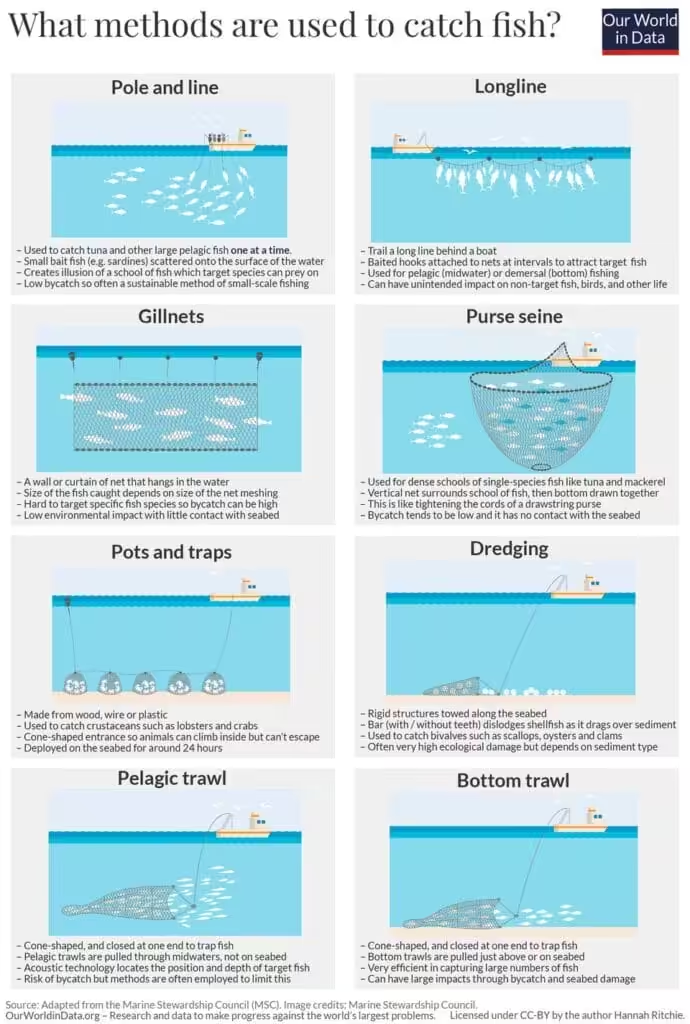
Issues and Challenges in Deep sea fishing:
- Overfishing: Overfishing is one of the greatest problems with deep-sea fishing. The populations of many fish species are declining as a result of fishing at a pace that is outpacing their capacity to reproduce. This could have a major effect on marine ecosystems and cause fish numbers to collapse.
- Bycatch: Bycatch, a term for the accidental capture of non-target species during deep-sea fishing, occurs frequently. This can include fish species, seabirds, and marine mammals, many of which are in peril of extinction.
- Habitat destruction: Deep-sea fishing techniques can cause substantial damage to the seafloor and the habitats of deep-sea species. Bottom trawling, for example, entails dragging heavy nets along the seafloor, which can destroy coral reefs and other critical habitats.
- Illegal, unreported, and unregulated fishing: Deep sea fishing is frequently done by boats that don’t follow local, national, and foreign fishing laws. This may result in illegal commerce in fish and seafood products as well as overfishing and other unsustainable fishing methods.
- Climate change: The oceans and the marine creatures that live in them are being significantly impacted by climate change. Fish populations may diminish as a result of rising ocean temperatures and acidification, necessitating the modification of fishing methods to the new environmental circumstances.
- Technological limitations: Deepwater fishing can be expensive and logistically difficult. Fishing access to deep-sea fish populations may be challenging due to inadequate technology and gear, which may reduce the potential for sustainable fishing methods.
- Threatens Livelihood of Traditional Fishers: Contrary to traditional fishers using traditional fishing gear, purse seiners frequently overfish, endangering the traditional fisher’s means of subsistence. It is a non-targeted fishing technique that catches any fish that gets in the net’s path, including young fish. As a result, they seriously harm aquatic resources.
- Threat to Food Security: The diminishing supply of oil sardines, a favourite of fish eaters in Kerala, is a serious worry. Just 3,297 tonnes of sardines were taken in by Kerala in 2021, a significant drop from the 3.9 lakh tonnes taken in 2012.
- Threatens Endangered Species: A possible trade embargo may be threatened by the non-selective fishing techniques used by purse seines that result in the bycatch of other marine living species, some of which may be endangered.
New rules for deep sea fishing:
Currently, around 238,000 fishing vessels from 13 coastal states and Union Territories are registered on the portal. Of these, about 172,000 smaller boats are exempt, while around 64,000 mechanised vessels will require access passes for EEZ operations. The central government has announced new rules for deep-sea fishing within India’s Exclusive Economic Zone (EEZ), aimed at empowering fishermen, cooperatives, and small-scale fishers. The rules, notified on November 4, fulfil a key Budget 2025–26 promise and are expected to unlock the potential of India’s vast marine resources, according to a PTI report.
- Foreign vessels will be prohibited from operating in Indian waters under the new framework.
- Focus on tuna and advanced fishing vessels :The revised norms seek to tap high-value tuna resources that remain largely underutilised, even as neighbouring countries harvest them extensively in the Indian Ocean region.
- Fishermen Cooperative Societies and Fish Farmer Producer Organisations (FFPOs) will be prioritised for deep-sea fishing using technologically advanced vessels.
- Introduction of the mother-and-child vessel model, enabling mid-sea transhipment in line with Reserve Bank of India (RBI) regulations. This move is expected to especially benefit the Andaman & Nicobar and Lakshadweep Islands, which together account for 49 per cent of India’s EEZ.
- Curbing harmful fishing practices To protect the marine ecosystem, the rules prohibit harmful fishing methods such as LED light fishing, pair trawling, and bull trawling.
- The Centre will also prescribe minimum legal sizes for various fish species and prepare Fisheries Management Plans in consultation with state governments and other stakeholders.
- Digital access pass for mechanised vessels
- Traditional and small-scale fishers using motorised or non-motorised boats are exempt from the new requirements. However, mechanised and large motorised vessels will need to obtain a free “access pass” through the ReALCRaft online portal.
- The digital system enables vessel owners to apply with minimal documentation and track their applications in real time, eliminating the need for physical visits.
- The ReALCRaft portal is being integrated with the Marine Products Export Development Authority (MPEDA) and the Export Inspection Council (EIC) for issuing Fish Catch and Health Certificates, key requirements for exporting seafood to premium international markets. This integrated digital system ensures end-to-end traceability, sanitary compliance and eco-labelling, enhancing the global competitiveness of Indian marine products.
- The ReALCraft application has been integrated with the Nabhmitra Application used by fishermen for safe navigation, which will also help marine enforcement agencies, including the Indian Coast Guard and Navy, strengthen coastal security.
- The rules also bring regulatory reforms recognising fish resources from the Indian EEZ beyond the contiguous zone as ‘Indian origin’ under revenue and customs norms, so that they are not treated as ‘imports’ while landing at Indian ports.
- Access to credit will be facilitated under flagship schemes such as the Pradhan Mantri Matsya Sampada Yojana (PMMSY) and the Fisheries and Aquaculture Infrastructure Development Fund (FIDF).
To ensure safety and security, the rules mandate the use of transponders for deep-sea fishing vessels and QR-coded Aadhaar Card/Fishers ID Card for identification.
Source: https://anantamias.com/current-affairs/deep-sea-fishing-and-its-new-rules-2/