Study Guides · Study Notes · Environment & Ecology · GS III
Why in news:
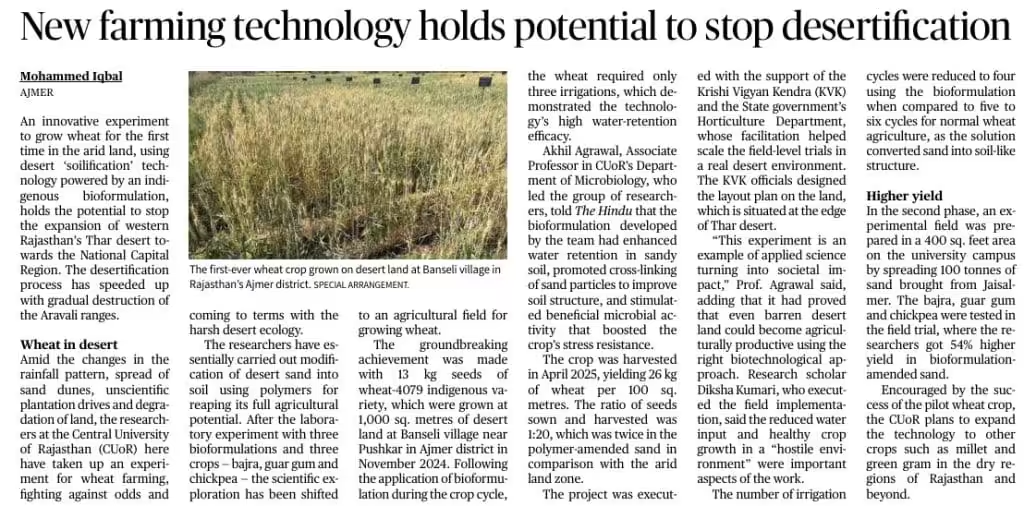
Scientists at the Central University of Rajasthan (CUoR) have successfully grown wheat for the first time in Rajasthan’s desert land (Ajmer district), using an innovative desert “soilification” technology. This breakthrough is significant as it can combat desertification in the Thar desert and expand cultivable land in arid regions.
Wheat variety 4079 was grown on 1,000 sq. metres of desert land near Pushkar (Ajmer). Crop harvested in April 2025 produced 26 kg of wheat per 100 sq. metres, with only three irrigations (compared to 5–6 cycles in normal wheat farming). Demonstrated 54% higher yield in bioformulation-amended land compared to untreated land.
UPSC Relevance:
Conservation, environmental pollution and degradation, Climate change.
UPSC PYQ:
Q. The process of desertification does not have climate boundaries. Justify with examples. (2020)
Q. In what way micro-watershed development projects help in water conservation in drought-prone and semi-arid regions of India? (2016)
About Desertification:
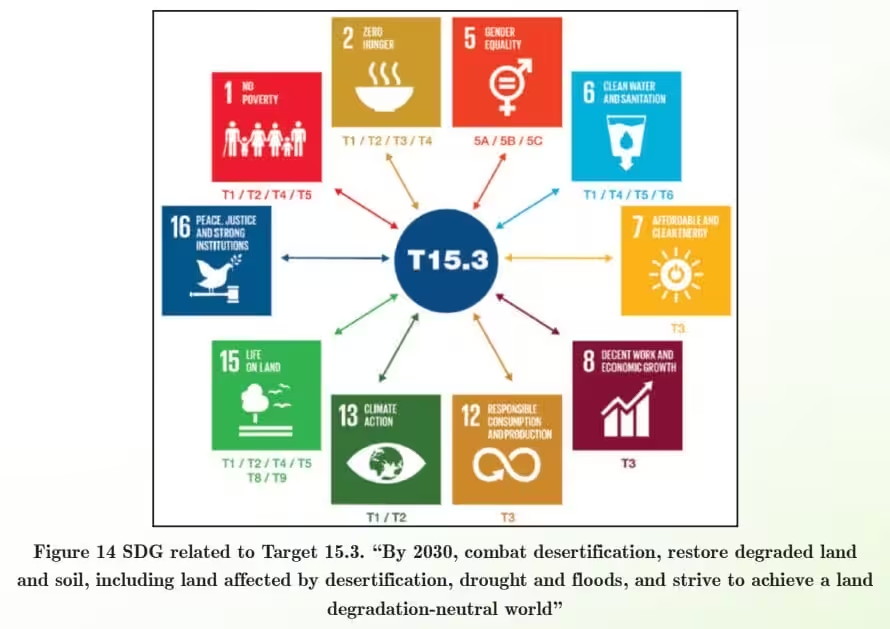
Desertification poses a serious challenge to sustainable development and humanity’s ability to survive in many areas of the world. The UNCCD’s goal is a future that avoids, reduces, and reverses desertification. Our work paves the way for a land degradation neutral world, one that fosters sustainable development to achieve the goals set in the UN’s 2030 Agenda for Sustainable Development.
Definition:
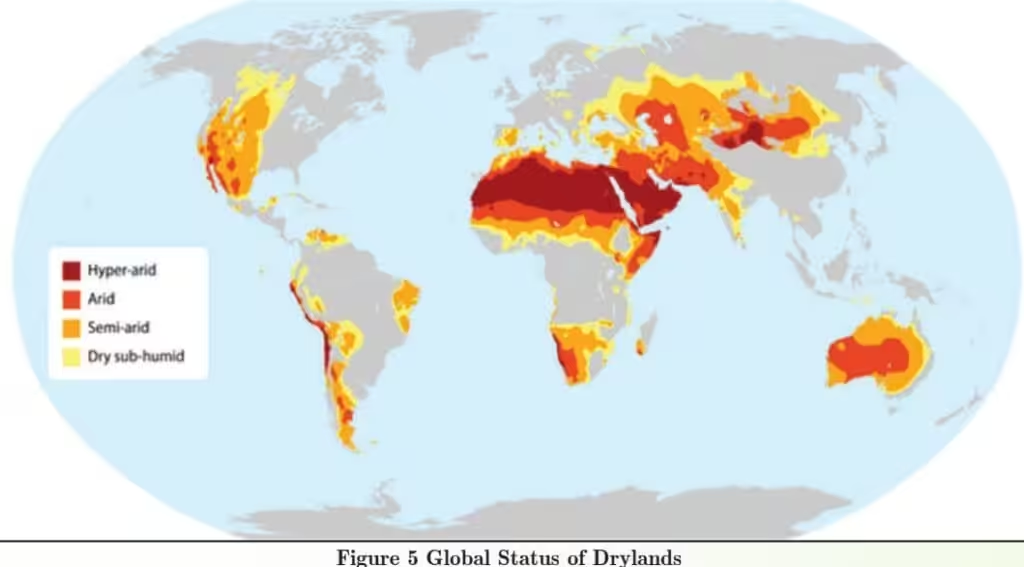
Desertification refers to land degradation in arid, semi-arid and dry sub-humid areas resulting from various factors, including climatic variations and human activities.
Data:
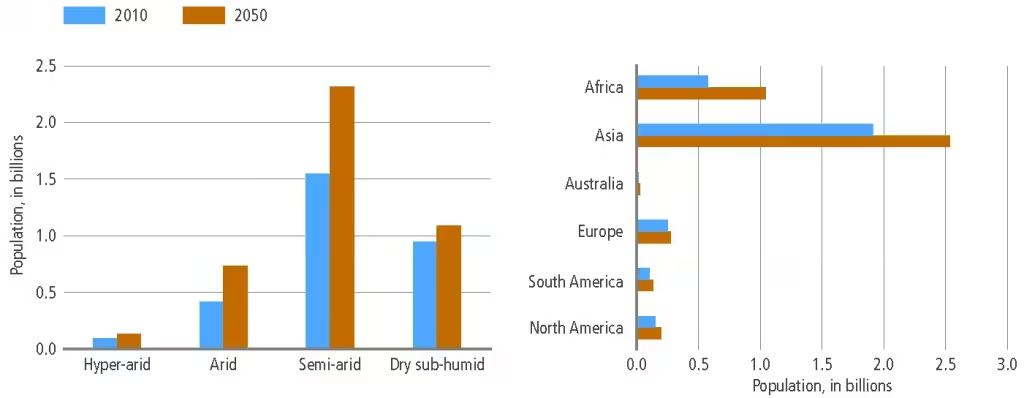
Currently, an estimated 2 billion people live on drylands vulnerable to this phenomenon and scientists predict that the effects of desertification could lead to the displacement of around 50 million people by 2030 as a result of the soaring temperatures, large-scale deforestation, and ecosystem damage in many parts of the world.
At present, Drylands cover about 46.2% (±0.8%) of the global land area and are home to 3 billion people (IPCC 2019). Approximately 70% of dryland areas are located in Africa and Asia. The highest number of people live in the drylands of South Asia, followed by Sub-Saharan Africa and Latin America. Over 70 percent of people living in drylands derive their livelihoods from natural resources (FAO). The status and extent of desertification globally and regionally still show substantial variations..
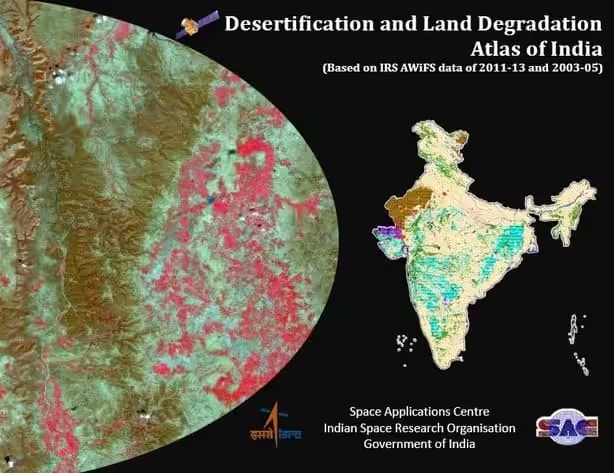
ISRO Desertification Data:
India is the second most populated country in the world with 1.21 billion population and area wise is the seventh largest covering 328.72 million ha (Census of India, 2011).
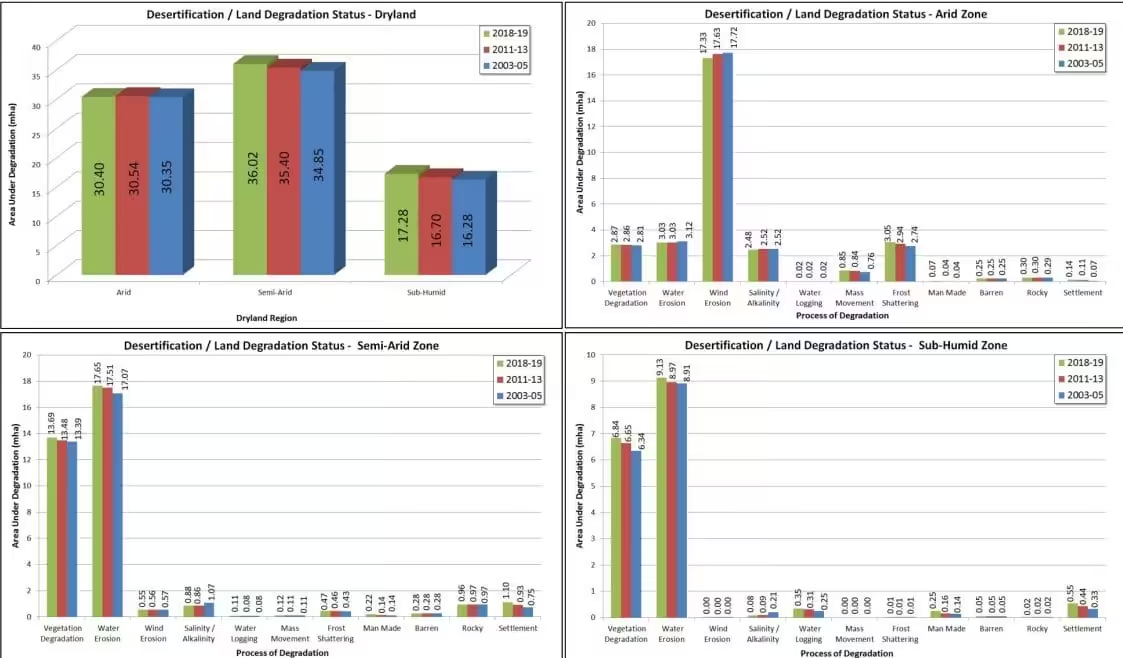
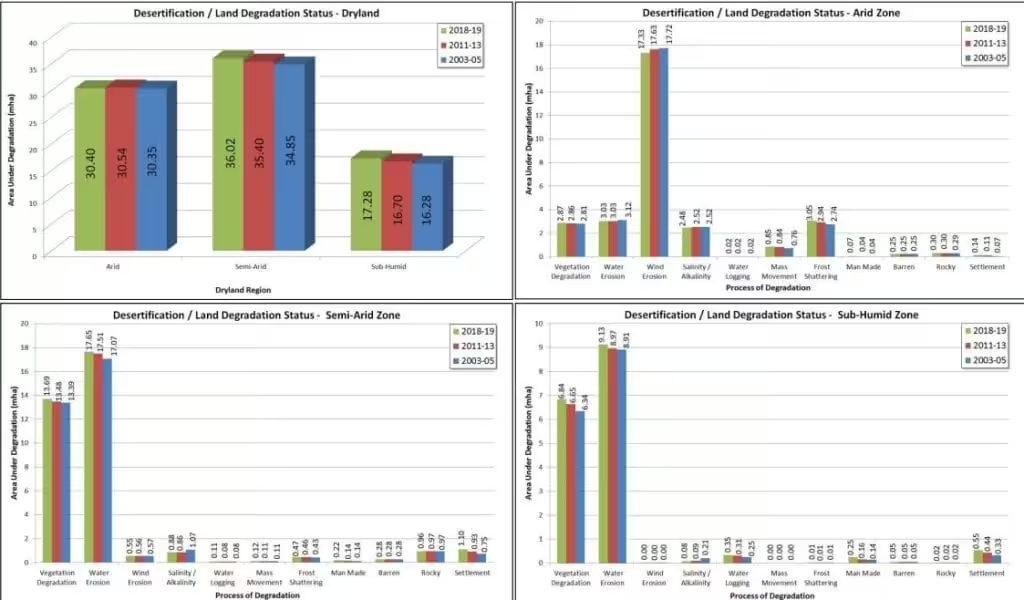
The statistical summary and analysis reveals that 97.85 million ha, 29.77% of the total Geographic Area (TGA) of the country is undergoing land degradation during timeframe 2018-19.
The area undergoing DLD during timeframe 2011-13 and 2003-05 is observed as 96.40 million ha (29.32% of the TGA) and 94.53 million ha (28.76% of the TGA) respectively.
A cumulative increase of 1.45 million ha area (0.44% of the TGA) undergoing DLD is observed from timeframe 2011-13 to 2018-19. Whereas, from timeframe 2003-05 to 2011-13, a cumulative increase of 1.87 million ha area (0.57% of the TGA) is observed.
The most significant process of desertification/ land degradation in the country is Water Erosion (11.01% in 2018-19, 10.98% in 2011-13 and 10.83% in 2003-05), followed by Vegetation Degradation (9.15% in 2018-19, 8.91% in 2011-13 and 8.60% in 2003-05) and Wind Erosion (5.46% in 2018-19, 5.55 % in 2011-13 and 5.58 % in 2003-05).
Cause of Desertification:
Deforestation, causes of which go beyond tree felling, which increases the risk of fires, among others.
Poor agricultural practices, from not rotating crops to unprotected soils or chemical fertiliser and pesticide use, etc.
Loss of forest cover, with a corresponding shortage of wood resources.
The decrease in drinking water reserves due to the loss of aquifers.
According to the United Nations Convention to Combat Desertification, the lives of 250 million people are already affected by desertification and up to 135 million could be displaced (climate migrations) by desertification by 2045, making it one of the most serious environmental problems facing humanity.
GOI Steps to combat desertification:
National Action Plan to Combat Desertification, 2022:
Restoration of 26 million hectares of degraded land by 2030
Generating an additional carbon sink of 2.5 – 3 billion tonnes of CO2 equivalent by 2030 through additional forest and tree cover.
An estimation of the Forest Survey of India establishes that the largest potential of creating additional carbon sinks lies in the restoration of open forest areas included degraded lands, afforestation on wastelands and agroforestry.
These activities of eco-restoration through forestry interventions can contribute up to 60% of the total carbon sink that may be achieved by 2030.
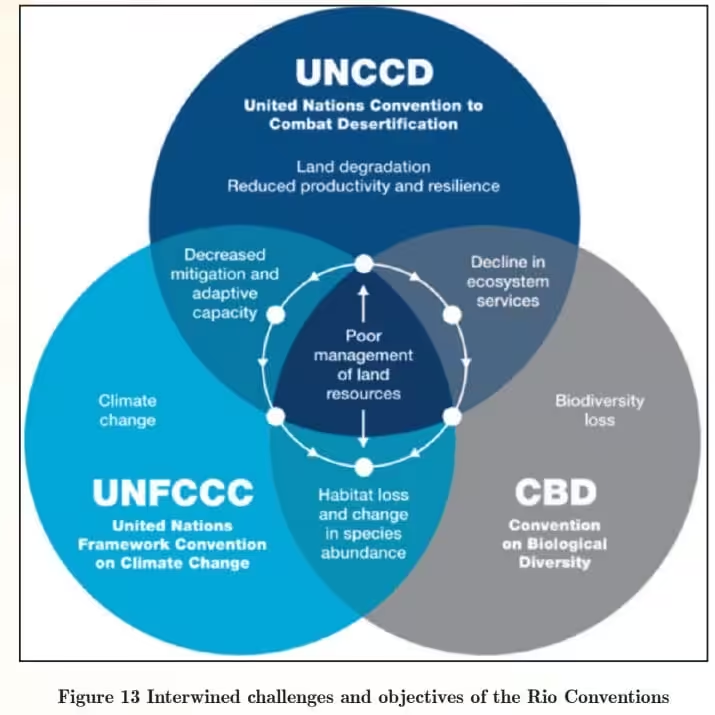
Established in 1994, the United Nations Convention to Combat Desertification (UNCCD) is the sole legally binding international agreement linking environment and development to sustainable land management. It is the driving force behind Sustainable Development Goal 15 and Land Degradation Neutrality (LDN).

Deforestation, causes of which go beyond tree felling, which increases the risk of fires, among others.
 Poor agricultural practices, from not rotating crops to unprotected soils or chemical fertiliser and pesticide use, etc.
Overexploitation of natural resources as a consequence, for example, of irresponsible management of vegetation or water.
Bad livestock practices, such as overgrazing, which severely erode the land and prevent the regeneration of vegetation.
Loss of biodiversity by worsening the living conditions of many species.
Food insecurity due to crop failure or reduced yields.
 The loss of vegetation cover and therefore of food for livestock and humans.
 Increased risk of zoonotic diseases, such as COVID-19.
The decrease in drinking water reserves due to the loss of aquifers.