Green Energy Corridor III: Connecting Transmission and Storage
Why in News?
On 30 September 2026, the Union Cabinet approved Green Energy Corridor Phase III, combining intra-state transmission expansion with battery energy storage for renewable integration.
- The approved transmission component is intended to enable evacuation of up to 135 GW of renewable energy.
- The scheme provides for 50 GWh of battery storage at generator sites or other locations important for grid flexibility.
- These are approved provisions, not evidence that the transmission assets and batteries have already been commissioned.
- Renewable generation is useful only when the network can carry it and electricity is available when consumers need it.
- The scheme connects infrastructure planning with the operational task of balancing variable generation and changing demand.
UPSC Relevance
Prelims Relevance
- Intra-state transmission and renewable power evacuation
- Battery Energy Storage Systems and grid flexibility
- GW as power versus GWh as energy
- Tariff Based Competitive Bidding and cost-plus implementation
- State Transmission Utilities
Mains Relevance
GS Paper 3
- Renewable integration, electricity infrastructure and energy security
- Coordinating generation, transmission and storage investments
GS Paper 2
- Centre-state coordination in infrastructure delivery
Essay
- Infrastructure creates value when its complementary systems work together.
Background and Context
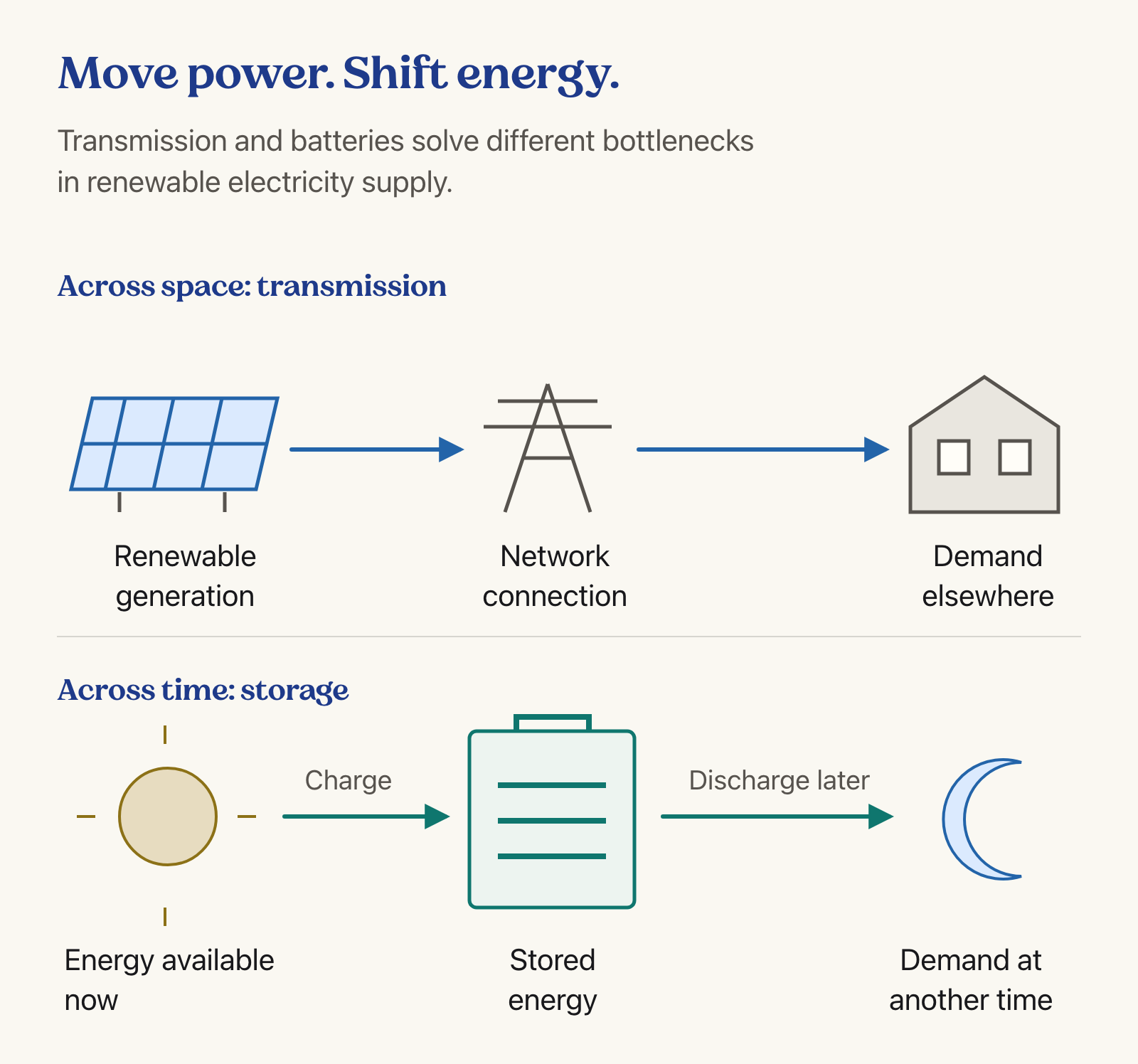
Transmission addresses the location of electricity
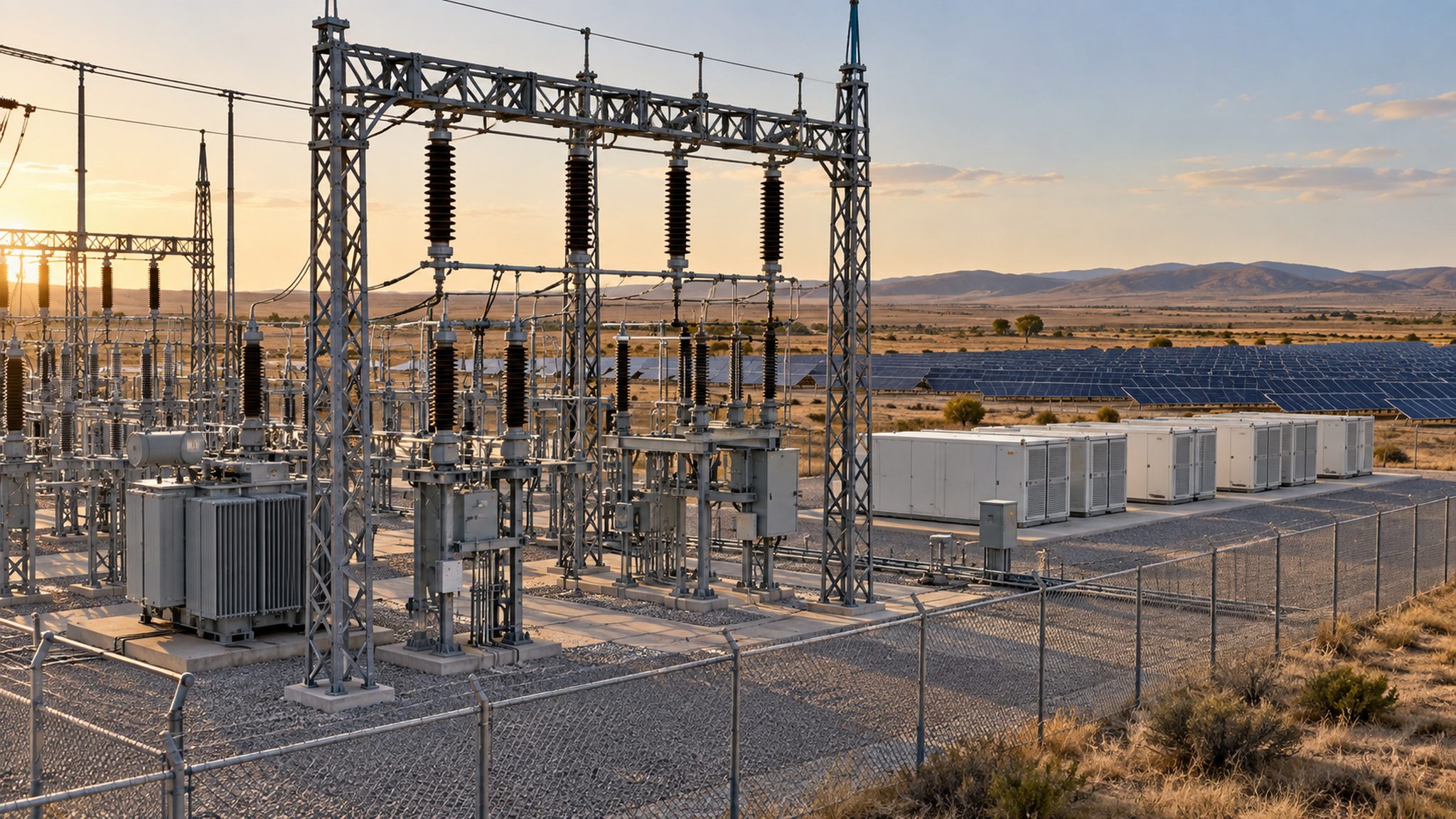
A transmission corridor connects renewable generation to the wider electricity system; its value depends on what happens at both ends.
- Power evacuation means carrying electricity away from generating stations into the network. A renewable plant may be ready to generate while its connecting line or substation remains the constraint on usable supply.
- Intra-state transmission strengthens the network within a state or Union Territory. In this scheme, the focus is enabling renewable integration and evacuation within those territories, rather than treating every corridor as an interstate link.
- Congestion arises when the network cannot carry all desired power flows within operating limits. Adding generation alone does not remove that bottleneck; suitable lines, substations and network strengthening must accompany the plant.
- Curtailment means reducing generation that could otherwise be produced. Where inadequate evacuation is the cause, transmission reinforcement can improve use of renewable resources, but its location and commissioning sequence matter as much as capacity.
- Demand connections complete the chain from renewable resources to productive use. The Kandla e-methanol proposal illustrates why renewable electricity supply must be considered alongside the industrial process that will consume it.
Storage addresses when electricity is needed
Batteries add a time dimension: they can absorb electricity at one moment and supply it later, subject to their operating limits.
- Battery storage charges when electricity is available and discharges when required. The Cabinet release identifies intermittency, congestion, curtailment and non-solar-hour demand among the problems this component is intended to address through grid flexibility.
- Location changes the service a battery can provide. Storage near a generator may absorb output before an export bottleneck; storage nearer demand may support local supply, depending on available connections and operating arrangements.
- GW measures power, the rate at which electricity is produced or delivered. GWh measures energy, an amount accumulated over time; comparing these units requires knowing which equipment each figure actually describes in the system.
- Storage duration requires the usable energy capacity and discharge power of the same storage system. Dividing the scheme’s battery-energy figure by its renewable-evacuation figure would mix different assets and produce a misleading duration.
- Flexibility is complementary: batteries do not create renewable energy or replace all network expansion. Their contribution depends on charging opportunities, available stored energy, conversion losses and the power they can deliver when needed.
Approval must become coordinated delivery
The implementation model separates new transmission projects from upgrades, while delivery still requires coordination across assets and institutions.
- Greenfield transmission projects under the scheme will use Tariff Based Competitive Bidding. Transmission Service Providers will participate through a Build-Own-Operate-Maintain model, linking project delivery with continuing responsibility for the asset’s operation and maintenance.
- Brownfield upgrades and network strengthening will follow a cost-plus basis. This distinction concerns the implementation route; it does not mean existing networks need less careful scrutiny of costs, performance or the chosen technical solution.
- State Transmission Utilities are the overall implementing agencies. Effective delivery requires their plans to match renewable-project readiness, connection requirements and storage siting, so one completed asset is not stranded while another remains unfinished.
- Financial assistance is intended to offset intra-state transmission charges and support affordable power. This is the policy rationale; an approval announcement alone cannot establish the eventual tariff paid by a particular electricity consumer.
- Outcome assessment should distinguish installed assets from useful services. As with measuring road connectivity outcomes, the question is whether infrastructure improves access and performance, rather than whether construction expenditure has simply occurred.
Way Forward
Plan and measure the complete electricity chain
- Sequence generation, transmission and storage against shared commissioning milestones, with responsibility for each connection clearly assigned.
- Choose battery locations and operating arrangements around a defined network or demand problem, rather than aggregate storage capacity alone.
- Track renewable curtailment, availability during demand peaks and network congestion before and after commissioning to assess actual service improvements.
Conclusion
- Transmission moves electricity across space; storage shifts its availability across time. Renewable integration needs both functions where the system’s bottlenecks demand them, alongside operational coordination and appropriate connections.
- Use GEC-III to explain complementary infrastructure in a Mains answer: begin with the bottleneck, identify the suitable intervention, and assess delivered electricity services separately from approved capacity or construction.
UPSC Practice Questions
Prelims MCQ 1
With reference to Green Energy Corridor Phase III, consider the following statements:
- It combines intra-state transmission development with battery energy storage provisions.
- GWh expresses energy capacity, whereas GW expresses power.
- The renewable-evacuation capacity can be used as the battery discharge rating to calculate storage duration.
How many of the above statements are correct?
(a) Only one (b) Only two (c) All three (d) None
Answer: (b) Only two
Explanation:
Statements 1 and 2 are correct. Storage duration needs the energy capacity and discharge power of the same battery system; renewable evacuation capacity is not its discharge rating.
Prelims MCQ 2
Which implementation distinction is stated for the transmission component of GEC-III?
(a) All projects use cost-plus implementation (b) Brownfield projects use competitive bidding while greenfield projects use cost-plus implementation (c) Greenfield projects use tariff-based competitive bidding while brownfield upgrades use cost-plus implementation (d) State Transmission Utilities have no implementing role
Answer: (c) Greenfield projects use tariff-based competitive bidding while brownfield upgrades use cost-plus implementation
Explanation:
The Cabinet release specifies competitive bidding for greenfield transmission and cost-plus implementation for brownfield upgrades and network strengthening. State Transmission Utilities are the overall implementing agencies.
UPSC Mains Questions
- Transmission and storage address different constraints in renewable energy integration. Explain with reference to Green Energy Corridor Phase III. (150 words)
- How should policymakers evaluate whether renewable-energy infrastructure delivers reliable electricity services? Discuss coordination and outcome measurement. (250 words)
Source: PIB, Union Cabinet.
Frequently Asked Questions
What is Green Energy Corridor Phase III?
It is a Cabinet-approved scheme combining intra-state transmission development with battery energy storage. Its purpose is to support renewable power evacuation, grid integration and flexibility; approval does not mean all assets are operational.
How do transmission and batteries differ?
Transmission carries electricity between locations. Batteries absorb electrical energy and supply it later. These functions can complement each other, but a battery cannot automatically remove every network bottleneck or replace transmission expansion.
Why should GW and GWh not be confused?
GW measures the rate of electricity delivery or generation. GWh measures an amount of energy. Storage duration requires the energy and discharge-power ratings of the same storage system, not figures from unrelated assets.
Who will implement the transmission component?
State Transmission Utilities are the overall implementing agencies. Greenfield transmission projects will use tariff-based competitive bidding, while brownfield upgrades and network strengthening will follow a cost-plus basis under the approved scheme.