IARRF: Studying the Atmosphere and Ionosphere With Radar
Why in News?
ISRO stated on 1 October 2026 that the ISTRAC Advanced Radar Research Facility is being established for atmospheric, ionospheric and space-weather research.
- The proposed IARRF will support experiments, radar technology development and validation of scientific models.
- ISRO identifies weather prediction, communication and navigation studies among the intended applications.
- Additional radars would be established according to emerging needs and after government approvals.
- The research connects processes in the atmosphere with changes in the near-Earth space environment.
- A facility announcement establishes a research direction; improved forecasts and dependable services require further evidence.
UPSC Relevance
Prelims Relevance
- IARRF: ISTRAC Advanced Radar Research Facility
- Ionosphere: electrically charged particles in the upper atmosphere
- Space weather and solar activity
- Radio communication and satellite navigation
- Observation, scientific models and validation
Mains Relevance
GS Paper 3
- Connecting scientific observations with reliable technological applications.
- Research infrastructure for communication, navigation and environmental science.
GS Paper 1
- Interactions between atmospheric processes and the near-Earth space environment.
Essay
- Reliable public services depend on understanding processes that remain invisible in everyday life.
Background and Context
What the proposed facility is meant to study
IARRF brings several scientific questions together, while each observation must still be interpreted according to the physical process being studied.
- ISRO describes a multidisciplinary research platform for radar technologies. Its remit includes atmospheric and ionospheric science, cloud studies and space weather, rather than a single announced operational service with demonstrated performance.
- The distinction between a measurement and its application matters. An observation records evidence about a process; researchers must interpret that evidence before using it to improve a model or decision.
- The facility will offer opportunities to conduct experiments and test scientific models. Comparing what a model predicts with observations helps identify where its description works and where further research is necessary.
- Radar research should be read through its purpose. Studying atmospheric processes asks different questions from determining the position of a spacecraft, even when both activities involve electromagnetic observations and ground-based instruments.
- The announcement does not specify a final instrument configuration or achieved accuracy. Readers should avoid filling those gaps with the frequency, range or capabilities of another radar discussed in the news.
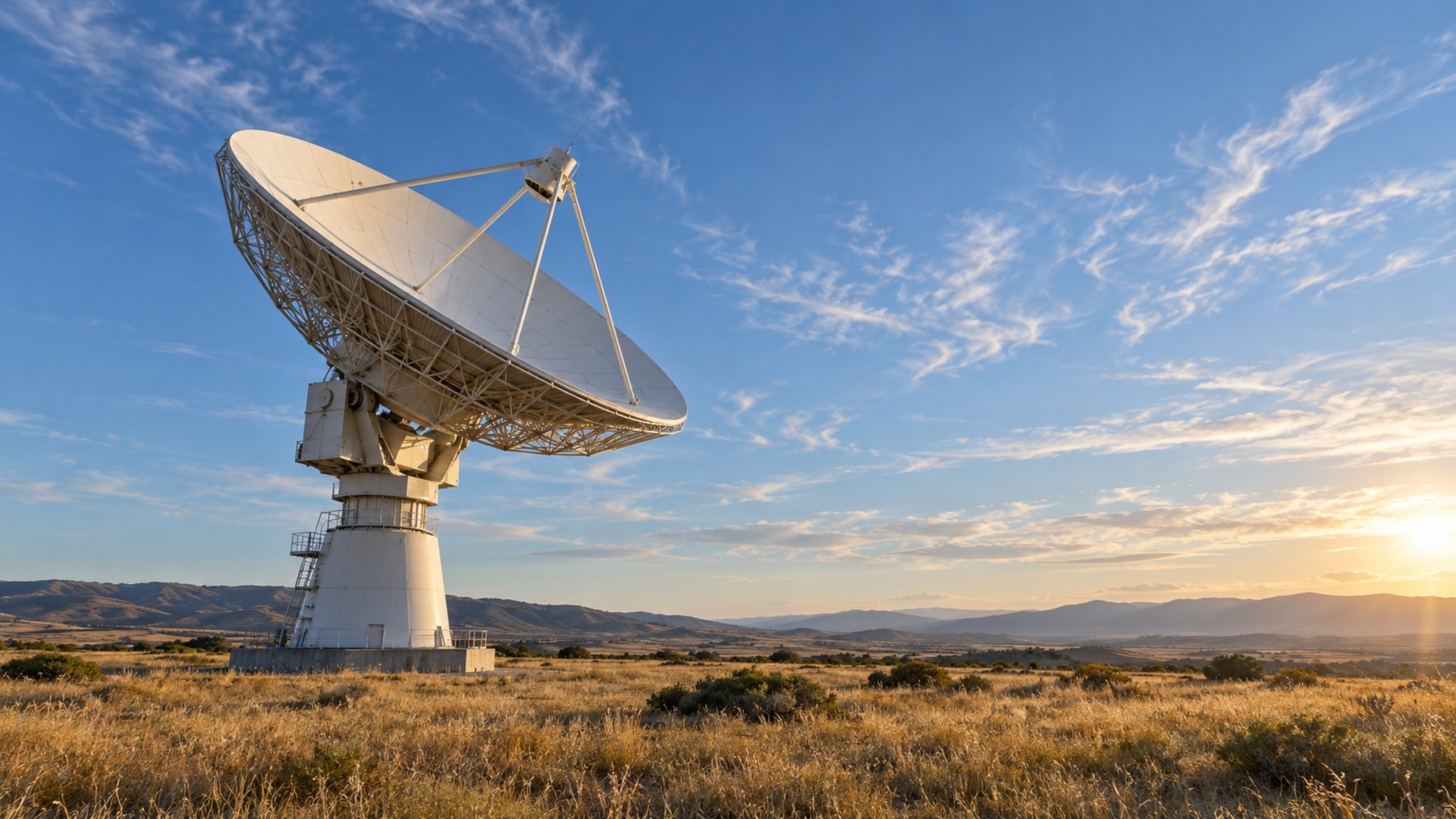
Why the ionosphere matters for radio signals
The ionosphere contains charged particles, making its behaviour important for communication and navigation as well as atmospheric science.
- Solar energy can remove electrons from gases in the upper atmosphere, producing ions and free electrons. This helps explain why the region changes between day and night.
- According to NASA’s ionosphere explainer, changes in its density and composition can disturb radio and navigation signals travelling through or interacting with it.
- Terrestrial weather can influence this region through pressure waves from below. The upper atmosphere is connected with lower atmospheric processes, rather than being isolated from them.
- Space weather includes changing electrical and magnetic conditions and particle events associated with solar activity. Charged particles respond to these conditions differently from neutral atmospheric gases.
- This creates a useful comparison: cloud and rainfall studies concern weather processes, while ionospheric research helps explain disturbances along radio-signal paths. Their scientific questions differ even where their environments interact.
How research becomes a dependable application
The practical test is whether observations improve a defined application under conditions that can be independently checked.
- ISRO lists aviation, agriculture and weather-related advisories among intended applications. These are reasons to develop research capacity, not measurements showing that IARRF has already improved a forecast or prevented a loss.
- A model should be checked against observations beyond those used to develop it. This is a general scientific safeguard: agreement with familiar examples alone cannot establish dependable performance in changing conditions.
- The Sambalpur weather-radar note examines operational observations and warnings. IARRF’s announced emphasis is broader scientific research, including questions about the upper atmosphere and communication pathways.
- Shared research infrastructure can widen access to instruments. For IARRF, the deeper question is the quality of experiments and model validation made possible by that access, rather than participation counts.
- Additional radars require approval, according to ISRO. Establishment, experimentation, validation and operational use remain distinct stages; the announcement cannot be used to infer that every proposed instrument or service is ready.
Way Forward
Make research claims testable
- Publish clear measurement objectives and documented instrument limitations so other researchers can understand what each observation can establish.
- Use independent validation before describing a research result as a dependable navigation, communication or weather application.
- Report development stages separately, distinguishing approved instruments, completed experiments and demonstrated applications.
Conclusion
- IARRF’s value lies in connecting atmospheric and ionospheric research with practical questions about environmental conditions and technology. The research purpose is clear; the announcement does not establish completed operational capability.
- For an answer, distinguish weather from space weather, then separate observation, interpretation and application. A proposed research platform becomes useful through evidence about what its instruments and models can reliably explain.
UPSC Practice Questions
Prelims MCQ 1
With reference to the IARRF announcement, consider the following statements:
- The facility’s remit includes ionospheric and atmospheric science.
- ISRO states that additional radars would require government approvals.
- The announcement establishes that all intended forecasting services are already operational.
How many of the above statements are correct?
(a) Only one (b) Only two (c) All three (d) None
Answer: (b) Only two
Explanation:
The first two statements follow the ISRO announcement. It describes a facility being established and intended applications, not completed operational services.
Prelims MCQ 2
Why can changes in the ionosphere affect communication and navigation?
(a) The ionosphere is a permanent barrier to all electromagnetic signals (b) Changes in charged-particle conditions can disturb radio-signal propagation (c) The ionosphere consists only of neutral water droplets (d) Space weather is identical to rainfall near the ground
Answer: (b) Changes in charged-particle conditions can disturb radio-signal propagation
Explanation:
The ionosphere contains charged particles; changes in its density and composition can affect radio and navigation signals.
UPSC Mains Questions
- Explain how atmospheric and ionospheric research can support communication and navigation. Distinguish weather from space weather. (150 words)
- Why should a research-facility announcement be distinguished from proven operational capability? Discuss with reference to IARRF. (250 words)
Sources: ISRO and NASA Science.
Frequently Asked Questions
What is IARRF?
IARRF is the ISTRAC Advanced Radar Research Facility. ISRO describes it as a multidisciplinary platform being established for research in radar technologies, atmospheric and ionospheric science, weather monitoring and space weather.
Has IARRF already demonstrated improved forecasts?
The announcement identifies intended applications and research opportunities. It does not provide operational performance results proving improved forecasts. Additional radars would be established according to needs and after government approvals.
How is ionospheric research different from cloud research?
Cloud research examines atmospheric weather processes. Ionospheric research examines a region containing charged particles whose changing conditions affect radio communication and navigation. The two regions can influence each other without being identical.
Why does model validation matter?
A model interprets observations and makes predictions. Comparing those predictions with independent evidence reveals its strengths and limits. Such checks are necessary before relying on a research model for practical decisions.