Quad-at-Sea: Coast Guard Learning Through Shipboard Observation
Why in News?
Indian Coast Guard ship Shaunak sailed from Chennai for Perth on 25 September 2026, beginning the Quad-at-Sea Ship Observer Mission.
- Six sea riders embarked: two officers each from India and Japan, and one each from Australia and the United States.
- The programme involves shipboard activities and professional exchanges, with interoperability, coordination and mutual trust identified as objectives.
- The PIB release records departure and intended cooperation; it does not report a completed mission or measured operational results.
- Shared procedures can make maritime cooperation more practical, because different services must understand how partners communicate and make decisions.
- An observer exchange offers a focused example of institution-building through professional contact, while leaving national responsibilities intact.
UPSC Relevance
Prelims Relevance
- Quad participants: India, Australia, Japan and the United States.
- Shaunak: Indian Coast Guard ship carrying the mission’s sea riders.
- Embarked observers: personnel placed aboard a host ship for observation and professional exchange.
- Coast guard functions: maritime safety, law enforcement, assistance to distressed fishermen and marine-environment protection.
Mains Relevance
GS Paper 2
- Functional maritime cooperation within the Quad.
- Professional exchanges as a means of building institutional trust.
GS Paper 3
- Coordination for maritime safety and security while respecting jurisdiction.
Essay
- Trust becomes useful when institutions learn how to work together.
Background and Context
What a ship observer mission does
Embarked observation exposes visiting personnel to how a partner service operates aboard a working ship.
- A sea rider joins the host vessel rather than bringing a separate national ship. Here, officers from all Quad countries share one platform for professional exchanges.
- The learning opportunity comes from seeing procedures in context: how personnel organise work, communicate requirements and respond to operating conditions, rather than only describing those routines at meetings.
- The release confirms shipboard activities but supplies no detailed training schedule. Particular rescue drills, boarding operations or surveillance exercises should not be presented as verified components of this voyage.
- Observers can compare familiar practices with a partner’s approach and identify questions for follow-up. This is a potential learning pathway, rather than an outcome already demonstrated by departure.
- The news concerns the start of an exchange. Arrival, completion, subsequent exercises and changes to standard procedures would each require separate evidence before being reported as accomplished.
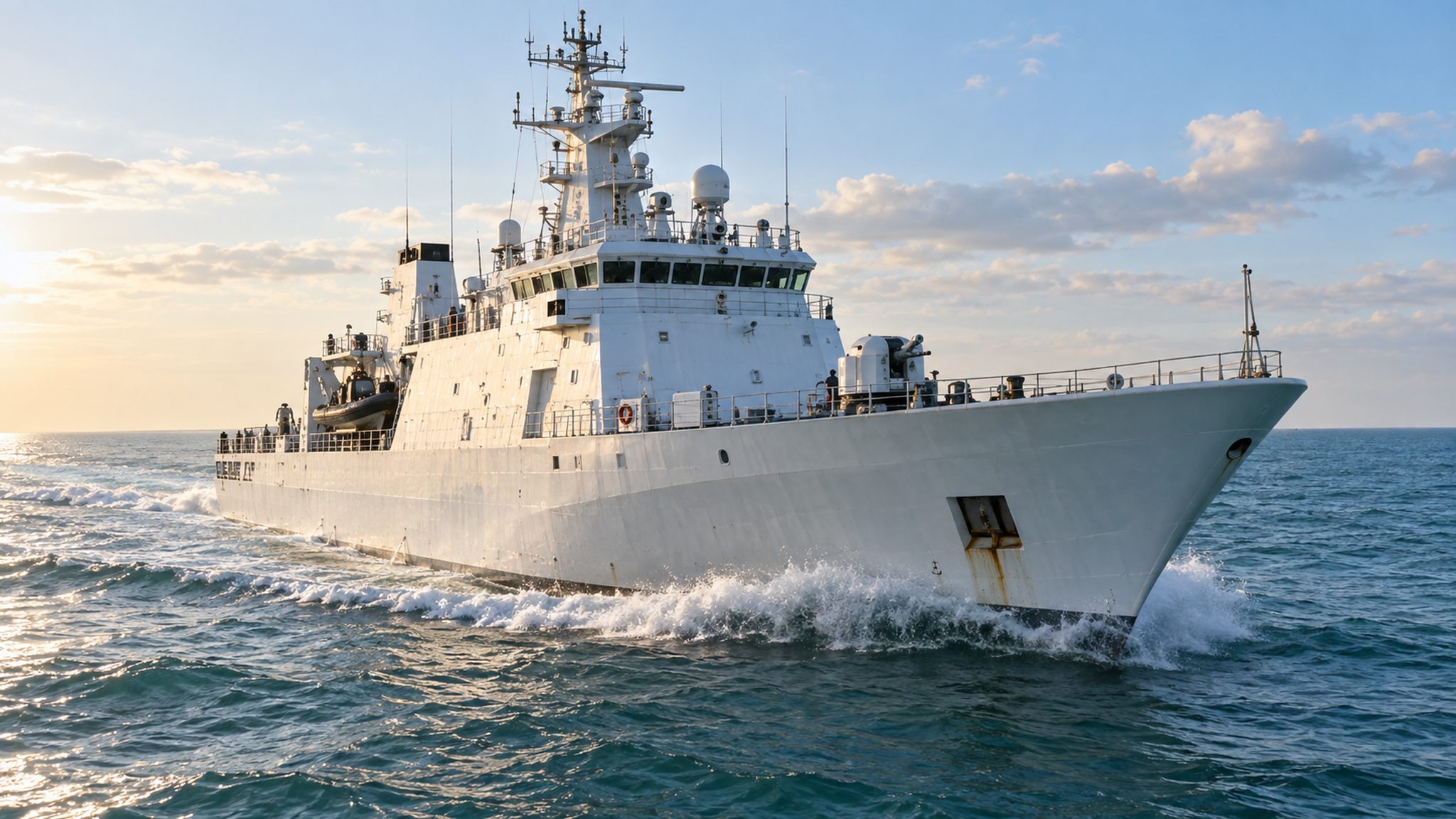
How observation can become operational learning
Experience becomes institutional capacity only when participants can carry relevant lessons back into their own organisations.
- Interoperability means being able to work together effectively. Compatible equipment helps, but personnel also need a shared understanding of messages, responsibilities and the sequence of a coordinated response.
- A useful debrief would distinguish practices that transfer easily from those dependent on the host service’s equipment, staffing or rules. Copying a procedure without those conditions may fail.
- For example, partners discussing a hypothetical distress incident could identify the information needed for coordination. This illustrates the learning mechanism; it is not a reported activity of this mission.
- Professional contacts can help officers understand whom to approach and what information to provide. Such familiarity supports coordination but cannot replace formal communication channels or responsible authorities.
- Institutional follow-through matters more than attendance alone: lessons need review, suitable training and later assessment. Participation counts cannot establish that services will coordinate successfully during an actual emergency.
Why coast guard cooperation matters
Coast guard cooperation connects external partnerships with practical protection of people, resources and the marine environment.
- The Indian Coast Guard’s official charter includes assistance to fishermen in distress. Maritime cooperation can be assessed through this public-service lens alongside wider security objectives.
- Marine-environment protection and pollution response also require coordination. Understanding another service’s working methods can be relevant when discussing support, although this announcement creates no particular response arrangement.
- Maritime law enforcement differs from combat operations in purpose and procedure. Officers need clarity about the applicable mandate, permitted actions and the authority responsible for decisions.
- The Indian Coast Guard is an Armed Force of the Union, according to its official description. Its safety and enforcement responsibilities should not be confused with being an unarmed civilian agency.
Observer exchange, exercise and patrol: keep the categories clear
The activity announced determines the claim an answer can safely make about maritime cooperation.
- An observer exchange places personnel aboard a host platform for learning. A combined exercise involves planned activities undertaken together; the terms should not be used interchangeably.
- The earlier SLINEX note concerns naval exercise phases. This mission instead provides an example of coast guard personnel learning through an embarked exchange.
- The Colombo Security Conclave tabletop note examines scenario-based discussion. Shipboard observation adds exposure to an operating environment, without making every shared voyage an exercise.
- A joint patrol or enforcement mandate cannot be inferred from foreign officers boarding Shaunak. The release announces an observer mission and gives no new authority to police another country’s waters.
- The Quad participants’ cooperation here does not establish a collective-defence obligation. Describe the specific maritime activity rather than treating this announcement as evidence of a new military alliance.
Way Forward
Turn exposure into testable improvements
- Use structured debriefs to record transferable lessons, procedural differences and questions requiring clarification by each service.
- Convert suitable lessons into training objectives, then assess communication and coordination in authorised follow-up activities.
- Keep information-sharing and command responsibilities explicit so professional familiarity supports accountable decisions.
- Report verified outcomes after the mission, separating participation from demonstrated improvements in operational coordination.
Conclusion
- Quad-at-Sea illustrates how a small embarked exchange can support practical maritime cooperation through observation, professional contact and institutional learning.
- In an answer, connect interoperability to procedures and follow-through, while keeping observer participation distinct from completed results, combat exercises and new enforcement powers.
UPSC Practice Questions
Prelims MCQ 1
With reference to the Quad-at-Sea Ship Observer Mission announced in September 2026, consider the following statements:
- Shaunak sailed from Chennai for Perth.
- The embarked sea riders included officers from India, Japan, Australia and the United States.
- The announcement granted participants a new joint maritime enforcement mandate.
How many of the above statements are correct?
(a) Only one (b) Only two (c) All three (d) None
Answer: (b) Only two
Explanation:
The first two statements match the PIB release. It announces shipboard activities and professional exchanges, without granting a new joint enforcement mandate.
Prelims MCQ 2
Which best describes the purpose of an embarked observer exchange?
(a) Automatically transferring command of the host vessel (b) Establishing a collective-defence obligation (c) Learning partner practices through shipboard observation and professional exchange (d) Granting unrestricted enforcement rights in foreign waters
Answer: (c) Learning partner practices through shipboard observation and professional exchange
Explanation:
The exchange supports familiarity, coordination and interoperability. Participation alone does not confer command, treaty obligations or foreign enforcement authority.
UPSC Mains Questions
- How can coast guard observer exchanges contribute to practical maritime cooperation? Discuss the institutional follow-through needed to convert participation into capacity.
- Distinguish an embarked observer exchange from a combined exercise and a joint patrol. Why do these distinctions matter when assessing Indo-Pacific cooperation?
Sources: PIB, Ministry of Defence and Indian Coast Guard: Charter of Duties.
Frequently Asked Questions
What is the Quad-at-Sea Ship Observer Mission?
It is an embarked professional exchange involving officers from Quad countries aboard Indian Coast Guard ship Shaunak. The announced objectives include improving interoperability, coordination and mutual trust through shipboard activities.
Which countries sent sea riders aboard Shaunak?
India and Japan contributed two officers each, while Australia and the United States contributed one each. The six sea riders embarked for the observer mission as Shaunak sailed from Chennai for Perth.
Is this mission a combined combat exercise?
The official release describes a ship observer mission involving professional exchanges and shipboard activities. It does not identify a combined combat exercise, announce a joint patrol or confer new maritime enforcement authority.
What should determine whether an observer exchange is useful?
Its value should be assessed through relevant lessons, institutional follow-through and later improvements in coordination. The announcement of departure or the number of participating officers alone cannot demonstrate those operational outcomes.