Why in News?
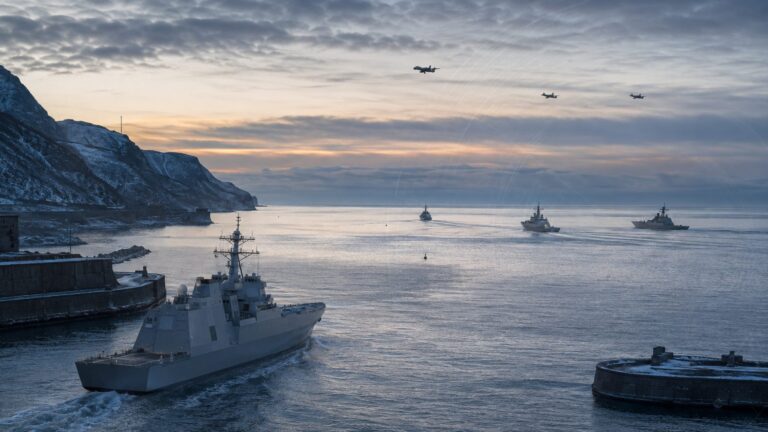
A Colombo Security Conclave tabletop exercise on coordinated responses to illicit maritime activities concluded at Eastern Naval Command, Visakhapatnam, on 11 September 2026, the Defence Ministry reported on 12 September.
- The exercise ran from 9 to 11 September and involved delegations and maritime security experts from CSC member states and observer nations.
- Participants used simulated operational scenarios addressing maritime terrorism, human trafficking, illicit trade and illegal, unreported and unregulated fishing.
- They reviewed Standard Operating Procedures and streamlined information sharing to strengthen collective Maritime Domain Awareness.
- The central problem is coordination: several agencies may recognise a maritime risk yet lack a shared understanding of responsibilities, information needs and the next decision.
- A tabletop exercise tests procedures through discussion and scenarios. Its completion is evidence of preparedness activity, not proof that a real maritime incident was intercepted or resolved.
UPSC Relevance
Prelims Relevance
- CSC: Colombo Security Conclave, the framework under which this exercise took place.
- TTX: tabletop exercise based on simulated scenarios.
- MDA: Maritime Domain Awareness, supporting understanding of relevant maritime activities and risks.
- SOP: Standard Operating Procedure, providing an agreed process for handling recurring situations.
- IUU fishing: illegal, unreported and unregulated fishing.
Mains Relevance
GS Paper 3
- Converting maritime information into coordinated security responses.
- Inter-agency preparedness for non-traditional maritime threats.
GS Paper 2
- Regional cooperation that improves practical coordination while retaining clear national responsibilities.
Essay
- Cooperation becomes effective when shared intent is translated into tested procedures.
Background and Context
What a tabletop exercise can test
A simulated incident creates a structured setting to examine decisions and coordination before agencies face a real emergency at sea.
- Scenario-based discussion asks participants how they would respond to an evolving situation. It can expose disagreements about responsibilities or missing information without implying that the imagined incident actually occurred in regional waters.
- SOP review examines whether the written process helps participants move from receiving information to choosing an appropriate response. The release confirms a review, but does not publish the resulting procedural changes.
- Information-sharing arrangements matter because agencies may possess different parts of a situation. Agreeing what must be communicated, to whom and when can reduce uncertainty before a response decision is taken.
- Simulated performance is different from operational performance. A discussion can identify procedural gaps, while real readiness also depends on personnel, communications and available assets; this announcement does not provide an independent readiness assessment.
- Exercise outcomes should be read precisely: the reported activities were scenario discussions, SOP review and improved sharing arrangements. The announcement supplies no basis for claiming an actual interception, rescue or successful enforcement operation.
Shared maritime awareness is not shared authority
Knowing what is happening at sea supports a decision, but the responsibility and authority to act remain separate questions.
- Maritime Domain Awareness concerns understanding relevant activity and risks in the maritime environment. In this exercise, stronger collective awareness was the stated purpose of streamlining information sharing among the participating maritime security representatives.
- A shared assessment is more useful than disconnected observations because participants can compare information and clarify uncertainty. Yet receiving an alert does not by itself settle the significance of the event or required response.
- Authority to act should not be inferred from access to information. A useful preparedness review asks which competent agency must decide and what permissions are needed; the release announces no new enforcement powers.
- Jurisdiction and coordination answer different questions: jurisdiction concerns the applicable authority, while coordination concerns agencies working together. The exercise report does not establish any transfer of national jurisdiction or automatic right to board vessels.
- Patrol assets can translate a decision into an at-sea presence, but sharing a maritime picture does not itself make those assets available. A response still requires the appropriate organisation to assign its resources.
Turning a rehearsal into usable preparedness
The next policy test is whether identified gaps lead to clearer procedures that participants can use and review in practice.
- Distinct threats require distinct decisions even when encountered in the same maritime space. The inclusion of terrorism, trafficking and IUU fishing supports a coordination focus; it does not make their legal treatment interchangeable.
- Clear points of contact are a practical follow-up priority: an agency should know where to send a concern and who can confirm receipt. This is a preparedness recommendation, not a newly announced exercise outcome.
- Uncertainty handling deserves attention when reports are incomplete or contradictory. Participants should distinguish confirmed observations from assessments, so that an apparent common picture does not conceal disagreement or create unwarranted confidence in an alert.
- Follow-up testing should check whether revised procedures resolve the specific gaps found in rehearsal. The relevant evidence would concern clearer decisions and functioning coordination, rather than the completion of another ceremonial event or declaration.
- Regional cooperation is most useful when it lowers practical coordination barriers. This exercise illustrates a procedural route to cooperation, while its brief public account leaves the detailed scenario results and implementation arrangements undisclosed.
Way Forward
Make procedural improvements testable
- Assign responsibility for follow-up to each identified procedural gap and revisit it in subsequent exercises. Track whether the same uncertainty continues to delay decisions.
- Review information quality and communication together: shared reports need clear timing, confidence and a route for clarification, rather than merely wider circulation.
- Keep authority and resource checks explicit in preparedness planning. A common assessment should lead to an accountable decision by the appropriate institution, with realistic implementation capacity.
Conclusion
- The CSC exercise illustrates the bridge between maritime awareness and coordinated response: information must connect with tested procedures, clear responsibilities and available capacity. A shared picture alone cannot complete that chain.
- For an examination answer, distinguish simulation from operations and cooperation from transferred jurisdiction. The verified milestone is a completed rehearsal and procedural review, with operational effectiveness requiring separate evidence.
UPSC Practice Questions
Prelims MCQ 1
With reference to the Colombo Security Conclave tabletop exercise, consider the following statements:
- It involved simulated operational scenarios.
- Participants reviewed Standard Operating Procedures and information-sharing arrangements.
- Its completion establishes that an actual maritime interception was carried out.
How many of the above statements are correct?
(a) Only one (b) Only two (c) All three (d) None
Answer: (b) Only two
Explanation:
Statements 1 and 2 are correct. A tabletop exercise rehearses responses through scenarios; the release does not report an actual interception.
Prelims MCQ 2
Which distinction is most relevant when interpreting collective Maritime Domain Awareness?
(a) Information sharing automatically transfers national jurisdiction (b) Shared awareness and authority to act are separate questions (c) Awareness eliminates the need for response resources (d) A simulated incident is evidence of a real enforcement action
Answer: (b) Shared awareness and authority to act are separate questions
Explanation:
Information supports decisions but does not itself establish new powers or transfer jurisdiction. The exercise announcement reports procedural review and sharing arrangements.
UPSC Mains Questions
- Explain how tabletop exercises can strengthen responses to non-traditional maritime threats. Distinguish shared maritime awareness from authority to act.
- Regional maritime cooperation requires tested procedures as well as political intent. Discuss with reference to information sharing, agency responsibility and follow-up evaluation.
Source: PIB, Ministry of Defence.
Frequently Asked Questions
What is a tabletop exercise?
A tabletop exercise uses simulated scenarios to examine how participants would make decisions and coordinate responses. It can reveal procedural gaps without requiring the scenario to occur as a real operation.
What did the CSC exercise review?
Participants reviewed existing Standard Operating Procedures and streamlined information-sharing arrangements. The stated objective was stronger collective Maritime Domain Awareness for coordinated responses to illicit activities in the Indian Ocean Region.
Does shared maritime awareness create enforcement powers?
No such power is established by this announcement. Sharing information helps agencies understand a situation, while the competent authority, necessary permissions and responsibility for action remain separate questions.
Was this an actual maritime interception?
No. The official account describes simulated operational scenarios in a tabletop exercise. It reports no actual interception or transfer of jurisdiction, so those outcomes should not be inferred from its completion.
Tell Google you want more of this.
Add Anantam IAS as a preferred sourceOne tap, and this site shows up more often in your own Top Stories, AI Overviews and AI Mode. Remove it any time.