Vande Mataram- National Song

Context: Prime Minister Narendra Modi inaugurated the year-long commemoration of 150 years of the National Song “Vande Mataram” on 7th November 2025 at the Indira Gandhi Indoor Stadium, New Delhi. Written by Bankim Chandra Chatterjee on Akshaya Navami in 1875.
UPSC Relevance: Modern History.
PYQ:
Q. Who among the following is associated with ‘Songs from Prison’, a translation of ancient Indian religious lyrics in English? (2021)
(b) Jawaharlal Nehru
(c) Mohandas Karamchand Gandhi
(d) Sarojini Naidu
Meaning of Vande Mataram:
- Vande Mataram (meaning “I bow to thee, Mother”) is India’s national song, symbolizing reverence to the motherland and evoking patriotism and unity among citizens.
Written by:
- Composed in Sanskritised Bengali by Bankim Chandra Chattopadhyay in the 1870s, it was first published in his novel Anandamath (1882).
History:
- The song’s first public rendition was by Rabindranath Tagore at the 1896 Congress Session.
- It became the anthem of India’s freedom struggle, sung in protests and revolutionary gatherings despite being banned by the British.
- The Indian National Congress (1937) adopted its first two stanzas as the National Song, balancing inclusivity and secular appeal.
- On January 24, 1950, the Constituent Assembly accorded Vande Mataram equal honour to the National Anthem “Jana Gana Mana.”
Features:
- Spiritual Patriotism: Depicts the nation as a nurturing mother embodying both emotional and divine strength.
- Secular Adaptation: Only the first two stanzas, devoid of religious imagery, are used officially to ensure inclusivity.
- Cultural Symbolism: Serves as a unifying call cutting across linguistic and regional divides.
- Historical Legacy: Its association with movements like Swadeshi (1905) and Quit India (1942) made it the lyrical soul of resistance.
Current Status:
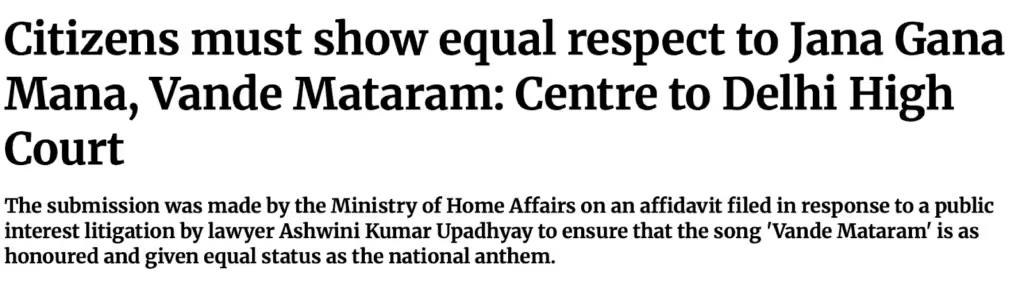
- Recognized by the Government of India as equal in stature to the National Anthem.
- Instrumental version is played at the closing of every Parliament session.
Citizens are encouraged to show equal respect to both Vande Mataram and Jana Gana Mana, as affirmed by a Delhi High Court affidavit (2022).