Dr. Har Gobind Khorana (UPSC Science & Tech)
UPSC guide to Dr Har Gobind Khorana: early life, education and migration, deciphering the genetic code, first synthetic gene, Nobel 1968, awards, legacy.
Dr. Har Gobind Khorana (1922-2011) was an Indian-American biochemist whose work cracked one of the deepest puzzles in biology — how the four-letter alphabet of DNA spells out the twenty-letter alphabet of proteins. For this he shared the 1968 Nobel Prize in Physiology or Medicine with Robert W Holley and Marshall W Nirenberg "for their interpretation of the genetic code and its function in protein synthesis". A few years later, in 1972, his lab assembled the world's first artificial gene. Without his work, the modern fields of genetic engineering, synthetic biology and CRISPR-based therapy would not exist.
Born in a tiny village in undivided Punjab to a family that walked the daily line between literacy and survival, Khorana's life is also a parable of how scholarship, scholarships and an open international scientific community can lift one mind to the frontier of human knowledge.
For UPSC, Khorana is essential ground for GS III — Science & Technology, GS I — Indian Society and Personalities, and Essay writing.
Early life
Har Gobind Khorana was born on 9 January 1922 in Raipur, a small village then in the Multan district of British India's Punjab Province (now in Pakistan). He was the youngest of five children. His father, Ganpat Rai Khorana, was a patwari — a village agricultural taxation clerk — who, although poor, valued education above almost everything. Khorana would later remark that his family was "practically the only literate family in the village inhabited by about 100 people". His father personally taught him and his siblings to read.
The early years were austere. The family lived in a one-room house. Education came in fits and starts — initially under a tree-shaded village teacher. Khorana attended D.A.V. High School in Multan, then the Punjab University in Lahore, where he earned a B.Sc. with honours in 1943 and an M.Sc. with honours in 1945, working under Mahan Singh.
Two scholarships changed his life. A Government of India Fellowship allowed him to go to Britain in 1945 to study for a Ph.D.
Education and migration
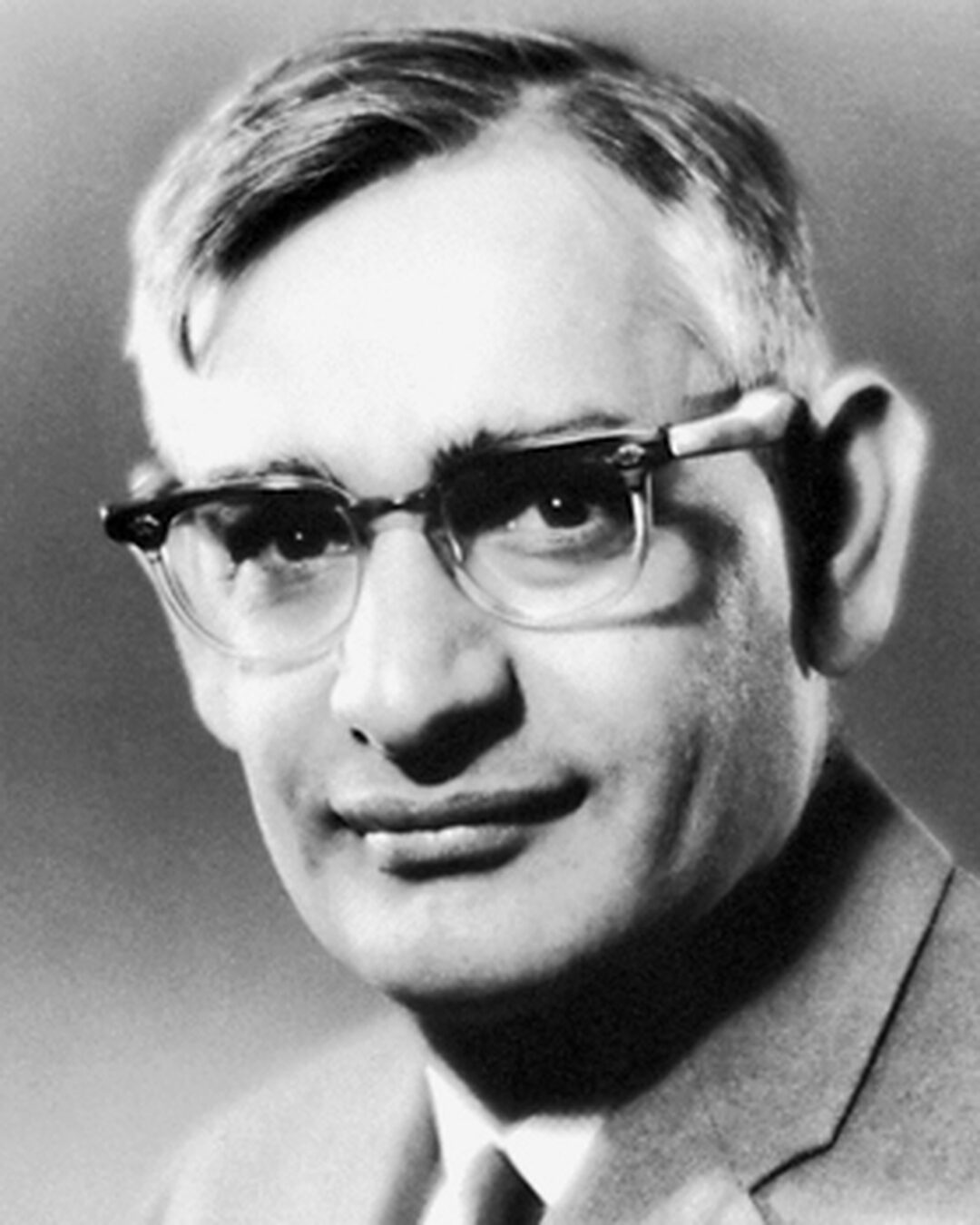
At the University of Liverpool, Khorana joined the laboratory of Roger J S Beer, completing his Ph.D. in organic chemistry in 1948 on a thesis dealing with the structure of melanin. Liverpool's bombed-out post-war chemistry was unglamorous, but Khorana later recalled it as the period when he became a serious researcher.
A turning point came when he heard about the work of Vladimir Prelog (Nobel 1975) at the ETH Zürich. He spent 1948-49 in Prelog's lab as a postdoctoral fellow, learning the rigorous Swiss-school approach to organic chemistry. There he absorbed the discipline of structure-activity thinking that would mark the rest of his career.
Returning to India in 1949, he found no academic position. He went briefly back to England, then accepted a fellowship from the British Columbia Research Council in Vancouver, Canada, in 1952 — under Gordon Shrum. The Council was a modest institution but gave Khorana a free hand. He worked on nucleic acid synthesis — chemically constructing nucleotides and short oligonucleotides — at a time when most biochemists were only studying these molecules indirectly.
In 1960 he moved to the University of Wisconsin-Madison as Co-Director of the Institute for Enzyme Research and full Professor of Biochemistry. In 1970 he joined the Massachusetts Institute of Technology (MIT) as Alfred P. Sloan Professor of Biology and Chemistry, where he remained for the rest of his career until retiring in 2007. He passed away in Concord, Massachusetts, on 9 November 2011, aged 89.
He became a naturalised US citizen in 1966, while remaining proud of his Indian roots.
Deciphering the genetic code
The 1960s were the heroic decade of molecular biology. Watson and Crick had revealed the double-helix structure of DNA in 1953. Marshall Nirenberg and Heinrich Matthaei had shown in 1961 that a synthetic RNA of UUU-UUU-UUU coded for the amino acid phenylalanine, suggesting that the genetic code worked through three-letter "codons".
But the full code remained out of reach. With four nucleotide letters (A, U, G, C) taken in groups of three, there are 64 possible codons; only 20 amino acids and 3 stop signals. The mapping of which codon meant which amino acid had to be discovered experimentally.
Khorana's breakthrough was to chemically synthesise defined-sequence RNAs. Where Nirenberg used random or simple repeating sequences, Khorana could make RNAs of any desired sequence — for example UCUCUCUC… (alternating U and C) or UGUGUG… (alternating U and G). When these were used as templates for protein synthesis in cell-free extracts, the resulting proteins revealed the codon assignments unambiguously.
Through such systematically designed experiments through 1964-66, Khorana's lab and Nirenberg's lab between them assigned every codon to its amino acid. The result was the codon table every biology student now memorises — the Rosetta Stone of molecular biology.
For this contribution, Khorana shared the 1968 Nobel Prize in Physiology or Medicine with Marshall W Nirenberg (NIH) and Robert W Holley (Cornell, who had separately worked out the structure of transfer RNA).
The first synthetic gene
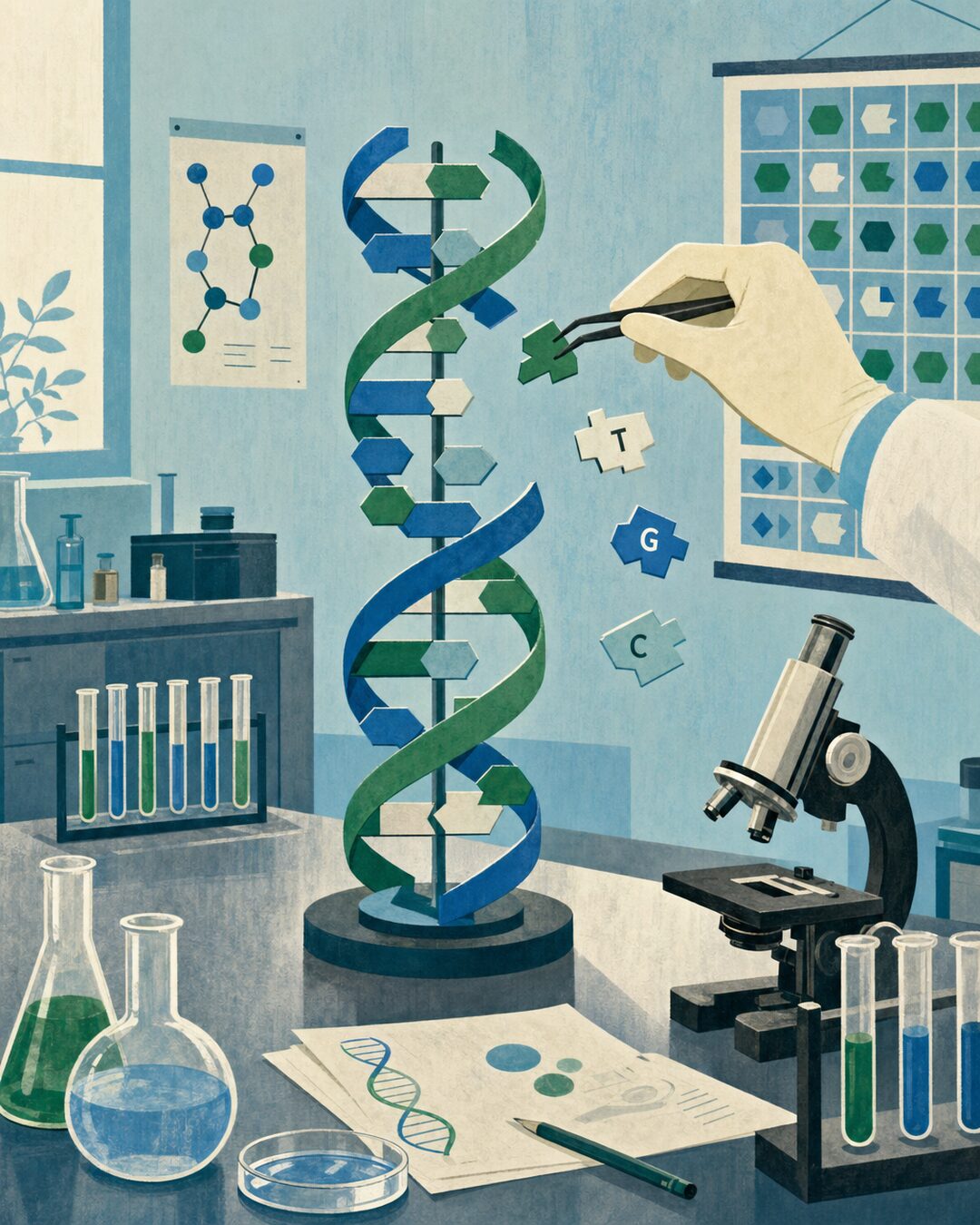
Most scientists would have rested on the Nobel. Khorana set out instead on a problem that even his peers thought too ambitious: to chemically synthesise an entire gene.
In 1970 his lab announced the chemical synthesis of the 77-nucleotide gene for an alanine transfer RNA from yeast. By 1972, with refinements, they had assembled a functional synthetic gene — a complete double-stranded DNA fragment, made by stitching together short chemically synthesised oligonucleotides using an enzyme called DNA ligase.
In 1976, Khorana's group went further: they synthesised a functional bacterial gene for tyrosine tRNA, complete with regulatory regions, and showed it worked when introduced into a living cell. This was, in effect, the birth of synthetic biology.
The chemical methods Khorana pioneered — synthesising nucleotides, joining them with phosphodiester bonds, ligating them into longer fragments — became the foundation of:
- Polymerase Chain Reaction (PCR) primers
- Sanger sequencing primers
- Site-directed mutagenesis
- Synthetic oligonucleotide microarrays
- CRISPR guide RNAs
- mRNA vaccines (which require defined-sequence mRNA)
- Gene therapy vector design
Later research at MIT
At MIT, Khorana shifted focus to membrane biochemistry, particularly the protein bacteriorhodopsin — a light-driven proton pump from a salt-loving bacterium. He studied rhodopsin, the visual-pigment protein in human retina, mapping mutations linked to retinitis pigmentosa, a hereditary cause of blindness. This second-act research, less famous than his code-cracking work, kept his lab productive for three more decades.
Awards and recognitions
| Year | Award |
|---|---|
| 1968 | Nobel Prize in Physiology or Medicine |
| 1968 | Padma Vibhushan, Government of India |
| 1969 | National Medal of Science (US) |
| 1971 | Honorary Fellow, Indian National Science Academy |
| 1974 | Willard Gibbs Medal |
| 1980 | Gairdner Foundation International Award |
| 1987 | National Medal of Science (Lifetime) |
| 2007 | Paul Kayser International Award of Merit in Retina Research |
He held honorary degrees from over 30 universities globally.
Legacy in modern Indian science and beyond
In India
- Khorana Programme for Scholars — a flagship scholarship started in 2007 by the Indo-US Science and Technology Forum (IUSSTF), the DBT and the University of Wisconsin-Madison. Sends Indian undergraduates to top US universities for summer research.
- Khorana scholarship and Bose-Khorana programme — for graduate students.
- His birth centenary in 2022 saw commemorative events by DBT, INSA and Indian universities; postage stamp issued by India Post (2018).
- His MIT and Wisconsin labs trained many Indian-origin biochemists who returned to India and built careers at IISc, NCBS, CCMB, IIT Bombay, IGIB and TIFR.
In modern biotechnology
Khorana's chemical synthesis of nucleic acids is the direct ancestor of:
- Recombinant DNA technology (Boyer-Cohen, 1973) — built on Khorana's synthesis methods.
- PCR (Mullis, 1983; Nobel 1993) — needs synthetic oligonucleotide primers.
- Sanger sequencing (Nobel 1980) and modern next-generation sequencing.
- Site-directed mutagenesis — used in every protein-engineering lab.
- CRISPR-Cas9 (Charpentier-Doudna, 2012; Nobel 2020) — uses synthetic guide RNAs.
- mRNA vaccines — Moderna and Pfizer-BioNTech COVID-19 vaccines depend on defined-sequence mRNAs synthesised using Khorana-derived chemistries.
- Synthetic biology and minimal genomes — Craig Venter's 2010 synthetic Mycoplasma genome traces its lineage to Khorana's 1976 synthetic gene.
- DNA data storage and DNA computing — emerging field built on long synthetic DNA.
In short, almost every modern biotechnology platform — from gene therapy and CAR-T cells to designer enzymes and plant gene-editing — traces some part of its toolkit to Khorana's chemistry.
UPSC relevance
GS Paper III — Science & Technology
- Genetic code and protein synthesis fundamentals.
- Synthetic biology, gene editing, mRNA vaccines, CRISPR — all descended from Khorana's chemical synthesis methodology.
- India's biotech ecosystem and how it builds on global scientific contributions.
GS Paper I — Personalities and Indian society
- Educational mobility from a poor village to Nobel laureate.
- Indian diaspora's role in global science.
- Partition-era migration and the brain drain debate.
Essay
- "The village schoolboy who cracked the code of life."
- "Brain drain or brain circulation? — the case of Indian-origin scientists abroad."
- "Curiosity as the engine of biotechnology."
Prelims pointers
- Har Gobind Khorana — born 9 January 1922 in Raipur, Multan (now Pakistan); died 9 November 2011 in Massachusetts.
- Nobel Prize in Physiology or Medicine 1968 — shared with Marshall W Nirenberg and Robert W Holley.
- Contribution — interpretation of the genetic code and its function in protein synthesis.
- First synthetic gene — chemically synthesised in 1972 (yeast tRNA gene); first functional synthetic gene 1976 (E. coli tRNA gene).
- Affiliations — University of British Columbia (Vancouver), University of Wisconsin-Madison, MIT.
- Padma Vibhushan — 1969.
- Khorana Programme for Scholars (KPS) — IUSSTF + DBT + University of Wisconsin scholarship.
- Genetic code — uses codons of three nucleotides each; 64 possible codons specifying 20 amino acids and 3 stop signals.
- Khorana's work foundational to — recombinant DNA, PCR, Sanger sequencing, mRNA vaccines, CRISPR-Cas9.
- Other Indian-origin Nobel laureates in science — C V Raman (1930), Subrahmanyan Chandrasekhar (1983), Venkatraman Ramakrishnan (2009).
For the UPSC aspirant, Khorana's life is more than a biographical fact. It is a case study in how basic, curiosity-driven research — chemically stitching together nucleotides one at a time — built the entire toolkit on which 21st-century biotechnology, vaccines and gene therapy run. The aspirant who can connect Khorana's 1972 synthetic gene to Moderna's 2020 mRNA vaccine, and to India's 2024 BioE3 Policy, will write answers that show genuine command of the material.