Emotional Intelligence (Goleman): Five Components, Mayer-Salovey Model and Civil Services Applications
Emotional intelligence by Daniel Goleman (1995) consists of self-awareness, self-regulation, motivation, empathy, and social skills. The Mayer-Salovey ability model, EI vs IQ, and applications to UPSC GS-IV ethics and civil services leadership.
Emotional intelligence Goleman popularised in Emotional Intelligence: Why It Can Matter More Than IQ (1995) is the capacity to recognise, understand, manage, and use emotions — one’s own and others’ — to navigate social situations and achieve goals. Daniel Goleman, a Harvard-trained psychologist and New York Times science writer, took an academic concept from the 1990 work of John Mayer and Peter Salovey, translated it for general readers, and made the phrase “emotional intelligence” part of standard organisational vocabulary. For UPSC GS Paper IV, emotional intelligence Goleman framed is one of the most directly examinable topics in the syllabus — it appears under “emotional intelligence and its utilities and applications in administration and governance” and recurs in case studies on workplace conflict, public anger, and ethical pressure.
The core claim is that cognitive ability (IQ) is not enough for effective living or leadership. Two persons of equal IQ can have radically different outcomes depending on how they manage their emotional lives — under stress, in conflict, when reading others, when motivating themselves. Goleman’s data argued that for senior leadership in particular, emotional intelligence accounts for far more variance in performance than technical or analytical skill. For civil services where decisions are made under political pressure, public scrutiny, and personal cost, this is not an academic point.
The Five Components of Emotional Intelligence
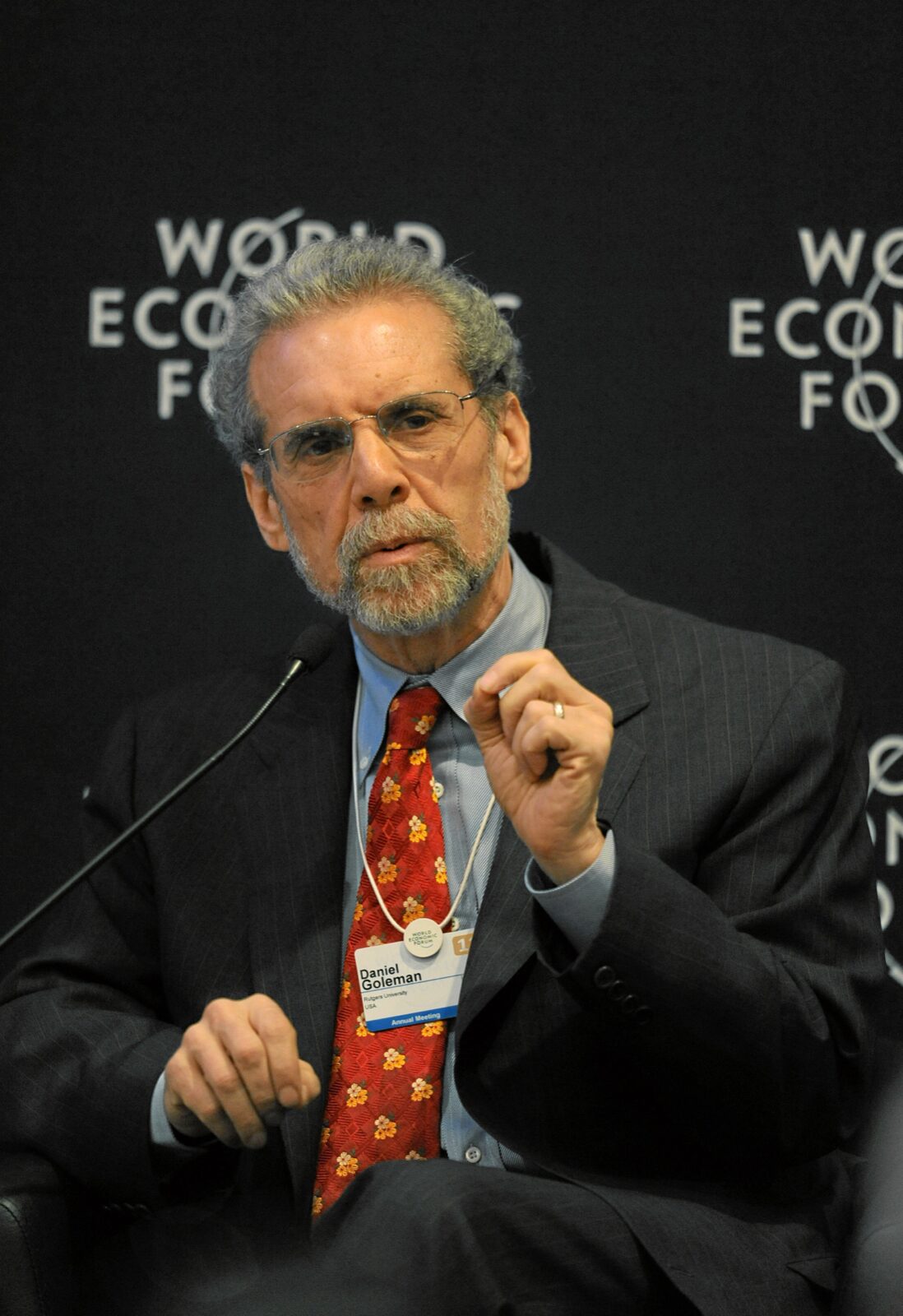
Goleman organised emotional intelligence into five domains — three intrapersonal (about managing oneself) and two interpersonal (about managing relationships). Together they form the framework most readers and recruiters use.
1. Self-Awareness
Self-awareness is the foundation. It is the capacity to recognise your own emotions as they occur — to notice anger rising before it speaks, to feel anxiety before it derails judgement, to perceive boredom or attraction or fear in time to consider what to do about them.
A self-aware officer recognises when a hostile delegation is triggering personal reaction rather than legitimate policy concern, distinguishes performance anxiety from genuine inadequacy, and notices the small early signals of burnout before they become catastrophic. The opposite — acting on emotions you cannot name — is the source of the most common preventable errors in public life: outbursts in meetings, intemperate orders, defensive denials.
Tools: emotional vocabulary (distinguishing irritation, anger, contempt, resentment); journaling; pausing before responding; soliciting feedback from trusted colleagues. The same capacity is what Indian moral traditions call atma-jnana (self-knowledge) and what Stoic philosophy called prosoche (attention). The concept connects directly to foundational values of civil services — integrity is impossible without the self-knowledge to detect one’s own rationalisations.
2. Self-Regulation
Self-regulation is the capacity to manage your emotional responses — not to suppress them, but to channel them into productive action. A self-regulated officer feels anger at a corrupt subordinate but does not lash out in a meeting; feels disappointment at a postponed promotion but does not sabotage the work; feels temptation at a bribe offer but does not hesitate to refuse.
Goleman distinguishes self-regulation from suppression. Suppression bottles emotion until it explodes or leaks out as physical illness, depression, or sudden cruelty. Self-regulation acknowledges the emotion, lets it inform judgement, and then directs the response. The model is closer to a thermostat than a dam.
Practical components:
- Impulse control — pause between stimulus and response
- Stress management — techniques to lower physiological arousal (breathing, exercise, sleep)
- Cognitive reframing — interpret the event in ways that change its emotional charge
- Trustworthiness and conscientiousness — the behavioural outcomes of consistent self-regulation
Self-regulation aligns with the Kantian conception of autonomy — see deontology Kant developed for the philosophical version. To be self-regulated is to be governed by one’s chosen principles rather than by the strongest current emotion.
3. Motivation
Motivation in Goleman’s sense is intrinsic motivation — the drive to pursue goals for their own sake or for the sake of values, not for external rewards. The emotionally intelligent person is energised by the work itself, by mastery, by service, by the connection between what they do and what they care about.
Components:
- Achievement drive — striving to improve or meet a standard of excellence
- Commitment — alignment with the goals of the group or organisation
- Initiative — readiness to act on opportunities
- Optimism — persistence in pursuing goals despite setbacks
Civil servants who treat their work merely as a job — clocking in, fulfilling minimum requirements, awaiting transfer — have low motivation in Goleman’s sense regardless of how many hours they put in. Those who find meaning in service, who treat each posting as an opportunity to do something useful, who maintain energy through setbacks — they are emotionally motivated even when external rewards are scarce or delayed.
4. Empathy
Empathy is the capacity to recognise and understand the emotions of others — to read what someone is feeling from their words, tone, posture, and context, and to respond in ways that acknowledge it.
Goleman distinguishes three kinds of empathy:
- Cognitive empathy — understanding what another person is feeling (the perspective-taking part)
- Emotional empathy — actually feeling something of what they feel (the resonance part)
- Compassionate empathy — being moved by their feeling to want to help (the action part)
For a civil servant, empathy is not optional. A district magistrate dealing with displaced villagers, a police officer at a protest, a Secretary briefing the minister — each must read emotional currents accurately to make sound decisions. The official who cannot tell whether a delegation is angry because of substantive grievance or theatrical pressure will misallocate response. The officer who feels nothing for the family of a victim cannot deliver justice that feels like justice to those affected.
Empathy is teachable. Active listening, asking open-ended questions, attending to non-verbal cues, slowing down conversations, taking time in cases that matter — all build empathic capacity over a career. Empathy also requires the boundary not to be overwhelmed by others’ emotions; the empathetic officer is informed by feeling, not flooded by it.
5. Social Skills
Social skills are the applied competencies that emerge when self-awareness, self-regulation, motivation, and empathy combine. Goleman lists them as the visible outputs of emotional intelligence in social settings:
- Influence — persuading without coercion
- Communication — clear sending, accurate receiving
- Conflict management — negotiating and resolving disagreements
- Leadership — inspiring and guiding groups
- Change catalyst — initiating or managing transitions
- Building bonds — cultivating relationships of trust
- Collaboration and cooperation — working with others toward shared goals
- Team capabilities — creating group synergy
A civil servant’s effectiveness in office is overwhelmingly determined by social skills in this sense. Technical knowledge of rules matters; ability to get colleagues, subordinates, ministers, and the public to cooperate around lawful objectives matters more.
Mayer-Salovey Ability Model
Before Goleman’s bestseller, John Mayer (University of New Hampshire) and Peter Salovey (Yale, later its president) had defined emotional intelligence in 1990 as “the ability to monitor one’s own and others’ feelings, to discriminate among them, and to use this information to guide one’s thinking and action.” This is the ability model — emotional intelligence is conceived as a set of mental abilities like verbal or mathematical intelligence, not as a bundle of personality traits.
Mayer and Salovey organised the construct into four branches:
| Branch | Capacity |
|---|---|
| Perceiving emotions | Identifying emotions in faces, voices, situations, art |
| Using emotions | Harnessing emotions to facilitate thinking and problem-solving |
| Understanding emotions | Comprehending emotional language and relations among emotions |
| Managing emotions | Regulating emotions in oneself and others |
The four branches are hierarchical — perception is foundational, management is most complex. Mayer-Salovey developed a performance test (the MSCEIT) that measures emotional intelligence the way IQ tests measure cognitive intelligence: through tasks with correct and incorrect answers, not self-report.
The Mayer-Salovey ability model and the Goleman mixed model (which folds in motivation, traits, and behaviours) are sometimes presented as rivals, but they answer different questions. The ability model is the more scientifically rigorous construct; the Goleman framework is the more practically useful guide for self-development and organisational training. UPSC answers benefit from naming both — it signals familiarity with the distinction between trait-based and ability-based conceptions.
EI vs IQ
Goleman’s most provocative claim was that emotional intelligence may matter more than IQ for life success, especially in leadership roles. The popular framing — “EI matters more than IQ” — overstates the research, but the underlying point has held up.
IQ is largely fixed by adulthood and predicts academic performance and certain cognitive tasks well. EI is developable across the lifespan and predicts interpersonal effectiveness, leadership, mental health, and stress resilience better than IQ does. For senior positions where work is overwhelmingly social and emotional, the contribution of EI to performance variance is substantial.
For civil services aspirants, the implication is encouraging: emotional intelligence is a skill that can be built through practice, reflection, and feedback. A candidate who scored modestly on cognitive tests in school can become a highly effective administrator by developing emotional self-management and social skills systematically over a career. The interview stage of the UPSC selection process — and especially the personality test — already implicitly evaluates EI; building it explicitly improves both selection and post-selection performance.
Emotional Intelligence in Civil Services
Emotional intelligence Goleman articulates is operationally critical in civil services for several reasons:
- Decisions under emotional pressure. A magistrate handling communal tension, a police officer at a protest, a relief officer in a disaster zone — all decide under conditions where untrained emotional response can be lethal. Self-awareness and self-regulation are not luxuries.
- Public trust. Citizens evaluate officials partly on whether they feel heard and respected. An empathetic officer often resolves grievances with less escalation and lower public cost than an officious one delivering the same substantive decision.
- Managing subordinates. The bulk of an officer’s working life is leading teams. Social skills determine whether instructions are executed energetically or grudgingly.
- Resilience to political pressure. Officers who maintain emotional steadiness under intimidation are harder to corrupt and easier to respect. This connects to ethics in public administration as a behavioural foundation for principled service.
- Avoiding burnout. The all-India services have high rates of stress, alcohol use, and family strain. Self-regulation and motivation, properly cultivated, are protective.
The integration of emotional intelligence with traditional ethics is the point: principles like fairness and integrity (Rawls’ theory of justice gives one structured account) are valuable only when carried by emotionally competent persons. A theoretically just officer who explodes at subordinates, ignores constituents’ pain, or burns out by year five delivers less justice than a less philosophically refined officer with better emotional skills.
Critiques of Goleman’s Framework
- Conceptual sprawl. Goleman’s “mixed model” includes traits, abilities, motivations, and behaviours under one heading. Critics (notably Mayer and Salovey themselves) argue this dilutes the construct’s scientific precision.
- Measurement problems. Self-report EI measures correlate too closely with personality (the “Big Five”) to add much explanatory power. The ability-based MSCEIT is more rigorous but harder to administer.
- Cultural specificity. Emotion recognition and management norms vary across cultures. A global construct risks privileging Anglo-American emotional styles.
- Marketing inflation. The popular claim that EI matters more than IQ for any kind of work is not empirically supported. EI matters more for some roles and contexts than others.
These critiques recommend caution but do not undermine the core insight — that emotional competencies are real, measurable, and developable, and that ignoring them in administration is foolish.
Emotional Intelligence in UPSC Case Studies
For GS Paper IV case studies, emotional intelligence Goleman gives is the natural lens when:
- A subordinate, citizen, or colleague is angry, grief-stricken, or anxious and the candidate must respond.
- A decision is technically clear but emotionally fraught — a difficult dismissal, a denial of benefits, a transfer.
- Workplace tension is undermining cooperation.
- The candidate is asked how they would manage their own response to pressure, criticism, or failure.
Strong UPSC answers explicitly name the EI competencies in play — self-awareness, empathy, social skill — and describe specific techniques (active listening, reflection, reframing) rather than gesturing at “being sensitive.” Examiners reward precision, not piety.
Frequently Asked Questions
What is emotional intelligence in simple words?
Emotional intelligence is the capacity to recognise, understand, manage, and use emotions — your own and others’ — to navigate social situations and achieve goals. Daniel Goleman popularised the concept in his 1995 book of the same name, drawing on earlier academic work by John Mayer and Peter Salovey.
What are the five components of emotional intelligence according to Goleman?
Self-awareness (recognising your own emotions), self-regulation (managing them), motivation (intrinsic drive aligned with values), empathy (recognising others’ emotions), and social skills (applied competencies like influence, communication, and conflict management). The first three are intrapersonal; the last two are interpersonal.
What is the difference between Goleman’s model and the Mayer-Salovey model?
Mayer and Salovey define emotional intelligence as a set of mental abilities (perceiving, using, understanding, managing emotions) measurable like cognitive intelligence. Goleman’s “mixed model” adds traits, motivations, and behaviours, making it broader and more practically actionable but scientifically less precise.
Is emotional intelligence more important than IQ?
For some outcomes, especially leadership and interpersonal effectiveness, EI predicts performance better than IQ. IQ matters more for academic and analytical tasks. The popular claim that EI universally matters more than IQ is an overstatement; the underlying point — that emotional competencies are critical and often underdeveloped — is well supported.
Can emotional intelligence be developed?
Yes. Unlike IQ, which is largely fixed by adulthood, emotional intelligence improves through practice, reflection, feedback, and structured training. Active listening, journalling, meditation, therapy, leadership coaching, and deliberate exposure to difficult emotional situations all build EI over a career.
How is emotional intelligence relevant to civil services?
Civil services decisions are made under emotional pressure (communal tension, public anger, political intimidation) and largely through teams (subordinates, peers, superiors). Self-awareness and self-regulation prevent catastrophic errors; empathy and social skills build the trust and cooperation that effective administration depends on.
What is empathy according to Goleman?
Empathy is the capacity to recognise and understand the emotions of others. Goleman distinguishes three kinds: cognitive empathy (understanding what another feels), emotional empathy (feeling something of what they feel), and compassionate empathy (being moved to help). All three are trainable.
How is emotional intelligence examined in UPSC GS-IV?
The syllabus explicitly lists “emotional intelligence — concepts, and their utilities and applications in administration and governance.” Direct questions on the construct and its components are common; case studies routinely require candidates to demonstrate self-awareness, empathy, and social skill in responding to workplace and public-facing scenarios.