
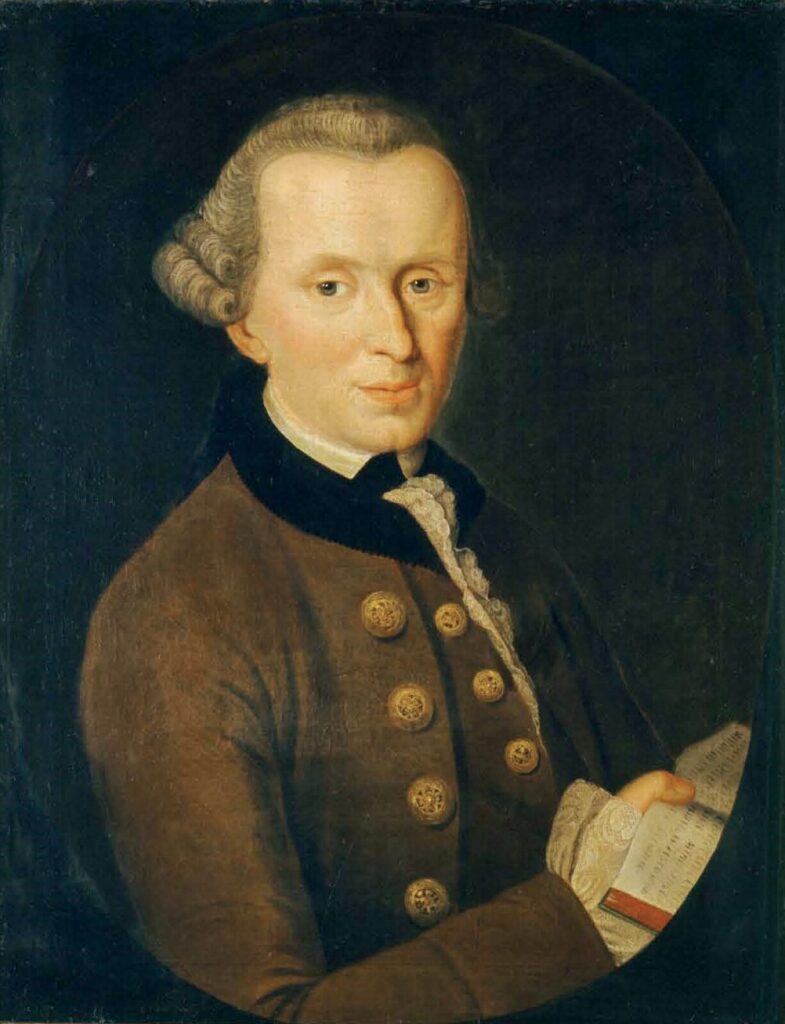
Deontology Kant is the ethical theory that judges actions by their conformity to moral duty, not by their consequences. Immanuel Kant (1724–1804), writing in Groundwork of the Metaphysics of Morals (1785) and Critique of Practical Reason (1788), built the most rigorous deontological system in Western philosophy — one whose central claim is that morality is a matter of rational law that any rational being must impose on themselves. For UPSC GS Paper IV aspirants, deontology Kant provides the principled counterweight to utilitarian arithmetic: a frame that protects individuals from being sacrificed for aggregate gain, that insists on truth-telling even when lies would help, and that grounds the inviolability of human dignity invoked in the Indian Constitution.
The word deontology derives from the Greek deon (duty) and logos (study). A deontological theory holds that certain actions are right or wrong in themselves — independent of the good or bad outcomes they produce. Kant’s version, the most influential, derives these duties from a single rational principle he called the categorical imperative.
Kant and the Foundation of Deontology
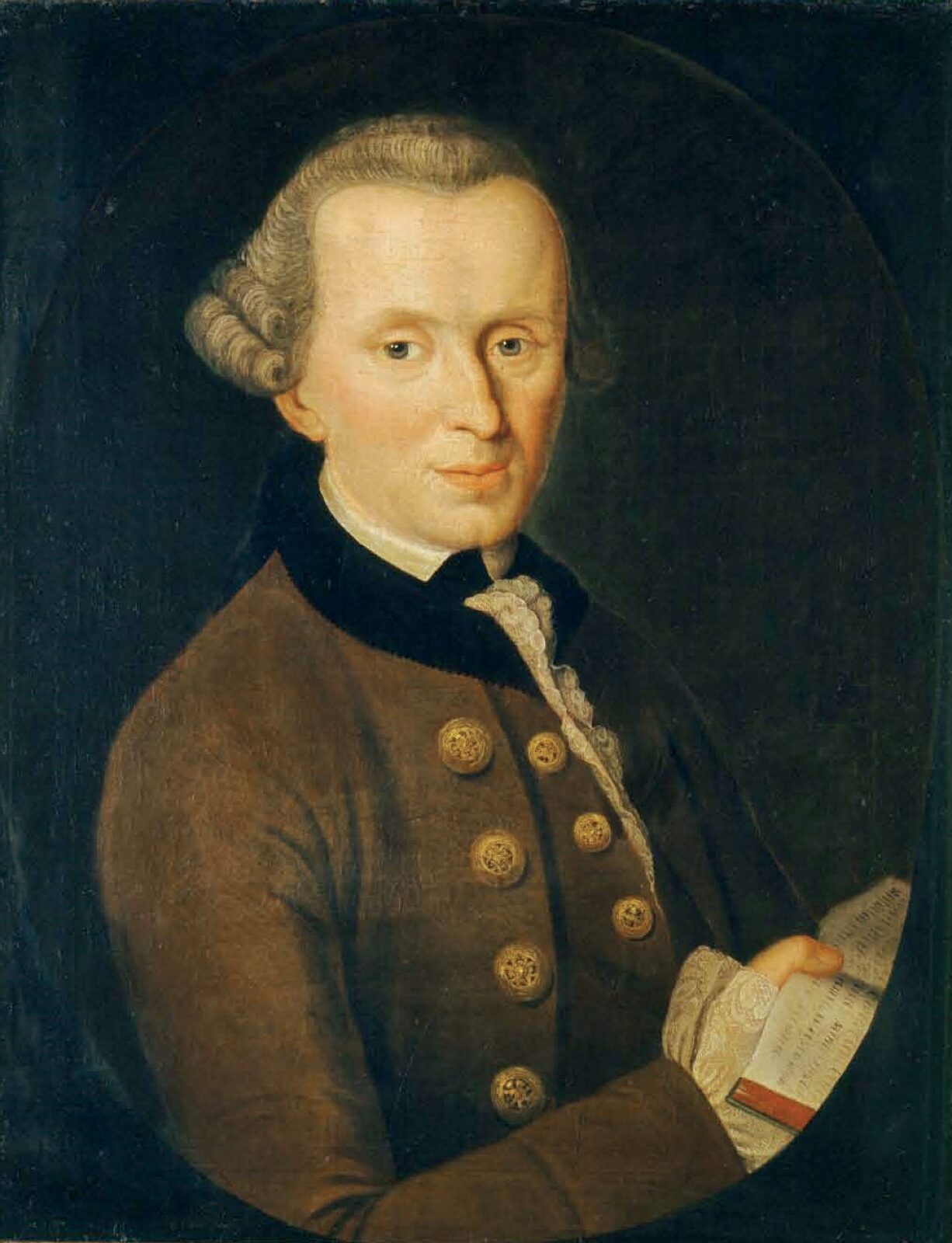
Kant lived his entire adult life in Königsberg, East Prussia, teaching at its university for over four decades. His daily routine was so unvarying that townspeople reportedly set their watches by his afternoon walks. From this provincial post he produced the most systematic moral philosophy since Aristotle and shifted the entire trajectory of European ethics.
Kant’s central question was how moral obligation could exist at all in a world where every event has a natural cause. His answer: morality is not located in the world of consequences (which is governed by natural law) but in the will of a rational agent. A rational being can step outside the causal stream by acting on principles it gives itself — and only such self-given principles can be moral.
This is the autonomy of the will, the cornerstone of deontology Kant defends. Moral law is not received from God, from custom, or from nature; it is legislated by reason itself, for itself. A morally good person obeys reason’s law because they recognise it as their own — not because they fear punishment, hope for reward, or feel sympathetic.
The good will
Kant opens the Groundwork with one of the most cited sentences in philosophy: “Nothing in the world — indeed nothing even beyond the world — can possibly be conceived which could be called good without qualification, except a good will.”
Intelligence, courage, wealth, even happiness can be misused. Only the good will — the will that acts from duty for duty’s sake — is unconditionally good. A merchant who refuses to cheat customers because cheating is bad for business has done the right thing but not from duty. The same merchant refusing to cheat because cheating is wrong, even when no one is watching and competitors are profiting, has acted morally in Kant’s sense. The outcome is identical; the moral worth is opposite.
This is the duty vs inclination distinction. Inclinations (desires, sympathies, self-interest) may align with duty but cannot ground it. Only an action done from duty has moral worth. Critics call this cold; Kant insists it is the only way to secure moral worth against the lottery of temperament. A naturally cheerful person who helps others because helping feels pleasant is not more moral than a depressed person who forces themselves to help because duty requires it — if anything, the second case shows duty more clearly.
The Categorical Imperative
The categorical imperative is the single rational principle from which all specific duties derive. “Categorical” means unconditional — it commands without “if” clauses. A hypothetical imperative says “if you want X, do Y” (if you want to be healthy, exercise). A categorical imperative says simply “do Y” — and it binds every rational being regardless of what they want.
Kant gives three principal formulations of the categorical imperative, each meant to express the same fundamental law from a different angle.
Formula 1: Universalizability
“Act only according to that maxim by which you can at the same time will that it should become a universal law.”
Before acting, identify the maxim (the principle) on which you are about to act. Then ask: could I will that everyone in similar circumstances act on this same principle?
Kant’s classic example is lying promises. If I am tempted to make a promise I do not intend to keep — say, borrowing money I cannot repay — my maxim is “make false promises when convenient.” Universalised, this maxim destroys itself: if everyone made false promises when convenient, the institution of promising would collapse, and there would be no promises left to falsify. The maxim is self-contradictory when universalised; it fails the test.
This is the logic of universalizability — a maxim is morally permissible only if it can be coherently universalised. The test is rational, not consequentialist. Kant is not asking what would happen if everyone lied; he is asking whether the very concept of “lying when convenient” can survive being made into a universal law. Often it cannot, because the action presupposes the rule it is trying to break.
Formula 2: Humanity as Ends, Never Merely as Means
“Act in such a way that you always treat humanity, whether in your own person or in the person of any other, never simply as a means, but always at the same time as an end.”
This is the formulation with the deepest moral resonance. Every rational being has dignity — an unconditional, incomparable worth — and must be respected as a source of their own ends, not used as a tool for someone else’s purposes. Slavery, deception, manipulation, exploitation, even paternalistic interference all violate this formula because each treats another person merely as instrumental to a goal they have not freely embraced.
The phrase “never merely as a means” matters. Kant accepts that we routinely use others as means — we hire taxi drivers, employ contractors, vote for politicians. The wrong is using them merely as means — without consideration of their own ends, dignity, or rational agency. A fair employment contract uses the worker as a means to production but respects them as an end by paying fairly, ensuring safety, and not deceiving them. Using a person merely as a means is the form of moral wrong that connects Kant to modern human rights, the abolition of trafficking, and constitutional dignity guarantees.
Formula 3: Kingdom of Ends
“Every rational being must so act as if he were through his maxim always a legislating member in the universal kingdom of ends.”
The kingdom of ends is an ideal community in which every rational being is both subject to the moral law and a legislator of it. Each member treats every other as an end and is so treated in return. To act morally is to act as a citizen of this ideal kingdom — to ask not merely “is my maxim universalizable?” but “would I, as co-legislator with every other rational being, will this law?” This formula brings the universalizability test together with respect for persons in a single image: a community of free, equal, dignified beings, each legislating for all.
Hypothetical vs Categorical Imperatives
The distinction between hypothetical and categorical imperatives is central to deontology Kant constructs.
| Hypothetical Imperative | Categorical Imperative |
|---|---|
| Conditional (“if you want X, do Y”) | Unconditional (“do Y”) |
| Depends on agent’s desires | Independent of desires |
| Counsel of prudence or skill | Command of morality |
| Example: “If you want to pass UPSC, study hard” | Example: “Do not lie” |
| Failure shows lack of skill or imprudence | Failure shows moral wrong |
Most everyday “shoulds” are hypothetical. Only moral oughts are categorical — they apply no matter what we want, no matter what we feel, no matter what consequences follow. This is why Kant rejects utilitarianism Bentham developed: utilitarian “oughts” are conditional on the goal of maximising happiness, and so for Kant they are merely hypothetical — counsels of how to be a good happiness-maximiser, not commands of morality.
Autonomy: The Heart of Kantian Ethics
The deepest claim of deontology Kant offers is that morality is autonomy. To be moral is to be free; to be free is to be moral. A being moved only by inclinations is unfree — they are pushed by causes they did not choose. A being who acts on a self-given rational law is free in the highest sense.
This idea reverses the common picture of freedom as doing whatever you want. For Kant, doing whatever you want is heteronomy — being ruled by something other than reason (appetite, custom, fear). Real freedom is the capacity to act from reason against inclination. The civil servant who refuses a bribe in defiance of greed is more free than the one who takes it; the bureaucrat who upholds rules under political pressure is more free than the one who complies with the powerful. This is the philosophical root of what Indian public administration calls moral courage — and it underwrites the foundational values of civil services of integrity, impartiality, and non-partisanship.
Critiques of Kant’s Deontology
Deontology Kant developed faces serious objections, several of which UPSC examiners themselves invoke.
- Rigorism — the murderer at the door. Kant famously argued that one must not lie even to a murderer asking where their intended victim is hiding. The conclusion strikes most readers as monstrous. Defenders distinguish lying (always wrong) from withholding information (permitted); critics say the example reveals deontology’s blindness to consequences.
- Empty formalism (Hegel). The categorical imperative tells us to universalise our maxims but cannot specify which maxims to consider. With clever description, almost anything can be universalised or rejected. Hegel argued the procedure is formal but contentless.
- Conflicts of duty. What if telling the truth and protecting innocent life conflict? Kant’s framework gives no clear way to weigh competing duties because each is supposed to be absolute. Ross’s prima facie duties and modern deontologists soften the rigidity.
- Coldness toward emotion. Pure duty without sympathy is, for many critics, a defective ideal. Real moral excellence integrates feeling and principle; Kant’s exclusion of inclination from moral worth feels artificial. This is exactly what emotional intelligence (Goleman) brings back into the moral picture.
- Cultural narrowness. Kant’s rational subject is suspiciously European, male, and bourgeois. Feminist and post-colonial critics have challenged the universality claim. Defenders respond that the universalisation procedure cuts equally across cultures even if Kant’s own examples are dated.
Deontology in UPSC Case Studies
For GS Paper IV case studies, deontology Kant gives is the natural lens when:
- A choice tempts you to use another person merely as a means (manipulation, deception, coercion).
- An aggregate welfare argument threatens to sacrifice an individual’s rights or dignity.
- The pressure to “make an exception just this once” comes up — universalizability tests it sharply.
- Constitutional values of dignity, equality before law, and due process are at stake.
A strong UPSC answer typically applies both Kant and a utilitarian frame, then resolves the tension explicitly. Kant gives you the principled floor — the line you will not cross whatever the math says. Utilitarianism gives you the lens for choices above that floor where outcomes legitimately matter. The synthesis — principled limits + outcome sensitivity within those limits — is roughly how Indian constitutionalism actually works, and how the strongest civil servants reason in office. The same synthesis with a justice-as-fairness twist appears in Rawls’ theory of justice, which can be read as a Kantian construction of social institutions.
A worked example
Suppose a junior officer discovers that a senior, much-respected colleague has falsified attendance records to claim leave fraudulently. Reporting will damage a long career; staying silent protects a friend but condones fraud.
Utilitarian frame: weigh the harms (precedent, institutional decay, fairness to honest staff) against the costs (career damage, friendship loss). Often this calculation cuts toward reporting but leaves room for compromise.
Kantian frame: ask whether the maxim “conceal a colleague’s fraud out of friendship” can be universalised. It cannot — universalised, it destroys the very integrity of the institution that makes service worthwhile. Treating the senior colleague as an end means respecting them as a rational adult accountable for their choices, not protecting them from consequences as if they were a child. The deontological answer is clear: report through proper channels. The utilitarian answer probably agrees; the Kantian answer would hold even if it did not. This is the protection Kant gives the principled officer when the math is uncertain.
Frequently Asked Questions
What is deontology in simple words?
Deontology is the moral theory that judges actions by their conformity to duty, not by their consequences. Immanuel Kant’s version is the most rigorous: certain actions (lying, breaking promises, using people merely as means) are wrong in themselves regardless of the good outcomes they might produce.
What is the categorical imperative?
The categorical imperative is Kant’s single fundamental moral principle. It commands unconditionally — without u0022ifu0022 clauses. Kant gives three main formulations: act only on maxims you can will to be universal laws; treat humanity always as an end, never merely as a means; and act as a legislating member of an ideal kingdom of ends.
What is the difference between hypothetical and categorical imperatives?
Hypothetical imperatives are conditional on goals (u0022if you want health, exerciseu0022). They are counsels of prudence or skill. Categorical imperatives are unconditional — they command regardless of what you want. Only categorical imperatives are properly moral.
Why does Kant emphasise the good will?
Kant argues that only the good will is good without qualification. Intelligence, courage, even happiness can be misused. A good will — one that acts from duty for duty’s sake — has unconditional moral worth even if external circumstances prevent its intended effects.
What does u0022treat humanity as an endu0022 mean?
It means every rational being has unconditional dignity and must be respected as a source of their own ends — never merely as a tool for someone else’s purposes. This formula grounds modern human-rights discourse, the prohibition of slavery and trafficking, and constitutional dignity guarantees.
How does Kant differ from utilitarian thinkers?
Utilitarians (Bentham, Mill) judge actions by consequences — the right action maximises happiness. Kant judges actions by their underlying principle (maxim) and whether it respects rational agency. Kant forbids sacrificing one person for aggregate welfare; utilitarians, in principle, may permit it.
What is the strongest critique of Kant’s deontology?
The rigorism critique — Kant’s refusal to lie even to a murderer asking where the victim hides. Critics argue absolute rules produce inhumane results in extreme cases. Hegel’s formalism critique (the categorical imperative is empty without content) and the difficulty of resolving conflicts of duty are also widely cited.
How is Kantian deontology relevant to UPSC GS-IV?
Kantian ethics protects individual rights and dignity against utilitarian sacrifice, grounds the duty to act on principle under pressure, and supports the foundational values of integrity and impartiality. In case studies, the categorical imperative is the test for whether an u0022exceptionu0022 is justified — almost always it is not.
Tell Google you want more of this.
Add Anantam IAS as a preferred sourceOne tap, and this site shows up more often in your own Top Stories, AI Overviews and AI Mode. Remove it any time.