Food Fortification in India: FSSAI Standards, +F Logo and the Mandatory Rice Push Explained
Food fortification in India is the addition of essential micronutrients to staples like rice, wheat flour, salt, oil and milk. Full UPSC explainer on FSSAI standards, the +F logo, mandatory rice fortification under PDS and MDM, iodised salt success, double-fortified salt and the Cochrane critique.
Food fortification in India is the deliberate addition of essential vitamins and minerals to commonly consumed staples — salt, oil, milk, wheat flour and rice — to address widespread micronutrient deficiency without requiring people to change their diet. Food fortification in India is regulated by the Food Safety and Standards Authority of India through the FSS (Fortification of Foods) Regulations, 2018, and fortified packs carry the +F logo. India’s flagship intervention is the mandatory fortified rice rollout, which by March 2024 covered the Public Distribution System, Mid-Day Meal scheme and ICDS for around 80 crore beneficiaries with iron-, folic acid- and vitamin B12-fortified rice. Iodised salt remains the country’s most successful fortification story — universal salt iodisation, mandated since 1992 and re-mandated in 2011, has brought iodine deficiency disorder prevalence down from 40 percent to below 4 percent.
For UPSC, food fortification in India sits across GS-II welfare schemes for vulnerable groups, GS-III food security, public health and biotechnology, and the essay paper. The recent Cochrane Collaboration critique of rice fortification, the debate on voluntary versus mandatory pathways, and federalism concerns when states like Tamil Nadu pause fortified rice make this a hot current-affairs topic.
Background: India’s Hidden Hunger
The phrase ‘hidden hunger’ refers to micronutrient deficiency without calorie deficit. NFHS-5 (2019–21) showed 67.1 percent of children 6–59 months are anaemic, vitamin A deficiency affects approximately 17 percent of children, and folate and vitamin B12 deficiency drive a significant share of megaloblastic anaemia in women of reproductive age. Calorie deficiency has fallen sharply since the Green Revolution, but micronutrient deficiency has not. Food fortification is one of the four globally recognised strategies — alongside dietary diversification, supplementation and biofortification — to bridge this gap.
The Copenhagen Consensus, an economist-led ranking of development interventions, has repeatedly placed food fortification among the most cost-effective public health investments. The World Bank estimates that every rupee spent on fortification returns ₹9 in productivity and health gains.
Why Fortification
Fortification scores high on three operational metrics: it requires no behaviour change from the consumer, rides on existing food supply chains, and reaches both the poor (through PDS) and the non-poor (through retail markets). It complements rather than replaces supplementation under Anaemia Mukt Bharat and Anganwadi-based interventions under POSHAN Abhiyaan.
FSSAI Standards and the +F Logo
The Food Safety and Standards (Fortification of Foods) Regulations, 2018, notified by FSSAI, set the legal floor for food fortification in India. The regulations cover five staples — salt, edible oil, milk, wheat flour and maida, and rice — and specify nutrient levels per kilogram.
- Salt: iodised, and double-fortified with iron in approved formulations
- Edible oil: vitamin A (palmitate) and vitamin D
- Milk: vitamin A and vitamin D
- Wheat flour and maida: iron, folic acid, vitamin B12, and optionally zinc, vitamin A and B vitamins
- Rice: iron, folic acid and vitamin B12 (mandatory) plus optionally zinc and vitamins A, B1, B6
Fortified products must carry the +F logo — a stylised letter F in a tick mark — which is owned by FSSAI and licensed free of cost. The Food Fortification Resource Centre at ffrc.fssai.gov.in publishes the standards, audit protocols and the list of licensed premixes.
The Mandatory Rice Fortification Push
Rice is consumed daily by over two-thirds of India’s population. In a 2021 Independence Day address, the Prime Minister announced that all rice supplied under government schemes would be fortified by 2024. The rollout proceeded in three phases:
- Phase 1 (March 2022): ICDS and PM POSHAN (Mid-Day Meal) across all states
- Phase 2 (March 2023): Targeted Public Distribution System in aspirational and high-burden districts
- Phase 3 (March 2024): Entire Public Distribution System, covering around 80 crore beneficiaries under the National Food Security Act
Rice is fortified by extrusion — fortified rice kernels containing the nutrient premix are blended with regular milled rice in a ratio of about 1:100. The Food Corporation of India and state procurement agencies pay rice mills a small additional charge for fortification, fully borne by the Centre under the Department of Food and Public Distribution.
Iodised Salt: India’s Fortification Success Story
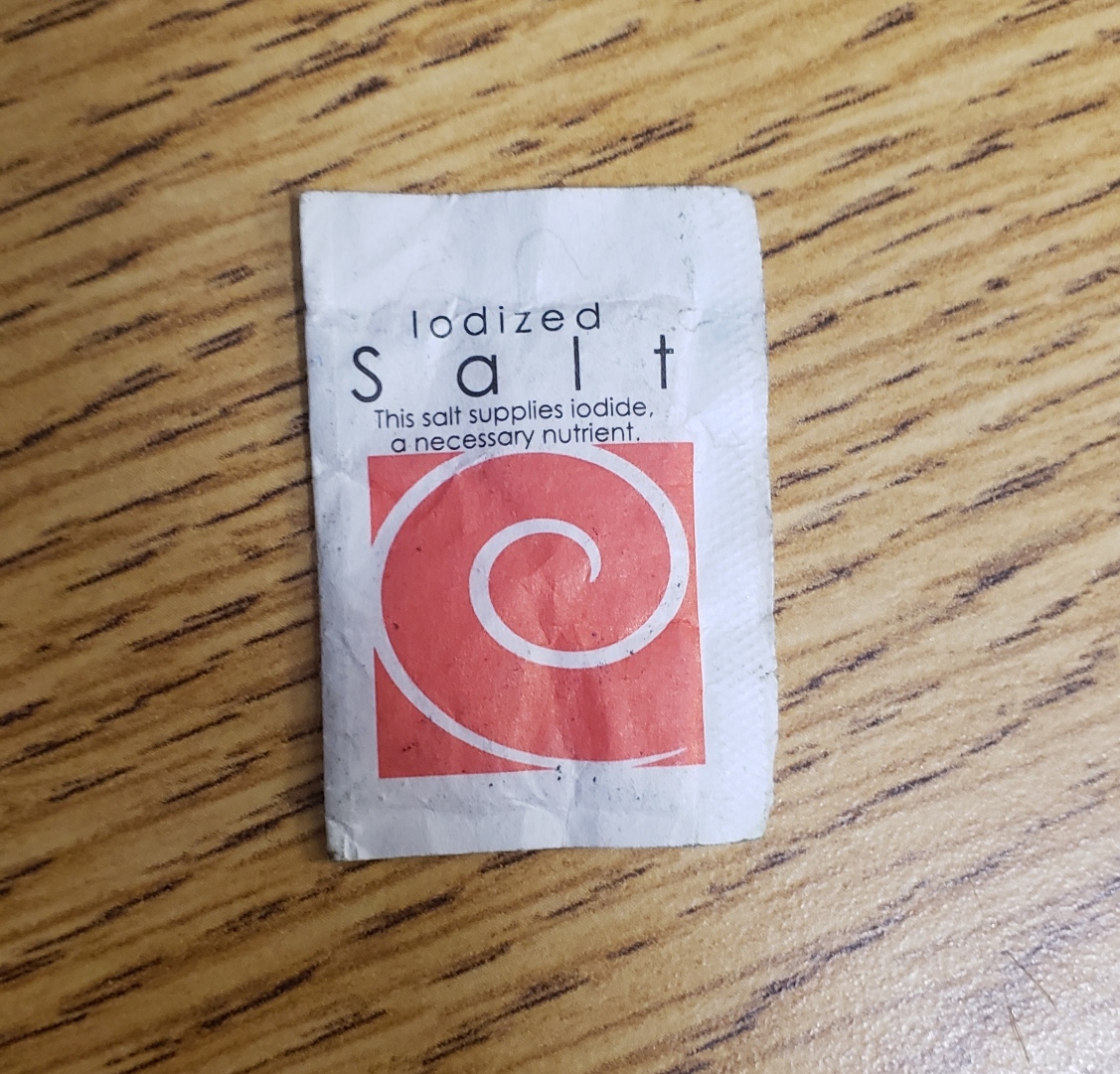
The Universal Salt Iodisation programme is India’s longest-running and most successful fortification initiative. After the 1992 ban on the sale of non-iodised salt for human consumption was eased in 2000 and re-imposed in 2011, NFHS data shows that over 93 percent of households now consume iodised salt and IDD prevalence has fallen from 40 percent to under 4 percent.
Iodisation is the textbook proof that mandatory fortification, when paired with strong supply-chain integration and consumer awareness, can almost eliminate a micronutrient deficiency in a generation. Tamil Nadu, Karnataka, Madhya Pradesh and Gujarat lead in compliance; Bihar and Jharkhand still report iodised salt coverage below 90 percent.
Double-Fortified Salt
Double-fortified salt is iodised salt that also carries encapsulated iron. It is a clever workaround for India’s anaemia problem because salt is universal and inexpensive. ICDS and Mid-Day Meal kitchens in several states use DFS. The Tamil Nadu Salt Department and Indian Council of Medical Research have driven much of the technical work. DFS is still voluntary under the 2018 regulations, not mandatory.
Iron-Fortified Wheat Flour and Edible Oil
Wheat flour fortification with iron, folic acid and vitamin B12 is voluntary at retail and mandatory in PDS and Mid-Day Meal kitchens of some states. Punjab, Haryana, Uttar Pradesh and Rajasthan procure fortified wheat flour for ICDS and MDM. Edible oil fortification with vitamins A and D is voluntary but widely adopted — Adani, Ruchi Soya, Marico and Cargill all offer +F branded oils. Fortified Toned Milk is sold by Mother Dairy and Amul.
Voluntary Versus Mandatory Fortification
The debate over voluntary versus mandatory is one of the most active policy fault lines.
Arguments for mandatory:
- Universal coverage including those who cannot afford a diverse diet
- Network effects — fortification works only when adoption is high
- Lower per-unit cost when an entire industry switches together
- Public health gains are too large to leave to industry choice
Arguments for voluntary:
- Consumer choice and right to information
- Concerns over excess micronutrient intake in already-supplemented groups (especially iron and thalassaemia)
- Regulatory burden on small mills
- Federalism — states should choose
Tamil Nadu briefly paused fortified rice distribution in 2023 citing concerns about haemoglobinopathies and the iron load, then resumed it. This federal pushback is the strongest test the mandatory model has faced.
The Cochrane Critique
In 2023 the Cochrane Collaboration — a respected global evidence aggregator — published a review of rice fortification trials that found low-certainty evidence for some outcomes and raised concerns about the strength of randomised evidence supporting the mandatory rice push. Indian Council of Medical Research and FSSAI scientists responded that the Cochrane review excluded several relevant Indian trials, that observational and effectiveness data support fortification, and that the precautionary principle for a high-burden, low-cost intervention is met.
The Cochrane episode is a rare instance of global evidence aggregation directly intersecting Indian welfare policy. It is now standard material for UPSC essay on evidence-based policy-making and reproducibility.
Concerns: Thalassaemia and Sickle Cell
Critics highlight that mandatory iron fortification can be harmful for people with thalassaemia and sickle cell anaemia — both prevalent in tribal pockets of central India. Genetic screening under the National Sickle Cell Anaemia Elimination Mission and exemption provisions in the rice fortification programme have been built in, but rollout is uneven.
International Comparison
Mandatory fortification of staples is the global norm. Over 80 countries fortify wheat flour with iron and folic acid, including the United States since 1998 and most of Latin America. Universal salt iodisation is the WHO global standard. India joined the rice fortification club in 2024; Costa Rica, Philippines and a few others preceded it.
Way Forward
- Stringent quality assurance of fortified rice kernel premixes at FCI godowns and state mills
- Universalise double-fortified salt in ICDS and Mid-Day Meal
- Expand fortification to millets under the International Year of Millets follow-through
- Integrate sickle cell and thalassaemia screening before iron-heavy interventions in tribal blocks
- Tighten the +F logo audit and enforcement against misuse
- Pair fortification with dietary diversification — fortification cannot substitute for vegetables, pulses and animal protein
- Build a national monitoring dashboard akin to the AMB dashboard for fortification compliance
Conclusion
Food fortification in India is one of the most ambitious public-health bets the country has placed. Iodised salt shows it can work at scale. The mandatory rice fortification rollout to 80 crore PDS beneficiaries is now in place, but its success will be measured not in tonnes blended but in NFHS-6 numbers on anaemia, vitamin B12 status and birth outcomes. The Cochrane critique and the federalism pushback have sharpened the debate; both deepen the policy rather than weaken it. For UPSC, food fortification in India is the case study where regulation, federalism, scientific evidence and welfare delivery meet on one plate.
Frequently Asked Questions
What is food fortification in India?
Food fortification in India is the addition of essential vitamins and minerals — iron, folic acid, vitamin B12, vitamin A, vitamin D, iodine — to staples like rice, wheat flour, salt, oil and milk, regulated by FSSAI under the FSS (Fortification of Foods) Regulations, 2018.
What is the +F logo?
The +F logo is the FSSAI mark identifying products that meet the food fortification standards. It is licensed free of cost and is owned by FSSAI.
Is rice fortification mandatory in India?
Yes. Since March 2024, fortified rice is supplied across the entire Public Distribution System, PM POSHAN (Mid-Day Meal) and ICDS, covering around 80 crore beneficiaries.
What is double-fortified salt?
Double-fortified salt is iodised salt that also contains encapsulated iron. It is used in several ICDS and Mid-Day Meal kitchens but is not yet mandatory across the country.
Why is iodised salt called a fortification success story?
Universal salt iodisation, mandated since 1992 and re-mandated in 2011, has brought iodine deficiency disorder prevalence from about 40 percent down to under 4 percent, with over 93 percent of households consuming iodised salt.
What did the Cochrane review say about rice fortification?
The 2023 Cochrane Collaboration review found low-certainty evidence for several outcomes and questioned the strength of randomised data behind mandatory rice fortification. Indian Council of Medical Research and FSSAI rebutted the review citing excluded Indian trials.
Why is mandatory fortification debated?
Concerns include consumer choice, risk of excess intake in already-supplemented groups, harm to people with thalassaemia and sickle cell anaemia, federalism and regulatory burden on small mills.
Which agency regulates food fortification in India?
The Food Safety and Standards Authority of India regulates food fortification through its Food Fortification Resource Centre at ffrc.fssai.gov.in.