Mitochondrial Replacement Therapy (MRT): Three-Parent IVF, Procedure, and Global Status
A complete UPSC GS-III explainer on Mitochondrial Replacement Therapy. Covers mitochondrial DNA inheritance, the science of MST and PNT, the three-parent baby debate, and the regulatory positions of the UK, Australia, the US, and India.
A child usually has two genetic parents. Mitochondrial replacement therapy makes a small, technical, and consequential exception to that rule. The procedure produces an embryo that carries nuclear DNA from a mother and a father, the way every other embryo does, plus a tiny amount of mitochondrial DNA from a third person, a donor whose healthy mitochondria have replaced the mother’s faulty ones. The popular press has called the result a “three-parent baby.” The biology is more limited than the headline. The ethics, the regulation, and the policy questions are more interesting than the headline.
For UPSC, MRT sits at the intersection of biotechnology, medical ethics, and reproductive law. It also touches on India’s evolving framework for assisted reproduction, the Surrogacy Regulation Act, and the wider international debate on heritable genetic modification. This article walks through the biology, the two main procedures, the global regulatory landscape, and the Indian position.
Quick Facts on Mitochondrial Replacement Therapy
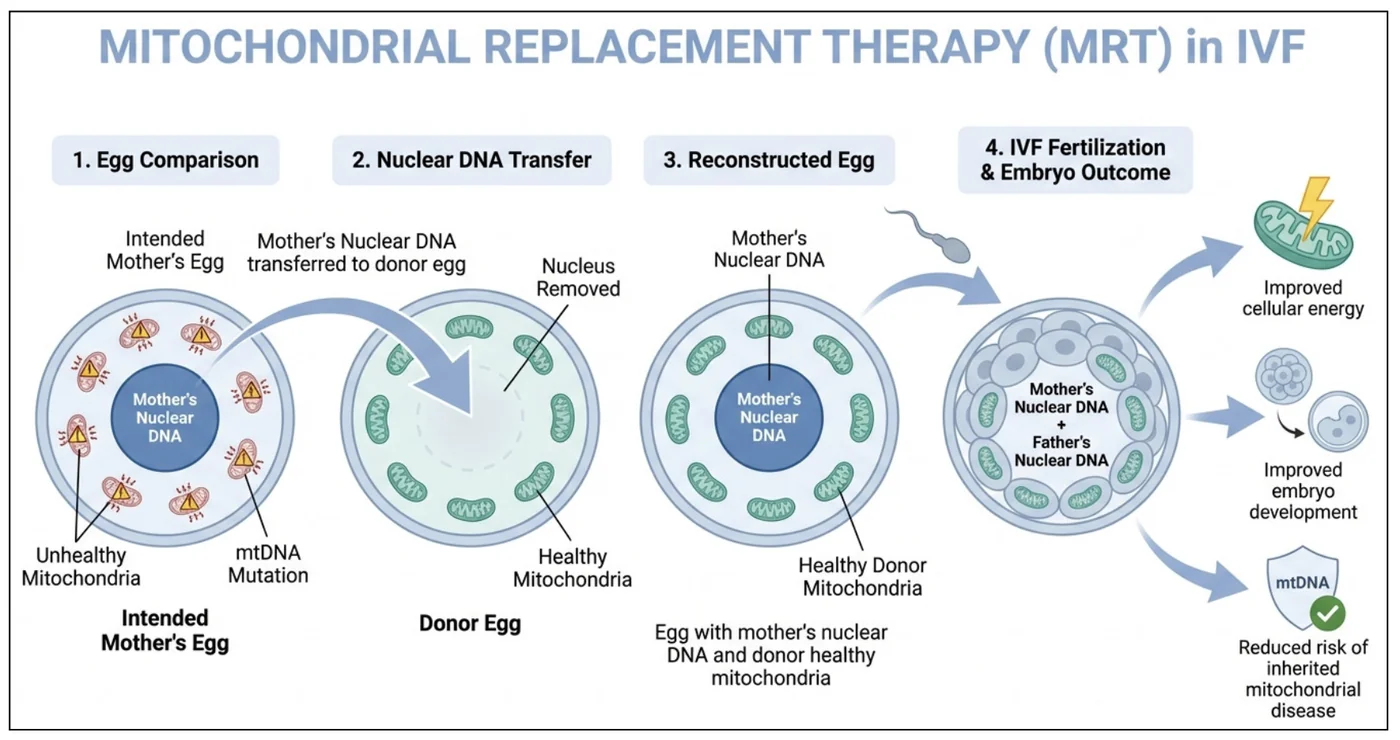
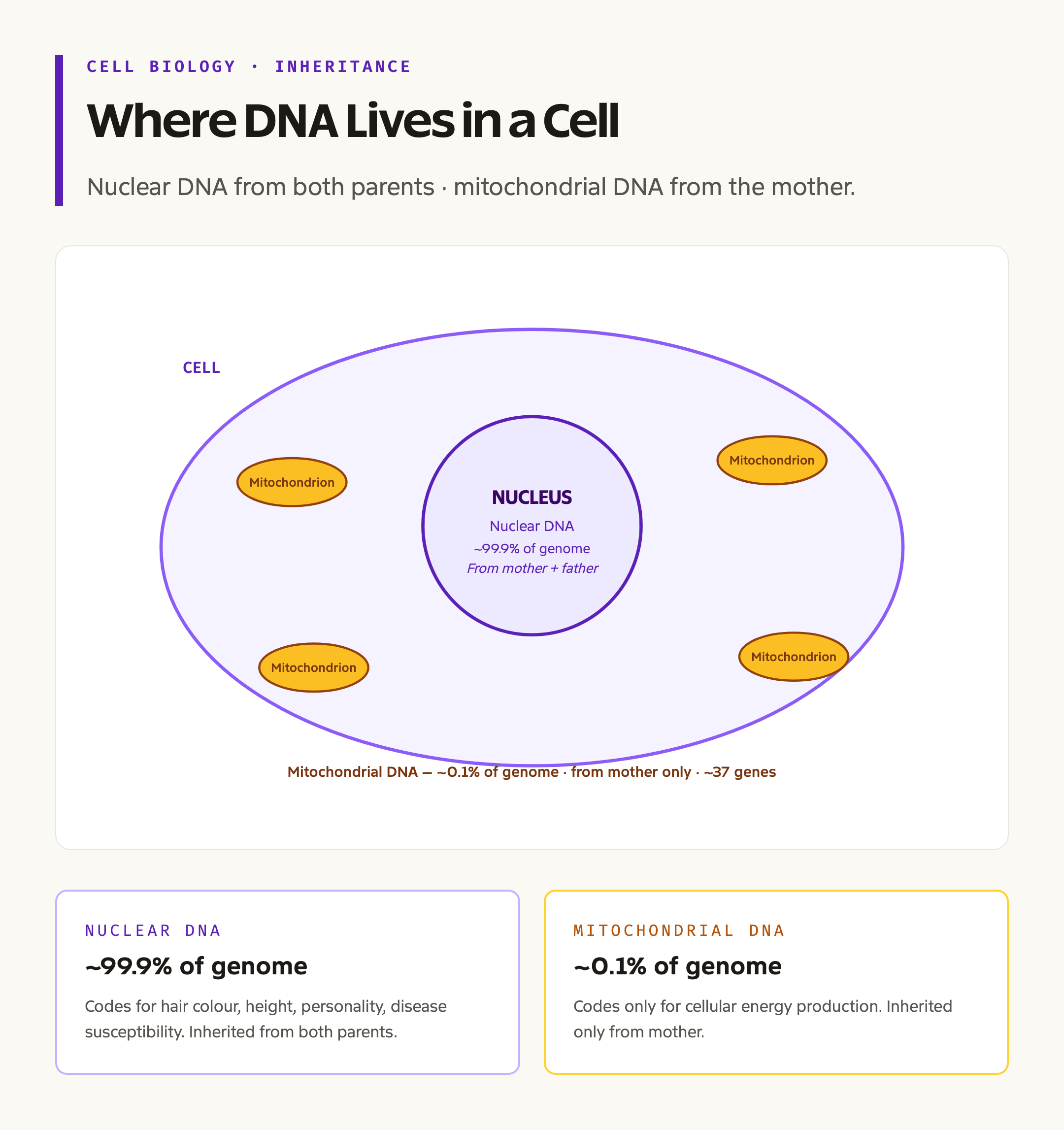
MRT is a specialized variant of in-vitro fertilization. Its purpose is to prevent a mother carrying defective mitochondrial DNA from passing serious mitochondrial disease to her child. The technology has two principal methods, Maternal Spindle Transfer and Pronuclear Transfer. The United Kingdom became the first country to legalize the procedure in 2015. Australia followed in 2022. The United States and India have not legalized it for clinical use, although research is permitted under restrictions in some jurisdictions.
The genetic contribution from the third person is small. Nuclear DNA, which determines almost every inherited trait, comes from the mother and the father. Only the mitochondrial DNA, accounting for roughly 0.1 percent of the genome and coding mainly for proteins involved in cellular energy production, comes from the donor.
What Mitochondria Are and Why Their DNA Matters
Mitochondria are the cellular organelles responsible for producing most of the chemical energy that a cell uses. They have their own circular genome, separate from the nuclear genome, with around 37 genes coding for proteins, transfer RNAs, and ribosomal RNAs essential to oxidative phosphorylation. A defect in mitochondrial DNA shows up most acutely in tissues with high energy demand, including muscle, heart, brain, and the pancreas.
Mitochondrial DNA is inherited almost exclusively from the mother. The egg contributes its cytoplasm, including its mitochondria, to the fertilized embryo. The sperm’s mitochondria are largely destroyed soon after fertilization. A woman who carries a pathogenic mitochondrial DNA mutation passes it on to all her biological children, with the severity of disease depending on the proportion of defective copies, a property called heteroplasmy.
The diseases caused by mitochondrial DNA mutations include Leigh syndrome, MELAS, MERRF, and a range of other conditions that typically present in childhood with progressive neurological, muscular, and metabolic deterioration. Many are fatal and have no curative treatment. MRT is one of the few interventions that can prevent transmission to the next generation, intersecting closely with broader debates on gene therapy and the ethics of heritable genetic change.
Background and Historical Context
Research into mitochondrial replacement began in the 1990s with cytoplasmic transfer experiments designed to address infertility, not specifically mitochondrial disease. Early work in the United States produced a small number of births in which donor cytoplasm, and with it some donor mitochondria, was injected into the mother’s egg. The United States Food and Drug Administration intervened in the early 2000s, classifying the procedure as gene therapy and effectively halting clinical use.
Modern MRT, focused specifically on prevention of mitochondrial disease, was developed through the 2000s in laboratories in the United Kingdom and the United States. The Newcastle group in the UK pioneered Pronuclear Transfer. Researchers at the Oregon Health and Science University in the US developed Maternal Spindle Transfer. The UK Parliament debated the regulation of MRT through 2014 and, in February 2015, voted to amend the Human Fertilisation and Embryology Act to permit the procedure under licence.
The first widely reported MRT birth using Maternal Spindle Transfer was carried out in 2016 by a US team operating in Mexico, where the procedure was not specifically regulated. The case attracted both clinical interest and regulatory criticism for being conducted outside the UK regulatory framework.
How MRT Actually Works
MRT addresses a single clinical problem. The mother’s egg has healthy nuclear DNA but defective mitochondrial DNA. The donor’s egg has healthy nuclear DNA and healthy mitochondrial DNA. The procedure swaps the genetic material so that the resulting embryo has the mother’s nuclear DNA inside the donor’s egg cytoplasm, including the donor’s mitochondria.
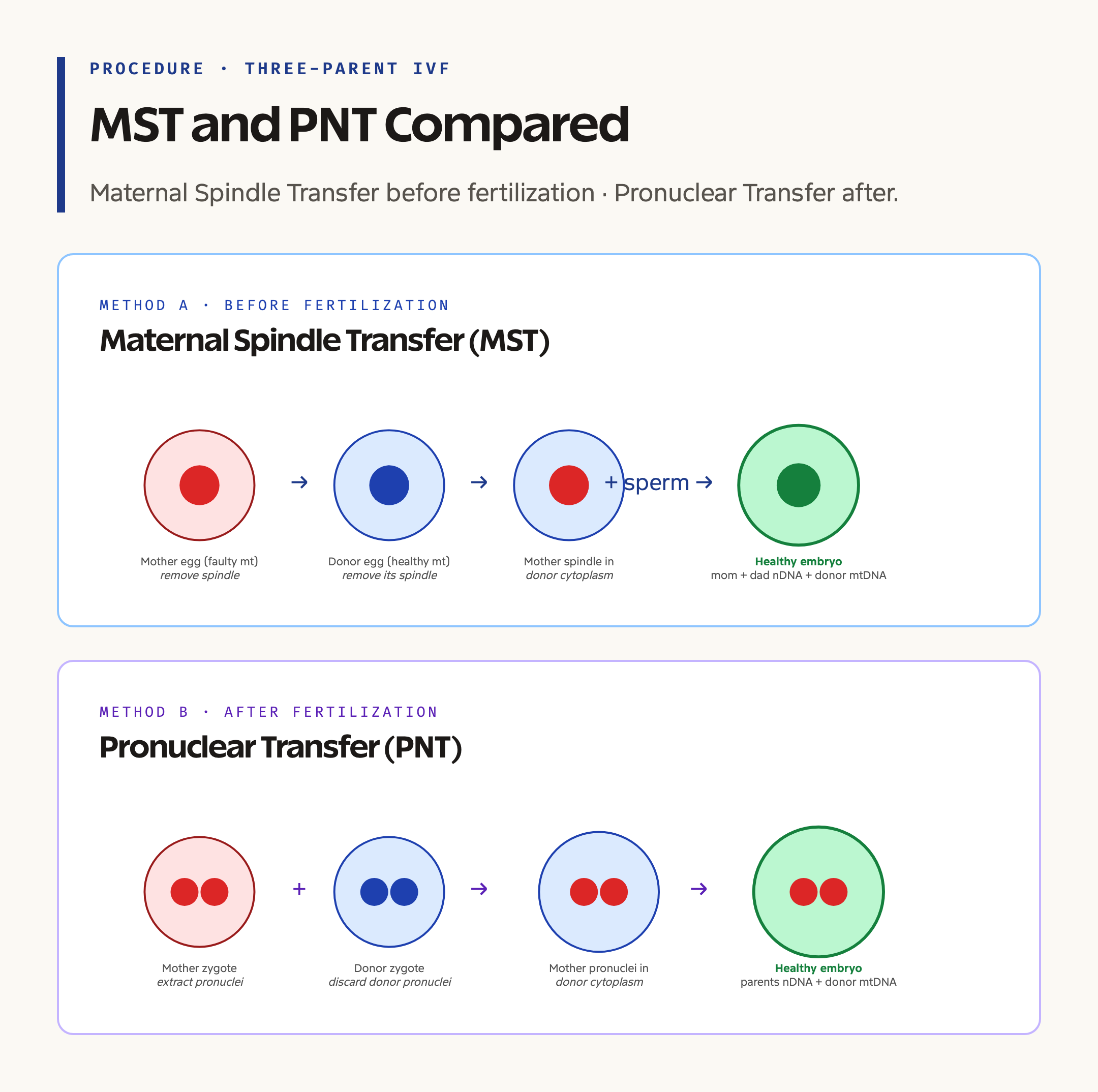
There are two principal methods. Maternal Spindle Transfer is performed before fertilization. The nucleus, more precisely the meiotic spindle of the mother’s egg, is removed and inserted into the donor’s egg, from which the donor’s nucleus has previously been removed. The reconstructed egg is then fertilized with the father’s sperm and the resulting embryo is transferred to the mother’s uterus.
Pronuclear Transfer is performed after fertilization. Both the mother’s and the donor’s eggs are fertilized with the father’s sperm, producing two zygotes. The two pronuclei, the male and female pronuclei before they fuse, are removed from the donor’s zygote. The pronuclei from the mother’s zygote are transferred into the now-empty donor zygote. The resulting embryo carries the parents’ nuclear DNA inside the donor’s cytoplasm.
Both methods aim to leave behind nearly all of the mother’s defective mitochondria. In practice, a small amount of carryover is unavoidable. The proportion is usually low enough to keep the embryo below the threshold of disease, although long-term outcome data is still limited. The science here connects to ongoing work in stem cells and to the broader regulatory framework governing assisted reproductive technologies.
Why MRT Matters for Policy
MRT matters for three reasons. The first is that it is the only currently available means to prevent transmission of mitochondrial DNA disease in a way that allows the mother to have a genetically related child. Adoption and donor egg IVF are alternatives, but they remove or reduce the mother’s genetic contribution. MRT preserves the nuclear genetic relationship while breaking the chain of mitochondrial inheritance.
The second is that MRT crosses the line into heritable genetic modification, however narrowly. The mitochondrial DNA introduced into the embryo will be passed on to that child’s children, if the child is female. The international consensus against germ-line genetic modification, formalized in instruments such as the UNESCO Universal Declaration on the Human Genome and Human Rights, has been read by some commentators as covering MRT and by others as not. The UK Parliament’s decision to permit MRT was justified in part on the argument that the change is to mitochondrial DNA, not nuclear DNA, and that the change does not affect characteristics traditionally understood as heritable traits.
The third is precedent. The architecture of regulation built around MRT, with licensed clinics, case-by-case approval, mandatory follow-up of children, and a clear statutory boundary between MRT and other genetic interventions, is being studied as a model for future heritable genome-editing techniques. The decisions made now will shape how more powerful tools, including CRISPR-based germ-line editing, are eventually regulated.
Detailed Procedure: MST and PNT Compared
A side-by-side comparison clarifies the two methods.
| Feature | Maternal Spindle Transfer (MST) | Pronuclear Transfer (PNT) |
|---|---|---|
| Timing | Before fertilization | After fertilization |
| What is transferred | Mother’s meiotic spindle | Two pronuclei |
| Donor egg fate | Receives mother’s spindle, fertilized | Fertilized first, pronuclei discarded |
| Mother’s egg fate | Spindle removed and used | Fertilized first, pronuclei used |
| Number of zygotes destroyed | Zero (donor egg discarded) | One donor zygote discarded |
| Ethical sensitivity | Lower in some frameworks | Higher in frameworks that see fertilization as ethically significant |
Both procedures are technically demanding. The success rate is below that of standard IVF. The procedures are typically restricted to women whose mitochondrial DNA mutation load is high enough to make natural conception extremely risky for the child.
Comparative Global Status
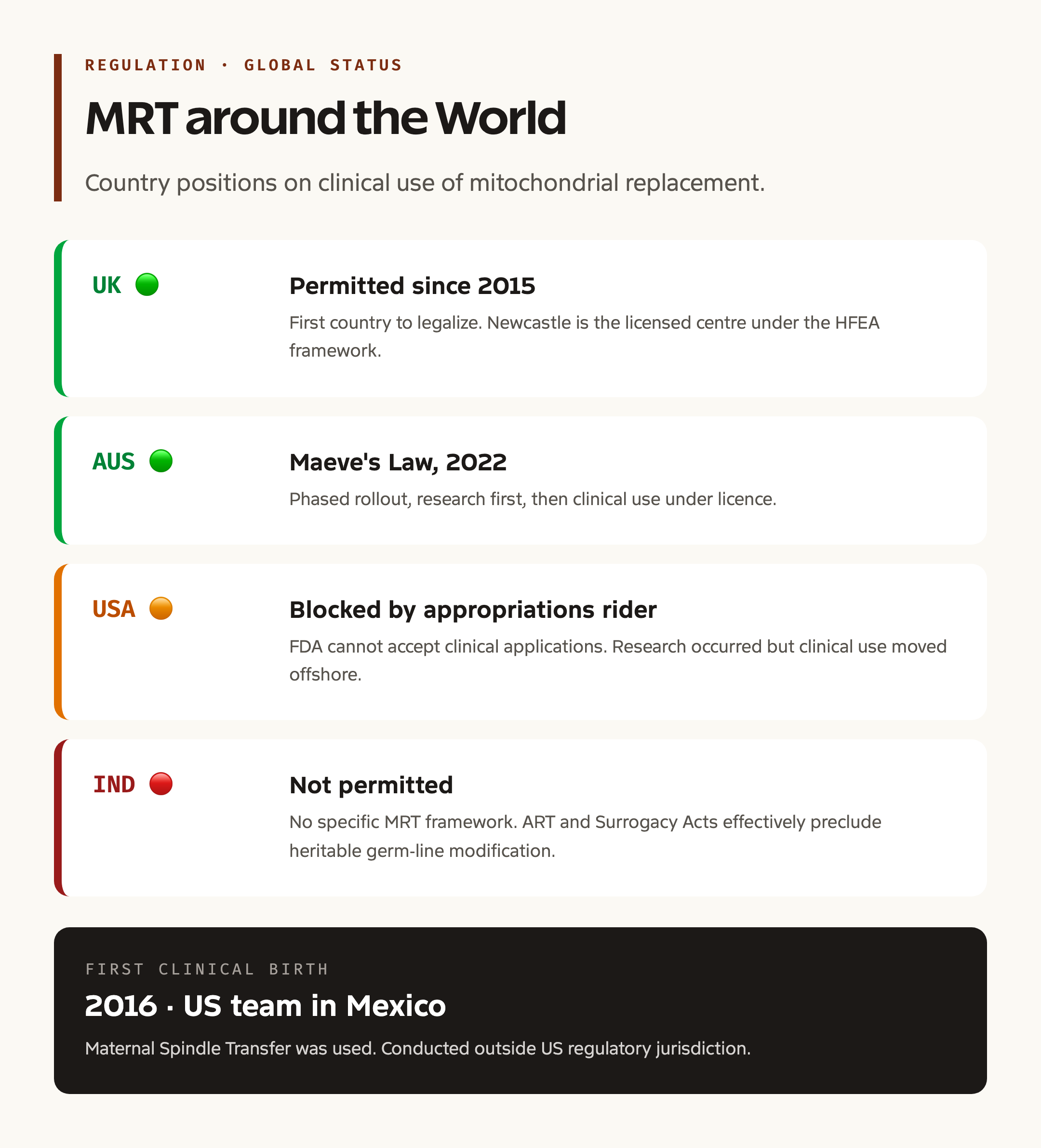
The regulatory picture varies sharply across jurisdictions.
| Country | Legal status of clinical MRT | Notes |
|---|---|---|
| United Kingdom | Permitted since 2015 under HFEA licence | First country to legalize. Newcastle is the licensed centre. |
| Australia | Permitted under Maeve’s Law, 2022 | Phased rollout, research first then clinical |
| United States | Not permitted for clinical use | FDA classifies as gene therapy. Congressional rider blocks review of applications. |
| India | Not permitted | No specific MRT regulation. Falls under ART and other rules. |
| Singapore | Under review | Bioethics Advisory Committee has recommended cautious permission |
| Most EU member states | Generally not permitted | Vary by national law |
The United States position is particularly worth noting. Although early research was done in the country, a Congressional appropriations rider since 2015 has barred the FDA from accepting applications for clinical trials of any procedure that would create an embryo with heritable genetic modification, which includes MRT. United States teams that have conducted MRT clinically have done so in jurisdictions outside the country.
Indian Position and Regulation
India has no specific regulatory framework for MRT. The Assisted Reproductive Technology (Regulation) Act, 2021 and the Surrogacy (Regulation) Act, 2021 govern much of the reproductive medicine landscape but do not specifically address mitochondrial replacement. The Indian Council of Medical Research has issued guidelines for stem cell research that touch on genetic modification of embryos. Heritable germ-line modification is not permitted under existing ART rules.
Several Indian fertility clinics have expressed interest in offering MRT, citing the high prevalence of consanguineous marriage in some communities and the resulting elevated risk of inherited mitochondrial disorders. The Department of Biotechnology has not signalled an intention to open the door, and the absence of a regulatory framework effectively blocks clinical use. The policy direction is likely to move only when ICMR develops specific guidance, similar to the framework developed for the genome India project and other large-scale genetic initiatives.
Challenges and Ethical Concerns
Several concerns have been raised in the international debate. Long-term safety is the first. The cohort of children born through MRT is small and young. Whether the small amount of mitochondrial DNA carryover from the mother will, over decades, drift back to disease levels is not yet known. Nuclear-mitochondrial mismatch, where the donor mitochondria do not function optimally with the parents’ nuclear DNA, has been observed in animal studies and remains a concern.
The second is the slippery slope. MRT is heritable genetic modification, narrowly defined. Permitting it sets a precedent that critics argue could be extended to nuclear DNA modification, including modifications aimed at enhancement rather than disease prevention. Supporters reply that the line is in fact possible to draw and is being drawn through the UK and Australian regulatory frameworks.
The third is the identity question. Whether the donor counts as a parent in any meaningful sense is debated. The UK position, codified in regulation, is that the donor has no parental status. The genetic contribution is too small and too narrowly functional to constitute parenthood. Some ethicists and faith traditions disagree.
The fourth is access. MRT is expensive, technically demanding, and currently available in very few centres globally. Even if Indian regulation moved towards permitting the procedure, access would be limited to a small number of patients, raising distributional concerns common to many advanced reproductive technologies.
Prelims Pointers
- Mitochondria are cellular organelles responsible for energy production through oxidative phosphorylation.
- Mitochondrial DNA is circular, separate from nuclear DNA, and inherited almost exclusively from the mother.
- A child born through MRT carries nuclear DNA from the mother and father plus mitochondrial DNA from a donor.
- Maternal Spindle Transfer is performed before fertilization. Pronuclear Transfer is performed after fertilization.
- The United Kingdom legalized MRT in 2015. Australia followed under Maeve’s Law in 2022.
- The United States has not approved clinical MRT. A Congressional appropriations rider blocks FDA review.
- India has not approved MRT. The ART Act and Surrogacy Act do not specifically address MRT.
- Mitochondrial DNA codes mainly for proteins involved in cellular energy production, accounting for roughly 0.1 percent of the genome.
- Heteroplasmy refers to the presence of both normal and mutant mitochondrial DNA in the same cell.
- The first reported clinical MRT birth using MST was conducted by a US team in Mexico in 2016.
Mains Practice Questions
- Mitochondrial replacement therapy has been described as the first sanctioned form of heritable human genetic modification. Examine the science behind MRT and discuss the regulatory and ethical questions it raises for India.
- Compare the regulatory frameworks adopted by the United Kingdom and Australia for mitochondrial replacement therapy. What lessons can India draw as it considers its own approach?
- Distinguish nuclear DNA from mitochondrial DNA and discuss the implications of mitochondrial inheritance for reproductive medicine and public policy.
Way Forward
A measured Indian path on MRT would have three elements. The first is research permission, allowing Indian laboratories to study the technology under defined conditions, accumulate experience, and contribute to the global evidence base. Long-term outcome data on the existing global cohort is the single most important input to any future clinical decision.
The second is a clear regulatory framework if and when clinical use is contemplated. The UK model, with a single licensed centre, case-by-case approval, mandatory follow-up of children, and statutory clarity that the donor has no parental status, is a workable template. Indian regulation would need to fit MRT into the existing ART and surrogacy frameworks rather than create a parallel structure.
The third is broad public consultation. The technology raises questions of religious, ethical, and social significance that go beyond pure science. The UK and Australian processes both involved extensive parliamentary debate and public engagement. An Indian process would benefit from the same transparency.
The technology is not going away. Indian families with mitochondrial disease are already travelling abroad to access MRT in jurisdictions where it is permitted. Whether India eventually permits the procedure or continues to prohibit it, the policy question deserves a deliberate answer rather than the current absence of one.
Frequently Asked Questions
Is a child born through MRT genetically the child of three people?
In a narrow technical sense, yes. The child carries nuclear DNA from the mother and father plus mitochondrial DNA from a donor. In a more meaningful sense, the donor’s contribution is small, functionally limited to cellular energy production, and does not affect inherited traits like appearance, personality, or disease susceptibility outside of mitochondrial disease.
What does mitochondrial DNA actually code for?
The mitochondrial genome contains roughly 37 genes coding for proteins involved in oxidative phosphorylation, transfer RNAs, and ribosomal RNAs needed for protein synthesis inside the mitochondrion. It does not code for traits like eye colour, height, or personality.
Why is mitochondrial DNA inherited only from the mother?
The egg contributes its cytoplasm, including hundreds of thousands of mitochondria, to the fertilized embryo. The sperm contributes very few mitochondria, and these are typically destroyed by the egg’s cellular machinery soon after fertilization. The result is that almost all of the embryo’s mitochondrial DNA comes from the mother.
What is the difference between Maternal Spindle Transfer and Pronuclear Transfer?
MST is performed before fertilization and involves transferring the mother’s meiotic spindle into a donor egg from which the donor’s nucleus has been removed. PNT is performed after fertilization and involves transferring the pronuclei from the mother’s fertilized zygote into a donor zygote whose pronuclei have been removed.
Which country was the first to legalize MRT?
The United Kingdom became the first country to legalize MRT for clinical use in 2015, following an amendment to the Human Fertilisation and Embryology Act.
Is MRT permitted in India?
No. India does not currently permit MRT for clinical use. There is no specific MRT regulation, and the existing ART and surrogacy frameworks effectively preclude heritable germ-line modification.
Why is MRT not approved in the United States?
A rider attached to United States federal appropriations legislation since 2015 bars the FDA from considering applications for clinical investigation of any procedure that would create an embryo with heritable genetic modification, which includes MRT. As a result, no US-based clinical MRT can proceed under federal jurisdiction.
What are the main mitochondrial diseases that MRT could prevent?
Diseases caused by pathogenic mutations in mitochondrial DNA, including Leigh syndrome, MELAS, MERRF, and a range of other often severe and progressive conditions affecting muscle, brain, heart, and metabolic function.
Is MRT the same as gene editing?
No. MRT replaces an entire defective organelle with a healthy donor organelle. It does not edit the sequence of any gene. CRISPR-based germ-line editing, in contrast, makes specific changes to the DNA sequence within cells. The two are different both technically and in regulatory framing.
Will the donor’s traits show up in the child?
Almost certainly not in any visible or behaviourally significant way. The donor contributes only mitochondrial DNA, which codes for cellular energy production and not for characteristics like appearance or personality. The nuclear DNA, which determines those traits, comes from the parents.