Savindra Singh Physical Geography: Edition, Chapters and Plan for the Optional
Savindra Singh's Physical Geography is the geography optional's physical-half reference, not a GS book. The edition to buy, a part map and a six-week plan.
Savindra Singh Physical Geography is the book geography optional aspirants are told to buy and GS aspirants are warned about, so the useful question is which of the two you are. For the optional, it’s the standard reference for the physical half of Paper I: geomorphology, climatology, oceanography and biogeography, at the depth a 250-mark paper needs. For GS alone, it’s more book than the paper asks for, and NCERT plus one clear world geography text will serve you better.
Most aspirants who own it use it in one of two unhelpful ways. The optional aspirant reads it cover to cover in the first two months and reaches human geography, the other half of Paper I, far too late. The GS aspirant buys it because a topper’s list named it, works through the early chapters on the Earth’s interior and stalls.
The book is a reference to be mined, not a course to be completed. Read the parts the paper actually weights, in the order it weights them, and leave the rest for lookups. I want to settle the edition first, because Savindra Singh listings on Amazon.in are a mess.
What Savindra Singh Physical Geography is, and which edition to buy
Physical Geography by Savindra Singh is published by Pravalika Publications, Allahabad (Prayagraj). The ISBN to look for is 978-8192829708, and booksellers sell the revised prints under that same ISBN, labelled as the 2024 and 2025 editions. The publisher’s listing on Amazon.in weighs in at 980 grams, which tells you what kind of book it is: a thick reference, not a quick read.
The facts that matter when you order it:
- Author: Savindra Singh
- Publisher: Pravalika Publications, Allahabad (Prayagraj)
- ISBN: 978-8192829708, shared by the revised prints
- Language: English; the Hindi edition, Bhautik Bhugol, comes from the same publisher
- Structure: four parts, Lithosphere (geomorphology), Hydrosphere (oceanography), Atmosphere (climatology) and Biosphere (biogeography)
The listings trip people up in three ways:
- An older print from a different publisher, dated 2006 with ISBN 978-8186539293, is still listed. Skip it.
- Several resellers list the book under generic brand names with page counts that don’t match each other. Buy the listing that names Pravalika Publications and ISBN 978-8192829708, and check the year printed on the cover.
- Savindra Singh has also written a separate book called Geomorphology. It isn’t this book, and you don’t need both.
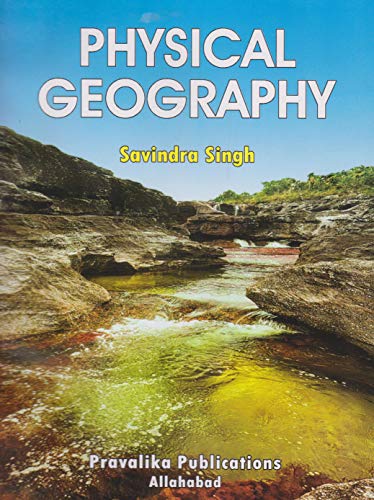
Physical Geography, Savindra Singh (Pravalika Publications)
- Pravalika Publications, Allahabad; ISBN 978-8192829708, shared by the revised prints
- Four parts: lithosphere, hydrosphere, atmosphere and biosphere
- A thick reference paperback for the geography optional's physical half
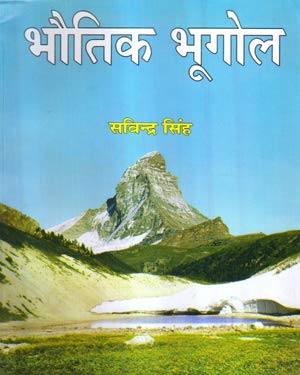
भौतिक भूगोल, सविन्द्र सिंह (प्रवालिका पब्लिकेशन्स)
- लेखक सविन्द्र सिंह, प्रवालिका पब्लिकेशन्स
- अंग्रेज़ी Physical Geography का हिंदी संस्करण
- हिंदी माध्यम से भूगोल वैकल्पिक विषय लिखने वालों के लिए
If you write the optional in Hindi, buy Bhautik Bhugol rather than the English book. The terms you will write in the answer booklet are the ones you should be reading.
Who Savindra Singh is for, and who should skip it
Savindra Singh Physical Geography is a core book for geography optional candidates, and for almost nobody else. UPSC’s syllabus splits optional Paper I, Principles of Geography, into physical geography and human geography. The physical half has five units:
- Geomorphology
- Climatology
- Oceanography
- Biogeography
- Environmental Geography
Our analysis of geography optional question papers from 2016 to 2026 counts 308 Paper I questions worth 4,400 marks. Those five physical units together carry 2,295 marks, about 52% of the paper:
- Climatology: 685 marks, 15.6%, the heaviest single unit
- Geomorphology: 485 marks, 11.0%
- Environmental geography: 475 marks, 10.8%
- Biogeography: 365 marks, 8.3%
- Oceanography: 285 marks, 6.5%
Savindra Singh’s four parts line up with the first four of those units. That is why the book is on every optional list, including our own geography optional booklist, which recommends it selectively for geomorphological theory and the climatological models.
Read it as a core book if:
- Geography is your UPSC optional.
- You are writing a state PSC exam with a geography optional, or studying geography at university.
- You have finished NCERT’s Class 11 physical geography and want the depth behind it.
Leave it on the shelf if:
- You are preparing GS only. NCERT and one clear world geography book cover GS1 and Prelims; see our geography books for UPSC list.
- You haven’t read NCERT yet. This book assumes the basics.
- You’re short on time for the optional. Then use it chapter by chapter against the syllabus, never front to back.
Buying it for GS isn’t a good idea, and neither is reading the whole thing for the optional. The sensible middle is to treat it as the optional’s physical geography reference and read it in the order the paper rewards.
The part map: what to read for the optional, and what for GS
Savindra Singh Physical Geography runs in four parts, and they are not equal in pages or in marks. In the contents published with an earlier print, geomorphology runs to more than 20 chapters against 8 for climatology, the opposite of how Paper I weights them. This is how the parts sort out.
| Part | What it covers | Geography optional Paper I | GS1 and Prelims |
|---|---|---|---|
| Lithosphere (geomorphology) | Origin and interior of the Earth, isostasy, earth movements, rocks, vulcanicity, earthquakes, mountain building, weathering, cycle of erosion, landforms of rivers, groundwater, waves, wind and glaciers | Core; read the theory chapters fully and the landform chapters for diagrams | Interior, earthquakes and volcanoes only; the rest from NCERT |
| Hydrosphere (oceanography) | Ocean relief, temperature, salinity, deposits, tides, currents, coral reefs, marine resources | Core; a shorter unit, read fully | Salinity, currents and coral reefs |
| Atmosphere (climatology) | Atmosphere’s structure, insolation and heat budget, temperature, pressure and circulation, humidity and precipitation, air masses, fronts, cyclones, climate classification | Core; the heaviest unit of Paper I, read slowly | Circulation and cyclones only |
| Biosphere (biogeography) | Ecosystems, plant and animal communities, biomes | Read; add soils and conservation from other sources | Skip beyond NCERT |
The payoff from that table is simple. Climatology deserves your slowest reading even though geomorphology takes up more of the book. An aspirant who spends six weeks on landforms and one on the atmosphere has the balance backwards.
How to read Savindra Singh in six weeks
The method is one model, one diagram, one paragraph. About an hour a day for six weeks, and every session ends with a diagram drawn from memory and a 150-word answer paragraph on the day’s model, written without the book.
- Weeks 1 and 2, geomorphology theory. The Earth’s interior, isostasy, plate tectonics, then the models of landscape development. Our notes on the cycle of erosion by Davis, Penck and King and plate tectonics sit well beside these chapters. Landform chapters get a skim and a diagram each.
- Weeks 3 and 4, climatology. Heat budget, atmospheric circulation, jet streams, air masses, fronts, cyclones and climate classification, at half the pace of the first fortnight. Pair the classification chapter with our Köppen classification note, and the climate-change material with Milankovitch cycles.
- Week 5, oceanography. Ocean relief, temperature and salinity, currents and coral reefs. The oceanography note gives you the short version to revise from.
- Week 6, biogeography, then questions. Read the biosphere part, add soils and environmental geography from other sources, then write answers to a full year of Paper I physical geography questions.
If a model won’t come out of your pen as a clean diagram, you haven’t learned it yet, however many times you have read the chapter. That is normal on the first pass through Davis and Penck. It gets easier on the second.
What to skip, and what to cross-check
Skim the descriptive tours of individual landforms once you’ve drawn each one. Paper I asks about processes and models far more than it asks you to describe a cirque or a barchan in detail.
Cross-check anything the syllabus has moved on from, or anything with a date on it:
- Soils. Genesis, classification and distribution of soils are the first topic in the optional’s biogeography unit. Check that your print covers them in enough depth, and use a dedicated source if it doesn’t.
- Environmental geography. The syllabus asks about environmental policy, legislation and hazards. A textbook is not the place for the current policy position.
- Climate change figures. Any temperature, sea-level or emissions figure carries the year it was measured. Check it against a recent official report before you quote it.
- Oceans in the news. The syllabus now names coral bleaching, sea-level changes and the law of the sea. Read current material on all three.
What Savindra Singh will not do
It won’t cover human geography, which is the other half of Paper I: perspectives, economic geography, population and settlements, regional planning and the models and theories. Notes such as determinism and possibilism and the quantitative revolution in geography start that half.
It won’t cover Paper II, the Geography of India, or its compulsory map question. It won’t write your answers, and the gap between knowing a model and writing it well in 150 words is where optional marks are lost; our geography optional notes are built around that gap. It won’t read easily either. It’s dense, and it rewards a pencil more than a highlighter.
It’s a reference for one half of one paper. Treat it as more than that and it will eat your optional preparation.
Savindra Singh vs GC Leong vs Strahler’s Introducing Physical Geography
Three physical geography books get compared for the optional, and each sits at a different depth.
| Book | Pages and edition | What it is | Verdict |
|---|---|---|---|
| Physical Geography, Savindra Singh | Pravalika Publications, a thick reference | Optional-level depth, written for Indian exams | The optional’s core reference |
| Certificate Physical and Human Geography, GC Leong, 2nd edition | 208 pages, OUP, December 2023 | Clear processes and climatic regions | The warm-up before Savindra Singh; enough for GS |
| Introducing Physical Geography, Alan Strahler, 6th edition (Wiley) | 660 pages, 2016 | A university textbook, strong on Earth systems and climate | Only if you want depth beyond both; not needed for UPSC |
For the optional, Leong first and Savindra Singh second is the order that works. The university textbook is a pleasure to read and a poor use of an aspirant’s month.
Is there a Savindra Singh PDF?
No official one. Pravalika Publications sells the book in print and does not offer a free PDF. The files that circulate as a Savindra Singh PDF are scans of older prints, which means older diagrams, missing revisions and, in some cases, the 2006 print from a different publisher. For a book you will return to for two years, a scan is a false saving.
The free and legitimate foundation is NCERT. The Class 11 Fundamentals of Physical Geography is on the official NCERT textbook site at https://ncert.nic.in/textbook.php, and it is the book to finish before you open this one.
Savindra Singh Physical Geography has earned its place on the optional list, and it earns it only when it’s read selectively. Buy the current Pravalika print, or Bhautik Bhugol if you write in Hindi. Read climatology slowest and geomorphology’s theory chapters fully, and end every session with a diagram and a paragraph. Start this week with the heat budget chapter, the one most optional candidates leave until too late.
Frequently Asked Questions
Is Savindra Singh Physical Geography needed for UPSC GS?
No. For GS1 and Prelims, NCERT’s physical geography textbooks and one clear world geography book are enough. Savindra Singh is written at the depth the geography optional needs, which is more than GS asks for.
Which edition of Savindra Singh Physical Geography should I buy?
The current print from Pravalika Publications under ISBN 978-8192829708, sold as the 2024 or 2025 edition. Avoid the 2006 print from a different publisher and check the year on the cover of reseller copies.
Is Savindra Singh enough for geography optional Paper I?
It covers the physical half of Paper I, which carried about 52 percent of the marks from 2016 to 2026. Human geography, the other half, needs separate books and notes, and Paper II needs Indian geography and map practice.
Which part of the book matters most for the optional?
The atmosphere part, on climatology. Climatology is the heaviest unit of Paper I at 685 marks over eleven years, even though the book spends more chapters on geomorphology. Read it slowly and draw every model.
Is there a Hindi edition of Savindra Singh Physical Geography?
Yes. Bhautik Bhugol by Savindra Singh comes from the same publisher, Pravalika Publications. Hindi-medium candidates should read it rather than the English book, so the terms they read are the terms they write.
Should I read GC Leong or Savindra Singh first?
GC Leong first, after NCERT. Leong gives a clear picture of processes and climatic regions, and Savindra Singh then adds the models and theory that Paper I of the optional asks about.
How long does it take to read Savindra Singh Physical Geography?
About six weeks at an hour a day if you read it selectively: two weeks on geomorphology theory, two on climatology, one on oceanography and one on biogeography and answer practice. Reading it cover to cover takes far longer and is not needed.
Is there a free Savindra Singh PDF?
There is no official free PDF. The scans that circulate are older prints, some from a different publisher. NCERT’s Class 11 physical geography textbook is free on the NCERT website and should be read first.